Direct Mail for Real Estate Investors: A Complete Guide


Direct mail is still one of the few channels where a motivated seller can't scroll past you. But most wholesalers waste thousands of stamps because they mail the wrong list, with the wrong offer, and never follow up.
This guide fixes that. You'll get the full playbook — lists, offers, copy, budgets, tracking, and the software that holds it together — grounded in real housing market data so you know exactly what you're mailing into.
Key Takeaways
- Direct mail works best when it's repeat and consistent — one postcard is a lottery ticket, a six-touch sequence is a marketing system.
- Your list is the whole game. Skip the county list everyone else buys and build a stacked, filtered list from multiple signals.
- The current market helps you: median days on market sat at 61 as of September 2026, up from a spring low of 52 — more sellers are sitting, and sitting sellers are motivated sellers.
- Budget realistically. Direct mail is a cost-per-lead channel, not a cost-per-click one, so plan for 60-90 days before you judge it.
- The Wholesale REI directory tracks 7 direct mail tools among its 65 software tools across 9 categories — enough to compare before you commit.
What is direct mail for real estate investors?
Direct mail for real estate investors is any physical mail piece — postcard, letter, or oversized envelope — sent to a targeted property owner to start a conversation about buying, selling, or financing their property. For wholesalers, it's the front door of the deal pipeline: the mail piece gets a call, the call gets an appointment, and the appointment gets a contract.
It's not glamorous. It's not fast. But it's one of the only channels where you control who sees your message and when.
Why wholesalers still mail in a digital world
Because everyone else went digital. Your competition is fighting for attention in a crowded inbox and a crowded feed. A physical piece lands in a mailbox that gets maybe a dozen items a day instead of a hundred emails.
There's also a trust factor. A postcard with a real name, a real phone number, and a real offer feels more legitimate than a Facebook ad to a 72-year-old homeowner who's never clicked a lead form in her life.
And the data backs up the opportunity. Homeowners are sitting on properties longer in this market, which means more of them are stuck — and stuck sellers are the ones who respond to mail.
How is the housing market affecting direct mail right now?
Sellers are taking longer to move, which means more motivated-seller inventory for your mail campaign. Median days on market climbed to 61 days as of September 2026, up from a spring low of 52 days in April and May.
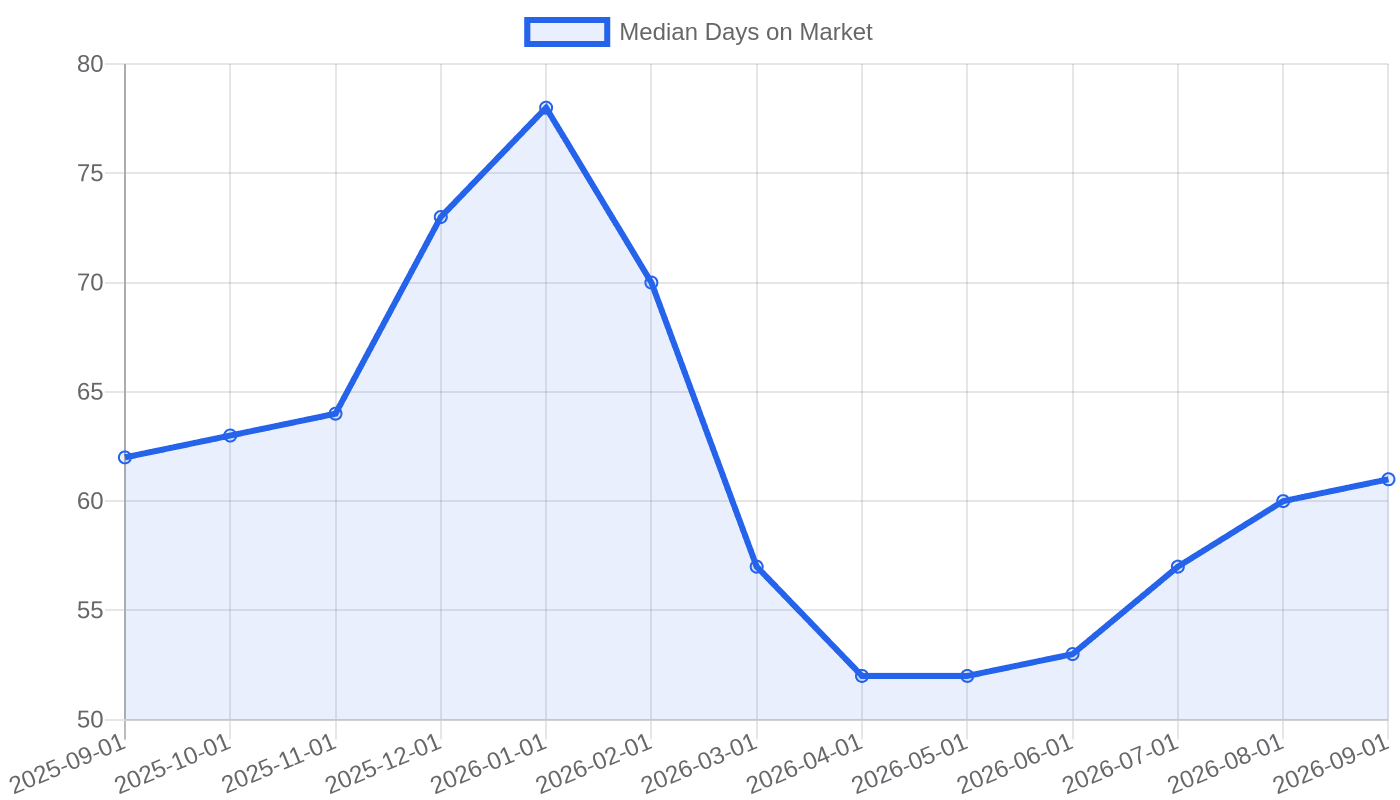
That's a meaningful shift. When homes sell in three weeks, a frustrated seller might just wait it out. When they sit for two months, the phone starts feeling heavier — and a well-timed postcard lands differently.
The price picture matters too
The median sales price of houses sold was $410,700 as of April 2026, down from a peak of $435,400 back in July 2023. Prices have been drifting sideways-to-down for a while now.
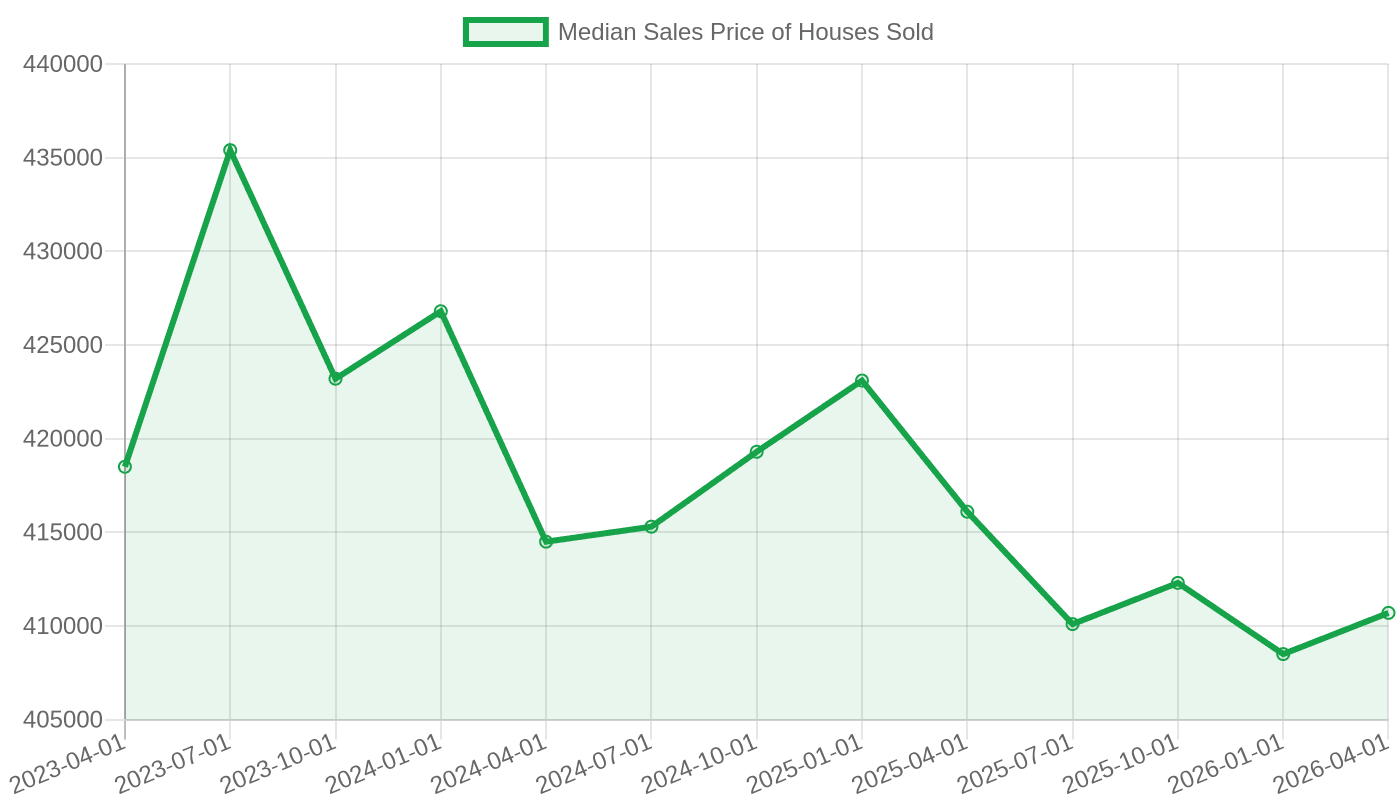
What does that mean for your mail? It means your offers need to reflect reality. If you're mailing offers based on 2023 comps, sellers will either laugh at you or — worse — accept, and you'll be stuck with a deal that doesn't pencil.
Rates are the quiet motivator
The 30-year fixed mortgage rate hit 7.4% as of October 15, 2026, up from 6.58% in late July. Higher rates lock people in place — they don't want to sell and buy at a higher payment.
But that cuts both ways. It also creates a pool of sellers who need to move (job change, divorce, inheritance, financial strain) but can't easily list on the MLS. Those are your people.
How do you build a direct mail list that actually converts?
You build it by stacking multiple distress signals on top of each other instead of buying a single list from a single source. The more independent signals a property has, the hotter the lead.
Here's the process most successful wholesalers follow:
- Pull a base list from county records — absentee owners, tax delinquents, probate filings, code violations, or pre-foreclosure notices.
- Layer a second signal. Cross-reference with a second data source: a different list provider, a skip-trace service, or your own CRM history.
- Filter hard. Remove properties you can't actually buy — owner-occupied with no distress, recently sold, listed on the MLS, or outside your buy box.
- Score and segment. Rank leads by number of signals and estimated equity, then write different mail pieces for each tier.
- Deduplicate ruthlessly. Nothing burns money faster than mailing the same address three times in one week from three different lists.
What list types should you mail first?
Start with the lists that have the shortest path from mail to conversation. Absentee owners and probate leads tend to respond faster than generic "we buy houses" lists because the motivation is already baked in.
- Absentee owners — landlords who may be tired of managing a property from out of state.
- Probate and inheritance — heirs who don't want the house and want a clean, fast sale.
- Tax delinquent — owners facing a deadline, which creates urgency.
- Pre-foreclosure — tight timelines, high motivation, but you need to move fast.
- Tired landlords — long-term owners with deferred maintenance and low patience.
How big should your list be?
Big enough to produce a statistically meaningful number of calls, small enough that you can afford to mail each lead six times. A common starting point is a few thousand records per market, mailed in waves — not one giant blast.
If you can't afford six touches on 5,000 records, mail 1,500 records six times instead. Depth beats breadth in direct mail.
What offer should you put on your mail piece?
Your offer should be specific, believable, and easy to say yes to — usually a clear cash price range, a fast close, or an as-is purchase with no repairs. Vague offers like "we buy houses" get ignored because they ask the seller to do the work of figuring out what you want.
Strong offers share three traits:
- Concrete — a number, a timeline, or a specific condition ("we buy as-is, no repairs, close in 14 days").
- Low-risk — no obligation, no fees, no pressure to list.
- Relevant — it solves the exact problem the list segment has. A probate lead cares about speed and simplicity. A tired landlord cares about not dealing with tenants.
Should you put a price on the postcard?
Usually no — but a range can work. Putting an exact number invites comparison shopping and anchors you low. A range ("cash offers in the $180k-$220k range for homes in your area") sets expectations without locking you in.
What matters more is the call to action. Make it one action, one phone number, one reason to call now.
How do you write direct mail copy that gets calls?
You write it short, personal, and specific — and you write it like a human, not a billboard. The best-performing pieces read like a note from a neighbor, not a corporate flyer.
Here's the structure that works:
- Hook line — name the problem in the first sentence. "If you've inherited a house you don't want to deal with, this is for you."
- One-sentence proof — who you are and why they should trust you. "I'm a local investor who buys homes as-is for cash."
- The offer — clear, concrete, low-risk.
- The call to action — one phone number, one next step.
- A reason to act now — a deadline, a limited number of purchases, or a seasonal hook.
Postcard vs. letter vs. oversized envelope
Each format has a job. Match the format to the segment and the stage of the sequence.
| Format | Best for | Typical strength | Watch out for |
|---|---|---|---|
| Postcard | First touch, broad lists | Cheap, gets seen immediately | Easy to toss, limited space |
| Letter | Mid-sequence, higher-value leads | Feels personal, more room to persuade | Higher cost per piece |
| Oversized envelope | High-equity or probate leads | Hard to ignore, premium feel | Expensive, slower to produce |
| Handwritten-style note | Follow-up touches | Stands out, feels human | Can look gimmicky if overdone |
How long should your mail piece be?
Short. A postcard should be readable in under 10 seconds. A letter should fit on one page. If a seller has to work to understand your offer, you've already lost them.
How many times should you mail the same lead?
You should mail the same lead at least six times across several months before you judge the campaign. Most responses come from the third touch onward, not the first.
This is where most wholesalers quit. They send one postcard, get two calls, decide direct mail doesn't work, and move on. Meanwhile the seller who was going to call on touch four never gets the chance.
What does a good mail sequence look like?
A simple, repeatable sequence:
- Touch 1 — postcard with the core offer.
- Touch 2 (2-3 weeks later) — letter with a slightly different angle.
- Touch 3 (3-4 weeks later) — postcard with a seasonal or urgency hook.
- Touch 4 (4 weeks later) — oversized envelope or handwritten-style note.
- Touch 5 (6 weeks later) — postcard restating the offer.
- Touch 6 (8 weeks later) — final letter with a clear deadline.
Then pause, re-score the list, and start again with the leads that showed any engagement.
Why consistency beats creativity
A boring postcard sent six times beats a brilliant postcard sent once. Sellers don't remember your design — they remember that they've seen your name before. Familiarity is the conversion driver.
How much should you budget for a direct mail campaign?
You should budget by cost per lead, not cost per piece — and expect to spend 60-90 days of mailings before you can judge results. A campaign that looks expensive per postcard can be cheap per deal; a campaign that looks cheap per postcard can be expensive per deal if it never gets a call.
Build your budget in three buckets:
- List and data — buying lists, skip tracing, and scrubbing.
- Production and postage — printing, addressing, and stamps.
- Follow-up — the CRM, the phone system, and the time to actually call people back.
A simple way to set a starting budget
Pick a monthly mail budget you can sustain for at least three months without flinching. Divide it by your average cost per piece to get your monthly volume. Then divide by six to get your list size per wave.
That math forces you to be honest. If your budget only covers one touch on a huge list, you're not running a campaign — you're running a coin flip.
What should you track?
Track these numbers from day one:
- Pieces mailed per wave.
- Calls received per wave.
- Appointments set per wave.
- Contracts signed per wave.
- Cost per lead and cost per contract.
If calls are low but appointments are high, your list is fine and your mail piece is weak. If calls are high but appointments are low, your phone script needs work.
What software do you need to run direct mail at scale?
You need three categories of software: a list and data tool, a mail production and sending tool, and a CRM to catch and follow up on every response. Skip any one of them and the campaign leaks money.
That's why the Wholesale REI directory tracks 7 direct mail tools among its 65 software tools across 9 categories. You don't need all seven — you need the one that fits your volume and your workflow.
What should you look for in a direct mail tool?
Look for these features before you sign up:
- List integration — can it pull from your CRM or a list provider directly?
- Address verification and NCOA — bad addresses waste stamps.
- Automation — can it trigger a mail piece from a CRM status change?
- Tracking — unique phone numbers or QR codes per campaign.
- Pricing transparency — per-piece cost plus postage, no surprises.
Where does the CRM fit in?
Every call from a mail piece needs to land in a system that reminds you to follow up. A seller who calls once and never hears back is a lead you paid for and threw away. The CRM is where the mail campaign turns into revenue.
What mistakes kill direct mail campaigns?
Mailing too little, too broadly, and too vaguely kills more campaigns than anything else. Most failures aren't caused by bad luck — they're caused by predictable, fixable mistakes.
Here are the big ones:
- Mailing once and quitting. The number one killer. Six touches minimum.
- Mailing a list everyone else has. If your list is identical to your competitor's, your response rate is split in half.
- Vague offers. "We buy houses" is not an offer.
- No follow-up system. Calls that don't get returned are money burned.
- Ignoring the market. Mailing offers based on stale comps in a market where the median sales price has drifted to $410,700 will get you rejected or stuck.
- No tracking. If you don't know which list and which piece produced which call, you can't improve.
How do you fix a campaign that isn't working?
Diagnose before you quit. If you mailed fewer than six times, the answer is usually "keep mailing." If you mailed six times with no calls, the problem is the list or the offer — not the channel.
Test one variable at a time: a new list segment, a new offer, or a new format. Give each test a full sequence before you judge it.
How does direct mail fit with your other marketing?
Direct mail works best as the anchor of a multi-channel campaign, not a standalone tactic. Pair it with cold calling, texting, and digital retargeting so a seller sees your name in more than one place.
A seller who gets a postcard, then a call, then sees your ad online is far more likely to pick up the phone than a seller who only got one touch. Repetition across channels compounds.
Where does cold calling fit?
Cold calling is the natural follow-up to direct mail. The mail piece warms the lead; the call closes the loop. Many wholesalers mail first, then call the same list a week later — the mail gives the call a reason to exist.
If you want to sharpen your phone skills before you start dialing a paid list, practice first. You can try our free AI Cold Call Trainer to run a few realistic seller conversations before you spend a dollar on postage.
The Bottom Line
Direct mail for real estate investors still works — but only when you treat it like a system: a stacked list, a specific offer, six touches, and a CRM that catches every call. The current market, with median days on market at 61 and rates at 7.4%, is producing plenty of motivated sellers. Your job is to reach them consistently and follow up fast.
Your next step: compare the direct mail tools in the directory before you commit to one, so your list, production, and tracking all live in the same workflow.
Frequently Asked Questions
How many times should I mail the same list?
Plan for at least six touches across several months before you judge a campaign. Most responses come from the third touch onward, so a single postcard rarely tells you whether direct mail works for your market.
What's the best list for a wholesaler to mail first?
Start with lists that already carry motivation, like absentee owners, probate and inheritance leads, and tax-delinquent owners. Stacking two or more independent signals on the same property produces far hotter leads than a single generic list.
How long before I see results from a direct mail campaign?
Give it 60-90 days of consistent mailings before you evaluate. Judge the campaign on cost per lead and cost per contract, not on how many calls came in during the first week.
Do I need software to run direct mail at scale?
Yes, once you're mailing more than a few hundred pieces a month. You need a list and data tool, a mail production and sending tool, and a CRM to catch and follow up on every response. The directory tracks 7 direct mail tools you can compare.
Is direct mail still worth it with mortgage rates at 7.4%?
Yes, and higher rates can actually help. Rates at 7.4% as of October 15, 2026 lock many owners in place, creating a pool of sellers who need to move but can't easily list on the MLS — exactly the sellers direct mail reaches best.
Should I put a price on my postcard?
Usually not an exact number, since it anchors you low and invites comparison shopping. A price range with a clear, low-risk call to action tends to perform better than a fixed figure.
Sources
- Median Days on Market (as of 2026-09-01) — FRED (Federal Reserve Bank of St. Louis)
- Median Sales Price of Houses Sold (as of 2026-04-01) — FRED (Federal Reserve Bank of St. Louis)
- 30-Year Fixed Mortgage Rate (as of 2026-10-15) — FRED (Federal Reserve Bank of St. Louis)
- Direct Mail tools tracked in the directory — Wholesale REI directory
- Software tools tracked in the Wholesale REI directory — Wholesale REI directory
- Tool categories in the Wholesale REI directory — Wholesale REI directory
This article was researched and drafted with AI assistance, then reviewed and edited by Mark Anthony. Every statistic is sourced and cited. It's for informational purposes only and is not financial or legal advice. Read our editorial policy.