After Repair Value Loan: What You Need to Know


You found a beat-up house that could be worth a lot more with some work — but the bank only wants to lend you what it's worth right now. That gap is exactly what an after repair value loan is built to close.
Key Takeaways
- An after repair value loan sizes your funding off the home's future fixed-up value, not its current condition.
- Lenders typically cap the total loan at a percentage of ARV, so your purchase price plus repair budget has to fit inside that ceiling.
- The 30-year fixed mortgage rate sat at 7.03% as of September 24, 2026, which makes short-term, ARV-based financing more attractive for flips.
- The median U.S. home sale price was $410,700 as of April 1, 2026, so ARV math on a typical deal is working with six-figure numbers.
- Homes sat on the market a median of 60 days as of August 1, 2026 — your holding costs matter as much as your loan terms.
What is an after repair value loan?
An after repair value loan is a short-term real estate loan that is sized based on what a property will be worth after renovations are finished, rather than its current as-is value.
That single difference changes everything about how much you can borrow.
A traditional mortgage looks at the house today. If the roof is shot and the kitchen is from 1978, the lender sees a distressed asset and lends accordingly.
An ARV loan looks at the house you're going to create. The lender appraises the finished product — the renovated kitchen, the new roof, the updated bathrooms — and lends against that number.
This is why ARV loans are the backbone of the fix-and-flip world. They let you buy a property you couldn't otherwise finance, fund the rehab, and pay it all back when you sell or refinance.
ARV loan vs. traditional mortgage
A traditional mortgage is a long-term loan based on current value. An ARV loan is a short-term loan based on future value.
That's the whole distinction in two sentences. Everything else — rates, terms, paperwork — flows from it.
ARV loan vs. hard money loan
Here's where people get confused. An ARV loan is often structured as a hard money loan, but the two terms aren't identical.
- Hard money loan describes the lender type — a private lender who cares more about the deal than your credit score.
- ARV loan describes the loan sizing method — the amount is calculated from the after-repair value.
Many hard money lenders offer ARV-based products. Some don't. When you shop, ask specifically how they size the loan.
How does an after repair value loan work?
An ARV loan works by combining a purchase loan and a rehab budget into one package, capped at a percentage of the property's finished value.
Here's the typical flow:
- You find a distressed property and estimate its ARV based on comparable sales.
- The lender orders an appraisal — often a "subject-to" appraisal that values the home as if repairs were complete.
- The lender calculates your maximum loan using the ARV and their loan-to-value cap.
- You close on the purchase and receive funds for the rehab, usually released in draws as work is completed.
- You finish the project, then sell or refinance to pay off the loan.
The ARV formula lenders actually use
The core formula is simple:
Maximum loan = ARV × LTV cap
Most ARV lenders cap total exposure somewhere between 65% and 75% of ARV, though the exact number varies by lender, market, and deal strength.
Then there's the 75% rule, which many flippers use as a quick screen:
Maximum offer = (ARV × 0.75) − repair costs
If a house will be worth $400,000 after $50,000 in repairs, the 75% rule says your max offer is $250,000. That leaves room for the lender's fees, your holding costs, and a profit margin.
A concrete example
Say you find a property with an ARV of $410,000 — right around the national median sale price of $410,700 as of April 1, 2026.
- Estimated repairs: $45,000
- Lender's ARV cap: 70%
- Maximum total loan: $287,000
- Your purchase price needs to fit inside that, minus the rehab holdback
If the seller wants $260,000, the numbers are tight but workable. If they want $300,000, you're over the cap and need more cash or a different deal.
This is why ARV math has to happen before you make an offer, not after.
Why do ARV loans matter right now?
ARV loans matter right now because higher mortgage rates have made traditional financing expensive for short-term projects, while slower home sales make accurate ARV estimates more important than ever.
The 30-year fixed mortgage rate climbed to 7.03% as of September 24, 2026, up from 6.43% in early July.
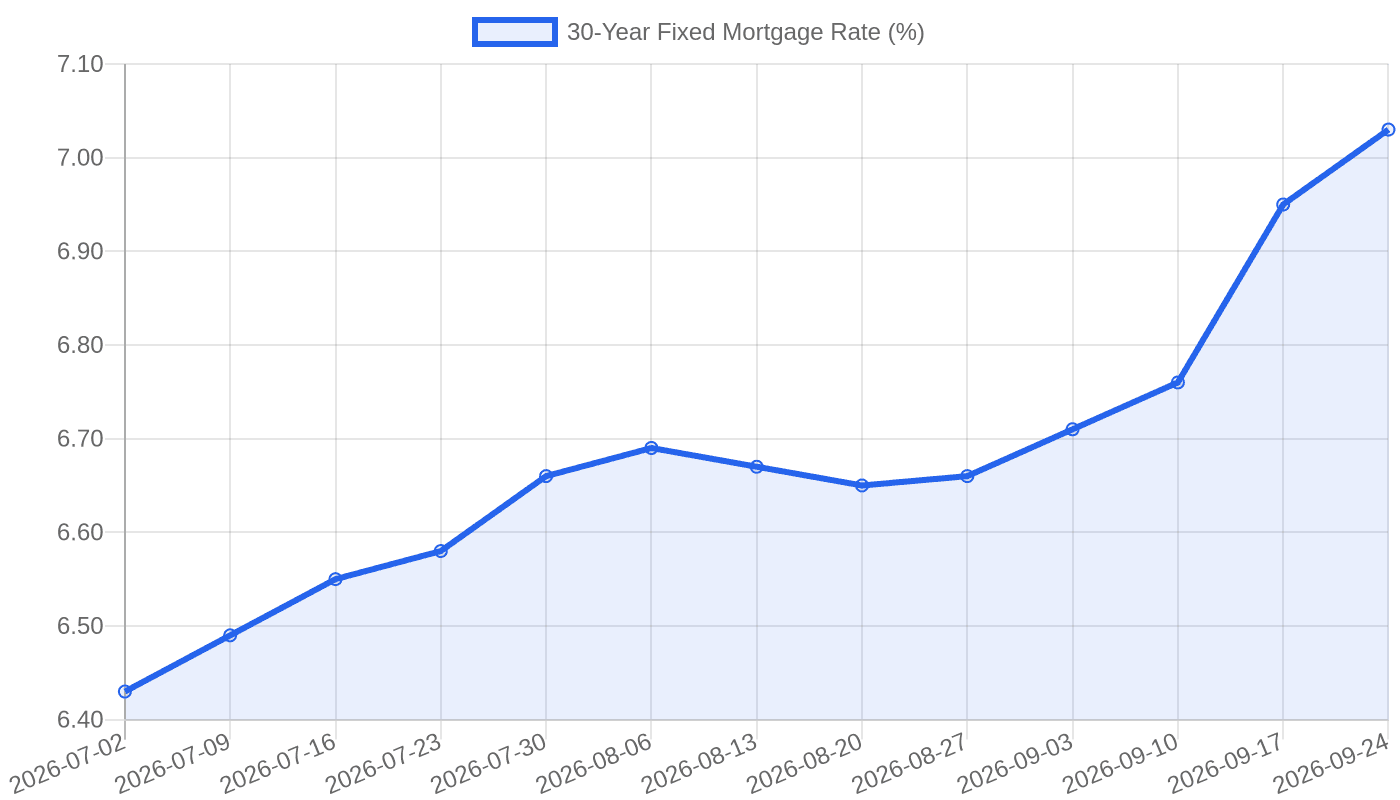
That trend matters for two reasons.
First, higher rates mean higher carrying costs on any loan tied to prime or market rates. Second, higher rates cool buyer demand, which can stretch your timeline.
The days-on-market factor
Homes sat on the market a median of 60 days as of August 1, 2026 — up from a low of 52 days in April and May.
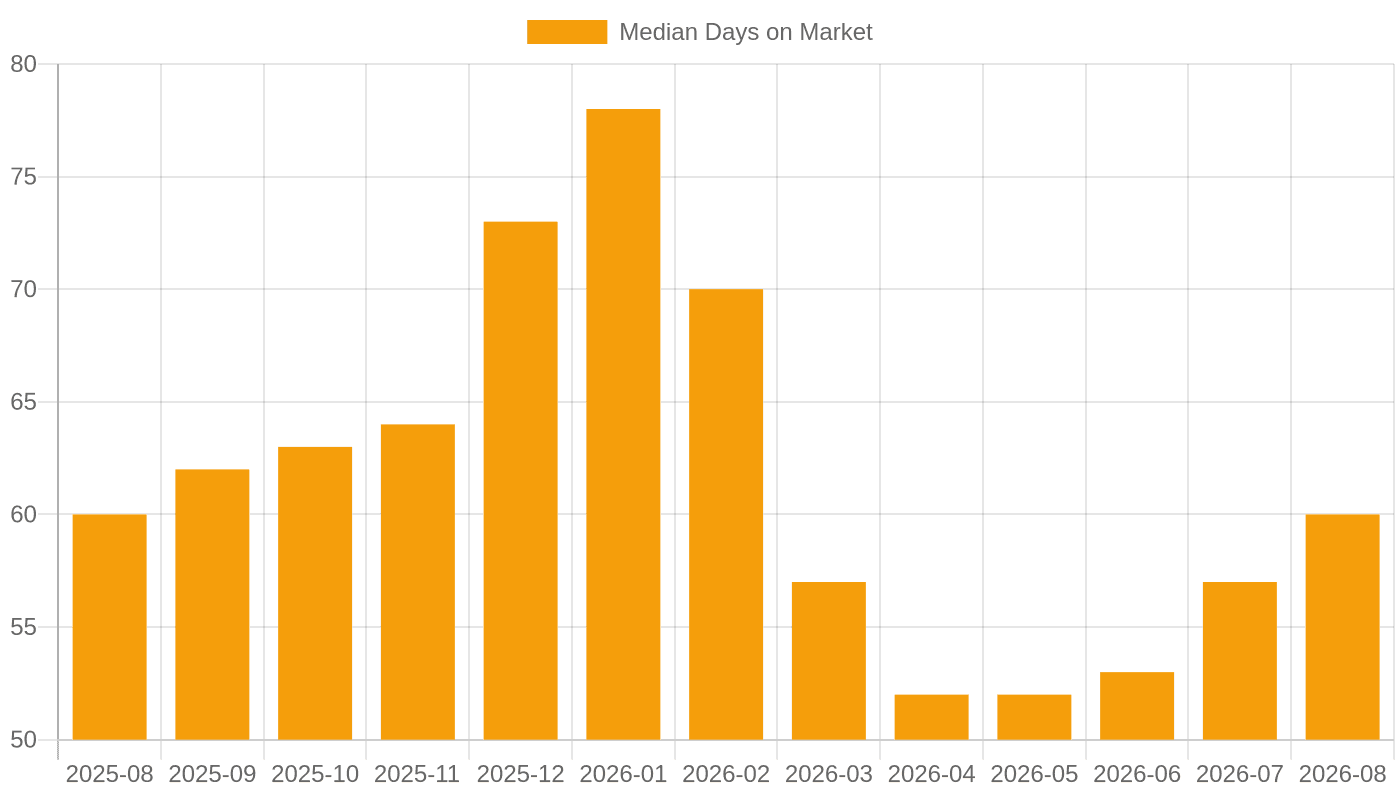
Every extra day on market is another day of interest, taxes, insurance, and utilities. If your ARV loan carries a 12% rate and you're holding a $287,000 balance, each month costs you roughly $2,870 in interest alone.
Sixty days of holding instead of thirty is real money.
The price stability factor
The median U.S. home sale price was $410,700 as of April 1, 2026, down slightly from $418,500 three years earlier.
Prices have been remarkably flat. That's good news for ARV accuracy — your comps aren't moving as fast — but it also means you can't count on appreciation to bail out a bad deal.
How do lenders calculate after repair value?
Lenders calculate after repair value using a subject-to appraisal, comparable sales analysis, and their own risk adjustments — not your estimate.
You can run your own ARV numbers, and you should. But the lender's number is the one that counts.
The subject-to appraisal
A subject-to appraisal values the property as if the planned repairs were already done. The appraiser looks at:
- Recent sales of similar renovated homes nearby
- The scope of work you've described
- Local market conditions and absorption rates
- Adjustments for differences between your property and the comps
If your scope of work is vague, the appraiser guesses. Vague scopes produce conservative ARVs, which shrink your loan.
Comparable sales selection
Appraisers pick comps that are similar in size, age, location, and condition. The tricky part is condition.
Your comp needs to be a renovated home, not a distressed one. If the only recent sales nearby are other fixers, the appraiser has to reach further out or further back in time — and that weakens the ARV.
Lender risk adjustments
Even after the appraisal, lenders apply their own haircuts. They might:
- Cap ARV at the lower end of the appraisal range
- Reduce the ARV if the market is softening
- Require a larger down payment for unusual properties
This is normal. It's not personal. It's how they protect themselves.
What are the typical terms on an ARV loan?
Typical ARV loan terms include a short duration (usually 6 to 18 months), a higher interest rate than conventional financing, and points paid at closing.
Here's what to expect:
| Feature | Typical Range |
|---|---|
| Loan term | 6–18 months |
| Interest rate | Higher than conventional |
| Points at closing | 1–3 points |
| ARV cap (LTV) | 65%–75% |
| Rehab funding | Draw-based |
| Prepayment penalty | Sometimes |
Interest rates
ARV loan rates run higher than conventional mortgages because the lender is taking more risk. You're borrowing against a future value that doesn't exist yet.
Compare that to the 30-year fixed rate of 7.03% as of September 24, 2026. ARV loans typically price well above that.
Points and fees
Points are upfront fees calculated as a percentage of the loan. One point on a $287,000 loan is $2,870.
Add appraisal fees, origination fees, and closing costs, and your total cost of borrowing climbs fast. Budget for it.
Draw schedules
Rehab funds are usually released in draws as work is completed. You pay for materials and labor upfront, then get reimbursed after an inspection.
This means you need cash reserves. The loan funds the project, but it doesn't front the money.
How do you qualify for an after repair value loan?
You qualify for an ARV loan by showing a strong deal, a realistic rehab budget, and enough reserves to carry the project — not by having perfect credit.
That said, credit still matters. Here's what lenders look at:
- Experience — Have you completed flips before? First-timers often pay more.
- Credit score — Many lenders want 620 or higher, though some go lower.
- Liquidity — Can you cover holding costs and unexpected overruns?
- Deal quality — Does the ARV hold up? Is the margin real?
- Exit strategy — How will you pay the loan back?
Experience requirements
If you've never flipped a house, expect stricter terms. Some lenders require at least one completed project. Others will work with beginners but charge more.
Credit and liquidity
Credit score matters less than you'd think, but it's not irrelevant. A score below 620 narrows your options.
Liquidity matters more. Lenders want to see reserves — often 10% to 20% of the project cost — sitting in an account.
Exit strategy
Every ARV loan needs a clear exit. Either you sell the finished home or you refinance into a long-term loan.
If you plan to refinance, watch rates. At 7.03%, a refinance into a conventional loan is expensive. Make sure your numbers still work.
What are the risks of an after repair value loan?
The main risks of an ARV loan are an inflated ARV estimate, rehab cost overruns, and a slow sale that stretches your holding period.
Let's break each one down.
Overestimating ARV
If you think the house will be worth $410,000 but the appraisal comes back at $380,000, your loan shrinks. You need more cash to close.
This is the most common way ARV deals fall apart. Be conservative with your comps.
Rehab overruns
Contractors run late. Materials cost more than quoted. Surprises hide behind walls.
Every flip needs a contingency — usually 10% to 15% of the rehab budget. If your budget is $45,000, hold back $4,500 to $6,750 for surprises.
Slow sales
With homes sitting a median of 60 days as of August 1, 2026, your exit timeline needs padding. If you assumed 30 days to sell and it takes 60, that's an extra month of interest.
Rate risk on refinance
If your exit is a refinance, you're exposed to rate movements. The 30-year fixed rate rose from 6.43% in early July 2026 to 7.03% by late September.
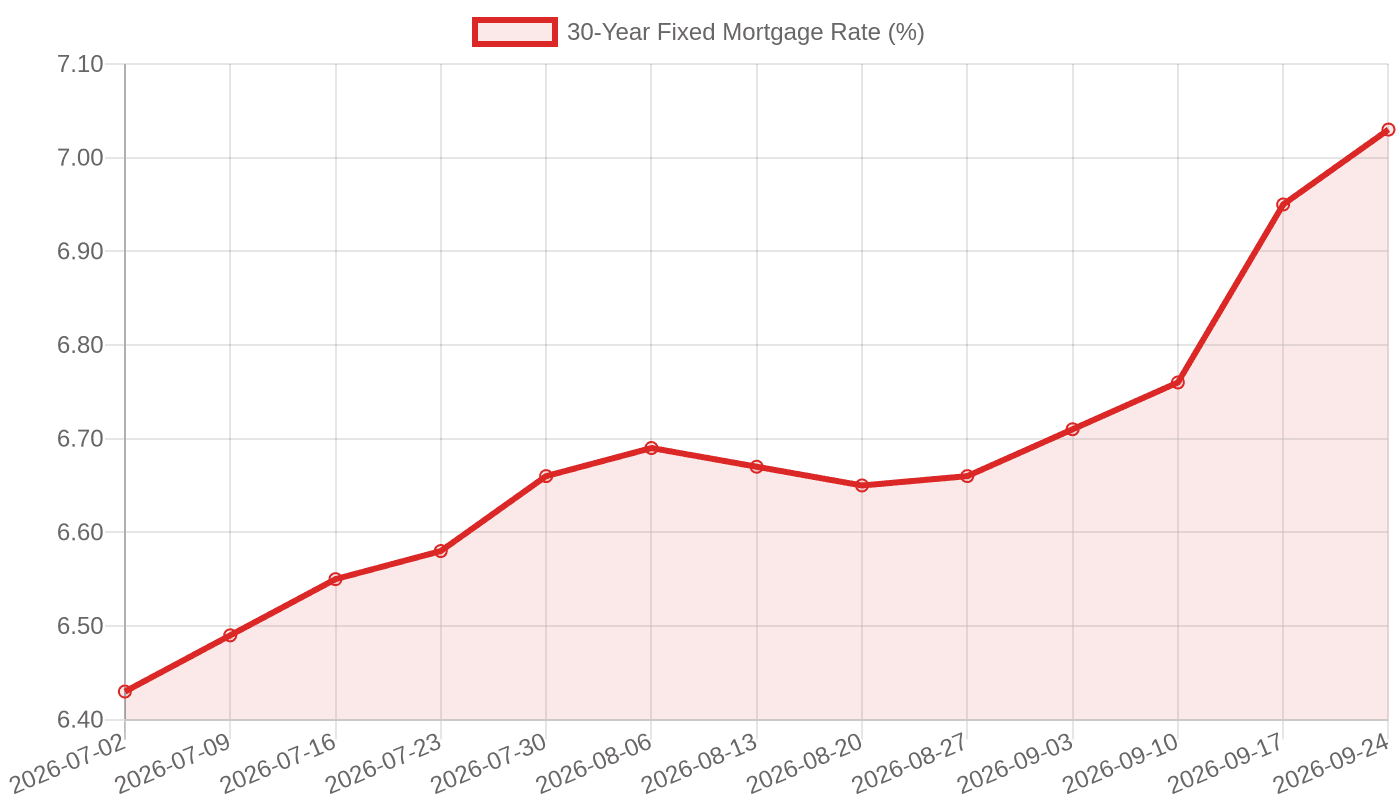
That's a meaningful jump in a single quarter. If you're planning to refinance, build a buffer into your numbers.
How do ARV loans compare to other financing options?
ARV loans sit between hard money and conventional financing — more flexible than a bank, more structured than a private loan.
Here's how the main options stack up:
| Loan Type | Based On | Term | Best For |
|---|---|---|---|
| ARV loan | Future value | 6–18 months | Fix and flips |
| Hard money | As-is value | 6–24 months | Distressed properties |
| Conventional | Current value | 15–30 years | Owner-occupants |
| Private money | Deal-specific | Varies | Flexible situations |
| HELOC | Home equity | 5–10 years | Existing homeowners |
When an ARV loan makes sense
An ARV loan makes sense when the property needs significant work and you need financing that reflects the finished value.
If the house is move-in ready, you don't need an ARV loan. If it needs $50,000 in work, you probably do.
When it doesn't
Skip the ARV loan if:
- The property is already in good condition
- Your ARV margin is too thin to absorb surprises
- You can't cover holding costs and draws out of pocket
How do you find and vet ARV lenders?
You find ARV lenders by asking specifically about their loan sizing method, then comparing terms across at least three options.
Don't just ask "do you do hard money?" Ask "how do you calculate the loan amount?"
Questions to ask every lender
- What's your maximum LTV against ARV?
- How do you handle rehab draws?
- What are your points and fees?
- Is there a prepayment penalty?
- How long does closing take?
- What's your minimum credit score?
- Do you require reserves?
Red flags
- Vague answers about ARV calculation
- Pressure to close before you've run your numbers
- Fees that appear late in the process
- No clear draw schedule
Using software to compare and track deals
This is where good tools earn their keep. The Wholesale REI directory tracks 65 software tools across 9 categories — everything from comp analysis to CRM to dialers.
If you're running multiple ARV deals, you need systems for:
- Pulling comps and estimating ARV
- Tracking rehab budgets and draws
- Managing lender and contractor communication
- Following up with buyers and sellers
Tools like PropStream and ATTOM Data help with comps and property data. GoHighLevel and Launch Control handle CRM and marketing. CallTools and TeleVista cover outreach.
What mistakes do new investors make with ARV loans?
New investors make three big mistakes with ARV loans: they trust their own ARV too much, they underestimate holding costs, and they forget the loan has to be repaid.
Let's fix all three.
Mistake 1: Trusting your own ARV
Your ARV estimate is a guess until an appraiser confirms it. Build your deal on the conservative end of your comp range.
If comps suggest $400,000 to $420,000, run your numbers at $400,000.
Mistake 2: Ignoring holding costs
Every month you hold the property costs money. Interest, taxes, insurance, utilities, lawn care, security.
At 60 days median days on market, you're looking at two months minimum after listing. Add your rehab timeline. Add a buffer.
Mistake 3: Forgetting the payoff
An ARV loan is temporary. It has to be repaid — either through a sale or a refinance.
If neither exit works, you're stuck with a short-term loan and no way out. Plan both exits before you close.
The Bottom Line
An after repair value loan lets you borrow against what a property will be worth, not what it is today — which is exactly what you need for a fix-and-flip. The catch is that everything depends on your ARV being accurate and your exit being realistic.
Before you sign anything, run your numbers conservatively, compare at least three lenders, and check the tools that help you estimate ARV and track your deal. Start by browsing the software directory to find comp analysis and deal-tracking tools that fit how you work.
Frequently Asked Questions
What does after repair value mean?
After repair value (ARV) is what a property will be worth once all planned renovations are complete. Lenders use it to size ARV loans, and investors use it to decide whether a deal is worth pursuing.
How is an ARV loan different from a hard money loan?
A hard money loan describes the lender type — a private lender focused on the deal rather than your credit score. An ARV loan describes the loan sizing method, where the amount is based on the property's future value. Many hard money lenders offer ARV-based products, but not all do.
What credit score do you need for an ARV loan?
Many ARV lenders want a credit score of 620 or higher, though some will go lower. Experience and liquidity often matter more than a perfect score, especially for investors with a track record.
How much can you borrow with an ARV loan?
Most ARV lenders cap the total loan at 65% to 75% of the after-repair value. That cap has to cover both your purchase price and your rehab budget, so the exact amount depends on the deal.
What happens if the appraisal comes in lower than your ARV estimate?
A lower appraisal shrinks your maximum loan, which means you need more cash to close the gap. This is the most common reason ARV deals fall apart, so it pays to run your numbers on the conservative end of your comp range.
How long do ARV loans usually last?
Most ARV loans run 6 to 18 months. They're designed to be repaid through a sale or a refinance once the project is finished, not held long term.
Sources
- Software tools tracked in the Wholesale REI directory — Wholesale REI directory
- Tool categories in the Wholesale REI directory — Wholesale REI directory
- 30-Year Fixed Mortgage Rate (as of 2026-09-24) — FRED (Federal Reserve Bank of St. Louis)
- Median Sales Price of Houses Sold (as of 2026-04-01) — FRED (Federal Reserve Bank of St. Louis)
- Median Days on Market (as of 2026-08-01) — FRED (Federal Reserve Bank of St. Louis)
This article was researched and drafted with AI assistance, then reviewed and edited by Mark Anthony. Every statistic is sourced and cited. It's for informational purposes only and is not financial or legal advice. Read our editorial policy.