Free After Repair Value Calculator: How to Run ARV Numbers That Hold Up


You found a house with good bones and bad carpet, and now you need one number before you can make an offer: the after repair value. Get it wrong and you either leave money on the table or lock up a deal nobody will buy.
Key Takeaways
- ARV is what a property will sell for after repairs, based on recent sales of similar fixed-up homes.
- A free after repair value calculator gives you a fast estimate, but the comps you feed it decide whether the number is real.
- The national median sales price of houses sold was $410,700 as of 2026-04-01, a useful sanity check on your local ARV.
- The 30-year fixed mortgage rate hit 6.95% as of 2026-09-17, which raises buyer payments and can soften what your end buyer will pay.
- Median days on market sat at 60 as of 2026-08-01, so build a holding cushion into every ARV-based offer.
What Is an After Repair Value (ARV) Calculator?
An after repair value calculator is a tool that estimates what a property will sell for once it is fully repaired, using recent sales of similar homes in the same area. You enter the address, the bed and bath count, square footage, and condition, and the tool returns a dollar figure.
That figure is the anchor for everything else in a wholesale deal. Your offer, your assignment fee, and your end buyer's profit all flow from ARV.
Why ARV Matters More Than Almost Any Other Number
ARV sets the ceiling on the whole deal. If your ARV is too high, you overpay, and no cash buyer will take the contract off your hands.
If your ARV is too low, you insult the seller and lose the deal to someone else. The margin for error is thin.
Free Calculator vs. Paid Data Platforms
A free after repair value calculator is perfect for quick screening. You can run ten addresses in ten minutes and spot the ones worth a deeper look.
Paid platforms pull county records, MLS history, and foreclosure data in bulk. They are built for volume, not for one-off curiosity.
How Do You Calculate ARV Step by Step?
You calculate ARV by finding three to five recent sales of repaired homes that closely match your subject property, then averaging their price per square foot and applying it to your subject. That is the short version. Here is the full process.
Step 1: Pull the Right Comps
A comp is a comparable sale. It should be the same property type, within roughly a mile in a dense market or a few miles in a rural one, and sold in the last three to six months.
Aim for homes within 20% of your subject's square footage and the same bed and bath count. Three to five solid comps beat ten sloppy ones.
Step 2: Adjust for Differences
No two houses are identical, so you adjust. Add value for an extra bathroom or a garage. Subtract for a busy road or a smaller lot.
Most investors use simple rules of thumb, like $5,000 to $10,000 per bathroom. Keep your adjustments consistent so your ARV stays honest.
Step 3: Calculate Price Per Square Foot
Divide each comp's sale price by its square footage. Then average those numbers.
Say your three comps came in at $180, $190, and $200 per square foot. Your average is $190. Multiply that by your subject's 1,500 square feet, and your ARV is $285,000.
Step 4: Sanity-Check Against the Market
Zoom out. The national median sales price of houses sold was $410,700 as of 2026-04-01, so a $285,000 ARV in a mid-tier neighborhood is plausible, while the same number in a luxury zip code should make you pause.
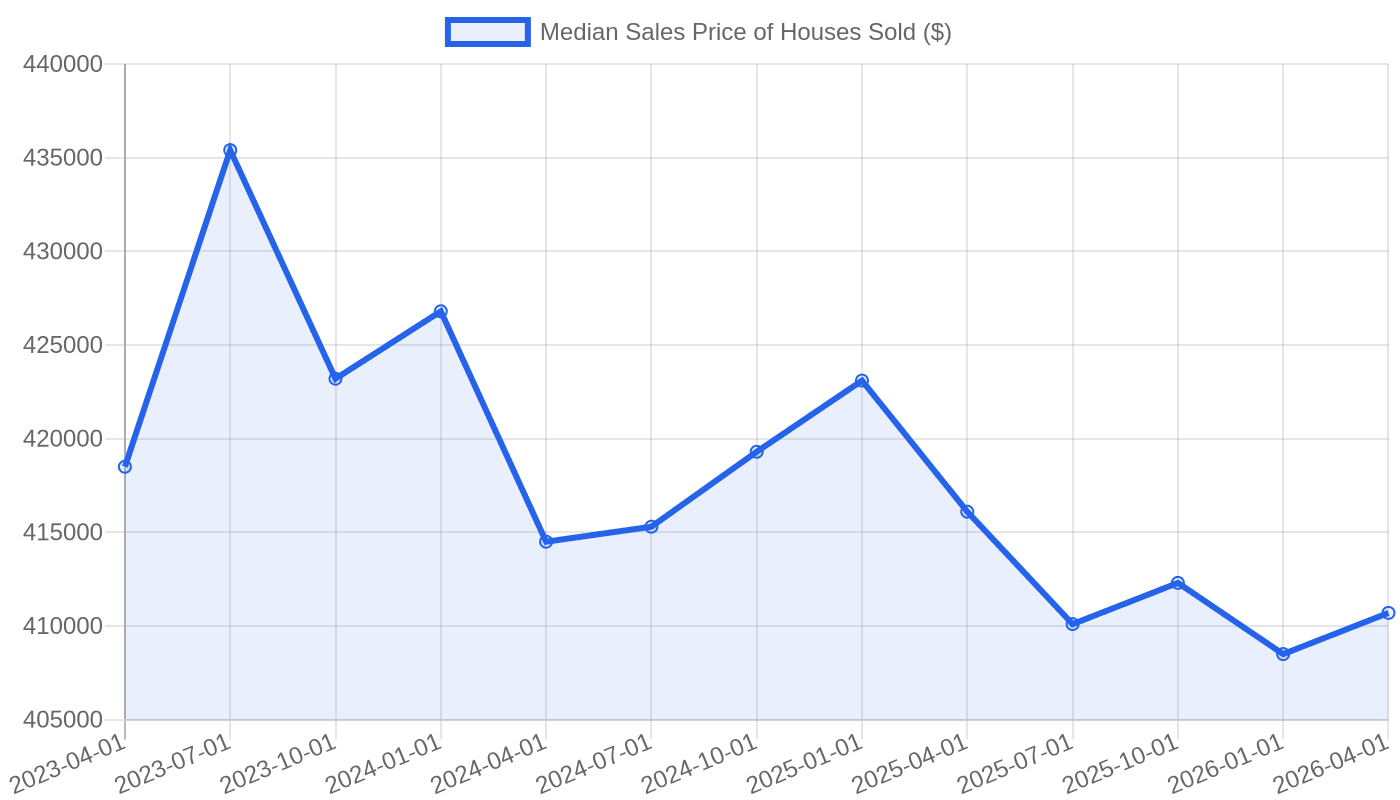
This national trend line is not your ARV. It is a gut check that tells you whether prices are drifting up, flat, or down while you negotiate.
Step 5: Run It Through a Free Calculator
Now plug your numbers into a free after repair value calculator. Compare its output to your hand calculation.
If the two are close, you can move forward with confidence. If they are far apart, dig into why before you make an offer.
What Is the ARV Formula Wholesalers Actually Use?
The ARV formula wholesalers use is ARV x 70% - repair costs = maximum allowable offer, often shortened to MAO. That 70% rule gives you room for closing costs, holding costs, and profit.
Here is how it looks with real numbers. Suppose your ARV is $285,000 and repairs will run $45,000.
- $285,000 x 0.70 = $199,500
- $199,500 - $45,000 = $154,500 maximum allowable offer
That $154,500 is your ceiling, not your opening bid. You still want to negotiate below it so your assignment fee has room to breathe.
Where the 70% Rule Comes From
The 70% rule is a shortcut for the flip math your end buyer will run. They need to buy at a discount, fix the place up, and still sell for a profit after fees.
In slower markets, buyers push for 65% or lower. In hot markets, 75% can still work.
Adjusting the Rule for Today's Market
Mortgage rates shape what your end buyer can pay. The 30-year fixed mortgage rate reached 6.95% as of 2026-09-17, up from 6.49% in late June 2026.
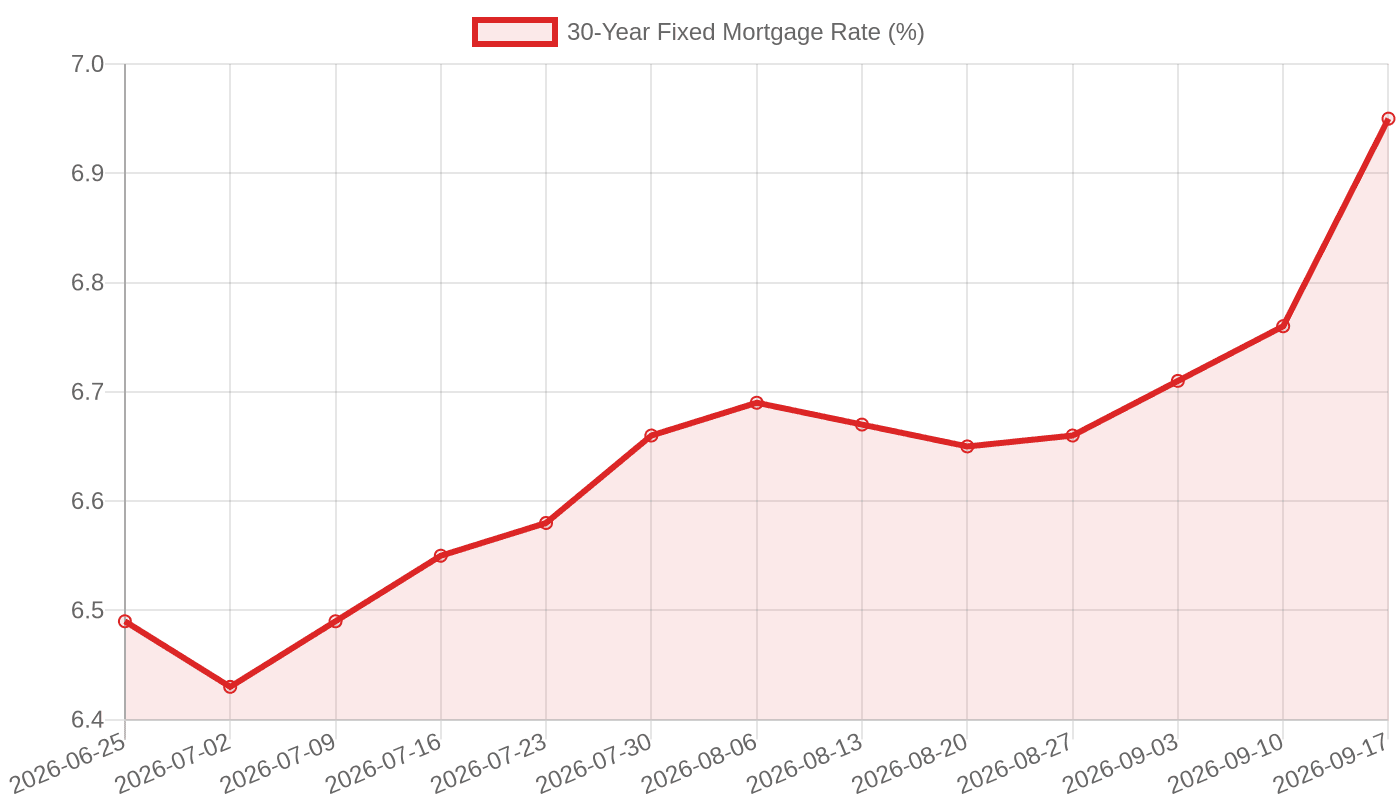
When rates climb, buyer purchasing power drops, and your ARV assumptions need to reflect that. A deal that penciled at 6.5% may not pencil at 6.95%.
How Do You Pick Comps That Hold Up?
You pick comps by matching location, size, age, and condition, then favoring the most recent sales. The closer your comps mirror the repaired version of your subject, the more reliable your ARV.
The Comp Checklist
Run every candidate comp through this list before you trust it.
- Same property type: single-family to single-family, not condo to house.
- Similar square footage: within about 20% of your subject.
- Same bed and bath count: a 3/2 comp for a 3/2 subject.
- Recent sale: ideally within three to six months.
- Close proximity: same subdivision or within a mile or two.
- Repaired condition: a fixer comp drags your ARV down unfairly.
Red Flags in Your Comp Set
Watch for foreclosure sales, family transfers, and listings that sat for a year. Those prices do not reflect a normal open-market sale.
If a comp is an outlier, either drop it or adjust it with a clear reason. Never average in a number you cannot defend.
What Does a Free After Repair Value Calculator Get Right and Wrong?
A free after repair value calculator gets speed and consistency right, and gets condition and hyper-local nuance wrong. Understanding both sides keeps you out of trouble.
What It Gets Right
- Speed: instant estimates for screening many addresses.
- Consistency: the same inputs always produce the same output.
- Baseline math: price per square foot without a spreadsheet.
What It Gets Wrong
- Condition: it cannot see that the roof is shot or the kitchen is original.
- Micro-location: a busy street versus a cul-de-sac changes value.
- Timing: it may lean on older sales in a shifting market.
Treat the calculator as a first pass, not a final answer. Your own comp review is what makes the number trustworthy.
How Do Market Conditions Change Your ARV?
Market conditions change ARV by shifting how fast homes sell and how much buyers will pay. Two numbers tell the story: days on market and mortgage rates.
Median days on market was 60 as of 2026-08-01. That is a moderate pace, meaning homes sell, but not overnight.
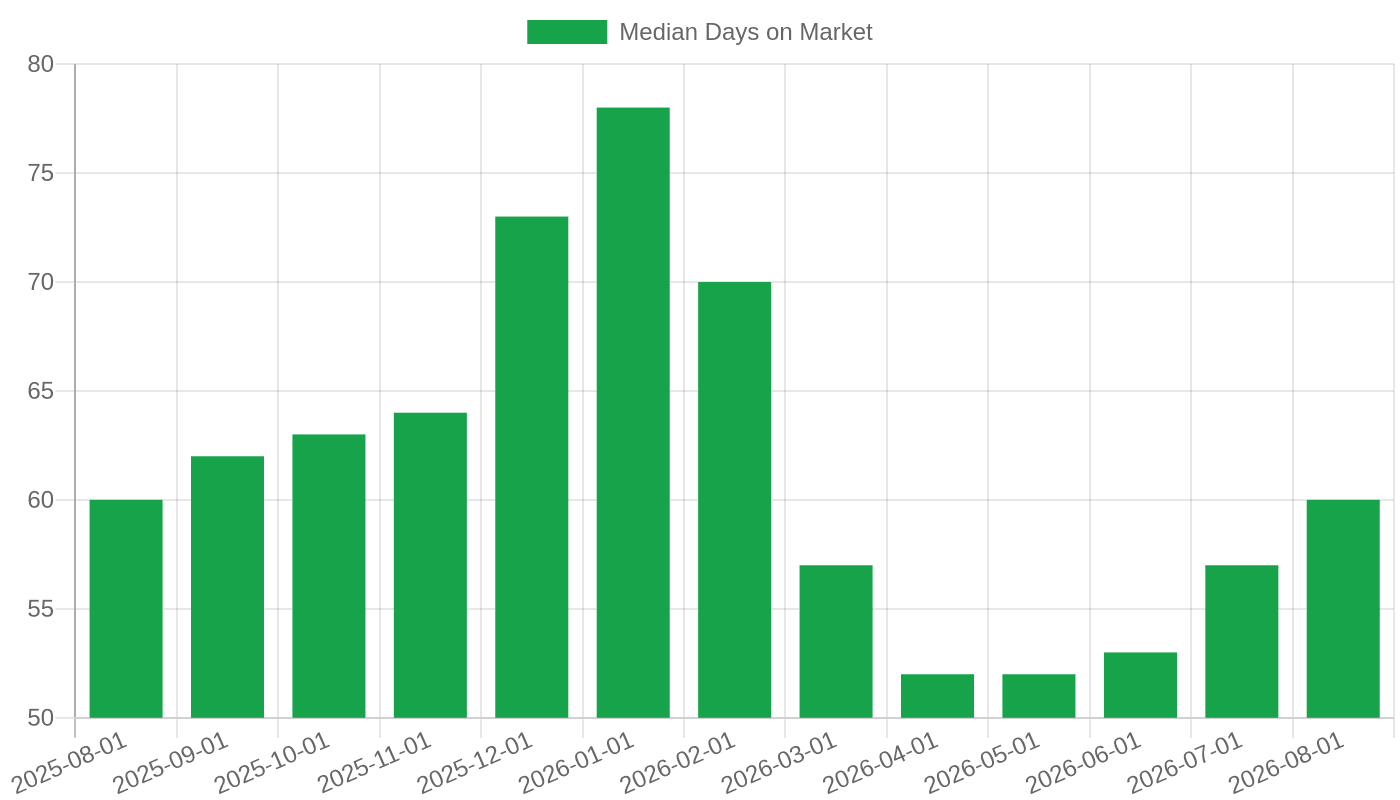
Notice how days on market swung from 78 in January 2026 down to 52 in April and May, then back to 60 by August. That volatility is your signal to build a longer holding cushion into your offer.
Why Days on Market Matters to Wholesalers
Every extra day a repaired home sits unsold costs your end buyer money in taxes, insurance, and loan interest. They price that risk into what they will pay you.
When days on market stretch out, your effective ARV drops even if the comps have not moved yet.
Why Mortgage Rates Matter Too
Higher rates shrink the pool of qualified buyers. Fewer buyers means less competition and softer prices.
With the 30-year fixed at 6.95% as of 2026-09-17, be conservative. Assume your end buyer will want a bigger discount, not a smaller one.
Free Calculator vs. Paid Tool: Which Should You Use?
Use a free after repair value calculator for screening and a paid data platform for volume and depth. Most wholesalers end up using both.
| Feature | Free ARV Calculator | Paid Data Platform |
|---|---|---|
| Cost | $0 | Monthly subscription |
| Best for | Quick screening, single deals | Bulk analysis, lead lists |
| Comp depth | Limited | Deep, with MLS and county data |
| Condition adjustments | Manual | Often built in |
| Speed per address | Fast | Fast, at scale |
When Free Is Enough
If you are analyzing one or two deals a week, a free calculator plus your own comp review is plenty. You do not need to pay for volume you will not use.
When to Upgrade
If you are pulling dozens of leads a day, a paid platform pays for itself. It saves hours of manual comp hunting and keeps your ARV consistent across a team.
The Wholesale REI directory tracks 65 software tools across 9 categories, so you can compare options without guessing.
Common ARV Mistakes That Kill Deals
Common ARV mistakes include using fixer comps, ignoring condition, and rounding up to make a deal work. Each one quietly destroys your margin.
Mistake 1: Using the Wrong Comps
Pulling comps from a nicer neighborhood inflates your ARV and your offer. Your end buyer will spot it and walk.
Mistake 2: Skipping the Repair Estimate
ARV without a repair number is half a deal. A $45,000 rehab and a $90,000 rehab produce very different offers on the same ARV.
Mistake 3: Forgetting Closing and Holding Costs
Taxes, insurance, utilities, and loan interest add up fast. The 70% rule bakes some of this in, but not all of it.
Mistake 4: Trusting One Calculator
No single tool is right every time. Cross-check your free calculator against your own comp math before you commit.
How Do You Turn ARV Into an Offer?
You turn ARV into an offer by subtracting repairs and your profit target from the ARV, then negotiating from there. The math is simple; the discipline is not.
The Offer Walkthrough
Start with your ARV of $285,000. Apply the 70% rule to get $199,500. Subtract $45,000 in repairs to land at a $154,500 maximum offer.
Now decide your assignment fee. If you want $10,000, you need to contract below $144,500 to leave room for your buyer.
Presenting the Number to a Seller
Sellers hear "ARV" and think retail price. Explain that your offer reflects repairs, holding costs, and profit, and that you close fast with no agent commissions.
Show your math. Transparency builds trust and keeps the conversation moving.
The Bottom Line
A free after repair value calculator gives you a fast starting point, but your comps and your repair estimate decide whether the number holds up. Run the ARV formula, sanity-check it against national trends, and stay conservative when rates and days on market are working against you.
Your next step: compare the top ARV and comp tools in the directory, then practice pitching your offer out loud with our free AI Cold Call Trainer. It takes no signup to start, and a few reps will make your seller conversations sharper.
Frequently Asked Questions
What is a free after repair value calculator?
It is a tool that estimates what a property will sell for after repairs, using recent sales of similar fixed-up homes. Free versions are great for quick screening, but you should still review the comps yourself before making an offer.
How do I calculate ARV without a calculator?
Find three to five recent sales of repaired homes that match your subject, average their price per square foot, then multiply that by your subject's square footage. Adjust for differences like an extra bathroom or a smaller lot.
What is the 70% rule in wholesaling?
The 70% rule says your maximum allowable offer equals ARV times 70%, minus repair costs. It leaves room for closing costs, holding costs, and profit for you and your end buyer.
How accurate are free ARV calculators?
They are accurate on price per square foot but weak on condition and hyper-local details like a busy street. Use them as a first pass, then verify with your own comp review.
Do mortgage rates affect ARV?
Yes. Higher rates shrink buyer purchasing power, which can soften what your end buyer will pay. With the 30-year fixed at 6.95% as of 2026-09-17, stay conservative on your ARV assumptions.
How many comps do I need for a reliable ARV?
Three to five strong comps are usually enough. They should match your subject on property type, size, bed and bath count, location, and repaired condition, and should have sold within the last three to six months.
Sources
- Software tools tracked in the Wholesale REI directory — Wholesale REI directory
- Tool categories in the Wholesale REI directory — Wholesale REI directory
- Median Sales Price of Houses Sold (as of 2026-04-01) — FRED (Federal Reserve Bank of St. Louis)
- 30-Year Fixed Mortgage Rate (as of 2026-09-17) — FRED (Federal Reserve Bank of St. Louis)
- Median Days on Market (as of 2026-08-01) — FRED (Federal Reserve Bank of St. Louis)
This article was researched and drafted with AI assistance, then reviewed and edited by Mark Anthony. Every statistic is sourced and cited. It's for informational purposes only and is not financial or legal advice. Read our editorial policy.