Run Comps in 5 Minutes: A Wholesaler’s Shortcut


If you're wholesaling houses, your entire deal lives or dies on one number: the after-repair value (ARV). And that number comes from one place — real estate comps. Run them wrong, and you either lose the deal or buy a property you can't sell. Here's exactly how to run comps that protect your spread.
Key Takeaways
- Real estate comps are recently sold properties similar to your subject property, used to estimate its market value.
- The national median sales price is $403,200 (as of Jan 2026), but your comps must be hyper-local — within 0.5–1 mile and sold in the last 3–6 months.
- Adjust for differences: add or subtract value for square footage, bedrooms, bathrooms, condition, and lot size.
- Use the 70% rule: max offer = (ARV × 0.70) – repair costs. This ensures your wholesale fee stays intact.
- Days on market affects pricing — a property sitting 73 days (Dec 2025) may need a bigger discount than one selling in 53 days (June 2026).
What Are Real Estate Comps?
Real estate comps (short for comparables) are recently sold properties that are similar to the property you're evaluating. They are the backbone of any valuation in wholesaling. Without accurate comps, you're guessing — and guessing loses money.
Comps tell you what a buyer will likely pay for a house after repairs. That's your ARV. From there, you back into your max allowable offer (MAO) and your wholesale fee.
How Do You Find Real Estate Comps for Wholesaling?
You find comps by searching for closed sales (not active listings) of properties similar to your subject. The key filters:
- Location: within 0.5 miles in dense suburbs, up to 1 mile in rural areas.
- Time frame: sold within the last 3–6 months. In a fast-moving market, use 3 months; in slower markets, stretch to 6.
- Property type: single-family comps for single-family, condo comps for condo.
- Size: within 20% of the subject's square footage.
- Bedrooms/bathrooms: same or within one.
- Condition: look for homes in similar or recently renovated condition (your ARV comps should be renovated homes).
Where to Pull Comps
- MLS access (via a realtor friend or paid service) — most accurate.
- PropStream — popular with wholesalers, pulls from public records.
- ATTOM Data — deep nationwide property data.
- County assessor websites — free but clunky.
- Zillow / Redfin — use for quick checks, but verify with public records.
Our directory tracks 63 software tools across 9 categories to help you find and analyze comps faster.
How to Calculate ARV Using Comps
ARV = the price a renovated home would sell for. To calculate it:
- Find 3–5 closed comps of renovated homes in the immediate area.
- Note their sale prices, square footage, beds, baths, and days on market.
- Adjust each comp for differences from your subject.
- Average the adjusted prices.
Example Adjustment Table
| Feature | Subject | Comp 1 | Adjustment |
|---|---|---|---|
| Sq Ft | 1,500 | 1,400 | +$5,000 (for extra 100 sq ft) |
| Bedrooms | 3 | 3 | $0 |
| Baths | 2 | 1.5 | +$3,000 |
| Garage | None | 2-car | -$8,000 |
| Condition | Good | Excellent | -$10,000 |
| Adjusted Price | $280,000 |
Repeat for each comp, then average. That average is your ARV.
The 70% Rule: Your Safety Net
Once you have ARV, apply the 70% rule:
Max Offer = (ARV × 0.70) – Repair Costs
This leaves a 30% margin for your profit, the buyer's profit, closing costs, holding costs, and unexpected surprises. If ARV is $300,000 and repairs are $50,000, your max offer is ($300,000 × 0.70) – $50,000 = $160,000. Your wholesale fee comes out of that spread.
Why Days on Market Matters for Comps
Days on market (DOM) tells you how hot the market is. When DOM is low, homes sell fast and prices are firmer. When DOM is high, sellers may accept lower offers.
As of June 2026, the national median days on market is 53 days — down from a peak of 78 days in January 2026. That means the market is heating up again. But in slower months (Dec 2025: 73 days), you could negotiate harder.
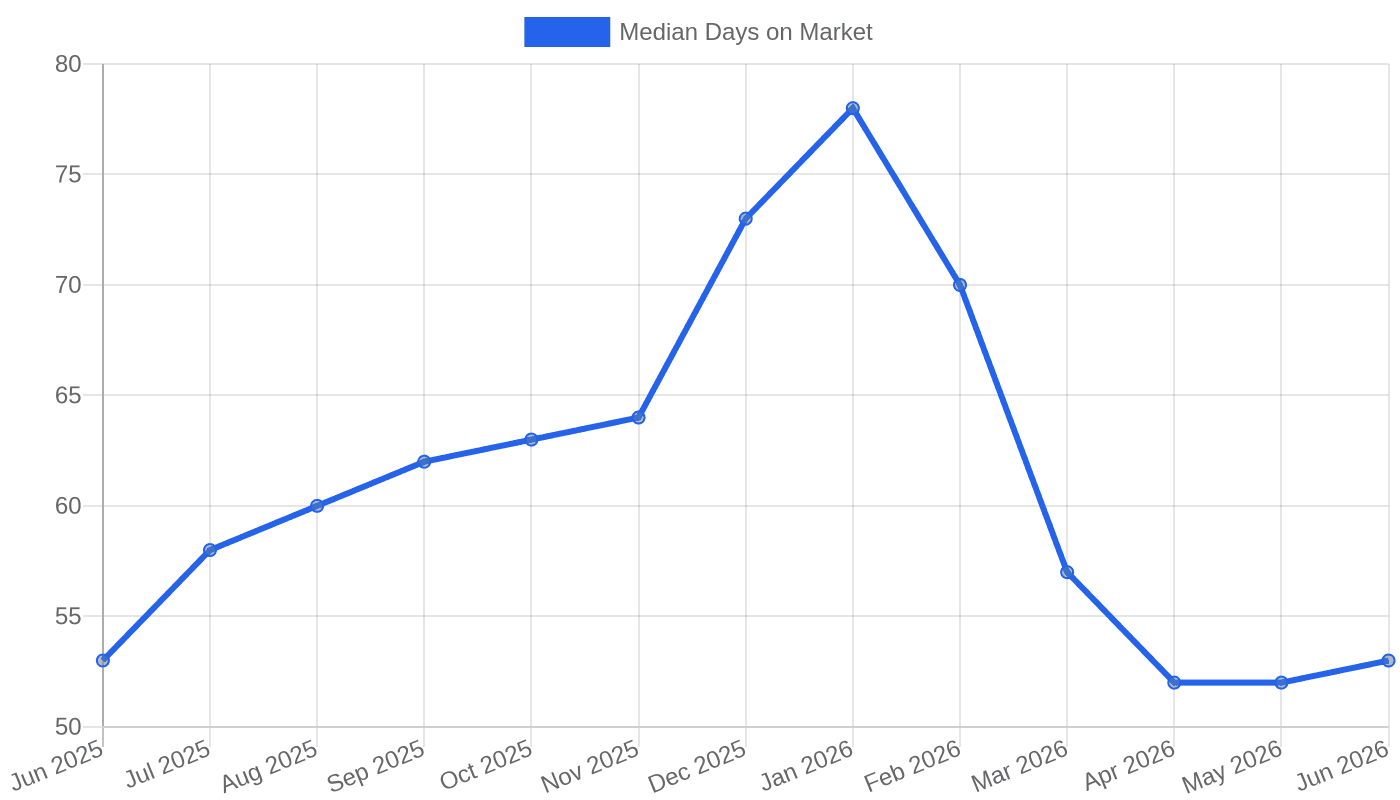
Always check the DOM of your comps. If a comp sat for 90+ days, it may have sold below market — don't use it as a primary comp.
How to Adjust Comps for Market Conditions
The national median sales price has been trending down. As of January 2026, it's $403,200 — down from $429,000 in January 2023.
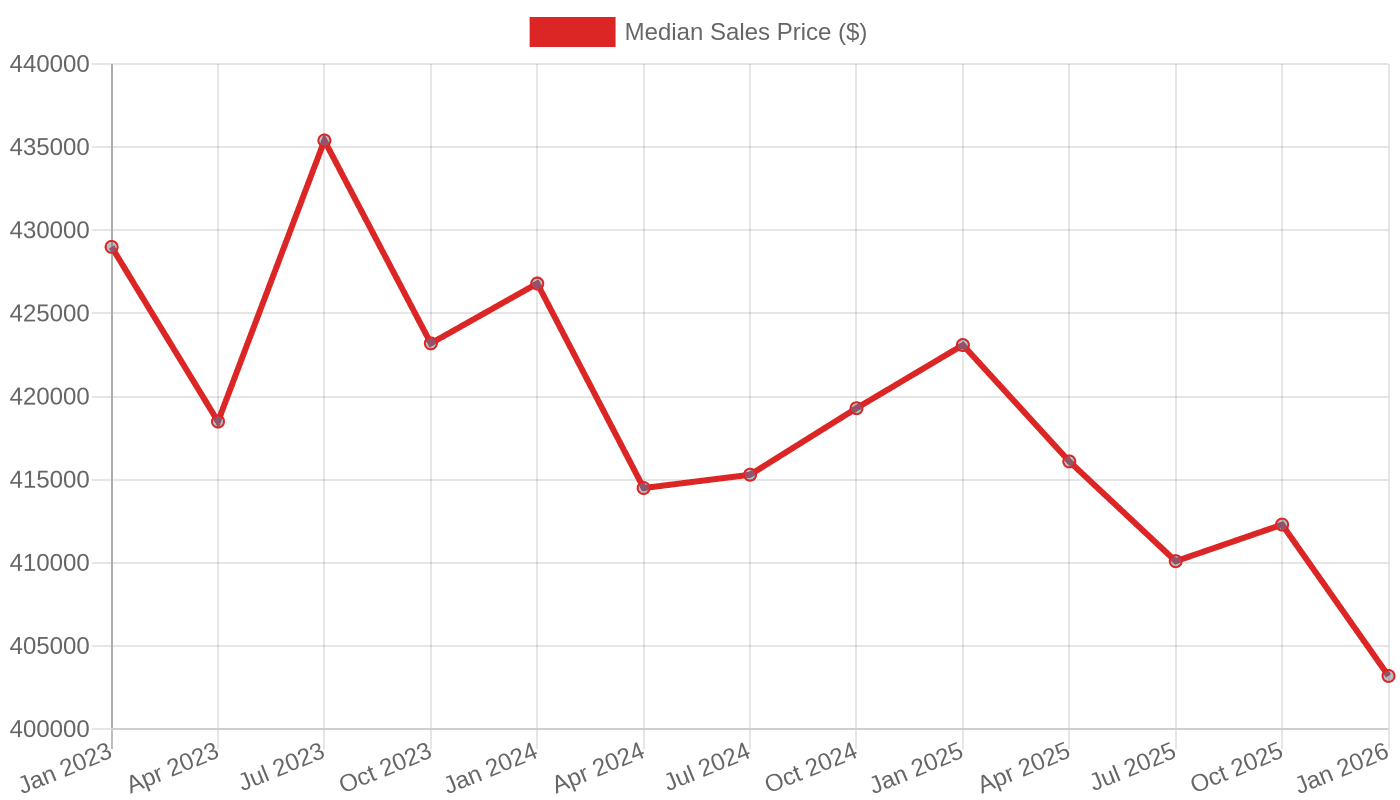
This means you need to weight recent comps more heavily. A comp from 6 months ago may be less relevant if prices are falling. Use a time adjustment: if prices dropped 2% in your area over 6 months, reduce older comps by 2%.
Common Mistakes When Running Comps
- Using active listings — those are asking prices, not sold prices. Always use closed sales.
- Ignoring condition — a comp that's fully renovated will sell for more than your subject. Adjust down.
- Going too far — a comp 2 miles away in a different neighborhood is useless.
- Forgetting to adjust — every difference matters. Square footage, lot size, garage, pool, etc.
- Relying on one comp — use at least 3, preferably 5.
Best Tools for Running Real Estate Comps as a Wholesaler
Our directory lists 63 tools across 9 categories. Here are the top ones for comps:
| Tool | Best For | Key Feature |
|---|---|---|
| PropStream | Nationwide comps | Skip tracing + comps in one platform |
| ATTOM Data | Bulk data & analytics | 150+ property attributes |
| GoHighLevel | CRM + comps integration | Automate comp reports for leads |
| CallTools | Cold calling + comps | Dialer with built-in property data |
| Launch Control | Marketing + comps | Track comps alongside campaigns |
| Rezzie | AI-driven comps | Instant ARV estimates |
Most wholesalers use PropStream for comps and GoHighLevel to manage their deals. But the best tool depends on your workflow.
How to Present Comps to a Seller
When you talk to a seller, you need to show them why your offer makes sense. Use a comps report that includes:
- Photos of the comps
- Sale prices and dates
- Adjustments for condition
- Your ARV calculation
- Your offer based on the 70% rule
This builds trust. Sellers who see real data are more likely to negotiate.
The Bottom Line
Running accurate real estate comps is the most important skill in wholesaling. Without them, you're flying blind. Use closed sales within 0.5 miles, adjust for differences, apply the 70% rule, and always check days on market. The market is shifting — median prices are down to $403,200, and DOM is volatile. Stay sharp.
Want to practice your pitch before calling a seller? Try our free AI Cold Call Trainer — it's free, takes no signup, and lets you practice against a realistic AI seller. Then go pull those comps and close a deal.
Frequently Asked Questions
What are real estate comps in wholesaling?
Real estate comps are recently sold properties similar to your subject property. They help you estimate the after-repair value (ARV) so you can calculate your max allowable offer.
How many comps should I use for a wholesale deal?
Use at least 3 to 5 closed comps. More comps give you a more reliable ARV. Always use sold properties, not active listings.
What is the 70% rule in wholesaling?
The 70% rule says your max offer should be 70% of the ARV minus repair costs. This leaves room for your profit, the buyer's profit, and closing costs.
How do I adjust comps for differences?
Add or subtract value for differences in square footage, bedrooms, bathrooms, condition, lot size, and features like garages or pools. Use local market data for adjustment amounts.
Why does days on market matter for comps?
Days on market (DOM) indicates market demand. Low DOM means homes sell fast and prices are firm; high DOM may mean sellers are more negotiable. Use comps with similar DOM to your subject.
What tools can I use to find real estate comps?
Popular tools include PropStream, ATTOM Data, GoHighLevel, and county assessor websites. Our directory lists 63 tools across 9 categories to help you find and analyze comps.
Sources
- Median Sales Price of Houses Sold (Jan 2026) — FRED (Federal Reserve Bank of St. Louis)
- Median Days on Market (Jun 2026) — FRED (Federal Reserve Bank of St. Louis)
- Software tools tracked in directory — Wholesale REI directory
- Tool categories in directory — Wholesale REI directory
This article was researched and drafted with AI assistance, then reviewed and edited by Mark Anthony. Every statistic is sourced and cited. It's for informational purposes only and is not financial or legal advice. Read our editorial policy.