How to Use a Comps Generator to Price a Wholesale Deal


You found a motivated seller and need to make an offer fast. But if you guess wrong on the comps, you either leave money on the table or scare the seller away. A real estate comps generator fixes that by pulling recent sales data and calculating your max offer in minutes.
Key Takeaways
- A comps generator pulls recent nearby sales and adjusts for differences to give you a defensible after-repair value (ARV).
- The 70% rule still works: offer no more than 70% of ARV minus repairs, but adjust for your market's days-on-market.
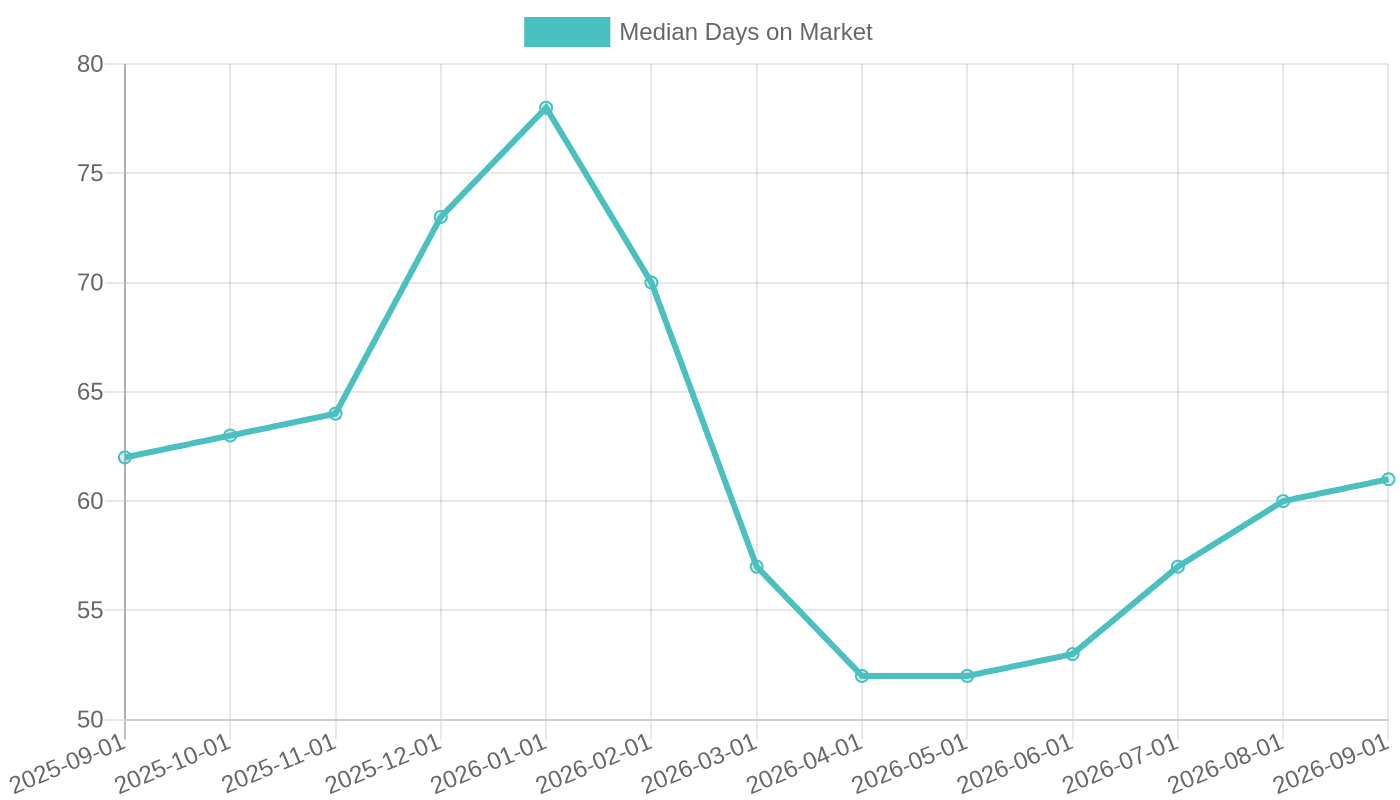
- National median days on market sits at 61 days as of September 2026, so price your exit timeline accordingly.
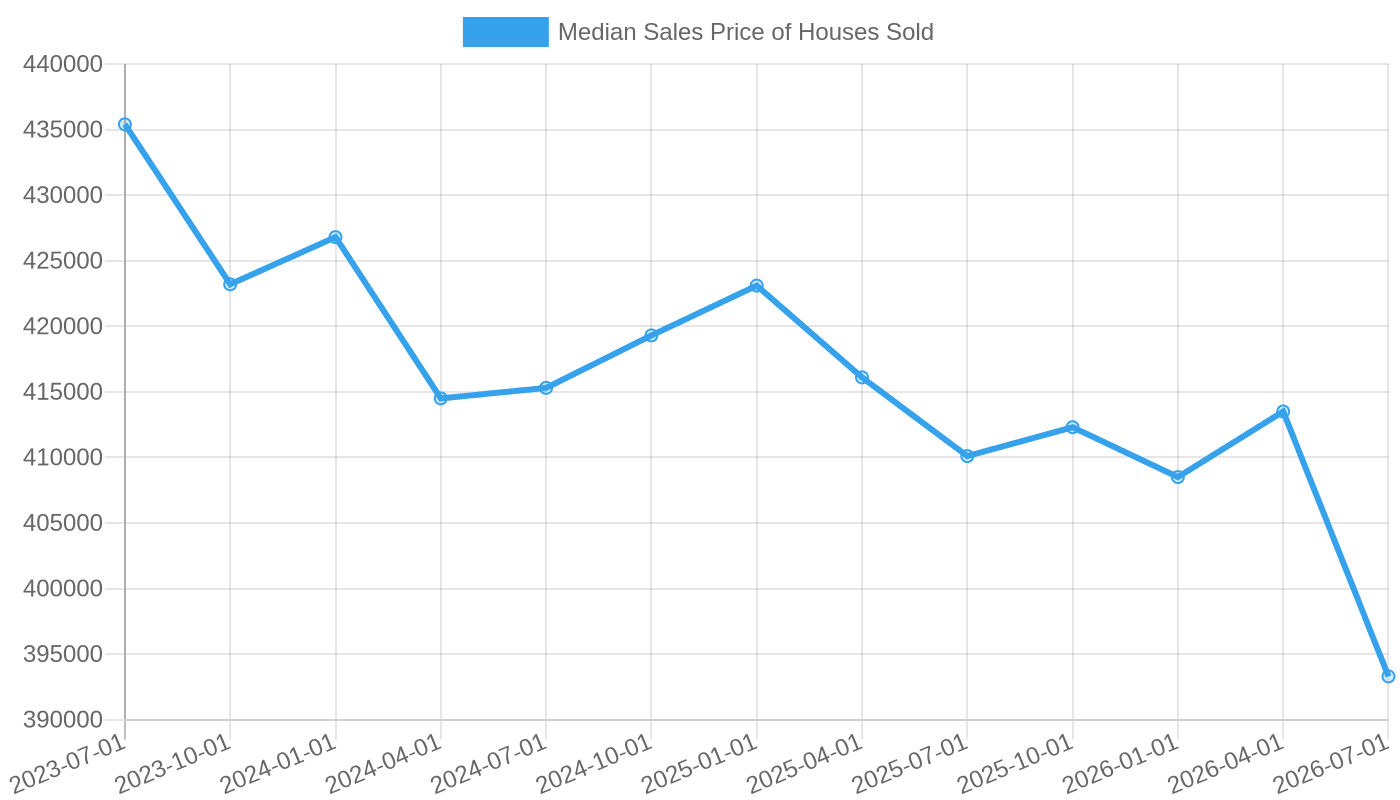
- The median sales price of houses sold was $393,300 in Q3 2026, down from $435,400 in Q3 2023 — comps must reflect current trends, not old data.
- The Wholesale REI directory tracks 65 tools across 9 categories, including comps and data tools like PropStream and ATTOM.
What is a real estate comps generator?
A real estate comps generator is software that automatically finds recent comparable property sales near a subject property and calculates an estimated market value. It saves you from manually searching county records and MLS listings.
Most comps generators pull from public records, MLS data, and proprietary databases. They let you filter by distance, sale date, square footage, bed/bath count, and property condition. Then they adjust the value based on how each comp differs from your subject property.
Why wholesalers need one
Wholesalers live and die by speed. You need to make offers quickly, often before you even see the property. A comps generator gives you a defensible ARV in minutes instead of hours.
It also reduces emotion. When you have data in front of you, you can justify your offer to the seller and to your cash buyers.
How do you use a comps generator step by step?
Here is the exact process to price a wholesale deal using a comps generator.
Step 1: Enter the subject property details
Start by entering the address, square footage, bed/bath count, lot size, and property condition. The more accurate your inputs, the better the comps.
If you don't have all the details, use the generator's property record lookup to fill in gaps. Most tools pull from public records automatically.
Step 2: Set your search filters
Narrow your comps to the most relevant sales. A good starting point:
- Distance: within 0.5 to 1 mile in urban areas, up to 3 miles in rural areas.
- Sale date: last 6 months. In slower markets, extend to 12 months but adjust for market trends.
- Property type: same type (single-family, condo, etc.).
- Size: within 20% of subject square footage.
- Bed/bath: same count or within one.
Step 3: Review and adjust the comps
The generator will return a list of comparable sales. You need to review each one and adjust for differences.
For example, if a comp has an extra bathroom, its sale price is higher than your subject would be. The generator may adjust automatically, but you should verify.
Common adjustments:
- Square footage: adjust by local price per square foot.
- Bed/bath count: add or subtract based on local market expectations.
- Condition: a renovated comp sells for more than a distressed one.
- Lot size: larger lots add value, but diminishing returns.
- Garage/pool: adjust based on local demand.
Step 4: Calculate your after-repair value (ARV)
The generator will give you an estimated ARV based on the adjusted comps. This is the value of the property after you (or your buyer) complete repairs.
Use the median or average of your top 3-5 comps. Don't rely on a single sale.
Step 5: Apply the 70% rule (or your market's version)
The classic 70% rule says: Maximum offer = (ARV × 0.70) − estimated repairs.
This leaves room for your profit and holding costs. But the rule is a starting point. In competitive markets, you may need to go higher. In slow markets, lower.
Let's look at how market conditions affect this. The median days on market was 61 days in September 2026, up from 52 days in April 2026. That means properties are sitting longer, so you should build in more holding time and price more conservatively.
Step 6: Factor in your profit and costs
Your offer needs to cover:
- Purchase price
- Repair costs
- Closing costs (both sides)
- Holding costs (taxes, insurance, utilities)
- Your assignment fee or profit
A common target is 10-20% of ARV for profit. So if ARV is $300,000, you want $30,000-$60,000 in profit.
Why do comps matter more in a shifting market?
Comps matter more in a shifting market because values can change quickly, and outdated comps will lead you to overpay. The national median sales price of houses sold dropped from $435,400 in Q3 2023 to $393,300 in Q3 2026. That's a 9.7% decline.
If you use comps from 2023 to price a deal in 2026, you'll overestimate ARV and likely overpay. A comps generator that pulls the latest sales protects you from that mistake.
How mortgage rates affect comps
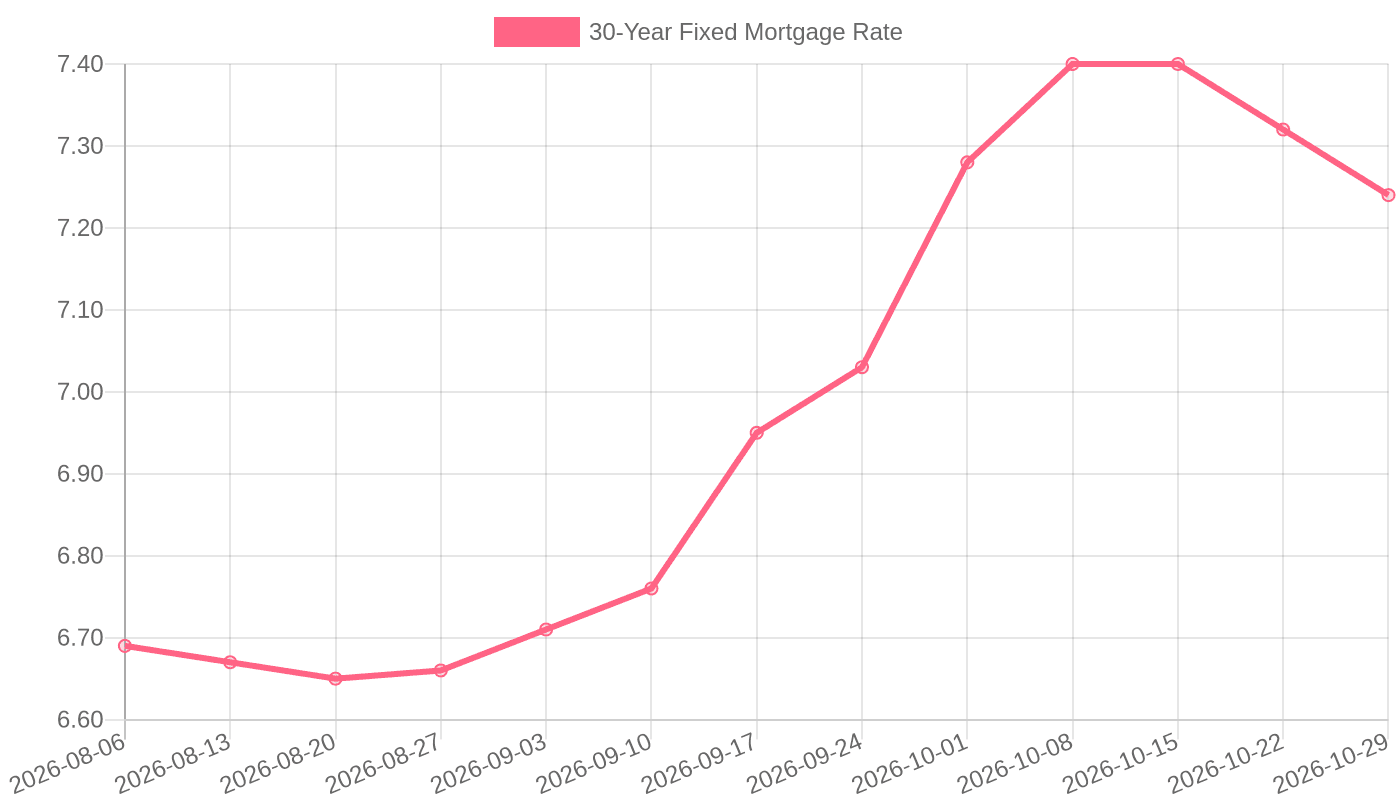
Mortgage rates influence buyer demand and therefore comps. The 30-year fixed mortgage rate was 7.24% as of October 29, 2026, up from 6.65% in August 2026. Higher rates reduce affordability, which can push prices down or slow sales.
When rates rise, be more conservative with your ARV. Use comps that sold recently and adjust downward if you see a trend of declining prices.
What are the best comps generator tools for wholesalers?
The best comps generator tools for wholesalers combine property data, comp analysis, and list management. Here are some top options from the Wholesale REI directory, which tracks 65 tools across 9 categories.
| Tool | Best For | Key Features |
|---|---|---|
| PropStream | All-in-one comps and lead generation | Property data, comps, skip tracing, list stacking |
| ATTOM Data | Raw property data and analytics | Nationwide property records, AVM, comps |
| Launch Control | Deal analysis and comps | Comps, rehab estimator, deal calculator |
| GoHighLevel | CRM and automation | Integrates with comps tools, automates follow-up |
| CallTools | Cold calling and lead management | Power dialer, CRM, integrates with data tools |
| TeleVista Lead Generation | Lead lists and data | Targeted lists, skip tracing, comps data |
PropStream
PropStream is popular among wholesalers for its combination of property data, comps, and list-building features. It pulls from public records and provides estimated values and comps.
ATTOM Data
ATTOM provides raw property data and analytics, including automated valuation models (AVMs) and comps. It's a good choice if you want to build your own analysis or integrate data into other tools.
Launch Control
Launch Control offers deal analysis with comps and a rehab estimator. It's designed for wholesalers who want a streamlined workflow from comps to offer.
How do you avoid common comps mistakes?
Avoid common comps mistakes by using recent, nearby sales and adjusting for differences. Here are the most frequent errors and how to fix them.
Using outdated comps
In a market where prices are changing, a 12-month-old comp may not reflect current value. Stick to 6 months or less, and check the trend. The median sales price has been declining, so older comps may be too high.
Ignoring market conditions
Days on market and mortgage rates affect value. With 61 days on market and 7.24% mortgage rates, buyers are more cautious. Price accordingly.
Not adjusting for condition
A renovated comp is not the same as a distressed property. Make sure your comps generator adjusts for condition, or do it manually.
Relying on a single comp
One sale can be an outlier. Use at least 3-5 comps and look at the range.
Forgetting about location nuances
A busy street, school district, or flood zone can affect value. The generator may not capture these, so verify with local knowledge.
How do you calculate your max offer with a comps generator?
Calculate your max offer by taking the ARV from your comps generator, multiplying by your desired profit margin, and subtracting repairs and costs. The formula:
Max Offer = (ARV × Profit Margin %) − Repairs − Closing Costs − Holding Costs
Most wholesalers use 70% as a starting point. But you can adjust based on your market and competition.
Example calculation
Let's say your comps generator gives you an ARV of $300,000. Repairs are estimated at $40,000. Closing costs are $6,000. Holding costs for 3 months are $3,000. You want a 15% profit margin.
Max Offer = ($300,000 × 0.85) − $40,000 − $6,000 − $3,000 = $255,000 − $49,000 = $206,000.
So your maximum offer is $206,000. You can adjust based on your negotiation.
Using the 70% rule
With the 70% rule: Max Offer = ($300,000 × 0.70) − $40,000 = $210,000 − $40,000 = $170,000.
That's more conservative. The right approach depends on your market and your desired profit.
How do you use comps to talk to sellers and buyers?
Use comps to justify your offer to sellers and to show buyers the value. When you present comps, you build trust and credibility.
Talking to sellers
Show the seller the comps and explain how you arrived at your offer. Be transparent about repairs and costs. This reduces friction and helps you negotiate.
Talking to cash buyers
Provide a comps report with your deal package. Buyers want to see the numbers. A clear comps analysis makes your deal more attractive.
The Bottom Line
A real estate comps generator turns a guessing game into a data-driven process. Use recent comps, adjust for market conditions like 61 days on market and 7.24% mortgage rates, and apply a profit margin that protects you. Start by comparing the top comps tools in the Wholesale REI directory to find the one that fits your workflow.
Frequently Asked Questions
What is a real estate comps generator?
A real estate comps generator is software that automatically finds recent comparable property sales near a subject property and calculates an estimated market value. It pulls from public records, MLS data, and proprietary databases to save you time.
How do I calculate my max offer using comps?
Take the after-repair value (ARV) from your comps generator, multiply by your desired profit margin (like 70%), and subtract repairs and costs. The formula is: Max Offer = (ARV × Profit Margin %) − Repairs − Closing Costs − Holding Costs.
Why do comps matter more in a shifting market?
In a shifting market, values can change quickly, so outdated comps can lead you to overpay. The national median sales price dropped from $435,400 in Q3 2023 to $393,300 in Q3 2026, so using recent comps is critical.
What are the best comps generator tools for wholesalers?
Top options include PropStream, ATTOM Data, and Launch Control. The Wholesale REI directory tracks 65 tools across 9 categories, so you can compare features and pricing to find the best fit.
How do mortgage rates affect comps?
Higher mortgage rates reduce buyer demand and can push prices down or slow sales. As of October 29, 2026, the 30-year fixed rate was 7.24%, so be conservative with your ARV when rates are rising.
Sources
- Software tools tracked in the Wholesale REI directory — Wholesale REI directory
- Tool categories in the Wholesale REI directory — Wholesale REI directory
- Median Sales Price of Houses Sold (as of 2026-07-01) — FRED (Federal Reserve Bank of St. Louis)
- 30-Year Fixed Mortgage Rate (as of 2026-10-29) — FRED (Federal Reserve Bank of St. Louis)
- Median Days on Market (as of 2026-09-01) — FRED (Federal Reserve Bank of St. Louis)
This article was researched and drafted with AI assistance, then reviewed and edited by Mark Anthony. Every statistic is sourced and cited. It's for informational purposes only and is not financial or legal advice. Read our editorial policy.