How to Wholesale Real Estate: A Complete Guide

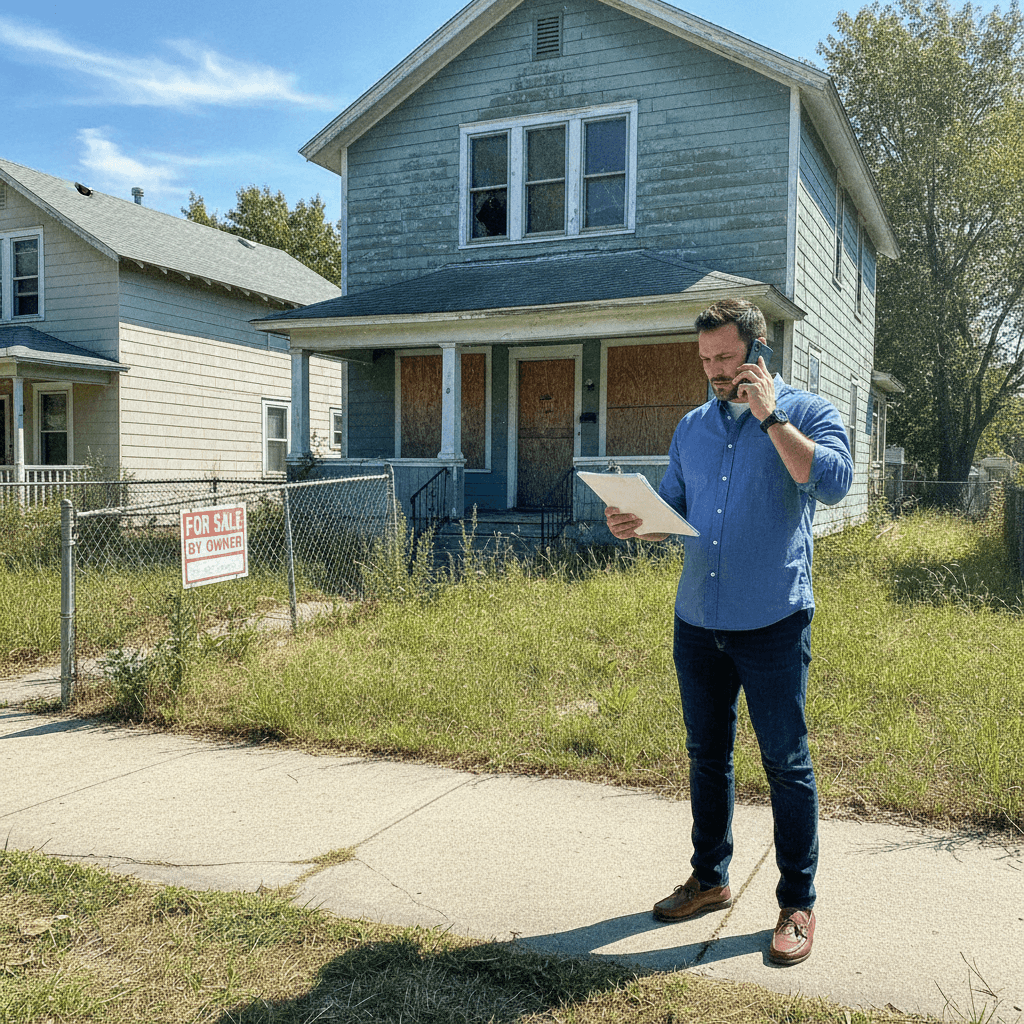
If you want to start investing in real estate with little money and no credit, wholesaling is the fastest path. You don't need to buy houses — you just need to find great deals and sell the contract to another investor. Here's exactly how to wholesale real estate, step by step, using current market data and the best software to automate your business.
Key Takeaways
- Wholesaling real estate means you find a motivated seller, get the property under contract at a discount, and assign that contract to an end buyer for a fee — you never actually buy the house.
- The national median home price is $403,200 (as of January 2026), and the 30-year mortgage rate is 6.43% (July 2026), creating a market where motivated sellers are more common.
- Your profit in a wholesale deal is the difference between your contracted price and the price the end buyer pays, typically $5,000–$30,000 per deal.
- The Wholesale REI directory tracks 63 software tools across 9 categories to help you find leads, manage deals, and close faster.
- Success depends on three things: lead generation, accurate deal analysis, and a strong buyer's list.
What Is Wholesaling Real Estate?
Wholesaling real estate is the practice of getting a property under contract at a below-market price and then assigning that contract to another investor for a fee. You are essentially a middleman who connects motivated sellers with cash buyers. You never take ownership of the property, and you don't need a real estate license in most states (though you should always check your local laws).
How the Transaction Flow Works
The mechanics of a wholesale deal are straightforward but require precision at every step. Here's the sequence:
- You find a motivated seller — Someone who needs to sell fast due to foreclosure, divorce, relocation, or property damage.
- You negotiate a below-market price — Typically 70–80% of the after-repair value (ARV), minus repair costs.
- You sign a purchase agreement — This contract includes an assignment clause allowing you to transfer your rights to another buyer.
- You market the contract — You send deal sheets to your buyer's list of cash investors.
- You assign the contract — The end buyer pays you an assignment fee (your profit) at closing, then buys the property directly from the seller.
Example of a Real Wholesale Deal
Let's walk through a concrete scenario using current market data:
- Property ARV: $300,000 (based on comparable sales in a mid-sized Midwest market)
- Estimated repairs: $45,000 (new roof, HVAC, flooring, paint)
- Your target assignment fee: $15,000
- Maximum allowable offer (MAO): ($300,000 × 0.70) – $45,000 – $15,000 = $150,000
You contract the property at $150,000. You find a buyer who agrees to pay $165,000 for the contract. At closing, the buyer pays you $15,000, then closes with the seller at $150,000. The buyer's total cost is $165,000 plus $45,000 in repairs = $210,000 all-in, leaving them a $90,000 profit margin at the $300,000 ARV.
Legal Considerations by State
Wholesaling is legal in most states, but the rules vary. Here's what you need to know:
- States where wholesaling is generally allowed without a license: Texas, Florida, Georgia, Ohio, North Carolina, Tennessee, Arizona, Colorado, and many others.
- States with stricter regulations: California, New York, Illinois, and Oregon may require a license or have specific disclosure rules.
- What to check: Look up your state's real estate commission website or consult a real estate attorney. Key questions: Does your state require a license to "sell" real estate? Does assigning a contract count as "selling"? Are there disclosure requirements about your role as a principal or assignor?
Why Wholesale Real Estate in 2026?
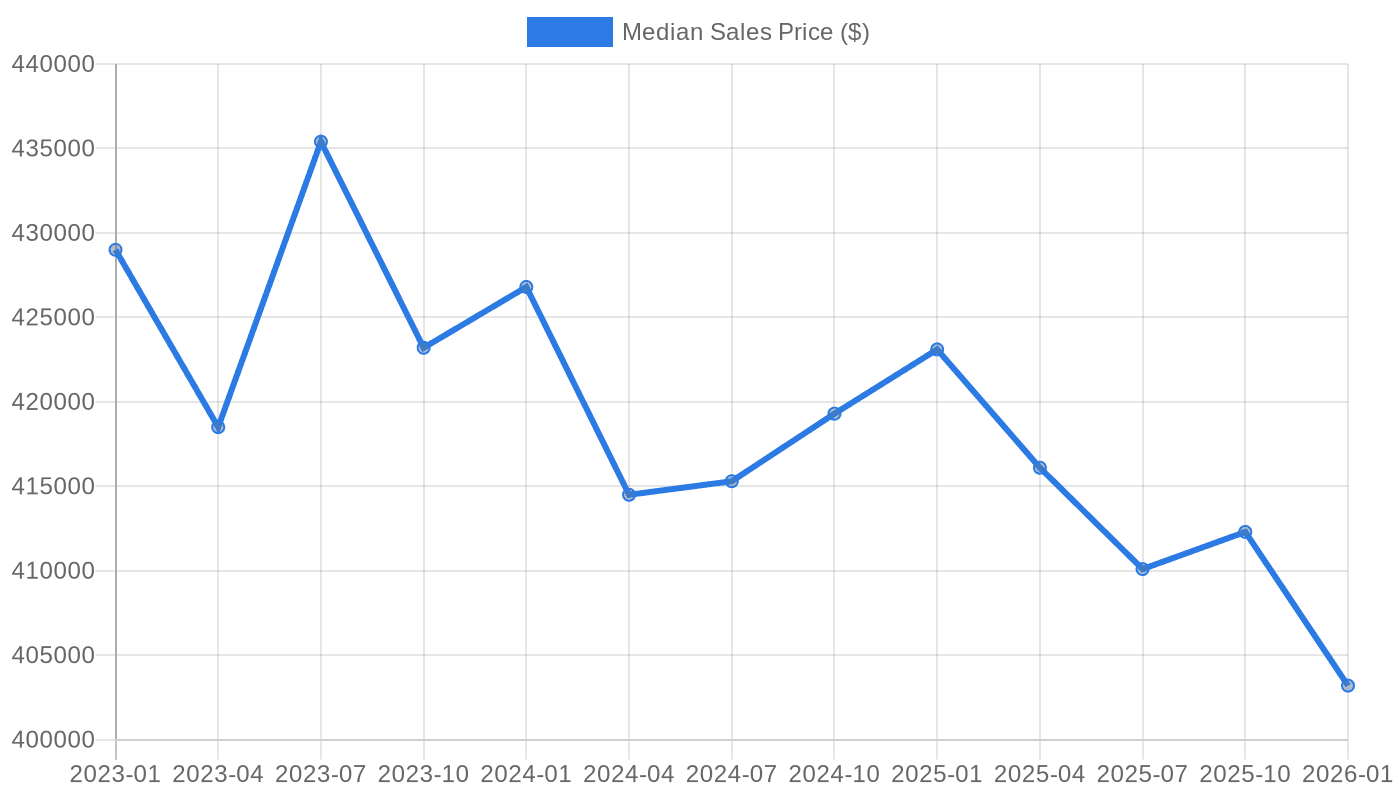
The current market conditions make wholesaling especially attractive. As of January 2026, the median sales price of houses sold in the U.S. is $403,200, down from $429,000 in early 2023. Meanwhile, the 30-year fixed mortgage rate sits at 6.43% as of July 2026. Higher rates mean fewer traditional buyers can qualify for a mortgage, which pushes more sellers to consider creative financing or a quick cash sale — exactly the kind of motivated sellers wholesalers look for.
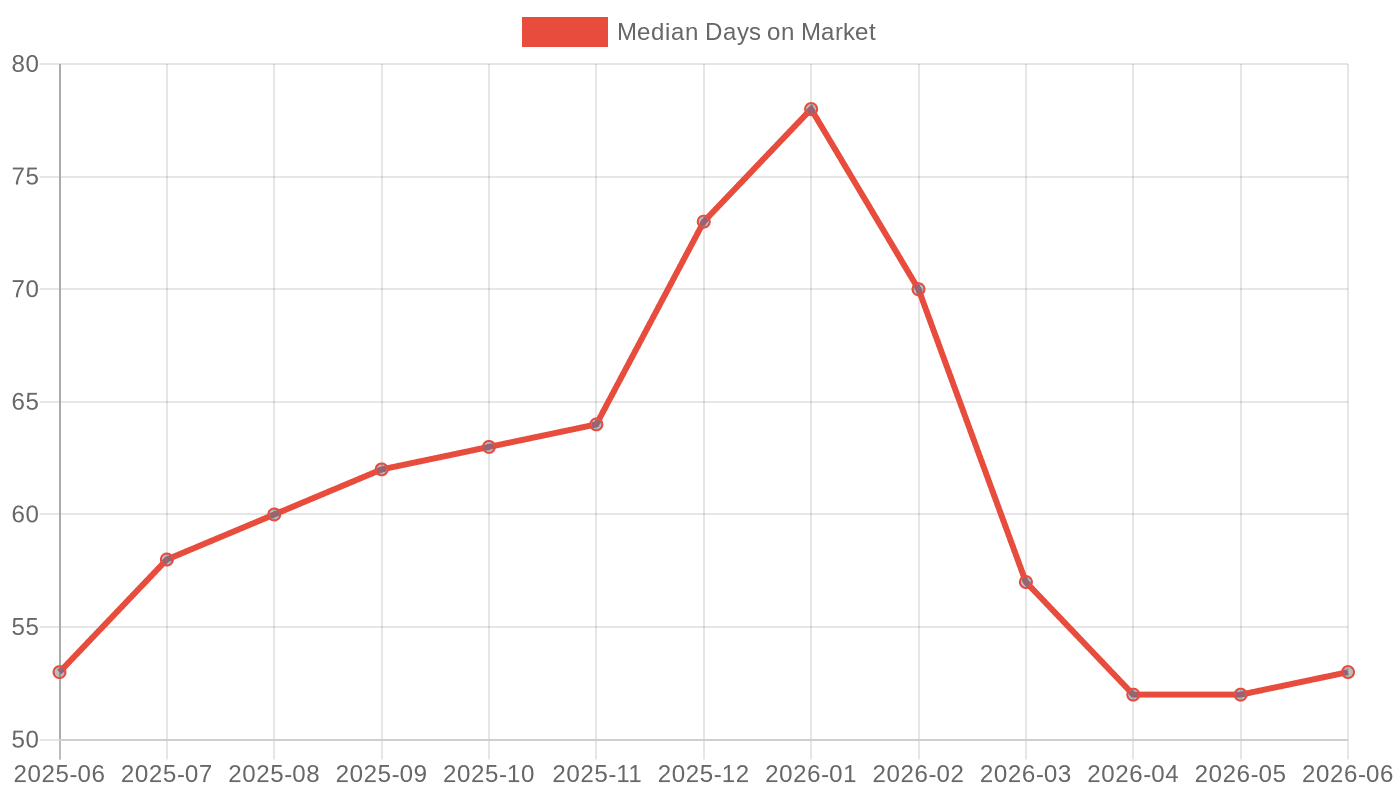
At the same time, median days on market have been fluctuating. In June 2026, homes sat for a median of 53 days, up from 52 days in April and May. That's still a relatively fast market, but the trend shows a slight softening, which can create more opportunities for wholesalers to negotiate.
The Numbers That Matter
- $403,200 — Median home price (Jan 2026). A typical wholesale deal might target 70–80% of that, meaning you'd contract at $282,240–$322,560.
- 6.43% — Mortgage rate (July 2026). Higher rates reduce buyer demand, increasing the pool of motivated sellers.
- 53 days — Median days on market (June 2026). A balanced market where sellers may be more willing to negotiate.
Why Motivated Sellers Are More Common Now
The combination of high mortgage rates and softening prices creates a unique opportunity. Here's why:
- Sellers who bought in 2021–2022 at low rates (3–4%) now face a market where their homes are worth less than they expected. If they need to sell due to job loss, divorce, or relocation, they're motivated to accept a cash offer.
- Investors with adjustable-rate mortgages are seeing their payments rise. Some are forced to sell quickly to avoid foreclosure.
- Inherited properties are always a steady source. Heirs often want cash fast and don't want to deal with repairs or showings.
How to Wholesale Real Estate: Step-by-Step
Step 1: Build Your Buyer's List Before You Find a Deal
Your buyer's list is your most important asset. Without buyers, you can't assign a contract. Start by networking with local real estate investors, attending REIA meetings, and joining Facebook groups for house flippers and landlords. Aim for at least 50 active cash buyers in your target area.
Use software like PropStream or REZzie to find cash buyers by searching for recent cash purchases or absentee owners. The Wholesale REI directory lists 63 tools across 9 categories, including lead generation and CRM tools, to help you build and manage your list.
How to Build Your Buyer's List: A Step-by-Step Process
- Search for cash buyers in PropStream — Filter by "cash purchase" in the last 12 months. Export the list of names, phone numbers, and email addresses.
- Join local REIA groups — Search Facebook for "[Your City] Real Estate Investors Association." Attend meetings and collect business cards.
- Network at title companies — Call local title companies and ask if they work with investors. They often know who's buying cash.
- Create a simple CRM — Use Google Sheets or GoHighLevel to track buyer names, contact info, property preferences (price range, zip codes), and buying criteria (e.g., "needs to be under $200K ARV").
- Qualify your buyers — Ask: "What's your max purchase price? Do you buy as-is? What's your timeline?" This saves you time later.
What to Include in Your Buyer's List Database
| Field | Example | Why It Matters |
|---|---|---|
| Name | John Smith | Personal touch in communication |
| Phone | 555-123-4567 | Quick deal sharing via text |
| john@example.com | Send deal sheets | |
| Max Purchase Price | $250,000 | Only send relevant deals |
| Preferred Zip Codes | 30301, 30302 | Geographic targeting |
| Buying Criteria | Needs 15% minimum ROI | Avoid wasting time on thin margins |
| Last Contact Date | 2026-07-15 | Track follow-up frequency |
Step 2: Find Motivated Sellers
You need to find sellers who are motivated to sell quickly. Common motivations include:
- Pre-foreclosure or foreclosure
- Divorce
- Job relocation
- Inherited property
- Deferred maintenance (ugly houses)
- Landlord burnout
Lead Generation Methods
- Driving for dollars — Drive neighborhoods and look for distressed properties. Note the address, then use skip tracing to find the owner.
- Direct mail — Send postcards or letters to absentee owners, pre-foreclosures, or expired listings.
- Bandit signs — Place signs in high-traffic areas (check local laws first).
- Online marketing — Run Facebook ads targeting homeowners in your area with phrases like "We buy houses cash."
- Cold calling — Call expired listings, FSBOs, or absentee owners. Tools like CallTools or Launch Control can automate dialing and track calls.
Deep Dive: Driving for Dollars
This is the cheapest and most effective method for beginners. Here's how to do it systematically:
- Choose a target neighborhood — Look for areas with older homes (built before 1980), high rental density, or recent foreclosures.
- Drive slowly and scan — Look for overgrown lawns, peeling paint, boarded windows, junk in the yard, or mail piling up.
- Record the address — Use a voice memo app or a simple notebook. Snap a photo of the property.
- Skip trace the owner — Use PropStream or REZzie to find the owner's name, phone number, and mailing address.
- Call or mail — Call the owner within 24 hours. Say: "Hi, I noticed your property at 123 Main Street needs some work. I'm looking for properties to buy cash. Are you interested in selling?"
Pro tip: Drive the same neighborhood every 2–3 weeks. New distress appears constantly — a fresh "For Sale" sign, a new foreclosure notice on the door, or a car with out-of-state plates (indicating an inherited property).
Deep Dive: Cold Calling Scripts
Your script should be short, empathetic, and direct. Here's a template:
Opening: "Hi, is this [Owner Name]? My name is [Your Name]. I'm a local real estate investor looking for properties in [City/Neighborhood]. I noticed your property at [Address] and wanted to see if you've thought about selling."
If they say no: "No problem at all. If you ever change your mind or know someone who needs to sell quickly, feel free to call me at [Your Number]. Have a great day."
If they're interested: "Great. Can you tell me a little about the property? Is it currently occupied? Are there any major repairs needed? What's your ideal timeline for selling?"
The goal: Get them talking. Listen for motivation — divorce, foreclosure, job loss, inheritance. Once you hear it, you have leverage.
Step 3: Analyze the Deal
Once you have a lead, you need to determine the maximum allowable offer (MAO). The formula is simple:
MAO = After Repair Value (ARV) × 70% – Estimated Repair Costs – Your Desired Profit
For example, if the ARV is $300,000, repairs are $40,000, and you want a $15,000 assignment fee:
- MAO = ($300,000 × 0.70) – $40,000 – $15,000 = $210,000 – $40,000 – $15,000 = $155,000
You would offer the seller $155,000, then assign the contract to a buyer for $170,000, pocketing $15,000.
Use tools like PropStream or ATTOM Data to get accurate ARV estimates, comparable sales, and repair cost data.
How to Estimate ARV Accurately
Your ARV estimate is the most critical number in the deal. Get it wrong, and you'll either overpay (no buyer) or under-offer (lose the deal). Here's how to do it right:
- Find 3–5 comparable sales — Use PropStream to search for homes within 0.5 miles of the subject property, sold in the last 6 months, with similar square footage (±200 sq ft), bedrooms, and bathrooms.
- Adjust for differences — If a comp has a finished basement and your subject doesn't, subtract $15,000–$25,000. If your subject has a larger lot, add value.
- Use the "price per square foot" method — Calculate the average price per square foot of your comps, then multiply by the subject's square footage. This gives you a rough ARV.
- Check active listings — If similar homes are sitting on the market for 60+ days, your ARV may be too high. Discount by 5–10%.
How to Estimate Repair Costs
Repair estimates are where beginners lose money. Here's a practical approach:
- Get a contractor's estimate — If you have a serious lead, pay a contractor $100–$200 to walk the property and give you a written estimate.
- Use a repair cost estimator tool — PropStream has a built-in repair estimator based on property condition. It's not perfect, but it's a starting point.
- Create your own checklist — Walk through the property and note: roof condition, HVAC age, foundation cracks, plumbing, electrical, flooring, paint, kitchen, bathrooms, windows, doors, landscaping.
Rule of thumb: If you're unsure, add 20% to your repair estimate. It's better to under-offer than to overpay.
Step 4: Get the Property Under Contract
You need a solid purchase agreement that allows assignment. Most wholesalers use a standard real estate purchase contract with an "assignment clause" or a separate assignment agreement. Key terms to include:
- Inspection period — Typically 7–14 days to find a buyer.
- Assignability clause — States that you can assign the contract to another buyer.
- Earnest money — Usually $100–$500 to show good faith. Make sure it's refundable if you can't find a buyer.
What to Include in Your Purchase Agreement
| Clause | Purpose | Example Language |
|---|---|---|
| Assignment clause | Allows you to transfer the contract | "Buyer has the right to assign this contract to any entity or individual without seller's consent." |
| Inspection contingency | Gives you time to find a buyer | "Buyer has 14 days to conduct inspections and may terminate for any reason." |
| Earnest money refundability | Protects your deposit | "Earnest money shall be fully refundable if buyer terminates during the inspection period." |
| Closing timeline | Sets expectations | "Closing shall occur within 30 days of contract acceptance." |
How to Handle Earnest Money
Earnest money shows the seller you're serious. But as a wholesaler, you don't want to risk losing it. Here's how to protect yourself:
- Use a refundable deposit — Make sure your contract states that earnest money is refundable if you terminate during the inspection period.
- Use a title company — Have the title company hold the earnest money, not the seller's agent.
- Keep it low — $100–$500 is standard. Anything higher raises suspicion.
Step 5: Assign the Contract to a Buyer
Once you have the contract, market it to your buyer's list. Send out a deal sheet with the address, ARV, asking price, repair estimate, and your assignment fee. The buyer pays you the assignment fee at closing, and then they close on the property with the seller.
You can also use a double close if the buyer wants to keep the transaction confidential. In a double close, you buy the property and immediately resell it to the end buyer. This requires transactional funding (short-term financing), but it keeps your profit private.
How to Create a Deal Sheet
Your deal sheet is your marketing tool. Keep it clean and professional. Include:
- Property address
- ARV — Your estimate based on comps
- Contract price — What you're selling it for
- Estimated repairs — Your best estimate
- After-repair value (ARV) — What it's worth fixed up
- Estimated profit for buyer — ARV minus contract price minus repairs
- Your assignment fee — What you'll earn
- Contact info — Your phone and email
Example deal sheet:
Property: 123 Main Street, Atlanta, GA 30301
ARV: $300,000
Contract Price: $165,000
Estimated Repairs: $45,000
Buyer's Estimated Profit: $90,000 ($300,000 - $165,000 - $45,000)
Assignment Fee: $15,000
Contact: John Doe | 555-123-4567 | john@example.com
How to Close a Double Close
A double close involves two transactions happening on the same day:
- You buy the property from the seller for $150,000 using transactional funding (a short-term loan from a private lender or funding company).
- You sell the property to the end buyer for $165,000.
- You repay the transactional funding and keep the $15,000 profit.
When to use a double close:
- The buyer wants to keep their identity private.
- The seller doesn't want to know you're assigning.
- You want to keep your profit confidential.
Transactional funding providers: Look for companies that specialize in real estate transactional funding. They typically charge 1–3 points (1–3% of the loan amount) and require a confirmed end buyer.
Best Software for Wholesaling Real Estate
The right software can save you hours each week. The Wholesale REI directory currently lists 63 tools across 9 categories. Here's a comparison of the most popular ones:
| Tool | Category | Key Feature | Price Range |
|---|---|---|---|
| GoHighLevel | CRM & Automation | All-in-one CRM, email, SMS, and pipeline management | $97–$497/month |
| PropStream | Data & Analytics | Property data, comps, skip tracing, and marketing lists | $99–$199/month |
| ATTOM Data | Data & Analytics | Nationwide property data, ownership, and foreclosure data | Custom pricing |
| CallTools | Dialer & Tracking | Power dialer, call recording, and voicemail drop | $59–$149/month |
| Launch Control | Dialer & Tracking | Predictive dialer, CRM integration, and compliance | $79–$199/month |
| REZzie | Lead Generation | Skip tracing, property data, and direct mail integration | $49–$149/month |
How to Choose the Right Tool
- If you're just starting, go with PropStream for data and GoHighLevel for CRM. That covers your bases for under $200/month.
- If you do high-volume cold calling, add CallTools or Launch Control to automate dialing.
- If you need deep property data, ATTOM Data has the most comprehensive coverage but is pricier.
Detailed Tool Breakdown
GoHighLevel — This is the Swiss Army knife of real estate software. It includes:
- A CRM to track leads and buyers
- Email and SMS marketing (with templates)
- Pipeline management (visual deal tracking)
- Call tracking and recording
- Website and funnel builder
- Automation workflows (e.g., "Send a text 3 days after a lead is added")
PropStream — The go-to for property data. Features:
- Nationwide property records (ownership, tax, liens)
- Comparable sales (comps) with automated ARV estimates
- Skip tracing (find phone numbers and emails)
- Marketing lists (export data for direct mail or cold calling)
- Repair cost estimator
CallTools — For high-volume cold calling:
- Power dialer (dials multiple numbers at once, connects you to live answers)
- Voicemail drop (leaves a pre-recorded message)
- Call recording and analytics
- CRM integration (works with GoHighLevel)
How to Set Up Your Tech Stack for Under $200/Month
Here's a starter stack that covers all the essentials:
- PropStream — $99/month for data and skip tracing
- GoHighLevel — $97/month for CRM and automation
- Google Voice — Free for a second phone number
- Canva — Free for creating deal sheets and marketing materials
- Google Sheets — Free for tracking leads and buyers
Total: $196/month — Less than the cost of a single missed deal.
Common Mistakes to Avoid
Overpricing the Deal
Your offer must leave room for the end buyer to profit. If you contract at 90% of ARV, the buyer has no margin. Stick to the 70% rule (or adjust based on your market).
Real-world example: A beginner wholesaler in Phoenix contracted a property at $280,000 with an ARV of $300,000 and repairs of $30,000. The buyer's math: $300,000 - $280,000 - $30,000 = -$10,000. No buyer would touch it. The deal died.
Fix: Use the MAO formula every time. If the numbers don't work, walk away.
Not Having a Buyer's List Ready
Don't find a deal first and then look for buyers. Build your list before you start. A deal without a buyer is just a contract you can't sell.
Real-world example: A wholesaler in Atlanta found a great deal — a pre-foreclosure at $120,000 with an ARV of $200,000. But they had only 3 buyers on their list. None of them had the capital. The deal expired, and the seller went to foreclosure.
Fix: Spend your first 30 days building a list of 50+ qualified buyers. Attend REIA meetings, join Facebook groups, and use PropStream to find cash buyers.
Ignoring Local Laws
Some states require a real estate license to wholesale. Others have specific disclosure requirements. Always consult a real estate attorney in your state before you start.
Real-world example: A wholesaler in Florida was sued by a seller who claimed the wholesaler acted as an unlicensed broker. The court ruled against the wholesaler, and they had to pay damages and legal fees.
Fix: Spend $300–$500 on a consultation with a real estate attorney. Ask: "Is wholesaling legal in this state? What disclosures do I need to make? Can I assign contracts without a license?"
Poor Communication
Keep the seller and buyer informed throughout the process. If the seller thinks you're buying the property yourself, they may back out if they find out you're assigning. Be transparent or use a double close.
Real-world example: A wholesaler told the seller they were buying the property for themselves. When the seller found out the contract was assigned to a flipper, they felt deceived and refused to close. The wholesaler lost the deal and their reputation.
Fix: Be honest about your role. Say: "I'm an investor looking for properties to assign to other investors. I'll find a buyer who can close quickly." Or use a double close to keep the transaction confidential.
The Bottom Line
Wholesaling real estate is a legitimate, low-capital way to break into real estate investing. The current market — with a median home price of $403,200 and mortgage rates at 6.43% — creates a steady stream of motivated sellers. Focus on building a strong buyer's list, analyzing deals accurately, and using the right software to scale your efforts. To get started, browse the 63 tools in the Wholesale REI directory and pick the ones that fit your budget and workflow. And if you want to practice your pitch before calling a real seller, try our free AI Cold Call Trainer — it's a realistic way to build confidence without risking a deal.
Frequently Asked Questions
Do I need a real estate license to wholesale?
In most states, you do not need a license to wholesale real estate as long as you are assigning a contract and not marketing yourself as a real estate agent. However, some states have specific laws, so always consult a local real estate attorney.
How much money do I need to start wholesaling?
You can start with very little — often just enough for earnest money ($100–$500), marketing costs, and software subscriptions. Many wholesalers begin with less than $1,000.
What is the 70% rule in wholesaling?
The 70% rule says you should offer no more than 70% of the after-repair value (ARV) minus repair costs. This leaves room for the end buyer to profit after repairs and closing costs.
How do I find motivated sellers?
Common methods include driving for dollars, direct mail, bandit signs, online ads, cold calling expired listings, and networking with real estate agents. Software like PropStream can help you find absentee owners and pre-foreclosures.
What is an assignment contract?
An assignment contract is a purchase agreement that includes a clause allowing you to transfer your rights to buy the property to another investor. You assign the contract for a fee, and the end buyer closes with the seller.
Can I wholesale if I have bad credit?
Yes, because you are not taking out a mortgage. Wholesaling relies on finding a cash buyer to close the deal, so your personal credit is not a factor.
Sources
- Median Sales Price of Houses Sold (2026-01-01) — FRED (Federal Reserve Bank of St. Louis)
- 30-Year Fixed Mortgage Rate (2026-07-02) — FRED (Federal Reserve Bank of St. Louis)
- Median Days on Market (2026-06-01) — FRED (Federal Reserve Bank of St. Louis)
- Software tools tracked in the Wholesale REI directory — Wholesale REI directory
- Tool categories in the Wholesale REI directory — Wholesale REI directory
This article was researched and drafted with AI assistance, then reviewed and edited by Mark Anthony. Every statistic is sourced and cited. It's for informational purposes only and is not financial or legal advice. Read our editorial policy.