Wholesale Real Estate Contract: Key Clauses Explained


You've found a great deal, tied it up under contract, and now you need to assign it to an end buyer. But one missing or poorly worded clause can kill your assignment fee or land you in legal hot water. The wholesale real estate contract is your most important tool — and knowing the key clauses inside and out is what separates successful wholesalers from those who lose deals (or get sued).
Key Takeaways
- The assignment clause is the heart of a wholesale contract; without it, you cannot legally transfer your rights to a buyer.
- A well-defined earnest money clause protects your deposit and sets clear forfeiture terms, reducing negotiation friction.
- The inspection and due diligence clause gives you (and your end buyer) the exit ramp needed to walk away from a bad deal.
- The purchase price and assignment fee must be clearly separated to avoid confusing the seller and to ensure your profit is protected.
- Adding an "and/or assigns" clause in the buyer line is a simple but critical step that makes your contract assignable.
What is a Wholesale Real Estate Contract?
A wholesale real estate contract is a legally binding agreement between a wholesaler (you) and a property seller, where the wholesaler has the right to assign the contract to a third-party buyer before closing. Unlike a traditional purchase agreement, the wholesaler never intends to buy the property themselves — they profit by selling their position in the contract to an end buyer for an assignment fee.
How It Works in Practice
Imagine you find a distressed property owned by a motivated seller. The property is worth $150,000 after repairs, but the seller is willing to accept $100,000 because they need to move quickly or cannot afford the carrying costs. You sign a contract to purchase the property for $100,000. Then, you market that contract to investors who are looking for a deal. You find an investor willing to pay $110,000 for the right to buy the property. You assign your contract to that investor. At closing, the investor pays the seller $100,000 and pays you a $10,000 assignment fee. You never take ownership of the property — you simply sold your position in the contract.
The Legal Foundation
The legal basis for wholesaling comes from contract law, which generally allows a party to assign their rights under a contract unless the contract explicitly prohibits assignment. This is why the language in your wholesale contract is so important. If the contract says "this agreement may not be assigned," you cannot wholesale the deal. If it is silent on assignment, you may be able to assign it, but you risk the seller objecting. The safest approach is to include a clear, explicit assignment clause.
Why a Standard Purchase Agreement Isn't Enough for Wholesaling
If you use a generic real estate purchase contract without modifications, you risk not being able to assign the deal. Most standard contracts assume the buyer intends to close personally. Wholesalers need specific clauses to make the contract assignable and to protect their fee.
The Risk of Using the Wrong Contract
Using a standard contract without an assignment clause means you have no legal right to transfer the contract. If the seller finds out you're assigning, they may refuse to close with your buyer. Worse, you could be accused of fraud for failing to disclose your role.
Real-world example: A wholesaler in Texas used a standard TREC (Texas Real Estate Commission) contract without adding an assignment clause. When they found an end buyer, the seller's agent noticed the contract didn't allow assignment and told the seller they could void the deal. The wholesaler lost their $15,000 assignment fee and the seller refused to work with them again. The wholesaler had no legal recourse because the contract didn't grant assignment rights.
What Makes a Wholesale Contract Different?
A wholesale contract includes language that explicitly allows assignment, defines the assignment fee, and often includes a "time is of the essence" clause to keep the deal on track. It also typically has a shorter inspection period and a lower earnest money deposit than a retail contract.
Key differences at a glance:
| Feature | Standard Purchase Agreement | Wholesale Contract |
|---|---|---|
| Assignment clause | Usually absent or restrictive | Explicitly allows assignment |
| Earnest money | 1-3% of purchase price | $100-$500 (flat fee) |
| Inspection period | 10-17 days | 7-14 days (or longer in slow markets) |
| Financing contingency | Common | Often removed (cash deals) |
| Buyer line | Buyer's name only | "Buyer and/or assigns" |
| Closing timeline | 30-45 days | 14-30 days |
The 7 Key Clauses Every Wholesale Real Estate Contract Must Have
1. The Assignment Clause
The assignment clause is the most critical provision. It gives you the right to transfer your rights and obligations under the contract to another buyer. Without it, you cannot legally assign the deal.
What to look for: Language like "Buyer has the right to assign this contract, in whole or in part, to any person or entity without the consent of Seller." Some contracts require seller notification but not approval.
Pro tip: If the contract requires seller consent, make sure it says consent "shall not be unreasonably withheld." This prevents the seller from blocking your assignment for no good reason.
Sample clause language:
"Buyer shall have the absolute right to assign this Agreement, in whole or in part, to any person or entity at any time, with or without the consent of Seller. Upon such assignment, Buyer shall be released from all further liability and obligations under this Agreement, and the assignee shall assume all rights and obligations of Buyer hereunder. Buyer shall provide Seller with written notice of any assignment within three (3) business days of execution."
Why this matters: The clause above does three things: (1) gives you the right to assign without asking permission, (2) releases you from liability after assignment, and (3) requires you to notify the seller. This protects you and keeps the seller informed.
2. The "and/or Assigns" Clause
This is a small phrase with big impact. In the buyer line of the contract, after your name or entity, add "and/or assigns." This immediately signals that you may transfer the contract. It also helps if you're using a double-close strategy.
Example: "John Doe or his assigns" instead of just "John Doe."
How to implement it:
- On the first page of the contract, where it says "Buyer," write: "John Doe and/or assigns"
- If you're using an LLC, write: "123 Main Street Holdings LLC and/or its assigns"
- In the signature block, sign as "John Doe, individually and as assignor"
Why it works: This phrase puts the seller on notice from the very beginning that you may not be the ultimate buyer. It also creates a paper trail that supports your right to assign. If a seller later claims they didn't know you were wholesaling, you can point to the contract language.
3. The Purchase Price and Assignment Fee Structure
Your contract must clearly state the purchase price the seller will receive. Separately, your assignment fee is the difference between that price and what your end buyer pays. The contract should not confuse these two amounts.
Best practice: Use a separate assignment agreement or add a clause stating that the purchase price to the seller is fixed, and any amount paid above that by the end buyer belongs to you as the assignment fee.
Example structure:
- Contract with seller: Purchase price = $100,000
- Assignment agreement with end buyer: Assignment fee = $10,000 (end buyer pays you directly)
- Total end buyer pays: $110,000 ($100,000 to seller + $10,000 to you)
Sample clause:
"The purchase price to Seller is fixed at $[AMOUNT]. Any consideration paid by an assignee or end buyer in excess of this amount shall be the sole property of Buyer as an assignment fee. Seller acknowledges that Buyer may assign this contract and receive compensation in excess of the purchase price stated herein."
Why this matters: Without this clause, a seller might argue that any amount above the purchase price belongs to them. This clause makes it clear that your fee is separate and belongs to you.
4. The Earnest Money Clause
Earnest money shows the seller you're serious. In a wholesale deal, you typically put down a smaller deposit — often $100 to $500 — compared to a traditional buyer. The clause should specify:
- The amount of earnest money
- Where it is held (title company or escrow)
- The conditions for forfeiture (e.g., if you fail to perform)
- That the earnest money is refundable if you terminate within the inspection period
Key point: Make sure the earnest money is refundable to you if you can't find a buyer within the due diligence period. Otherwise, you risk losing your deposit on a deal that doesn't assign.
Sample clause:
"Buyer shall deposit $[AMOUNT] as earnest money with [TITLE COMPANY] within three (3) business days of contract execution. Said earnest money shall be fully refundable to Buyer at any time during the inspection period. If Buyer terminates this Agreement for any reason during the inspection period, the earnest money shall be returned to Buyer in full. If Buyer fails to close after the inspection period without a valid reason, the earnest money shall be forfeited to Seller as liquidated damages."
Why the amount matters: A $500 deposit is standard for wholesale deals. It's enough to show the seller you're serious but not so much that you're risking significant capital. Compare this to a retail contract where earnest money might be $3,000-$5,000 on a $100,000 property.
5. The Inspection and Due Diligence Clause
This clause gives you the right to inspect the property and review documents. For wholesalers, this is your exit strategy. If you can't assign the deal, you need to be able to walk away without penalty.
What to include: A due diligence period of 7 to 14 days (or longer for complex deals) during which you can terminate for any reason. You should also have the right to assign this inspection period to your end buyer.
Common mistake: Not allowing enough time to find a buyer. In a slower market, you may need 21 to 30 days. Check the median days on market — as of June 2026, the national median is 53 days (source: FRED). That gives you a sense of how long properties are sitting. If homes in your area take 60 days to sell, a 14-day assignment window may be tight.
Sample clause:
"Buyer shall have a due diligence period of [NUMBER] days from the date of contract acceptance ('Inspection Period'). During this period, Buyer may conduct any inspections, investigations, and reviews of the property and its condition, including but not limited to physical inspections, title review, and environmental assessments. Buyer may terminate this Agreement for any reason or no reason during the Inspection Period by providing written notice to Seller. Upon such termination, the earnest money shall be returned to Buyer in full. Buyer may assign this Inspection Period to any assignee of this Agreement."
How to determine your inspection period:
- Hot market (30 days or less on market): 7-10 days
- Average market (30-60 days on market): 14-21 days
- Slow market (60+ days on market): 21-30 days
Real-world example: A wholesaler in Cleveland, where median days on market is 65, set a 10-day inspection period. They couldn't find a buyer in time and had to let the deal go. The seller was frustrated, and the wholesaler wasted their time. If they had set a 21-day period, they would have had enough time to market the deal.
6. The Financing Contingency (or Lack Thereof)
Most wholesale deals are cash transactions to the end buyer. If your end buyer needs financing, you need a financing contingency clause that allows them to back out if they can't get a loan. However, this weakens your position with the seller.
Strategy: If possible, work with cash buyers or pre-approved hard money lenders. If you must include a financing contingency, keep the approval period short (7–10 days) and require the buyer to apply immediately.
Sample clause (if needed):
"This Agreement is contingent upon Buyer obtaining financing on terms acceptable to Buyer. Buyer shall apply for financing within three (3) business days of contract acceptance. Buyer shall have [NUMBER] days to obtain a written loan commitment. If Buyer fails to obtain financing within this period, Buyer may terminate this Agreement and receive a full refund of earnest money."
Why to avoid financing contingencies: Sellers prefer certainty. A cash deal closes faster and with fewer complications. If your end buyer needs financing, you're introducing risk. The seller may choose another offer over yours because of this contingency.
Alternative: Work with hard money lenders who can close in 7-14 days. Many hard money lenders pre-approve investors, so you can verify your end buyer's funding before you sign the contract.
7. The Time is of the Essence Clause
This clause means that all deadlines in the contract are strict. If you miss a deadline — even by one day — you could be in default. For wholesalers, this is crucial because your end buyer may drag their feet.
What to do: Set realistic deadlines and communicate them clearly to your end buyer. Use a transaction management tool to track dates.
Sample clause:
"Time is of the essence with respect to all deadlines and time periods set forth in this Agreement. If any deadline falls on a weekend or legal holiday, the deadline shall be extended to the next business day. Failure by either party to meet a deadline may result in default and the non-breaching party's right to terminate this Agreement and seek damages."
How to manage deadlines:
- Create a timeline spreadsheet with every deadline (inspection end, financing contingency end, closing date)
- Set internal deadlines that are 2-3 days before the actual contract deadlines
- Communicate deadlines to your end buyer in writing and get their acknowledgment
- Use a CRM like GoHighLevel to automate deadline reminders
Real-world example: A wholesaler in Atlanta had a 14-day inspection period ending on Friday. Their end buyer said they would have their inspection done by Thursday. But the end buyer's inspector was busy and didn't complete the report until Monday — three days after the deadline. The seller declared the wholesaler in default and kept the $500 earnest money. The wholesaler had no recourse because the "time is of the essence" clause made the deadline strict.
How to Structure the Assignment Fee in Your Contract
There are two common ways to structure your fee: the assignment method and the double-close method.
Assignment Method (Most Common)
You sign a contract with the seller at $100,000. You find an end buyer who agrees to pay $110,000. You assign the contract to the end buyer, and at closing, the end buyer pays the seller $100,000, and you receive your $10,000 assignment fee directly from the end buyer (or from escrow).
Advantages: Simpler, lower closing costs, only one closing.
Disadvantages: The seller sees the end buyer's name on the deed, which may reveal your assignment fee.
Step-by-step process:
- Sign purchase agreement with seller at $100,000
- Find end buyer willing to pay $110,000
- Sign assignment agreement with end buyer (fee = $10,000)
- Notify seller of assignment (if required)
- At closing, end buyer pays $100,000 to seller and $10,000 to you
- Deed transfers from seller to end buyer
Double-Close Method
You close on the property yourself (using transactional funding or a partner's funds), then immediately resell to your end buyer. You have two closings, often on the same day.
Advantages: The seller never sees the end buyer's price, so your profit is hidden.
Disadvantages: Higher closing costs (two sets of fees), and you need funding for the first closing.
Step-by-step process:
- Sign purchase agreement with seller at $100,000
- Find end buyer willing to pay $110,000
- Secure transactional funding ($100,000 + closing costs)
- Close on property (first closing) — you take title
- Immediately close with end buyer (second closing) — you transfer title
- End buyer pays $110,000
- You repay transactional funding ($100,000 + fees)
- You keep the difference (approximately $7,000-$8,000 after costs)
| Aspect | Assignment Method | Double-Close Method |
|---|---|---|
| Number of closings | 1 | 2 |
| Closing costs | Lower (one set) | Higher (two sets) |
| Profit visibility | Seller sees end buyer's price | Profit hidden from seller |
| Funding needed | None (end buyer funds) | Transactional funding required |
| Complexity | Simple | More complex |
| Time to close | Faster | Slightly slower (two closings) |
| Legal risk | Lower | Higher (you take title) |
When to use each method:
- Use assignment method when: The seller doesn't care about your fee, you have a good relationship with the seller, or you want to keep costs low.
- Use double-close method when: The seller might be upset about your fee, you want to keep your profit confidential, or your end buyer requires it.
Common Mistakes to Avoid in a Wholesale Contract
Not Having the Contract Reviewed by a Real Estate Attorney
State laws vary. What works in Florida may not work in California. Always have a local attorney review your contract template.
Why this matters: Some states have specific laws about wholesaling. For example:
- Florida: Requires wholesalers to disclose their role and may require a real estate license in some circumstances.
- California: Has strict rules about earnest money and disclosure.
- Texas: The TREC contract is heavily regulated and may not allow assignment without specific language.
Action step: Spend $500-$1,000 to have a real estate attorney review your contract template. This one-time investment can save you thousands in legal fees and lost deals.
Forgetting to Disclose Your Role
Some states require wholesalers to disclose that they are acting as an assignor, not the ultimate buyer. Failure to disclose can lead to license law violations.
What to disclose:
- That you are a wholesaler (or "investor")
- That you intend to assign the contract
- That you may not close personally
- That you will receive an assignment fee
Sample disclosure language:
"Buyer is a real estate investor and intends to assign this Agreement to a third-party buyer. Buyer may receive compensation in excess of the purchase price stated herein. Seller acknowledges and agrees to this arrangement."
Using Vague Language in the Assignment Clause
A weak assignment clause might say "Buyer may assign with seller's consent." If the seller withholds consent, you're stuck. Use strong language that requires consent not to be unreasonably withheld.
Weak clause:
"Buyer may assign this Agreement with Seller's written consent."
Strong clause:
"Buyer may assign this Agreement without Seller's consent. If consent is required by law, Seller agrees that such consent shall not be unreasonably withheld, conditioned, or delayed."
Not Specifying Who Pays the Assignment Fee
Your contract should state that the assignment fee is paid by the end buyer or from escrow proceeds. If it's not clear, you may have to fight for your money.
Sample clause:
"The assignment fee shall be paid to Buyer by the assignee or from escrow proceeds at closing. Buyer's assignment fee shall be disbursed prior to any funds being released to Seller."
How Technology Can Help You Manage Wholesale Contracts
With 63 software tools tracked in the Wholesale REI directory across 9 categories, you can streamline every step of the contract process. From CRM systems that track deadlines to e-signature platforms that speed up document execution, the right tools reduce errors.
Recommended Tools for Contract Management
- GoHighLevel – CRM and pipeline management to track contract milestones and automate follow-ups with buyers.
- PropStream – Property data and analytics to help you price deals accurately before writing the contract.
- CallTools – Power dialer to quickly reach motivated sellers and end buyers, keeping your deal pipeline full.
- Launch Control – All-in-one platform for managing deals, contracts, and assignments.
How to use these tools together:
- Use PropStream to find motivated sellers and analyze property values
- Use CallTools to call sellers and qualify leads
- Use GoHighLevel to manage your pipeline, send contracts, and track deadlines
- Use Launch Control to manage the assignment process and track fees
Automation tip: Set up automated email reminders in GoHighLevel for key deadlines. For example, send a reminder to your end buyer 5 days before the inspection period ends, then again 2 days before, then again 1 day before. This reduces the risk of missed deadlines.
The Impact of Market Conditions on Your Contract Strategy
Interest rates affect buyer demand and your ability to assign contracts. As of July 2, 2026, the 30-year fixed mortgage rate is 6.43% (source: FRED). Rates have been fluctuating between 6.23% and 6.53% over the past three months.
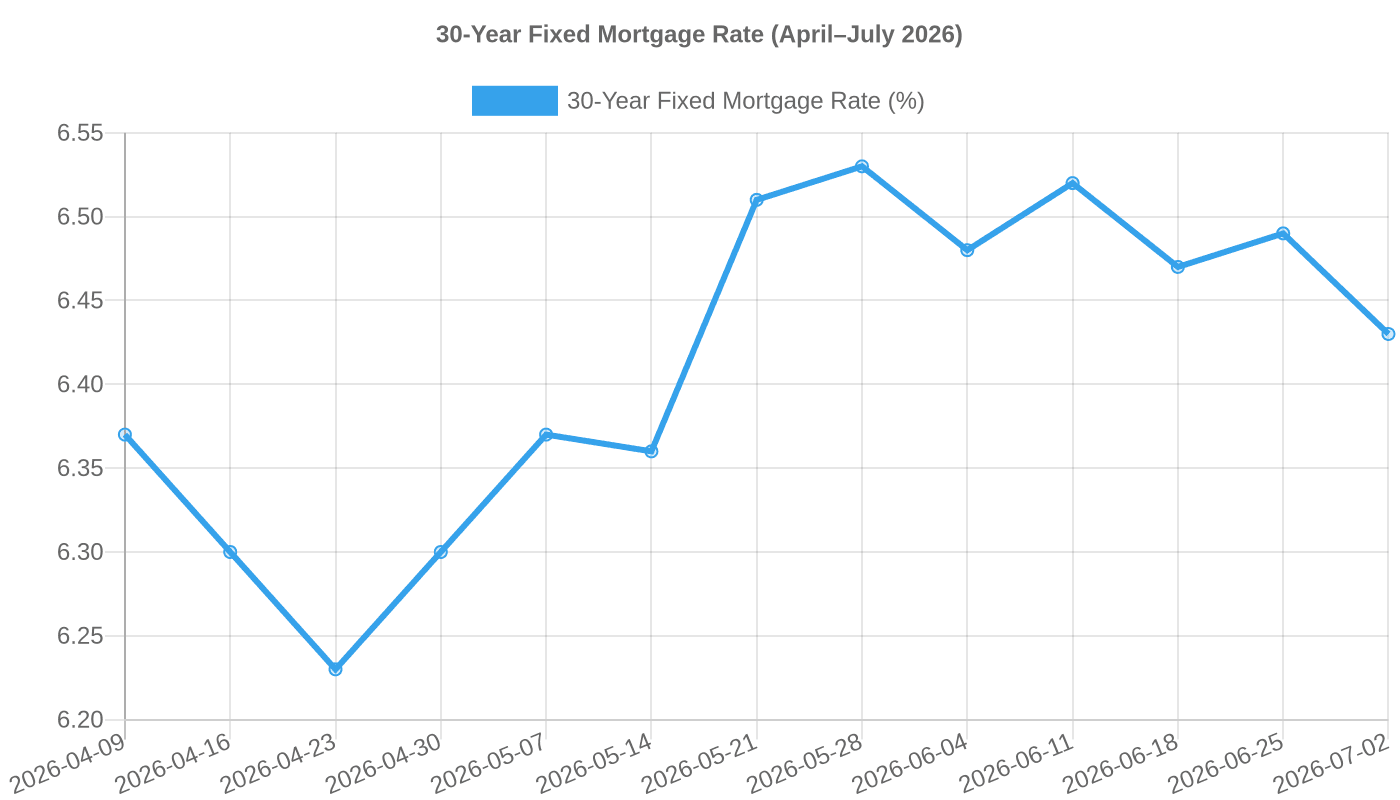
When rates rise, end buyers may be harder to find, so you'll want longer due diligence periods and stronger assignment clauses. When rates drop, you can move faster with shorter timelines.
How to adjust your contract based on rates:
- Rates above 7%: Use 21-30 day due diligence periods. Focus on cash buyers. Consider offering seller financing to make the deal more attractive.
- Rates between 6% and 7%: Use 14-21 day due diligence periods. Mix of cash and financed buyers. Standard assignment clauses work.
- Rates below 6%: Use 7-14 day due diligence periods. More financed buyers available. You can move faster.
Median Home Prices and Your Assignment Fee
The national median sales price of houses sold was $403,200 as of January 1, 2026 (source: FRED). Prices have declined from a peak of $435,400 in July 2023. In a declining price environment, your assignment fee may shrink because end buyers expect discounts. Your contract should allow flexibility to renegotiate if market conditions shift.
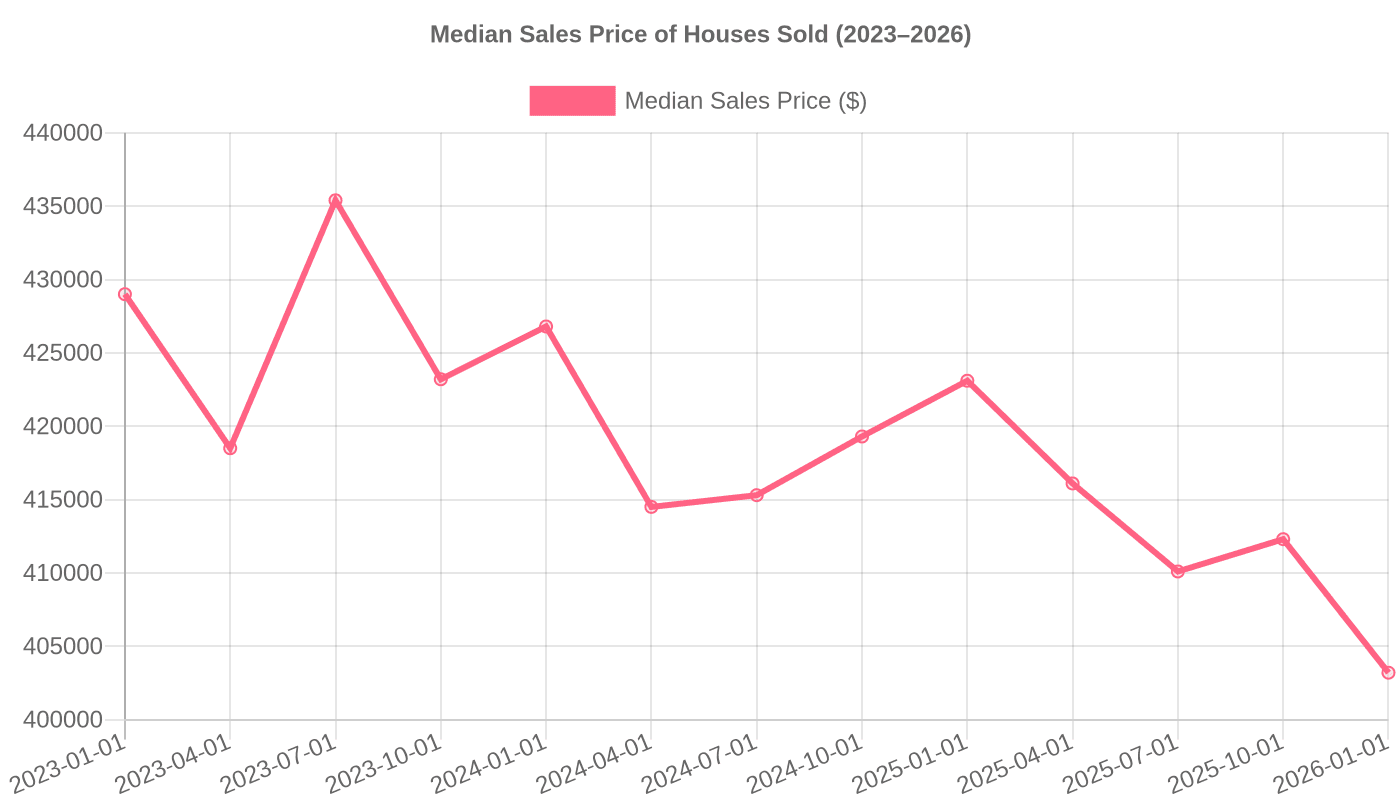
How to protect your fee in a declining market:
- Set a lower purchase price with the seller to give yourself more room for your fee
- Include a renegotiation clause that allows you to adjust the price if market conditions change
- Use a shorter assignment period so you don't get caught in a declining market
- Focus on distressed properties where sellers are more motivated and less likely to renegotiate
Days on Market: How Long You Have to Assign
As of June 2026, the median days on market is 53 (source: FRED). That's up from 53 a year ago, but down from a high of 78 in January 2026. Properties are sitting longer than they were during the pandemic boom, but the market is stabilizing.
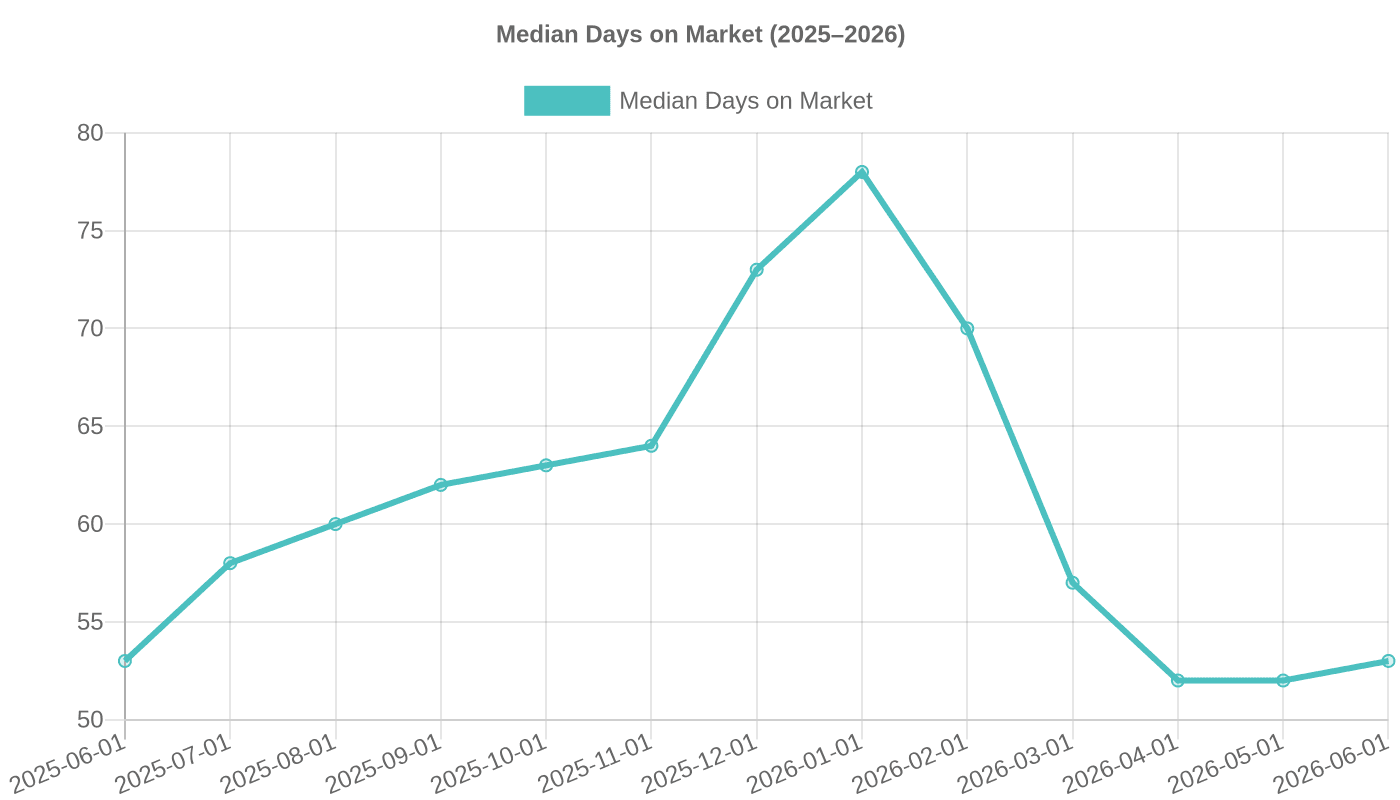
If homes in your area sit for 60+ days, you have more time to find an end buyer. But if your market is hot (30 days or less), you need to move fast. Adjust your contract's due diligence period accordingly.
How to determine your local days on market:
- Check your local MLS or use PropStream
- Look at the average days on market for the last 3 months
- Adjust your due diligence period to match (e.g., if average is 45 days, use 30 days to be safe)
- Monitor trends — if days on market are increasing, extend your period
The Bottom Line
Your wholesale real estate contract is your most important asset. The assignment clause, earnest money terms, and inspection period are the three pillars that protect your fee and your ability to walk away. Always use a contract that is tailored to wholesaling, not a generic form. And before you send your next contract, practice your negotiation script with our free AI Cold Call Trainer — it takes no signup to start and helps you handle seller objections about assignment fees. Then compare the tools in our directory to find the right CRM and contract management software for your business.
Frequently Asked Questions
What is a wholesale real estate contract?
A wholesale real estate contract is a legally binding agreement between a wholesaler and a property seller that gives the wholesaler the right to assign the contract to a third-party buyer before closing. The wholesaler profits by selling their position in the contract for an assignment fee.
What is the most important clause in a wholesale contract?
The assignment clause is the most important. It gives you the legal right to transfer your rights and obligations under the contract to another buyer. Without it, you cannot assign the deal.
How does the earnest money clause work in wholesaling?
The earnest money clause specifies the deposit amount (often $100–$500), where it is held, and conditions for forfeiture. It should be refundable during the due diligence period so you don't lose your deposit if you can't assign the deal.
What is the difference between assignment and double-close?
In an assignment, you transfer the contract to the end buyer and receive your fee at one closing. In a double-close, you buy the property yourself (using transactional funding) and then resell it to the end buyer in a second closing. Double-closing hides your profit but has higher costs.
Do I need a real estate attorney to review my wholesale contract?
Yes. State laws vary, and a local attorney can ensure your contract complies with regulations and protects your interests. This is especially important for the assignment clause and disclosure requirements.
How do market conditions affect my wholesale contract strategy?
When mortgage rates are high (like the current 6.43%), end buyers may be harder to find, so you need longer due diligence periods. When days on market are high, you have more time to assign. Adjust your contract timelines based on local market data.
Sources
- Software tools tracked in the Wholesale REI directory — Wholesale REI directory
- Tool categories in the Wholesale REI directory — Wholesale REI directory
- 30-Year Fixed Mortgage Rate (as of 2026-07-02) — FRED (Federal Reserve Bank of St. Louis)
- Median Sales Price of Houses Sold (as of 2026-01-01) — FRED (Federal Reserve Bank of St. Louis)
- Median Days on Market (as of 2026-06-01) — FRED (Federal Reserve Bank of St. Louis)
This article was researched and drafted with AI assistance, then reviewed and edited by Mark Anthony. Every statistic is sourced and cited. It's for informational purposes only and is not financial or legal advice. Read our editorial policy.