Cash Buyer Investors List: How to Build Your Own


You've got a motivated seller on the phone, a contract in hand, and 30 days to assign it. But without a cash buyer investors list, that deal is just a piece of paper. The difference between a $10,000 assignment fee and a dead deal comes down to one thing: who you can call right now.
Key Takeaways
- A cash buyer investors list is a database of investors who can close without financing — typically in 7–30 days.
- The national median home sales price sits at $410,700 as of April 2026, so buyers need real capital.
- With the 30-year fixed mortgage rate at 7.03% (September 2026), retail buyers are priced out — cash buyers are your best bet.
- Median days on market hit 60 in August 2026, meaning sellers are motivated and wholesalers have more inventory to move.
- You can build a list of 100+ qualified cash buyers in 30 days using county records, investor meetups, and targeted outreach.
What is a cash buyer investors list?
A cash buyer investors list is a curated database of real estate investors who purchase properties with their own funds or hard money — no mortgage, no bank approval, no waiting. These buyers close fast, often in 7 to 14 days, and they're the lifeblood of every wholesale deal.
Unlike a generic lead list, a cash buyer investors list is built for speed. You're not looking for owner-occupants. You're looking for flippers, landlords, and buy-and-hold investors who already have capital sitting in a bank account.
Why cash buyers matter more than ever in 2026
The 30-year fixed mortgage rate climbed from 6.43% in early July 2026 to 7.03% by late September 2026. That's a steady march upward that's squeezing retail buyers out of the market.
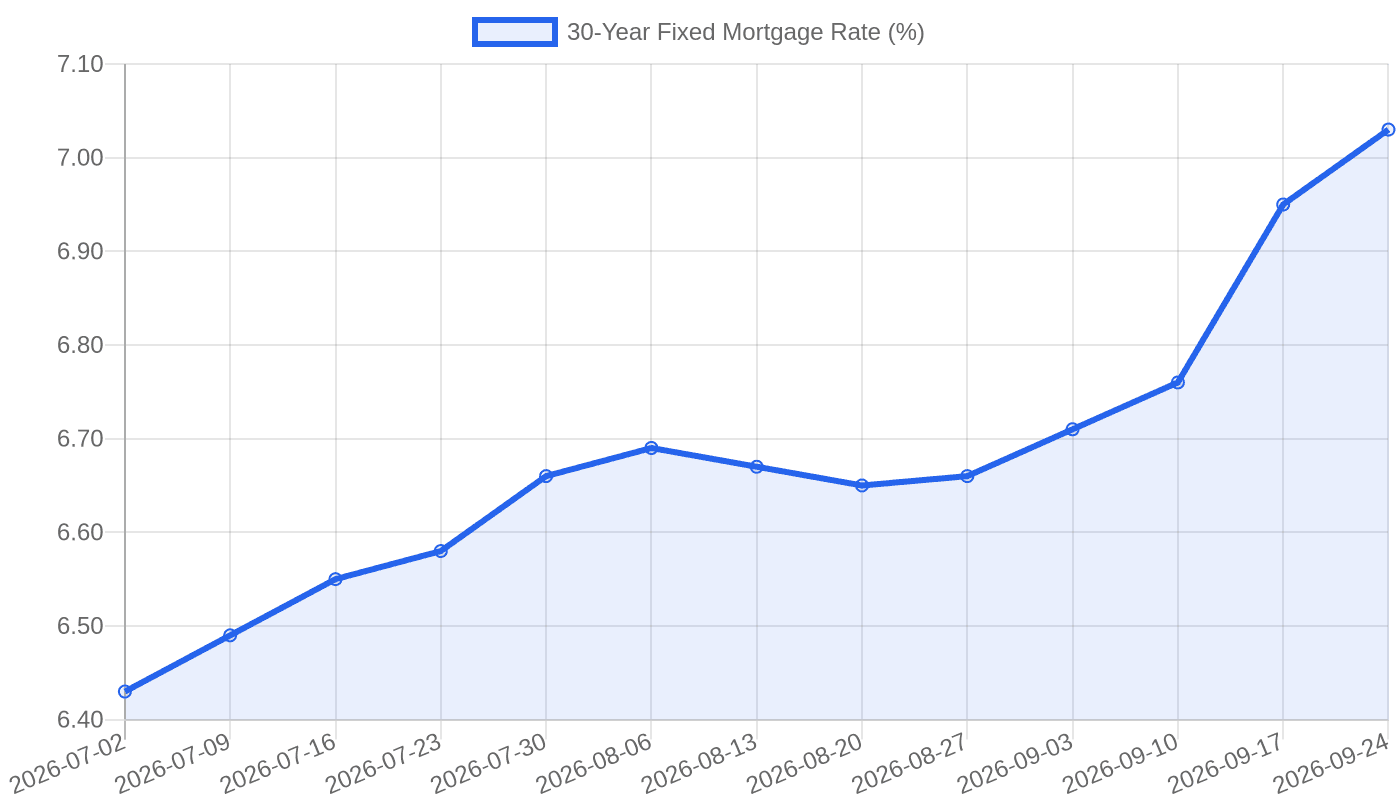
When rates rise, financed offers fall apart. Cash buyers don't care about rates. They care about the deal. That's why your list is your most valuable asset.
Why do you need your own cash buyer investors list?
You need your own list because relying on other wholesalers' buyers means you're always one deal behind. When you control the list, you control the deal flow, the assignment fee, and the relationship.
Here's what happens when you don't have your own list:
- You scramble to find a buyer after you've already locked up a contract.
- You split your assignment fee with another wholesaler who "knows a guy."
- You lose deals to wholesalers who already have 50 buyers on speed dial.
Building your own list takes 30 days of focused effort. After that, you have a repeatable asset that pays you on every deal.
How do you find cash buyers?
You find cash buyers by going where they already spend money — county records, investor meetups, and online platforms. The best sources are public and free, but they require consistent effort.
1. County records and tax rolls
Every county has a public record of property transactions. You're looking for buyers who paid cash — no mortgage lien recorded. These are your highest-probability cash buyers.
- Search your county's recorder or assessor website.
- Filter for sales where no mortgage was recorded.
- Pull the buyer's name and mailing address.
- Cross-reference with the tax roll to confirm they own multiple properties.
This method is free but time-consuming. Expect to spend 5–10 hours per county to get a solid list.
2. Investor meetups and REIA groups
Local real estate investor associations (REIAs) are goldmines. The people who show up are actively buying. Bring business cards, listen more than you talk, and follow up within 24 hours.
- Find your local REIA through a quick search.
- Attend at least two meetings per month.
- Ask every investor: "What's your buy box right now?"
- Add them to your list with notes on their criteria.
3. Online platforms and data tools
The Wholesale REI directory tracks 65 software tools across 9 categories — many of them built specifically to help you find cash buyers. Tools like PropStream and ATTOM Data let you filter by cash purchase history, equity, and ownership type.
- PropStream: filter by "cash buyer" and "absentee owner" to find active investors.
- ATTOM Data: pull deed records and mortgage history to identify free-and-clear properties.
- Launch Control: automate outreach to your list once it's built.
4. Direct mail and cold outreach
Once you have names, you need to reach them. Direct mail still works for older investors. Cold calling works for everyone else.
- Send a simple postcard: "I have off-market deals. Are you buying?"
- Follow up with a call 3–5 days later.
- Track every touchpoint in a CRM like GoHighLevel.
What should you track for each cash buyer?
You should track at least 10 data points for every cash buyer on your list. The more you know, the faster you can match a deal to the right buyer.
| Data Point | Why It Matters |
|---|---|
| Name and entity | Know who you're actually contracting with |
| Phone and email | Primary and secondary contact methods |
| Buy box (price, area, property type) | Match deals fast without guessing |
| Proof of funds | Confirm they can actually close |
| Past purchases | See what they've bought and where |
| Closing timeline | Know if they can hit your deadline |
| Preferred deal structure | Assignment, double close, or novation |
| Referral source | Track where your best buyers come from |
| Last contact date | Stay top of mind with regular follow-up |
| Notes | Anything else that helps you personalize |
How to verify proof of funds
Ask for a recent bank statement or a letter from their lender. Serious buyers won't hesitate. If they push back, they're not serious.
- Bank statement: redact account numbers, keep the balance visible.
- Hard money letter: confirms they have a lending relationship.
- Proof of funds letter from a title company: the gold standard.
How do you qualify a cash buyer?
You qualify a cash buyer by asking three questions: What's your buy box? How fast can you close? Can you show proof of funds? If they can't answer all three, they're not ready.
The three-question qualification script
- "What areas and property types are you buying right now?"
- "If I sent you a contract today, how many days to close?"
- "Can you send me a proof of funds letter this week?"
If they answer all three clearly, they go on your A-list. If they hesitate, they go on your B-list and get a follow-up in 30 days.
A-list vs. B-list vs. C-list
- A-list: Proven closers. You call them first on every deal.
- B-list: Interested but unproven. You nurture them with monthly deal alerts.
- C-list: Tire-kickers. You keep them in your database but don't waste time.
How do you build the list fast?
You build the list fast by combining free public data with paid tools and a consistent outreach routine. Thirty days of focused effort gets you 100+ qualified buyers.
Week 1: Data collection
- Pull cash sales from two counties.
- Join two local REIA groups.
- Set up a free CRM to track contacts.
Week 2: Outreach
- Send 100 direct mail pieces.
- Make 50 cold calls.
- Attend one investor meetup.
Week 3: Qualification
- Follow up with everyone who responded.
- Ask the three qualification questions.
- Sort into A, B, and C lists.
Week 4: Nurture
- Send your first deal alert to the A-list.
- Schedule monthly follow-ups for the B-list.
- Add new contacts from the week's meetup.
What tools help you build and manage your list?
The best tools for building a cash buyer investors list are data platforms, CRMs, and outreach automation. The Wholesale REI directory tracks 65 tools across 9 categories, so you can find exactly what fits your budget.
Data and lead generation tools
- PropStream: Best for filtering cash buyers by purchase history.
- ATTOM Data: Best for deep property and mortgage records.
- Televista Lead Generation: Best for targeted investor lists.
CRM and outreach tools
- GoHighLevel: Best all-in-one CRM with SMS and email automation.
- Launch Control: Best for wholesalers who want done-for-you marketing.
- CallTools: Best for high-volume cold calling.
How to choose the right stack
Start with one data tool and one CRM. Don't buy five tools on day one. Get good at two, then add more as your deal flow grows.
How do you keep your list warm?
You keep your list warm by staying in touch every 30 days with something valuable — a new deal, a market update, or a simple check-in. Cash buyers buy from wholesalers they remember.
The 30-day touch routine
- Day 1: Send a new deal alert.
- Day 10: Share a market stat or news update.
- Day 20: Call to check in.
- Day 30: Send a simple "still buying?" text.
What to send
- New deals that match their buy box.
- Local market updates (days on market, price trends).
- A quick "thinking of you" text with no ask.
What are common mistakes to avoid?
You avoid common mistakes by treating your list like a business asset, not a one-time project. The biggest mistake is building the list once and never updating it.
- Not verifying proof of funds. A buyer without funds is not a buyer.
- Not tracking buy boxes. Sending a $500k deal to a $150k buyer wastes everyone's time.
- Not following up. Most deals close after the 5th touch, not the first.
- Not segmenting. A-list buyers deserve more attention than C-list.
- Not using a CRM. Spreadsheets break. CRMs scale.
The Bottom Line
Your cash buyer investors list is the single most valuable asset in your wholesaling business. Build it once, keep it warm, and you'll never scramble to assign a contract again. Start this week: pull cash sales from one county, join one REIA, and make 10 calls. Then practice your pitch against a realistic AI seller with our free AI Cold Call Trainer — it takes no signup to start.
Frequently Asked Questions
What is a cash buyer investors list?
A cash buyer investors list is a database of real estate investors who buy properties with cash or hard money, without needing mortgage financing. These buyers close fast, often in 7–14 days, and are essential for wholesalers who need to assign contracts quickly.
How do I find cash buyers for wholesaling?
You can find cash buyers through county records (looking for cash purchases with no mortgage lien), local REIA meetups, online data tools like PropStream and ATTOM Data, and direct outreach. Combining two or three sources builds a solid list fastest.
How many cash buyers do I need on my list?
Aim for at least 50–100 qualified cash buyers. The more you have, the faster you can match a deal to a buyer. Quality matters more than quantity — 20 proven closers beat 200 tire-kickers.
What should I track for each cash buyer?
Track their name and entity, contact info, buy box (price, area, property type), proof of funds, past purchases, closing timeline, preferred deal structure, referral source, last contact date, and notes. A CRM like GoHighLevel makes this easy.
How often should I follow up with my cash buyers?
Follow up every 30 days with something valuable — a new deal, a market update, or a simple check-in. Most deals close after the 5th touch, so consistency is key.
What tools help build a cash buyer investors list?
Data tools like PropStream and ATTOM Data help you find cash buyers. CRMs like GoHighLevel and outreach tools like CallTools help you manage and contact them. The Wholesale REI directory tracks 65 tools across 9 categories to help you choose.
Sources
- Software tools tracked in the Wholesale REI directory — Wholesale REI directory
- Tool categories in the Wholesale REI directory — Wholesale REI directory
- 30-Year Fixed Mortgage Rate (as of 2026-09-24) — FRED (Federal Reserve Bank of St. Louis)
- Median Sales Price of Houses Sold (as of 2026-04-01) — FRED (Federal Reserve Bank of St. Louis)
- Median Days on Market (as of 2026-08-01) — FRED (Federal Reserve Bank of St. Louis)
This article was researched and drafted with AI assistance, then reviewed and edited by Mark Anthony. Every statistic is sourced and cited. It's for informational purposes only and is not financial or legal advice. Read our editorial policy.