Direct Mail Marketing for Real Estate Investors: Tips & Tricks That Get Responses


Most wholesalers don't have a mail problem. They have a response problem. You spend real money on postage, wait two weeks, and hear nothing back — and you're not sure if the list was bad, the letter was bad, or the timing was bad.
Key Takeaways
- Direct mail works best when your list, offer, and follow-up are built as one system — not three separate guesses.
- Housing market conditions change who responds: with the 30-year fixed mortgage rate at 7.32% and the median sales price at $393,300, motivated sellers and tired landlords are your sweet spot.
- The median home sits on the market for 61 days, which tells you how long a seller's patience lasts before they get flexible.
- The Wholesale REI directory tracks 7 direct mail tools out of 65 total tools across 9 categories — enough options to match software to your volume.
- Consistency beats cleverness: a plain, honest letter mailed five times outperforms a fancy one mailed once.
What is direct mail marketing for real estate investors?
Direct mail marketing for real estate investors is the practice of sending physical letters, postcards, or handwritten notes to a targeted list of property owners to generate motivated seller leads. It's a lead generation channel, not a branding exercise — every piece should have one job: get the phone to ring or the QR code scanned.
For wholesalers, direct mail is usually the backbone of the acquisition side of the business. You're not advertising a service. You're starting a conversation with someone who owns a property you'd like to buy.
Why physical mail still earns its place
Email gets filtered. Texts get blocked. A letter sits on the kitchen counter for a week.
That's the whole advantage. Physical mail gets handled, and it gets handled more than once. For a high-consideration decision like selling a house, repeated exposure matters more than a single clever subject line.
What direct mail is not
It's not a one-time blast. It's not a numbers game you win by mailing 50,000 pieces once. And it's not a replacement for cold calling or driving for dollars — it's the top of a funnel that the rest of your process has to catch.
How do you build a direct mail list that actually converts?
You build a converting list by starting with a specific motivation, not a zip code. The tighter the reason someone might sell, the higher your response rate.
Most beginners pull a giant list of absentee owners across five counties. That's a recipe for a low response rate and a thin wallet. Start narrow.
The list types worth testing first
- Tired landlords — owners of rentals with long tenure and out-of-state mailing addresses.
- Pre-foreclosure and tax delinquent — public records, high motivation, high competition.
- Probate and inherited property — slower timelines but very low competition.
- Vacant properties — code violations, utility shutoffs, and vacancy flags.
- High-equity, long-tenure owners — people who've owned 15+ years and have room to negotiate.
How market conditions shape your list
This is where most wholesalers leave money on the table. Your list should respond to what sellers are actually feeling.
When mortgage rates climb, sellers who locked in a low rate feel stuck. The 30-year fixed rate moved from 6.66% in late July 2026 to 7.32% by late October 2026 — a meaningful jump in a few months.
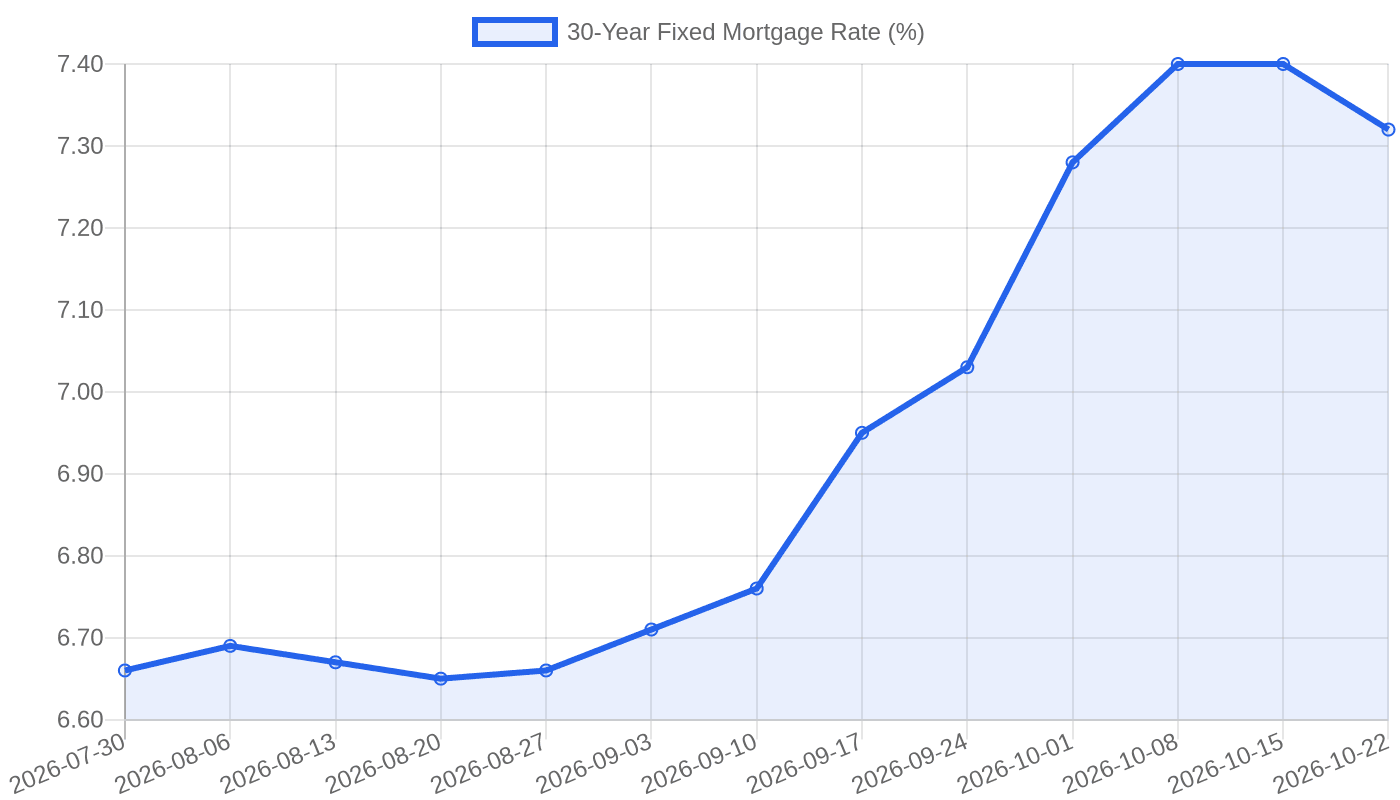
That trend matters for your messaging. When rates rise, the "sell and buy something else" math gets worse for homeowners, so your best prospects shift toward people who have to sell — probate, divorce, relocation, distressed properties — rather than people who'd simply like to upgrade.
How long do sellers wait before they get flexible?
Longer than you'd think, and then all at once. The median days on market sat at 61 days in September 2026, up from a low of 52 days in April and May of that year.
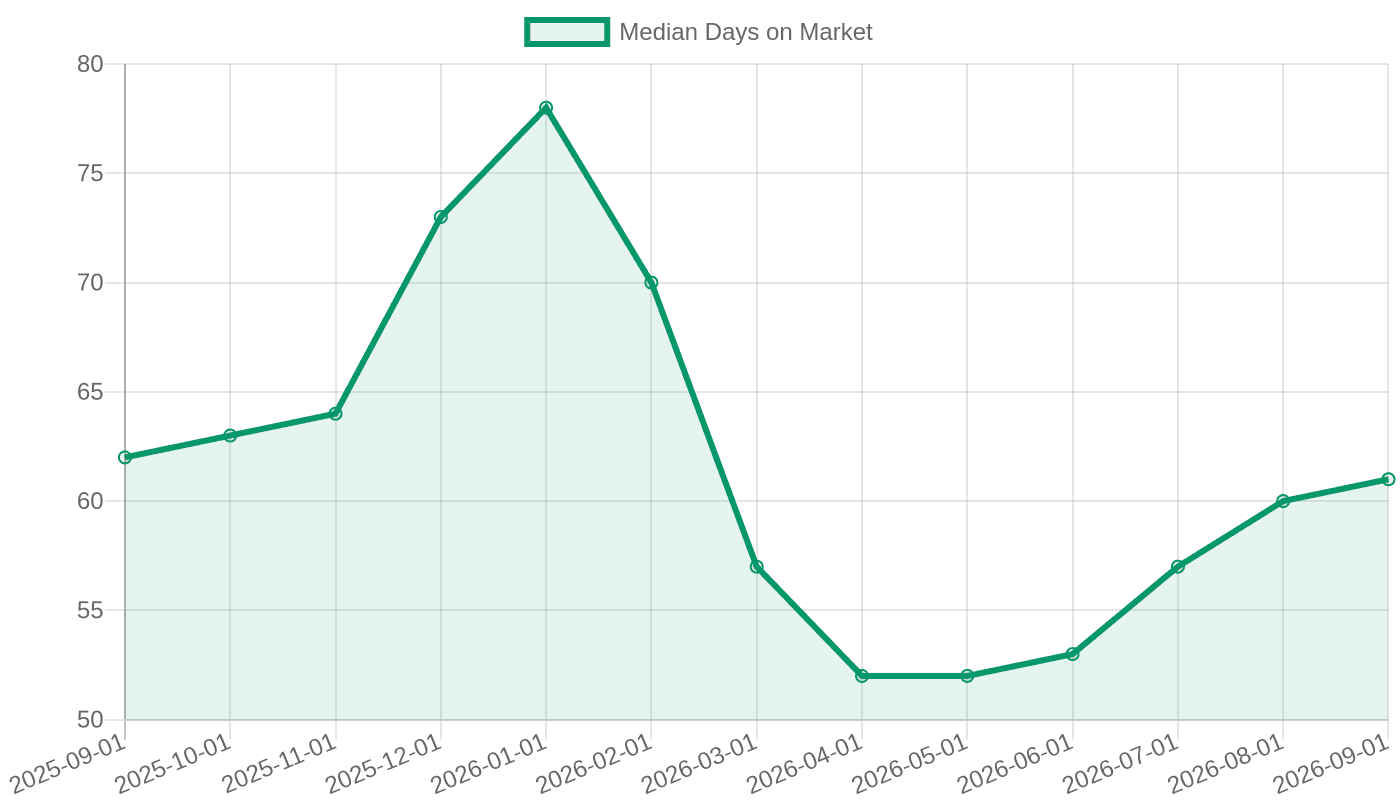
Here's the practical takeaway: a seller who lists in spring may not be ready to talk to an investor until late summer. That's why your mail campaign needs to run through the listing period, not just before it. The seller who ignored your letter in April may call you in September.
What should your direct mail piece say?
Your mail piece should say one clear thing: you buy houses, here's how to reach you, and there's no pressure. Everything else is decoration.
The elements of a letter that gets calls
- A human opening line. "I'm a local investor and I noticed your property on Elm Street." Not "Dear Property Owner."
- A specific offer. "I can close in 14 days, cash, and you pick the closing date."
- A reason to believe you're real. Your name, your company, a phone number a human answers.
- One call to action. Not three. One.
- A handwritten envelope. It gets opened at a dramatically higher rate than a window envelope.
Should you use postcards or letters?
Use postcards for volume and letters for depth. Postcards are cheap and great for a first touch or a reminder. Letters — especially handwritten or handwritten-font letters — win when you need the seller to actually read a paragraph.
A simple split test: run postcards on your broad list and letters on your tightest, highest-motivation list. Compare cost per lead, not response rate alone.
How long should your letter be?
One page is plenty. Two pages max. The goal is a conversation, not a biography. If your letter needs a table of contents, it's too long.
How often should you mail the same list?
You should mail the same list repeatedly — most wholesalers quit after one or two touches, which is exactly when response starts to build. Plan for a minimum of five touches over several months.
Here's a simple cadence that works for most small teams:
| Touch | Timing | Format | Purpose |
|---|---|---|---|
| 1 | Week 1 | Postcard | Introduce yourself |
| 2 | Week 3 | Letter | Make the offer |
| 3 | Week 6 | Handwritten note | Stay human |
| 4 | Week 10 | Postcard | Reminder |
| 5 | Week 16 | Letter | Final push, new angle |
Why spacing matters
Too close together and you look desperate. Too far apart and they forget you. Three to four weeks between touches is the sweet spot for most lists.
What to change between touches
Change the angle, not just the wording. Touch one is an introduction. Touch three might be "I noticed your property is still listed." Touch five might be "I'm still buying in your area this year." Same list, different reason to reply.
How do you write a direct mail offer that stands out?
You stand out by being specific and low-pressure. Vague offers get ignored; pushy offers get thrown away.
The offer formula
Specific outcome + specific timeline + zero obligation.
For example: "I can pay cash for your property, close in 14 days, and you choose the closing date. If you'd like a number, just call and I'll give you one — no obligation to accept."
That's it. No jargon about "equity positions" or "creative financing structures." Sellers don't care about your strategy. They care about certainty and speed.
What to avoid
- Fake urgency ("ACT NOW") — sellers see through it.
- Claims you can't back up ("highest cash offer guaranteed").
- Long paragraphs of legal language.
- Multiple phone numbers and websites competing for attention.
What software do wholesalers use for direct mail?
Wholesalers use direct mail software to handle list pulls, print-and-mail automation, address verification, and response tracking — so they're not stuffing envelopes at midnight. The Wholesale REI directory tracks 7 direct mail tools among its 65 total tools across 9 categories, so you can compare options by volume and budget.
What to look for in a direct mail tool
- List integration. Can it pull from a list source or upload a CSV cleanly?
- Print-and-mail automation. Does it print, stuff, and stamp for you?
- Handwriting options. Real handwriting or realistic handwriting fonts.
- Return address and NCOA handling. Bad addresses waste real money.
- Response tracking. Can you tie a returned call back to a specific campaign?
When to DIY vs. use a service
If you're mailing under a few hundred pieces a month, DIY printing plus a mail merge is workable. Above that, the time cost of stuffing envelopes usually exceeds the savings. That's the point where a print-and-mail service pays for itself.
How do you track whether your direct mail is working?
You track direct mail with a dedicated phone number and a unique campaign code per drop — not by asking callers "where did you hear about us?"
The metrics that matter
- Cost per lead — total campaign cost divided by qualified leads.
- Cost per contract — the number that actually decides whether you keep mailing.
- Response rate — calls plus texts plus QR scans, divided by pieces mailed.
- Conversion by list — which list type produced contracts, not just calls.
A simple tracking setup
- Get a separate tracking number for each campaign.
- Add a short code to every piece ("mention code ELM-3").
- Log every inbound call with the source and the list type.
- Review cost per contract monthly, not weekly.
Weekly reviews will make you quit too early. Monthly reviews give the data time to mean something.
What are the biggest direct mail mistakes wholesalers make?
Quitting too early is the biggest mistake — followed by mailing a vague offer to a broad list. Both are fixable, and both are common.
The top five mistakes
- Mailing once and calling it a test. One drop tells you almost nothing.
- Mailing too broad a list. Motivation beats geography.
- Ignoring the follow-up. A letter with no phone call follow-up leaves money on the table.
- No tracking. If you can't attribute a lead, you can't improve.
- Skipping the market context. Your message should reflect what sellers are seeing — slow days on market, higher rates, softer prices.
The market context worth knowing
The median sales price of houses sold was $393,300 as of July 2026, down from $435,400 in July 2023. That's a real shift in seller psychology.
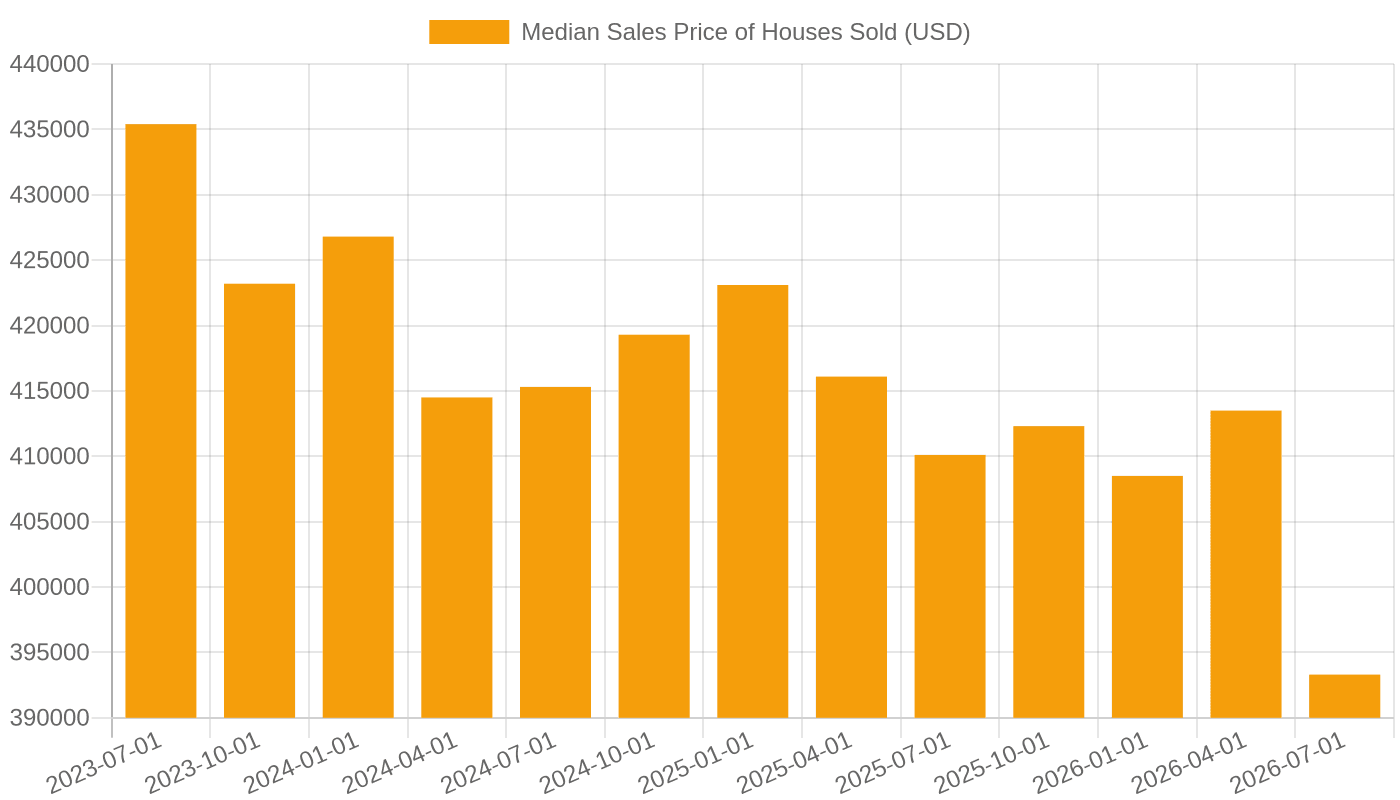
When prices soften, some sellers get nervous and want out fast. Others dig in and wait. Your mail should speak to both — certainty for the nervous ones, patience for the stubborn ones.
The Bottom Line
Direct mail still works for wholesalers, but only as a system: a tight, motivation-driven list, a plain and specific offer, repeated touches, and honest tracking. Pick your list type first, then build the campaign around it. When you're ready to choose software, compare the direct mail tools in the directory side by side — and if phone follow-up is where your campaign stalls, practice a few calls against a realistic AI seller first with our free AI Cold Call Trainer. It takes no signup to start.
Frequently Asked Questions
How often should I mail the same list?
Plan for at least five touches spread over roughly four months, with three to four weeks between each one. Most responses come after the second or third touch, so quitting after one drop wastes the money you already spent.
Are postcards or letters better for real estate investors?
Postcards are cheaper and work well for volume and reminders, while letters — especially handwritten ones — get read more closely. A good approach is postcards on broad lists and letters on your tightest, most motivated list.
How do I track which mailer brought in a lead?
Use a separate tracking phone number and a short campaign code on every piece. Log each inbound call with its source and list type, then review cost per contract monthly rather than weekly.
What list types should a new wholesaler start with?
Start narrow with high-motivation lists: tired landlords, pre-foreclosure and tax delinquent owners, probate and inherited properties, and vacant properties. Motivation beats geography every time.
Does the housing market affect direct mail response rates?
Yes. When rates rise and homes sit longer on the market, sellers who need to move become more receptive. The median days on market reached 61 days in September 2026, up from 52 days in spring, which means sellers get more flexible the longer they wait.
How many direct mail tools are available for wholesalers?
The Wholesale REI directory tracks 7 direct mail tools among 65 total tools across 9 categories. That range lets you match software to your mailing volume and budget instead of overpaying for features you won't use.
Sources
- Software tools tracked in the Wholesale REI directory — Wholesale REI directory
- Tool categories in the Wholesale REI directory — Wholesale REI directory
- Direct Mail tools tracked in the directory — Wholesale REI directory
- 30-Year Fixed Mortgage Rate (as of 2026-10-22) — FRED (Federal Reserve Bank of St. Louis)
- Median Sales Price of Houses Sold (as of 2026-07-01) — FRED (Federal Reserve Bank of St. Louis)
- Median Days on Market (as of 2026-09-01) — FRED (Federal Reserve Bank of St. Louis)
This article was researched and drafted with AI assistance, then reviewed and edited by Mark Anthony. Every statistic is sourced and cited. It's for informational purposes only and is not financial or legal advice. Read our editorial policy.