Direct Mail Real Estate Investing: How to Get Started


Most wholesalers quit direct mail after one batch of letters and zero calls. The ones who stick with it don't have a secret list or a magic script — they just treat mail like a system instead of a lottery ticket.
Key Takeaways
- Direct mail real estate investing means mailing offers to a targeted list of property owners to generate motivated seller leads.
- The directory tracks 65 software tools across 9 categories, including 7 direct mail tools built for investors.
- Housing starts came in at 1,275 as of August 2026, down from a 2026 high of 1,522 in March — less new supply means more competition for existing homes.
- The 30-year fixed mortgage rate hit 7.4% as of October 15, 2026, up from 6.58% in late July — a jump that pushes more sellers into problem situations.
- The median sales price of houses sold was $410,700 as of April 2026, so your mail budget has to match the size of the deal you're chasing.
What is direct mail real estate investing?
Direct mail real estate investing is the practice of sending physical letters, postcards, or notes to property owners to find sellers who want to sell fast, off-market, or on flexible terms. You're not advertising to the general public. You're picking a specific group of owners and starting a one-to-one conversation by mail.
For wholesalers, that conversation has one job: get the phone to ring. Every piece of mail you send is a lead-generation cost, and the deal only works if your cost per lead stays below what a contract is worth to you.
Why mail still beats a lot of digital channels
Mail is slow, expensive, and unglamorous. That's exactly why it works.
Your inbox is crowded. A physical envelope sitting in a stack of bills gets handled. And unlike a Facebook ad, a letter doesn't disappear the second someone scrolls past it — it sits on the kitchen counter for a week.
The other advantage is targeting. You can mail 200 owners on a specific street with a specific problem. You can't do that with a broad digital campaign.
What direct mail is not
It's not a one-time blast. It's not a postcard you send once and judge by the response rate. And it's not a replacement for follow-up calls.
Treat mail as the front door to a conversation. The letter's only job is to open the door.
Why does the housing market make direct mail worth it right now?
Because supply is tight and financing is expensive, which pushes more owners into situations where a fast, flexible sale makes sense. That's the exact profile direct mail is built to reach.
Housing starts were 1,275 as of August 2026. That's down from 1,522 in March 2026 — a real pullback in new construction.
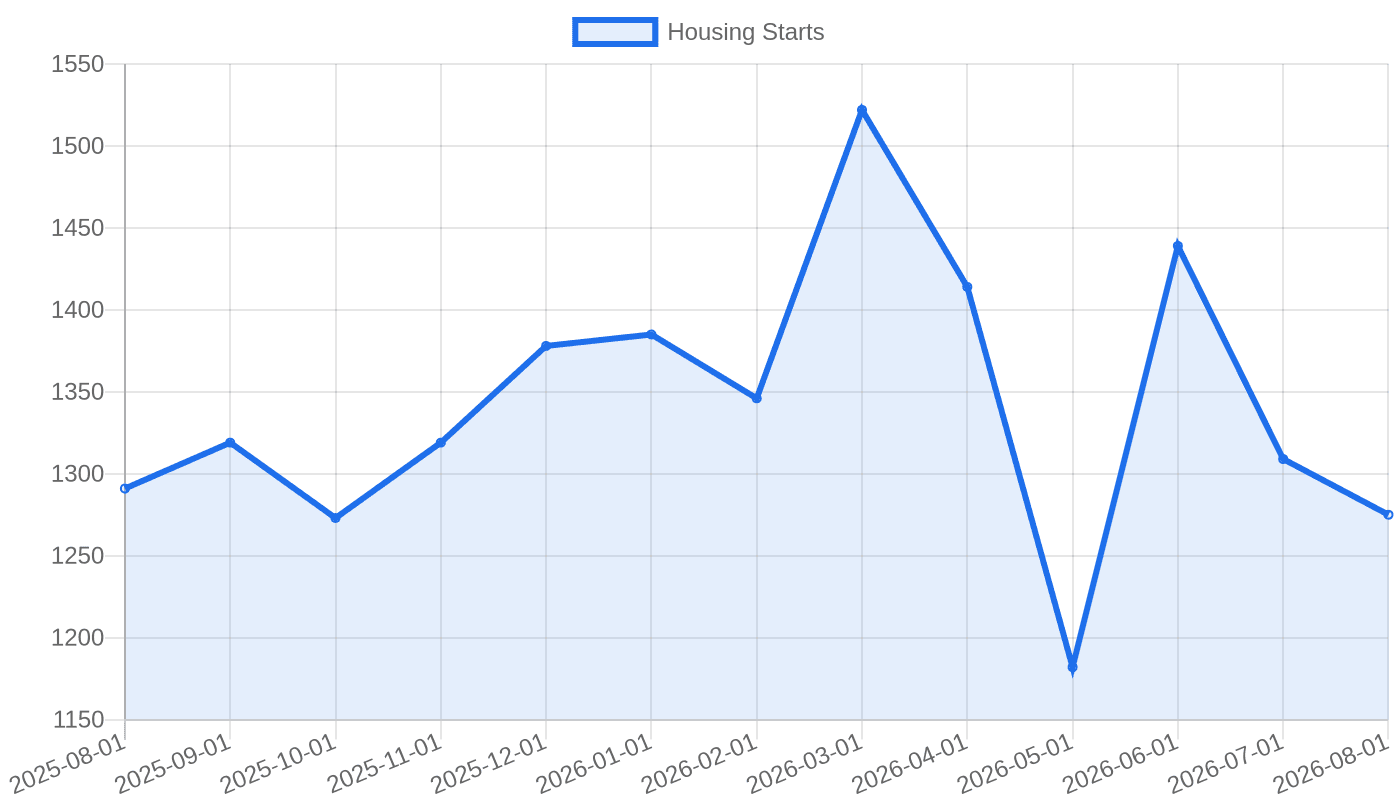
Fewer new homes breaking ground means buyers compete for the existing housing stock. For you, that means motivated sellers are more valuable, and the owners sitting on older properties have fewer easy options.
The rate story matters more than you think
Mortgage rates climbed from 6.58% on July 23, 2026 to 7.4% on October 15, 2026. That's a fast move in a short window.
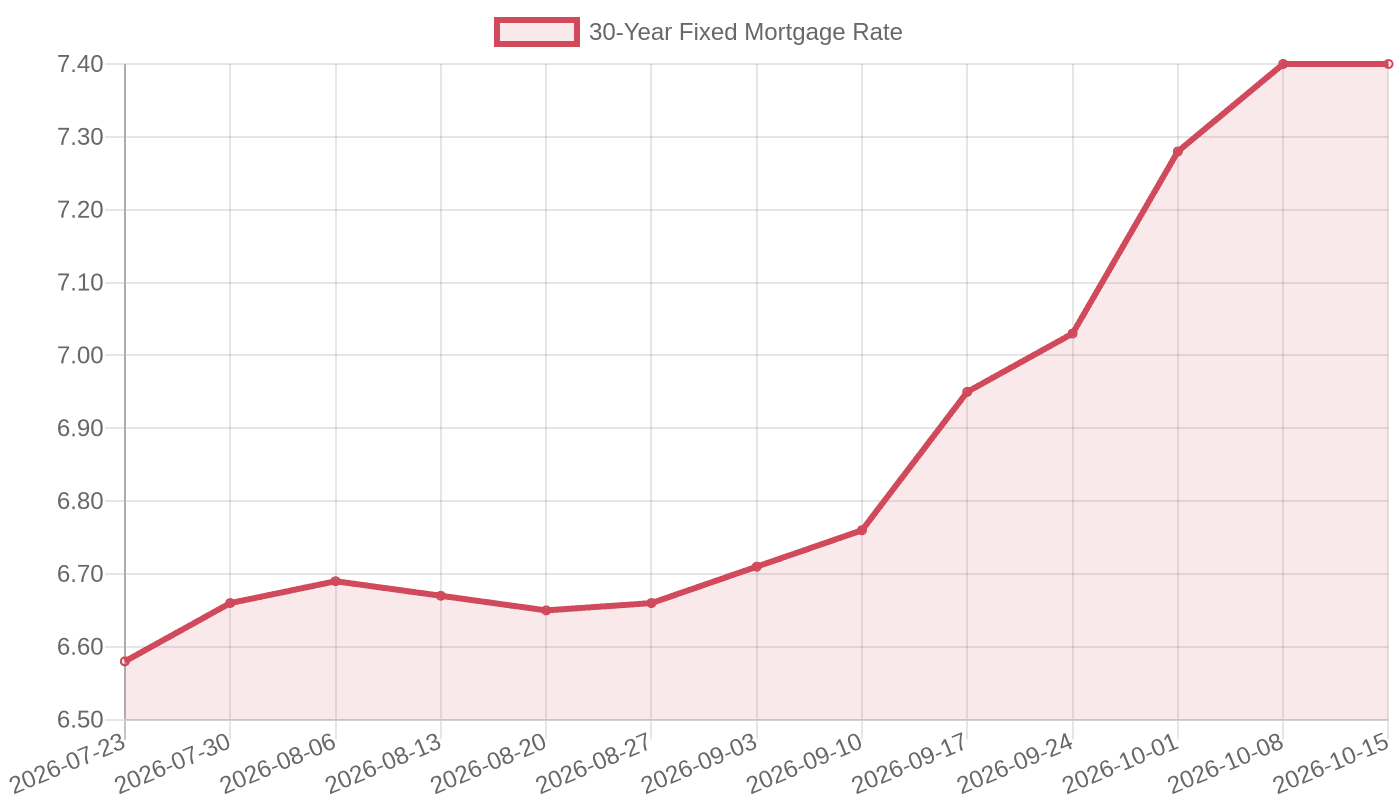
When rates jump like that, some owners lose their buyer pool. Some lose their refinance option. Some inherit a property with a payment they can't carry. Those are the people who answer a letter.
Price context for your budget
The median sales price of houses sold was $410,700 as of April 2026. Keep that number in your head when you decide how much to spend per lead. A campaign that costs a few thousand dollars to produce one contract on a six-figure property is a good trade.
How do you build a direct mail list for wholesaling?
You build the list first, before you write a single word of copy. The list decides your results more than the letter does.
Start with a data source that lets you filter by the things that signal distress or motivation: ownership length, equity position, property condition, absentee status, and tax delinquency. Then narrow to a geography you can actually drive.
The five list types most wholesalers start with
- Absentee owners — the mailing address differs from the property address.
- High-equity owners — long tenure with little or no mortgage left.
- Tired landlords — rental properties owned for many years.
- Pre-foreclosure and tax-delinquent owners — public records, time-sensitive.
- Probate and inherited properties — often out-of-state heirs who want a clean exit.
Pick one or two to start. Mailing five list types at once tells you nothing about which one works.
How big should your first batch be?
Big enough to read the results, small enough to survive a bad month. A few hundred records per list is a reasonable first test. If you can't afford to mail the same list three or four times, you can't afford to test it.
Clean the list before you spend a dime
Skip tracing, address verification, and de-duplication save more money than any copy tweak. Bad addresses are pure waste — you pay for printing and postage on a letter that never lands.
How do you write a direct mail letter that gets calls?
You write short, plain, and specific — and you make the offer obvious in the first two lines. Sellers skim. They decide in seconds whether you're a real person or a mass mailing.
The structure that works
- Open with them, not you. Name the property or the situation.
- State the offer plainly. "I'll buy your house as-is, cash, on a date you pick."
- Kill the two big objections. No repairs, no agent commissions, no fees.
- Give one clear call to action. A phone number and a name. That's it.
- Sign it like a human. Handwritten-style fonts and a real signature beat a logo.
Handwritten vs. typed vs. postcard
| Format | Best for | Cost per piece | Response feel |
|---|---|---|---|
| Handwritten-style letter | High-equity, probate, absentee | Higher | Warmest, slowest to scale |
| Typed letter with real signature | General list tests | Moderate | Solid, easy to personalize |
| Postcard | Brand recall, follow-up touches | Lowest | Fast, low commitment |
| Yellow letter | Tired landlords, low-equity lists | Moderate | Stands out in the stack |
The right answer is usually a mix: a letter first, then postcards to stay in front of the same list.
Personalization that actually moves response
Mention the property address. Mention how long they've owned it. Reference the situation if it's public record. That's it — you don't need a gimmick.
How much should you budget for a direct mail campaign?
Budget by cost per lead and cost per contract, not by "how much can I spend this month." Those two numbers tell you whether to scale or stop.
The simple math
Track four numbers on every campaign:
- Pieces mailed
- Calls received
- Leads qualified
- Contracts signed
Then divide total spend by each one. If your cost per contract is comfortably below your assignment fee, mail more. If it isn't, change the list before you change the letter.
Where the money actually goes
Printing, postage, list data, skip tracing, and return-address handling. Postage is usually the biggest line item, which is why list quality matters so much — every bad address is money gone.
Why most campaigns die in month two
Because the first batch rarely pays for itself. Direct mail compounds. The same owner has to see your name several times before they call. Budget for repeat touches from day one, or don't start.
What software do you need to run direct mail at scale?
The directory tracks 65 tools across 9 categories, and 7 of them are direct mail tools built specifically for real estate investors. You don't need all seven. You need one that handles list upload, templating, and tracking without a spreadsheet duct-taped to it.
What to look for in a direct mail tool
- List import and de-duplication so you're not paying to mail the same owner twice.
- Templates for letters, postcards, and handwritten styles.
- Address verification before print.
- Campaign tracking so you know which list and which piece produced which call.
- Turnaround time — a slow vendor kills a time-sensitive list.
Where direct mail fits in your stack
Mail is one category out of nine. Pair it with a CRM so every call gets logged, and with a lead source so you're not mailing blind. The mail tool sends the letter. The CRM tells you whether it worked.
How do you track and improve response rates?
You track by list and by piece, and you change one variable at a time. Most wholesalers change everything at once and learn nothing.
The tracking setup that works
- Give each list its own phone number or tracking line.
- Log every inbound call with the list name attached.
- Note the mail date and the call date — response lag tells you when to follow up.
- Review results after every batch, not every quarter.
What to change first when response is low
Change the list. Then change the offer. Then change the copy. Copy is the last thing to touch, because a great letter to the wrong list still gets ignored.
When to scale
Scale when cost per contract is consistently below your target and you can handle the call volume. Scaling a campaign that isn't profitable just loses money faster.
The Bottom Line
Direct mail real estate investing works when you treat it as a repeatable system: a tight list, a plain-spoken letter, a real budget for multiple touches, and honest tracking. The market conditions — fewer housing starts, higher rates, and a median sale price near $410,700 — mean motivated sellers are out there and worth reaching.
Your next step: compare the direct mail tools in the directory, pick one that handles list cleanup and campaign tracking, and mail your first list three times before you judge it.
Frequently Asked Questions
How much does direct mail real estate investing cost to start?
It depends on your list size and format, but plan for printing, postage, list data, and skip tracing on every piece. The real test is cost per contract versus your assignment fee — if that number works, the campaign works.
How many times should I mail the same list?
More than once. Most sellers don't respond to the first piece, so budget for three or four touches to the same list before you judge the results. Consistency is what separates campaigns that work from ones that quietly die.
Is direct mail still effective for wholesalers?
Yes, because it's targeted and hard to ignore. With housing starts at 1,275 in August 2026 and mortgage rates at 7.4% in October 2026, more owners are facing situations where a fast, as-is sale makes sense.
What's the best list to start with?
Absentee owners and high-equity owners are the most common starting points because the data is easy to pull and the motivation is clear. Pick one list type, mail it several times, and only then test a second list.
Do I need software to run a direct mail campaign?
You can start with a spreadsheet, but software saves money fast on list cleanup, address verification, and tracking. The directory tracks 7 direct mail tools built for investors, so you can compare before you commit.
Should I send letters or postcards?
Letters tend to pull better responses on high-equity and probate lists, while postcards are cheaper for follow-up touches. Many wholesalers use a letter first and postcards to stay in front of the same list.
Sources
- Software tools tracked in the Wholesale REI directory — Wholesale REI directory
- Tool categories in the Wholesale REI directory — Wholesale REI directory
- Direct Mail tools tracked in the directory — Wholesale REI directory
- Housing Starts (as of 2026-08-01) — FRED (Federal Reserve Bank of St. Louis)
- 30-Year Fixed Mortgage Rate (as of 2026-10-15) — FRED (Federal Reserve Bank of St. Louis)
- Median Sales Price of Houses Sold (as of 2026-04-01) — FRED (Federal Reserve Bank of St. Louis)
This article was researched and drafted with AI assistance, then reviewed and edited by Mark Anthony. Every statistic is sourced and cited. It's for informational purposes only and is not financial or legal advice. Read our editorial policy.