Finding Motivated Sellers: Proven Strategies That Work


Most wholesalers don't have a lead problem. They have a motivated seller problem. You can buy a thousand names and still get zero deals if none of those people actually need to sell.
Here's the good news: motivated sellers leave clues. They show up in public records, in listing data, and in the way they respond to your outreach. Your job is to find those clues, stack them, and reach out with something worth answering.
Key Takeaways
- Motivated sellers are identified by stacked distress signals — not by a single list.
- The national median days on market sat at 61 days as of September 2026, so sellers who need speed are easier to spot.
- The 30-year fixed mortgage rate climbed from 6.66% in late July 2026 to 7.32% by late October 2026, which squeezes some owners into a sale.
- The median sales price of houses sold was $410,700 as of April 2026, so equity-rich owners are your best targets.
- A disciplined follow-up system beats a bigger list almost every time.
What does "finding motivated sellers" actually mean?
Finding motivated sellers means locating property owners who have a reason to sell quickly and a willingness to accept a below-market offer in exchange for speed and certainty. It's not about finding people who want to sell. It's about finding people who need to.
That distinction matters. A homeowner who lists with an agent wants top dollar and has months to wait. A motivated seller wants a problem solved — a probate headache, a divorce, a vacant house draining their bank account — and will trade price for relief.
The three ingredients of a motivated seller
Every real deal has three things stacked together:
- A trigger event. Death, divorce, job loss, relocation, foreclosure, code violations, tenant problems.
- Financial pressure. Late payments, tax liens, high carrying costs, or a mortgage that's about to reset.
- Equity or control. They either own the property outright or have enough equity to make a discount work.
Miss any one of those and the deal usually stalls. Find all three and you're talking to someone who will pick up the phone.
Why the market right now creates more of them
Higher rates create motivated sellers. It's that simple.
The 30-year fixed mortgage rate moved from 6.66% at the end of July 2026 to 7.32% by October 22, 2026. That's a meaningful jump in a matter of months.
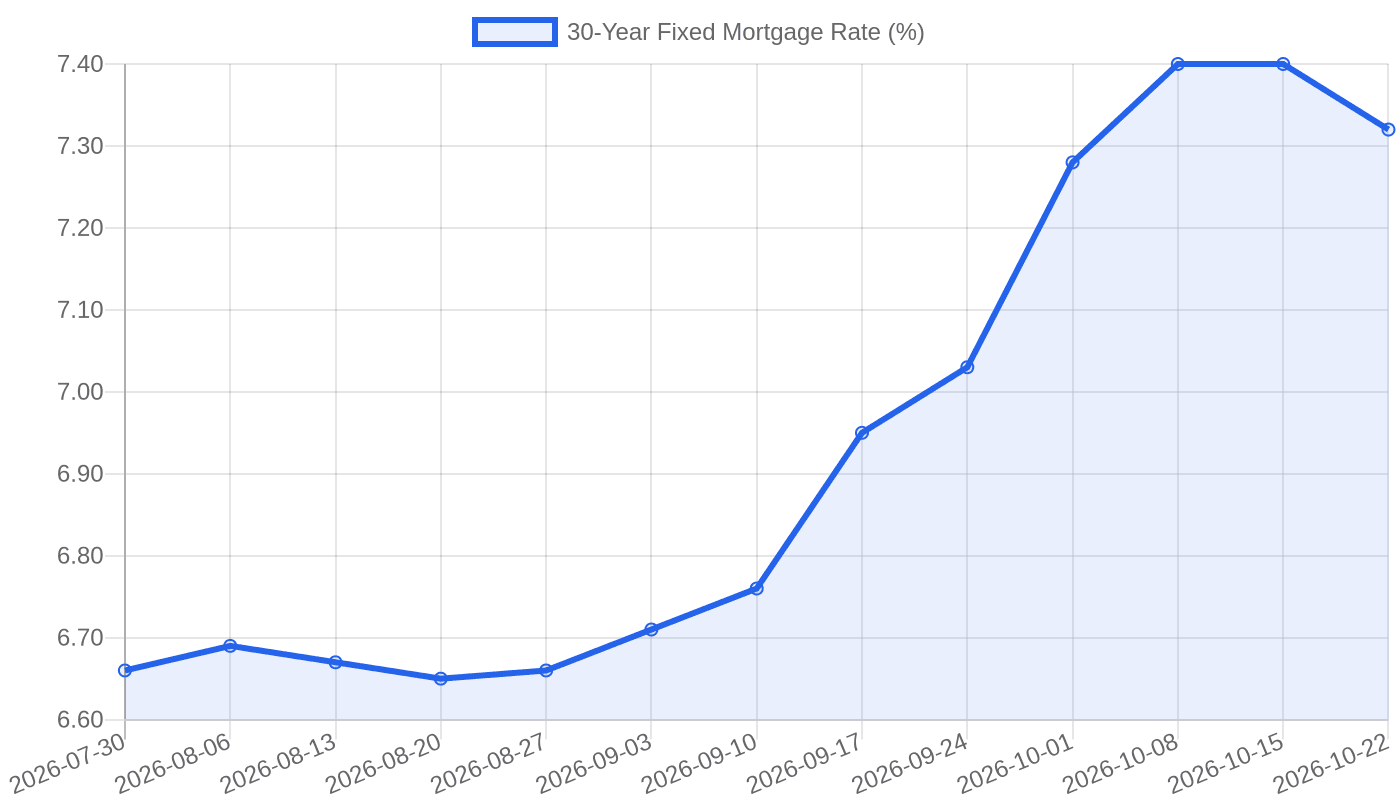
When rates climb that fast, two things happen. Buyers get priced out and listings sit longer. And owners who were counting on a cheap refinance suddenly can't make the numbers work. Both push people toward a fast, certain sale.
Meanwhile, the median sales price of houses sold was $410,700 as of April 2026. That's a lot of equity locked up in houses across the country — equity that a motivated seller can use to solve a problem.
How do you find motivated sellers?
You find motivated sellers by building lists from public distress records, layering multiple signals on top of each other, and then reaching out through more than one channel. The list is the foundation. The stacking is what makes it work.
Step 1: Pick your target geography
Start with two or three zip codes you know well. You want areas where you can drive to the property, where you understand the price range, and where you have a sense of which neighborhoods turn over.
Don't try to cover a whole metro on day one. Depth beats width when you're building a pipeline.
Step 2: Pull from multiple list sources
Here's where most beginners go wrong. They buy one list, mail it once, and wonder why nothing happens. Instead, pull from several sources and look for overlap.
| List source | What it signals | Best for |
|---|---|---|
| Pre-foreclosure / notice of default | Owner is behind and running out of time | High urgency, tight timelines |
| Probate and estate filings | Inherited property, often vacant or outdated | Equity-rich, low competition |
| Tax delinquent and tax lien | Owner is behind on property taxes | Long-term follow-up |
| Code violations and nuisance liens | Property is neglected or distressed | Value-add investors |
| Vacant property and absentee owner | Owner doesn't live there | Out-of-state owners ready to sell |
| High-equity + long tenure | Owns most of the house outright | Creative finance and subject-to |
| Expired listings | Tried to sell, didn't work | Warm, already motivated |
| Divorce filings | Forced sale, emotional urgency | Fast closings |
The magic is in the overlap. An absentee owner who is also tax delinquent and also has a code violation is a completely different prospect than someone who only shows up on one list.
Step 3: Stack the signals
Give each property a score. One signal is a cold lead. Two signals is a warm lead. Three or more is a call-today lead.
This is the single highest-leverage habit in this whole process. It tells you where to spend your time and it keeps you from burning out on low-probability names.
Step 4: Verify before you dial
Before you call, confirm the owner's name, the mailing address, and whether the property is still in their name. Skip tracing tools pull phone numbers, but records change fast. A quick check saves you from calling someone who sold two years ago.
What are the best lead sources for motivated sellers?
Direct mail and cold calling still produce the most deals for most wholesalers, but data-driven list stacking is what separates the operators who close from the ones who just stay busy. Here's how the main channels compare.
Direct mail
Direct mail works because it's tangible and it reaches people who don't answer unknown numbers. The downside is cost and speed. Expect to mail the same list multiple times before you get a response.
Best practice: send a sequence of at least four to six touches, spaced a few weeks apart, with a different angle each time.
Cold calling
Cold calling is the fastest feedback loop you have. You learn in one afternoon whether a list is any good.
It's also the hardest skill to build. Most people quit before they get good. If you want to improve fast, practice your opener and objection handling before you touch a live list — the AI Cold Call Trainer lets you rehearse against a realistic seller for free with no signup.
SMS and ringless voicemail
Text and voicemail work well as a second touch after a call or a mailer. They're cheap and fast. Just be careful to follow all applicable consent and marketing laws in your state.
Paid leads and marketplaces
Buying leads is the fastest way to start, but you're competing with every other buyer on that list. It's a good supplement, not a foundation.
Driving for dollars
Old-fashioned, but it still works. Look for boarded windows, overgrown yards, and stacked mail. Then look up the owner and add them to your list.
Why is list stacking so important?
List stacking matters because a single distress signal is common, but three signals on one property is rare — and rare is where the deals are. Anyone can buy a pre-foreclosure list. Almost nobody takes the time to cross-reference it against tax delinquency and absentee ownership.
Think about it this way. In a single zip code, maybe hundreds of owners are late on taxes. Maybe hundreds are absentee. But the number who are both — and also have a code violation — might be a few dozen. Those few dozen are your week.
A simple stacking scorecard
- +3 points: active foreclosure or probate
- +2 points: tax delinquent, code violation, or vacant
- +2 points: absentee owner or out-of-state mailing address
- +1 point: long tenure (owned 10+ years) or high equity
- +1 point: expired listing in the last 12 months
Anything at 5 or above goes to the top of your call list. Anything at 3 or 4 goes into your mail sequence. Below 3 goes into long-term nurture.
Where the market data helps you prioritize
Median days on market was 61 days as of September 2026, up from a low of 52 days back in April and May of 2026. That's a real slowdown.
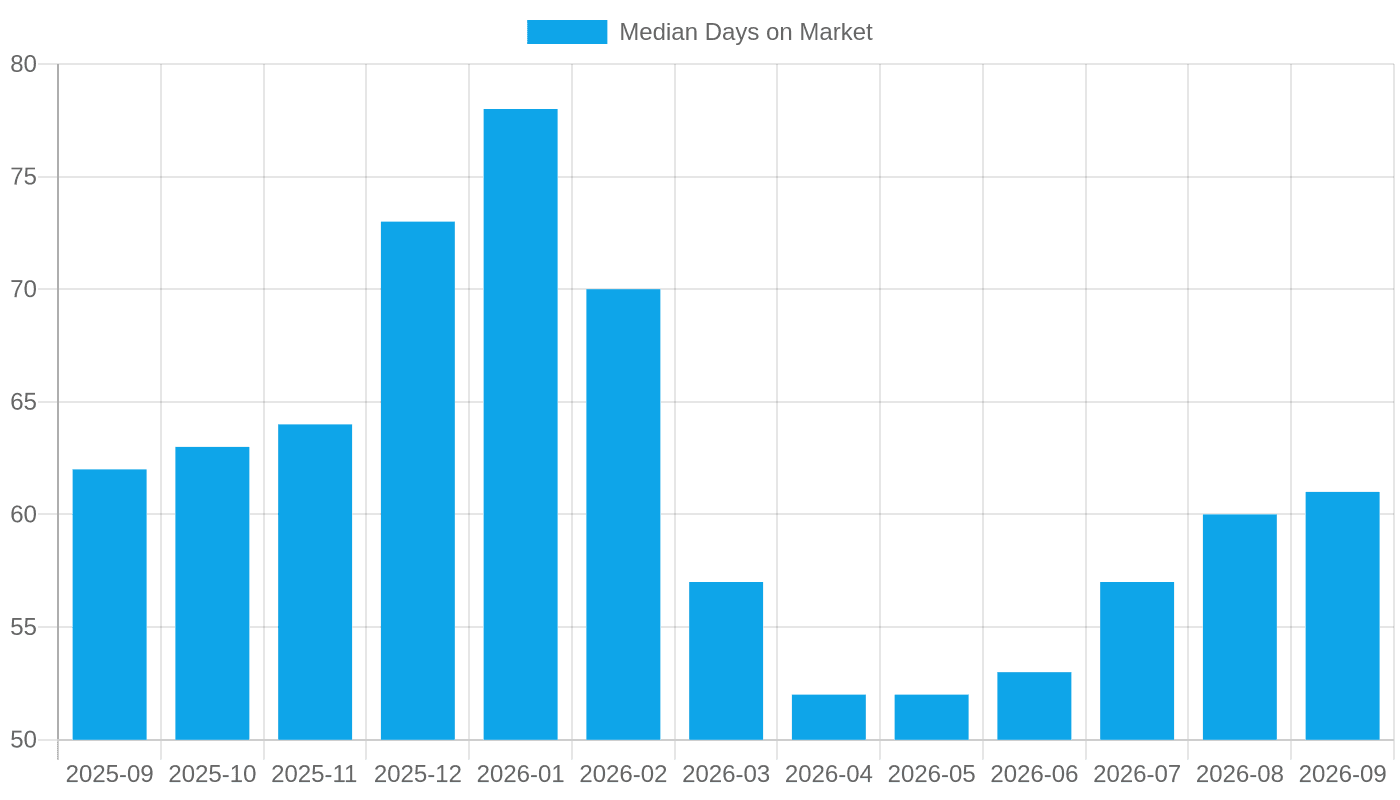
Longer days on market means more sellers are sitting on listings that aren't moving. Those expired and stale listings become a rich source of motivated sellers, because the owner has already accepted that the traditional route isn't working.
What are the strongest signals of a motivated seller?
Timeline pressure is the strongest signal, followed by financial distress and property condition. If someone needs to be out by a specific date, you have a deal to make. Everything else is secondary.
Timeline pressure
Ask early: "If we could make the numbers work, when would you need to be out?" The answer tells you everything. "Yesterday" is a deal. "Sometime next year" is a nurture lead.
Financial distress
Late payments, liens, and balloon payments create real deadlines. So does a rate environment like this one, where the 30-year fixed sat at 7.32% as of October 22, 2026. Owners facing a reset or a refinance they can't afford are motivated by math, not emotion.
Property condition
A house that needs a new roof, a new HVAC, and a full cosmetic update is a house the owner can't sell retail. That's your opening.
Life events
Divorce, death, job transfer, and retirement are the classic four. They're classic because they work.
Equity position
The median sales price of houses sold was $410,700 as of April 2026. Owners who bought a decade ago are sitting on substantial equity, which means they can afford to take a discount and still walk away with cash.
How do you reach motivated sellers without sounding like a spammer?
You reach motivated sellers by leading with curiosity and empathy instead of a pitch. The first sentence should make them want to keep listening, not make them want to hang up.
Openers that work
- "Hi, I'm calling about the house on Elm Street — are you the owner?"
- "I saw your property came up in some records and wanted to check if you'd consider an offer."
- "I'm a local investor. Are you open to a conversation about the house, even if you're not ready to sell?"
Notice what's missing: no "I buy houses cash" and no pressure. You're opening a door, not pushing through it.
Questions that surface motivation fast
- "How long have you owned the property?"
- "Are you living there now, or is it rented?"
- "If you did sell, where would you go next?"
- "What would need to happen for you to consider an offer?"
- "Is there a timeline you're working with?"
Question three is the one most people skip. It tells you whether the seller has a plan — and a seller with a plan is a seller who can close.
Handling the "not interested" response
Don't argue. Say something like: "Totally fair. Can I check back in a few months in case things change?" Then actually do it. A surprising number of deals come from the fourth or fifth contact.
How do you build a follow-up system that actually closes deals?
You build a follow-up system by putting every lead into a pipeline with a next action and a date. If a lead doesn't have a next step scheduled, it's not a lead — it's a note.
The minimum viable pipeline
- New: just added, needs first touch
- Contacted: at least one attempt made
- Conversation: spoke with the owner
- Offer: number presented
- Under contract: signed
- Nurture: not now, follow up later
Move every lead forward or park it. Nothing sits still.
Cadence that works
| Touch | Timing | Channel |
|---|---|---|
| 1 | Day 1 | Call |
| 2 | Day 2 | Text or voicemail |
| 3 | Day 5 | Call |
| 4 | Day 10 | Direct mail |
| 5 | Day 21 | Call |
| 6 | Day 45 | |
| 7+ | Monthly | Call or mail |
Seven touches sounds like a lot until you realize most of your competition quits after one.
Use software so nothing slips
A CRM with task reminders and a dialer changes the game. You don't need twenty tools — you need a few that talk to each other. If you're evaluating options, the directory tracks 65 software tools across 9 categories, so you can compare what's actually out there instead of guessing.
What tools help with finding motivated sellers?
Data and outreach tools do the heavy lifting: list building and skip tracing on one side, dialers and CRM on the other. Get both right and your pipeline runs itself.
Data and list building
Property data platforms let you pull owner records, equity estimates, and distress flags in one place. That's where list stacking becomes practical instead of a spreadsheet nightmare.
Dialers and calling tools
A power dialer multiplies your call volume without multiplying your hours. Pair it with a clean list and your contact rate climbs fast.
CRM and automation
Your CRM is the memory of your business. Every call, every mailer, every note lives there. Without it, follow-up is a guess.
Direct mail and lead gen services
If you'd rather not build lists yourself, lead gen services and mail vendors can handle it — at a price. Compare the cost per lead against your own list-building time before you commit.
What mistakes kill motivated seller campaigns?
Chasing volume over quality, quitting after one touch, and pitching before listening are the three biggest killers. Each one is fixable, and fixing them usually doubles your results without adding a single lead.
Mistake 1: Buying a huge list and mailing it once
A big list mailed once is a donation to the post office. Smaller list, more touches, better results.
Mistake 2: Ignoring the data
If median days on market is 61 days and climbing, expired listings are getting more valuable every month. If rates are at 7.32%, refinance-stressed owners are more motivated. The data tells you where to look.
Mistake 3: Sounding like every other investor
"I buy houses cash, any condition" is wallpaper. Say something specific about their property and you'll get a different response.
Mistake 4: No follow-up
Most deals close on touch four or later. If you stop at one, you're leaving money on the table every single week.
Mistake 5: Not tracking what works
Track cost per lead, contact rate, conversation rate, and contract rate by list source. Kill what doesn't work. Double down on what does.
How long does it take to find motivated sellers?
Expect 30 to 90 days from first touch to first contract for most new wholesalers, and longer if you're starting from zero. The first deal is always the slowest. After that, your data, scripts, and follow-up system compound.
What speeds it up
- Calling instead of only mailing
- Stacking lists instead of buying single-source names
- Following up seven or more times
- Practicing your script before you dial
- Focusing on two or three zip codes deeply
What slows it down
- Switching strategies every two weeks
- Buying leads without a follow-up plan
- Skipping the data and guessing at motivation
- Treating every lead the same
The Bottom Line
Finding motivated sellers comes down to three things: build lists from real distress data, stack signals so you know who to call first, and follow up relentlessly. The market is giving you tailwinds right now — longer days on market and higher rates are pushing more owners toward a fast sale.
Your next step: pick two zip codes, pull three list sources, and start stacking. Then compare the data and outreach tools in the directory so your pipeline is built on solid ground from day one.
Frequently Asked Questions
What is the fastest way to find motivated sellers?
Cold calling a stacked list is the fastest way to get real feedback. You learn in a single afternoon whether your list and your script are working, which is much quicker than waiting on a mailer response.
How many times should I follow up with a motivated seller lead?
Plan for at least seven touches across calls, texts, and mail. Most deals close on touch four or later, and most of your competition quits after one.
What is list stacking and why does it matter?
List stacking means layering multiple distress signals on the same property, like pre-foreclosure plus tax delinquency plus absentee ownership. A single signal is common, but three stacked signals on one property is rare — and that's where the deals are.
Do I need software to find motivated sellers?
You don't need it to start, but you'll want it quickly. Property data tools handle list building and skip tracing, while a CRM and dialer keep your follow-up from slipping.
How long does it take to get a first deal?
Expect roughly 30 to 90 days from first touch to first contract for most new wholesalers. The first deal is the slowest, and your system compounds after that.
Why do higher mortgage rates create motivated sellers?
Higher rates price out buyers and stretch listings longer, and they also trap owners who were counting on an affordable refinance. Both push people toward a fast, certain sale.
Sources
- Software tools tracked in the Wholesale REI directory — Wholesale REI directory
- Tool categories in the Wholesale REI directory — Wholesale REI directory
- 30-Year Fixed Mortgage Rate (as of 2026-10-22) — FRED (Federal Reserve Bank of St. Louis)
- Median Sales Price of Houses Sold (as of 2026-04-01) — FRED (Federal Reserve Bank of St. Louis)
- Median Days on Market (as of 2026-09-01) — FRED (Federal Reserve Bank of St. Louis)
This article was researched and drafted with AI assistance, then reviewed and edited by Mark Anthony. Every statistic is sourced and cited. It's for informational purposes only and is not financial or legal advice. Read our editorial policy.