Cincinnati Real Estate Market Update — September

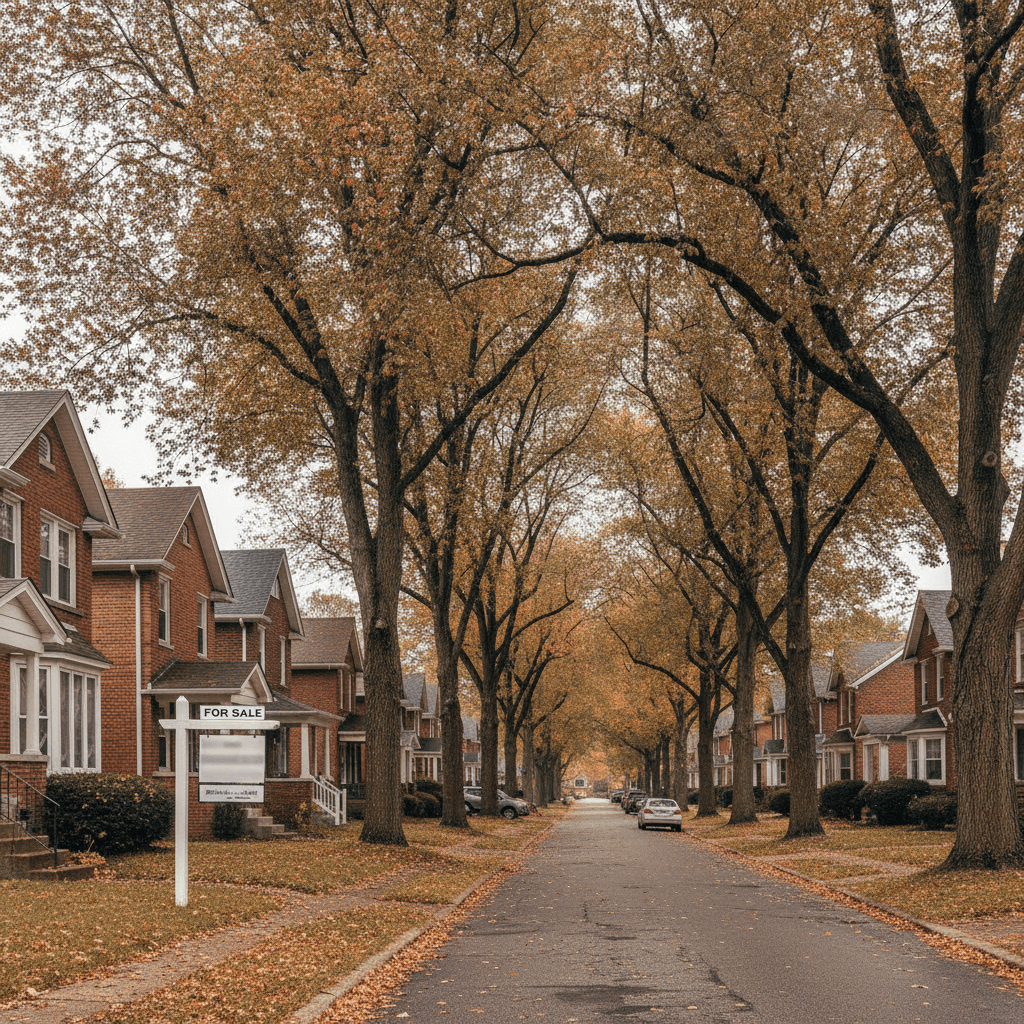
Cincinnati listings are sitting longer than they did a year ago, and that slow drift is quietly reshaping where wholesale deals come from. If you're working the metro right now, the numbers below tell you exactly who's motivated — and who's still holding out.
Key Takeaways
- Cincinnati's median days on market hit 42 days in August 2026, up from 37 days a year earlier.
- Active listings climbed to 4,630 in August 2026 — the highest point in the past 13 months.
- The median listing price sits at $349,900, roughly flat year over year.
- The national median days on market is 60 days, so Cincinnati still moves faster than the country overall.
- The 30-year fixed mortgage rate rose to 6.95% as of September 17, 2026, which pressures buyer budgets heading into fall.
What is the Cincinnati real estate market doing right now?
The Cincinnati real estate market is cooling gradually, not crashing. Inventory is building, homes are taking a bit longer to sell, and prices are basically flat.
Here's the snapshot for August 2026:
| Metric | Cincinnati (Aug 2026) | National (Aug 2026) |
|---|---|---|
| Median days on market | 42 days | 60 days |
| Active listings | 4,630 | — |
| Median listing price | $349,900 | — |
| 30-year fixed mortgage rate | 6.95% (Sept 17, 2026) | 6.95% |
Cincinnati is still a faster-than-average market. That matters. A 42-day median means well-priced homes move in about six weeks, while overpriced ones sit and rot.
That gap is where wholesale opportunity lives.
How has Cincinnati inventory changed over the past year?
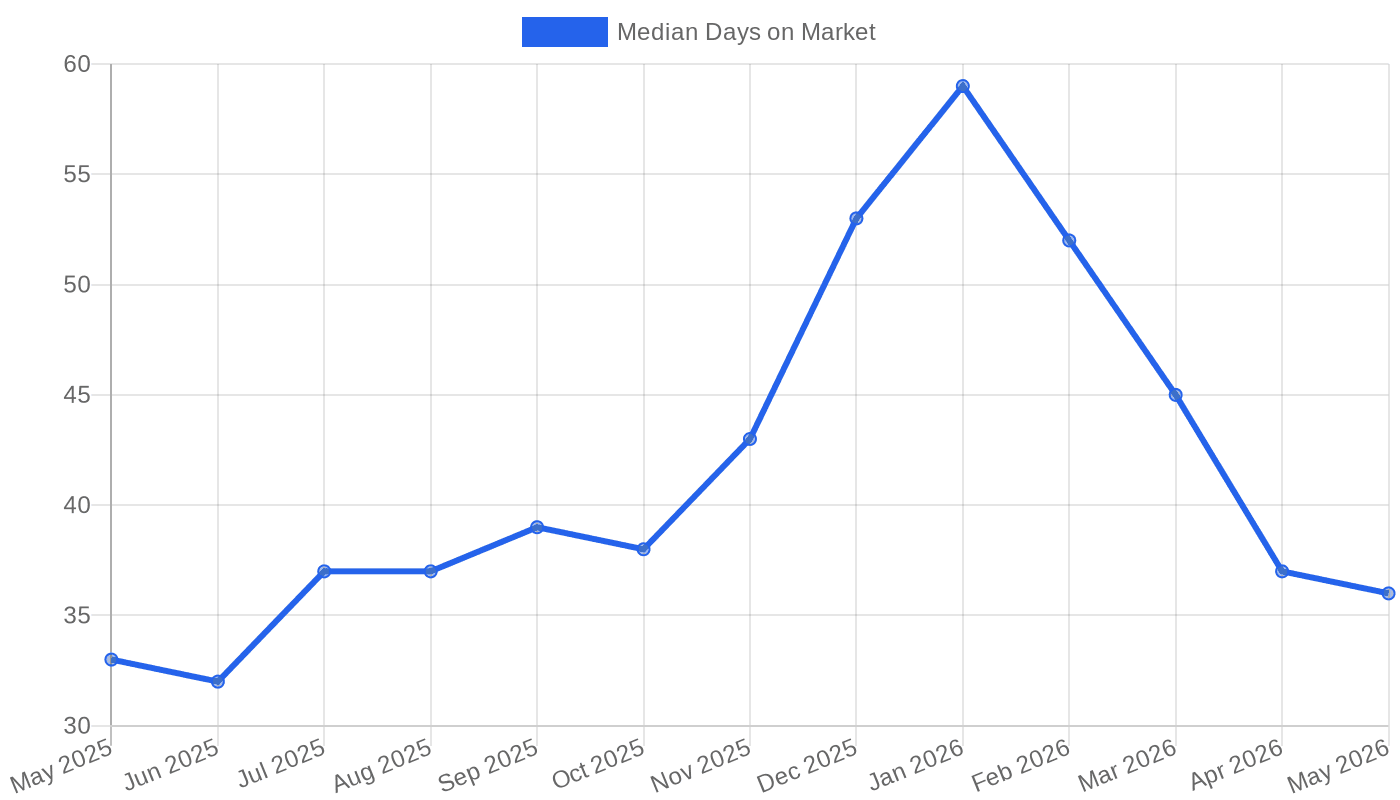
Active listings have grown steadily since early 2026. Cincinnati had 3,953 active listings in August 2025, dipped to a low of 3,282 in March 2026, then climbed all the way to 4,630 by August 2026.
That's a swing of nearly 1,350 listings from the spring low to the summer peak.
More inventory means more sellers competing for the same pool of buyers. When that happens, the weakest listings — the ones with deferred maintenance, tired finishes, or motivated owners — get ignored by retail buyers.
Those are your leads.
Why the spring dip matters
The March 2026 low of 3,282 listings was seasonal. Fewer people list in winter, and spring buyers clean up the backlog fast.
But this year, the rebound was stronger than usual. By July, listings had already blown past the prior August's level. That tells you sellers who were waiting on the sidelines finally listed — and many of them listed into a market that wasn't ready to pay top dollar.
How long are Cincinnati homes sitting on the market?
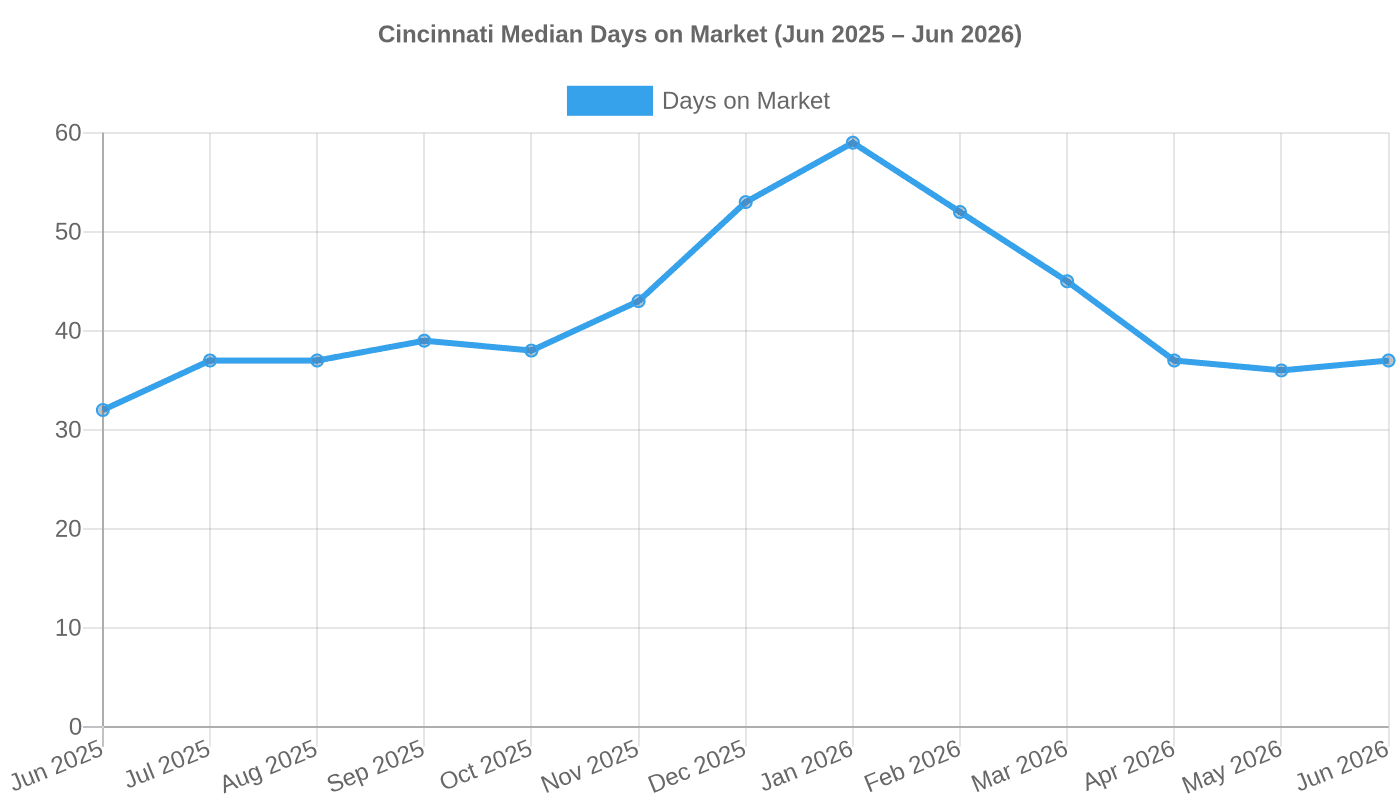
Cincinnati's median days on market was 42 days in August 2026, up from 37 days in August 2025. That's a five-day increase year over year.
The trend wasn't a straight line, though. Look at the monthly path:
- August 2025: 37 days
- December 2025: 53 days
- January 2026: 59 days (the peak)
- April 2026: 37 days
- August 2026: 42 days
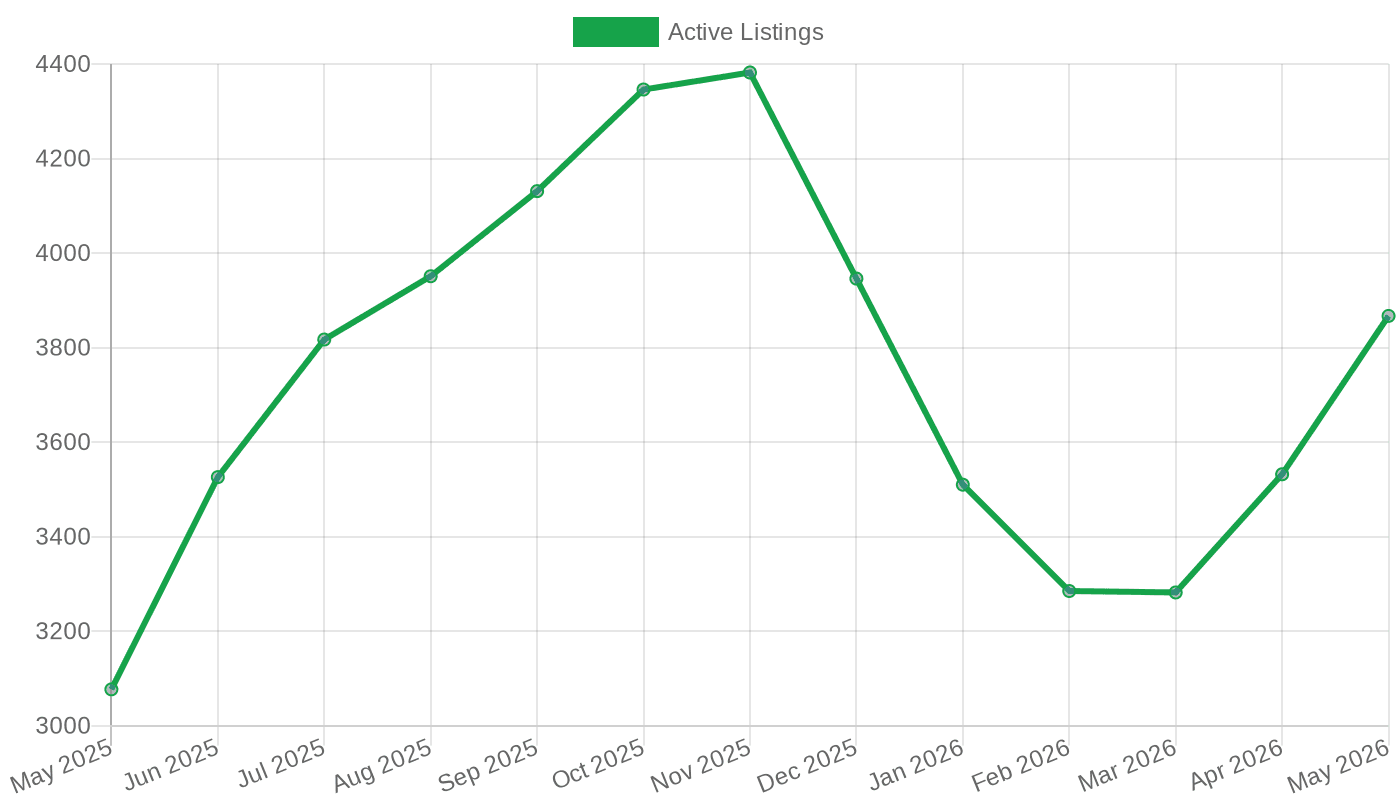
Winter always slows things down, so the January spike to 59 days is normal. What's more telling is that August 2026 came in at 42 days — higher than the same month last year, when the market was tighter.
What 42 days means for your acquisition strategy
A 42-day median means the average Cincinnati listing takes about six weeks to go under contract. But medians hide the tails.
Plenty of homes sell in under two weeks. Plenty sit for 90 days or more. The second group is your farm.
When you're pulling lists, sort by days on market over 60. Those sellers have already watched the market reject their price. That's when conversations get real.
How does Cincinnati compare to the national market?
The national median days on market was 60 days in August 2026. Cincinnati's 42 days is 18 days faster — roughly 30% quicker.
That gap is meaningful. It means Cincinnati sellers still have more leverage than the typical American seller, which keeps retail prices firmer and makes lowball offers harder to land.
But the gap is also narrowing. Nationally, days on market fell from 78 days in January 2026 to 60 days in August. Cincinnati went from 59 days to 42 over the same stretch.
Both markets are normalizing. Cincinnati is just doing it from a stronger starting position.
What the national price picture says
The median sales price of houses sold nationally was $410,700 as of April 2026, down from $418,500 in April 2023. National prices have been drifting sideways-to-lower for three years.
Cincinnati's median list price of $349,900 sits well below that national figure. That's a good thing for wholesalers — lower price points mean smaller capital requirements per deal and a deeper pool of buyer-investors.
What does the mortgage rate jump mean for Cincinnati wholesalers?
The 30-year fixed mortgage rate hit 6.95% as of September 17, 2026, up from 6.49% in late June. That's a 46-basis-point jump in under three months.
Rates climbing into fall is a headwind for retail buyers. Every bump in rates shrinks what a buyer can afford at the same monthly payment.
For wholesalers, that cuts two ways.
The bad news
Your end buyers — fix-and-flippers and landlords — are also financing. Higher rates raise their holding costs and shrink their margins. That means they'll bid lower on your contracts.
The good news
Higher rates push more retail sellers into trouble. Someone who bought in 2021 at 3% and needs to move in 2026 faces a brutal math problem. Those sellers are far more open to a cash offer than they were two years ago.
That's the trade you're making right now: tighter spreads, but more motivated sellers.
Why is the high-end market still strong in Cincinnati?
Cincinnati's high-end home sales are thriving even as affordability squeezes the rest of the market. That's the headline from local coverage in mid-September 2026.
This is a split market. Move-up and luxury buyers — often cash or low-leverage — aren't as rate-sensitive. Entry-level and mid-market buyers are getting crushed.
For wholesalers, that split matters. Your sweet spot is almost never the luxury tier. It's the mid-market seller who's stuck: priced too high for the current buyer pool, carrying a payment they can't sustain, and watching their listing go stale.
Where to focus your list pulls
- Days on market 60+ in suburban ZIPs with heavy 2021-2022 buying activity.
- Price reductions — a seller who's cut once will often cut again, or take a cash offer.
- Vacant properties — carrying costs hit hardest when nobody's living there.
- Tired landlords in older multifamily pockets.
How should wholesalers adjust their offers in this market?
Tighten your spreads and move faster. In a market where listings are building and rates are rising, the wholesaler who closes in 14 days wins over the one who needs 30.
Here's a practical playbook for the next 60 days:
- Re-run your comps weekly. With 4,630 active listings, the comp set changes fast. A deal that penciled in July may not pencil today.
- Build in a rate buffer. If your buyer is financing at 6.95%, assume it could be 7.25% by closing. Protect your assignment fee.
- Target 60+ day listings. These sellers have already been told no by the market.
- Lead with speed and certainty. Not price. You can't beat retail on price right now — you can beat it on closing timeline.
- Widen your buyer list. More inventory means more competition for the same end buyers. Have three backup buyers per deal.
The tool stack that keeps you fast
Speed comes from systems, not hustle. The directory tracks 65 tools across 9 categories built for exactly this kind of work — list pulling, skip tracing, dialers, CRM, and disposition.
If you're still running deals out of a spreadsheet, that's your bottleneck. Compare the options in the directory before your next campaign.
What's the outlook for the rest of 2026?
Expect more of the same: slowly rising inventory, flat-to-soft prices, and a mortgage rate that stays in the high-6s or low-7s. No crash, no boom.
That's actually a good environment for disciplined wholesalers. In a hot market, you compete with retail buyers and lose. In a balanced market, you compete with nobody — because most sellers still think it's 2021.
The wholesalers who win the next six months will be the ones who follow the days-on-market data and contact sellers the market has already passed by.
The Bottom Line
Cincinnati is a 42-day market with 4,630 active listings and a $349,900 median list price — slower than last year, but still faster than the nation's 60 days. That combination rewards wholesalers who target stale listings and close fast. Your next step: pull a list of Cincinnati properties sitting 60+ days and start dialing — and if you want to sharpen your pitch first, practice a few calls against a realistic AI seller with our free AI Cold Call Trainer. It takes no signup to start.
Frequently Asked Questions
How long do homes take to sell in Cincinnati right now?
Cincinnati's median days on market was 42 days as of August 2026, up from 37 days a year earlier. That's still faster than the national median of 60 days, so well-priced homes move in about six weeks.
How many homes are for sale in Cincinnati?
There were 4,630 active listings in Cincinnati as of August 2026 — the highest point in the past 13 months, up from a spring low of 3,282 in March 2026.
What is the median home price in Cincinnati?
The median listing price in Cincinnati was $349,900 as of August 2026, roughly flat compared with a year earlier. That's below the national median sales price of $410,700 as of April 2026.
Are mortgage rates hurting the Cincinnati market?
The 30-year fixed mortgage rate rose to 6.95% as of September 17, 2026, up from 6.49% in late June. Higher rates squeeze buyer budgets, which pushes more sellers toward cash offers and slows retail demand.
Is now a good time to wholesale in Cincinnati?
Yes, if you target stale listings. With inventory building and homes sitting longer, sellers who've been on the market 60+ days are far more open to a fast cash offer than they were a year ago.
Why is Cincinnati's high-end market still strong?
Local coverage in September 2026 noted that high-end home sales are thriving despite broader affordability pressure. Luxury and move-up buyers are less rate-sensitive, so the split between the top and middle of the market is widening.
Sources
- Cincinnati: Median days on market (as of 2026-08-01) — Realtor.com via FRED
- Cincinnati: Active listing count (as of 2026-08-01) — Realtor.com via FRED
- Cincinnati: Median listing price (as of 2026-08-01) — Realtor.com via FRED
- Software tools tracked in the Wholesale REI directory — Wholesale REI directory
- Tool categories in the Wholesale REI directory — Wholesale REI directory
- 30-Year Fixed Mortgage Rate (as of 2026-09-17) — FRED (Federal Reserve Bank of St. Louis)
- Median Sales Price of Houses Sold (as of 2026-04-01) — FRED (Federal Reserve Bank of St. Louis)
- Median Days on Market (as of 2026-08-01) — FRED (Federal Reserve Bank of St. Louis)
This article was researched and drafted with AI assistance, then reviewed and edited by Mark Anthony. Every statistic is sourced and cited. It's for informational purposes only and is not financial or legal advice. Read our editorial policy.