Facebook Ads for Wholesalers: A Step-by-Step Playbook


If you're a real estate wholesaler tired of chasing cold lists and praying for a callback, Facebook ads can put motivated sellers in front of you on purpose. But most wholesalers waste money because they treat ads like a magic button instead of a system.
Key Takeaways
- Facebook ads work for wholesalers when you target motivated seller signals, not just demographics.
- The national median days on market was 61 days as of September 2026, so sellers with timeline pressure are your best audience.
- The 30-year fixed mortgage rate sits at 7.18% as of November 5, 2026, keeping payment pressure high and driving motivated seller conversations.
- A simple funnel (ad → landing page → follow-up) beats a complicated one; most wholesalers lose deals in the follow-up, not the click.
- Track cost per lead and cost per contract, not clicks and likes.
What is Facebook ads for wholesalers?
Facebook ads for wholesalers is a paid lead-generation system that uses Meta's advertising platform to put targeted messages in front of homeowners who may be ready to sell. Instead of cold calling, you pay to show ads to people based on location, behavior, and life events, then capture their info on a landing page or in a direct message.
The goal isn't to sell a house in the ad. The goal is to start a conversation with a motivated seller.
Why should wholesalers use Facebook ads instead of only cold calling?
Facebook ads let you reach motivated sellers at scale without manually dialing and give you control over message, budget, and targeting. Cold calling still works, but it's a numbers game with high rejection. Ads flip the script: sellers raise their hand first.
Here's the practical difference:
- Cold calling: you interrupt strangers and hope for a 1-2% conversation rate.
- Facebook ads: you show up in the feed of people who match your seller profile, and they choose to click.
That doesn't mean ads replace calls. It means ads feed your pipeline with warmer conversations.
The market context that makes ads timely
The housing market is giving wholesalers a tailwind. The median sales price of houses sold was $393,300 as of July 2026, and the 30-year fixed mortgage rate was 7.18% as of November 5, 2026. High rates plus high prices mean some owners feel stuck, and that's exactly when creative financing and cash offers get attention.
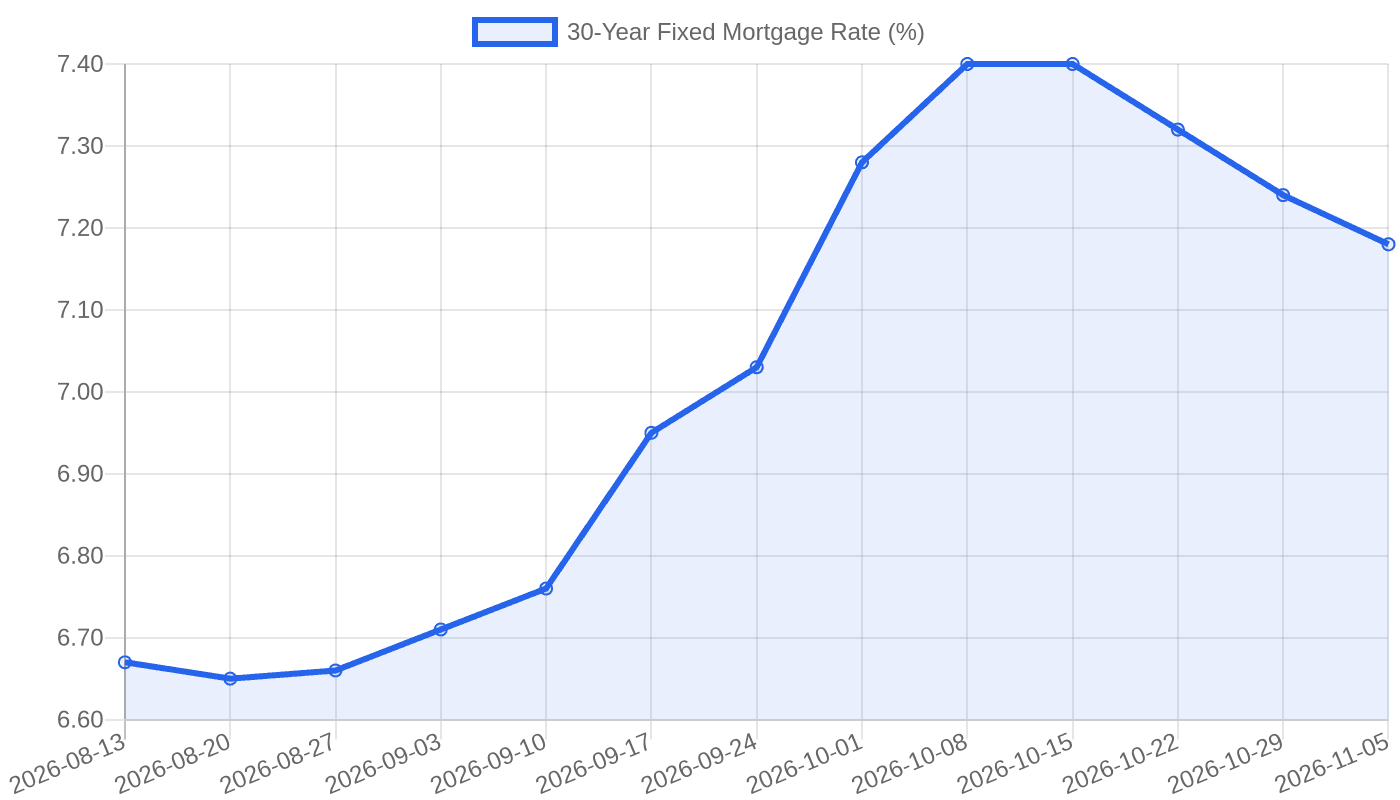
When rates climb, payment shock pushes more sellers to explore alternatives. Your ads should speak to that pressure without being alarmist.
How do you set up a Facebook ads campaign for wholesaling step by step?
You set up a wholesaling campaign by defining your seller avatar, building a simple landing page, creating 3-5 ad variations, and launching with a small test budget. Then you scale what works and kill what doesn't.
Here's the step-by-step playbook:
- Define your motivated seller avatar. Pick one situation: pre-foreclosure, inherited property, divorce, tired landlord, or absentee owner. Write down their fear, timeline, and dream outcome.
- Set up your Meta Business Suite and ad account. Add your payment method, verify your domain, and install the Meta Pixel on your landing page so you can track leads.
- Build a simple landing page. One headline, one short form (name, phone, address, situation), one clear promise. No menus, no distractions.
- Create 3-5 ad creatives. Use a photo of a real house, a short video, or a simple graphic. Write copy that names the situation and offers a fast, fair solution.
- Choose your campaign objective. For lead generation, use Leads or Conversions (with the Pixel). Avoid Traffic if you want form fills.
- Set your targeting. Start with a 20-30 mile radius around your farm area, age 35-75, homeowners. Layer in behaviors and interests only when you have data.
- Launch with a test budget. Start small—enough to get 50-100 clicks—then review cost per lead.
- Follow up fast. Call or text within 5 minutes. Speed-to-lead is the difference between a deal and a dead lead.
- Scale winners, pause losers. Increase budget on ads with the lowest cost per qualified lead, not the most likes.
What should your first ad budget be?
Your first budget should be small enough to learn from but large enough to gather data—typically a few hundred dollars over 7-10 days. Don't try to scale on day one. You're buying information about which message and audience produce leads.
How do you target motivated sellers on Facebook?
You target motivated sellers by combining geography, homeownership, life-event behaviors, and interest signals—not by relying on a single "motivated seller" checkbox. Facebook doesn't have a "pre-foreclosure" button, so you build a proxy audience.
Use these layers:
- Location: your farm area, zip codes, or a radius around your office.
- Age and homeownership: homeowners 35-75.
- Behaviors: likely to move, recently engaged shoppers, financial products.
- Interests: real estate, home improvement, estate planning, divorce support, landlord resources.
- Custom audiences: your website visitors, video viewers, and lead form openers.
- Lookalike audiences: build from your existing seller list once you have one.
Test one layer at a time so you know what's working.
What ad creative works best for wholesalers?
Direct, specific, and human creative wins for wholesalers. The best-performing ads name the seller's situation in the first line and offer a clear, low-friction next step.
Try these formats:
- Single image with a real house photo and a headline like "Inherited a house you don't want to manage?"
- Short video (15-30 seconds) where you talk directly to the camera about a specific situation.
- Carousel showing before/after or three seller scenarios.
- Lead form ads for sellers who don't want to leave Facebook.
Ad copy formula that converts
Use this structure:
- Call out the situation: "If you inherited a house in [city] and live out of state..."
- Name the pain: "...you're probably paying taxes and insurance on a property you never visit."
- Offer the outcome: "We buy houses as-is for cash and close on your timeline."
- Give a clear next step: "Tap Learn More to get a fair offer in 24 hours."
Keep it conversational. Write like you talk.
How do you turn Facebook leads into contracts?
The only way to turn Facebook leads into contracts is fast, persistent follow-up with a clear next step. Most wholesalers lose deals because they respond hours later or give up after one call.
Here's what to do:
- Respond within 5 minutes. Speed-to-lead is the single biggest lever.
- Call, then text, then email. Use a CRM or dialer to stay organized.
- Ask situation questions, not sales pitches. "What's making you think about selling?"
- Set a next step every time. A call, a walkthrough, or a follow-up date.
- Follow up for 30-90 days. Motivated sellers often need time to decide.
Tools that help you follow up faster
A CRM and a dialer make the difference between a lead and a contract. In the Wholesale REI directory, we track 65 software tools across 9 categories, so you can compare options for lead follow-up, data, and dialing in one place.
If you want to practice your seller conversations before you spend money on ads, try our free AI Cold Call Trainer. It lets you rehearse a few calls against a realistic AI seller—no signup, no cost.
How much do Facebook ads for wholesalers cost?
There's no fixed cost per lead because it depends on your market, creative, and offer. But you can control it by tracking cost per qualified lead and cost per contract, not just cost per click.
Use this simple scorecard:
| Metric | What it tells you | Target mindset |
|---|---|---|
| Cost per click | How compelling your ad is | Lower is better, but not the goal |
| Cost per lead | How well your landing page converts | Track weekly |
| Cost per qualified lead | How well your targeting matches | The number that matters |
| Cost per contract | Your true acquisition cost | Compare to your assignment fee |
If your cost per contract is below your average assignment fee, you have a scalable system. If not, fix your follow-up or targeting before increasing budget.
Why your cost per lead might be high
High cost per lead usually comes from broad targeting, weak creative, or a confusing landing page. Tighten your audience, rewrite your hook, and simplify your form. Small changes often produce big swings.
What mistakes should wholesalers avoid with Facebook ads?
The biggest mistakes are chasing likes instead of leads, ignoring follow-up, and scaling too fast. Facebook ads reward discipline, not budget size.
Avoid these:
- Running ads without a landing page. Sending traffic to your homepage wastes clicks.
- Targeting too broadly. "Everyone in the city" is not a motivated seller audience.
- Ignoring the Pixel. Without tracking, you can't optimize.
- Giving up after a week. Ads need time to gather data.
- Not answering leads fast. A lead that waits is a lead that calls your competitor.
How long should you test before judging results?
Give a campaign at least 7-14 days and enough spend to gather meaningful data before you judge it. If you haven't gotten leads after that, change the creative or audience—not the entire strategy.
How do you scale Facebook ads for wholesaling?
You scale by increasing budget on proven ad sets and expanding to new geographies or seller situations—not by duplicating everything at once. Scale in increments and watch your cost per lead.
A simple scaling sequence:
- Double down on the winning creative. Make 3-5 variations of the same angle.
- Expand your radius to adjacent zip codes.
- Add a new seller avatar (e.g., from inherited to tired landlord).
- Build lookalike audiences from your lead list.
- Increase budget by 20-30% at a time and monitor cost per lead.
When should you turn ads off?
Turn ads off when cost per qualified lead exceeds your acceptable threshold for two weeks straight or when you can't follow up on the leads you already have. More leads without follow-up is just more waste.
The Bottom Line
Facebook ads for wholesalers work when you treat them as a lead-generation system: targeted creative, a simple landing page, and fast follow-up. Start with one seller avatar, test small, and track cost per contract—not likes. When you're ready to build your stack, compare the tools in our directory to find the right CRM, dialer, and data provider for your follow-up.
Frequently Asked Questions
How much should a wholesaler spend on Facebook ads to start?
Start with a small test budget—enough to gather 50-100 clicks over 7-10 days—then review cost per lead before scaling. The goal is to learn which message and audience produce qualified leads, not to spend big on day one.
Can you target motivated sellers directly on Facebook?
Facebook doesn't have a 'motivated seller' targeting option, so you build a proxy audience using location, homeownership, life-event behaviors, and interests. Layer these signals and test one at a time to see what works.
What's the fastest way to turn Facebook leads into contracts?
Respond within 5 minutes by call or text, ask situation questions instead of pitching, and set a next step every time. Persistent follow-up for 30-90 days is what turns a lead into a contract.
How long before Facebook ads produce results for wholesalers?
Give a campaign at least 7-14 days and enough spend to gather meaningful data before judging it. If you're not getting leads after that, adjust your creative or audience rather than abandoning the strategy.
Do I need a landing page for Facebook ads?
Yes—sending ad traffic to your homepage wastes clicks. A simple landing page with one headline, a short form, and a clear promise will convert far better than a general website.
What metrics should wholesalers track on Facebook ads?
Track cost per click, cost per lead, cost per qualified lead, and cost per contract. The last two matter most because they tell you whether your ads are actually producing deals.
Sources
- Software tools tracked in the Wholesale REI directory — Wholesale REI directory
- Tool categories in the Wholesale REI directory — Wholesale REI directory
- 30-Year Fixed Mortgage Rate (as of 2026-11-05) — FRED (Federal Reserve Bank of St. Louis)
- Median Sales Price of Houses Sold (as of 2026-07-01) — FRED (Federal Reserve Bank of St. Louis)
- Median Days on Market (as of 2026-09-01) — FRED (Federal Reserve Bank of St. Louis)
This article was researched and drafted with AI assistance, then reviewed and edited by Mark Anthony. Every statistic is sourced and cited. It's for informational purposes only and is not financial or legal advice. Read our editorial policy.