How AI Is Changing Real Estate Wholesaling


Wholesaling has always been a numbers game — and right now the numbers are brutal. With the 30-year fixed mortgage rate sitting at 7.28% as of October 1, 2026, motivated sellers are harder to find, and the wholesalers who win are the ones who can reach more of them, faster, for less. That's exactly where real estate wholesaling AI comes in.
Key Takeaways
- Real estate wholesaling AI automates the three most time-hungry parts of the business: lead sourcing, outreach, and comping.
- The 30-year fixed mortgage rate hit 7.28% on October 1, 2026 — up from 6.49% in early July 2026 — which means seller motivation is shifting fast and speed matters more than ever.
- Median days on market climbed from 52 days in April 2026 to 61 days in September 2026, giving AI-driven wholesalers a wider window to find and lock deals.
- The median U.S. home sales price was $410,700 as of April 1, 2026 — a number AI comp tools can pull in seconds instead of hours.
- The Wholesale REI directory tracks 65 tools across 9 categories, so you can compare AI features side by side instead of guessing.
What is real estate wholesaling AI?
Real estate wholesaling AI is software that uses machine learning and automation to handle the repetitive, data-heavy work of finding, contacting, and evaluating properties — so you can focus on closing deals. It's not one tool. It's a stack of tools that each solve a specific bottleneck in the wholesale pipeline.
In practice, wholesaling AI shows up in four places:
- Lead generation — scoring lists, flagging motivated sellers, and predicting which properties are likely to sell below market.
- Outreach — AI dialers, voice agents, and SMS sequences that reach sellers at scale.
- Analysis — automated comps, ARV estimates, and repair-cost guesses.
- Follow-up — CRM automation that keeps leads warm without you manually chasing them.
If you've been running your business on spreadsheets and cold lists, AI doesn't replace your judgment. It replaces the hours you spend feeding the spreadsheet.
Why is AI suddenly so important for wholesalers?
The market shifted, and the shift rewards speed. When rates climb and days on market stretch, the wholesaler who reaches a seller first usually wins the contract — and AI is how you get there first.
The rate environment changed the game
In early July 2026, the 30-year fixed mortgage rate was 6.49%. By October 1, 2026, it had climbed to 7.28%.
That's a meaningful jump in a single quarter. Higher rates squeeze buyer affordability, which slows retail sales and pushes more sellers into situations where a cash offer starts to look attractive. But it also means more competition among wholesalers for the same motivated sellers.
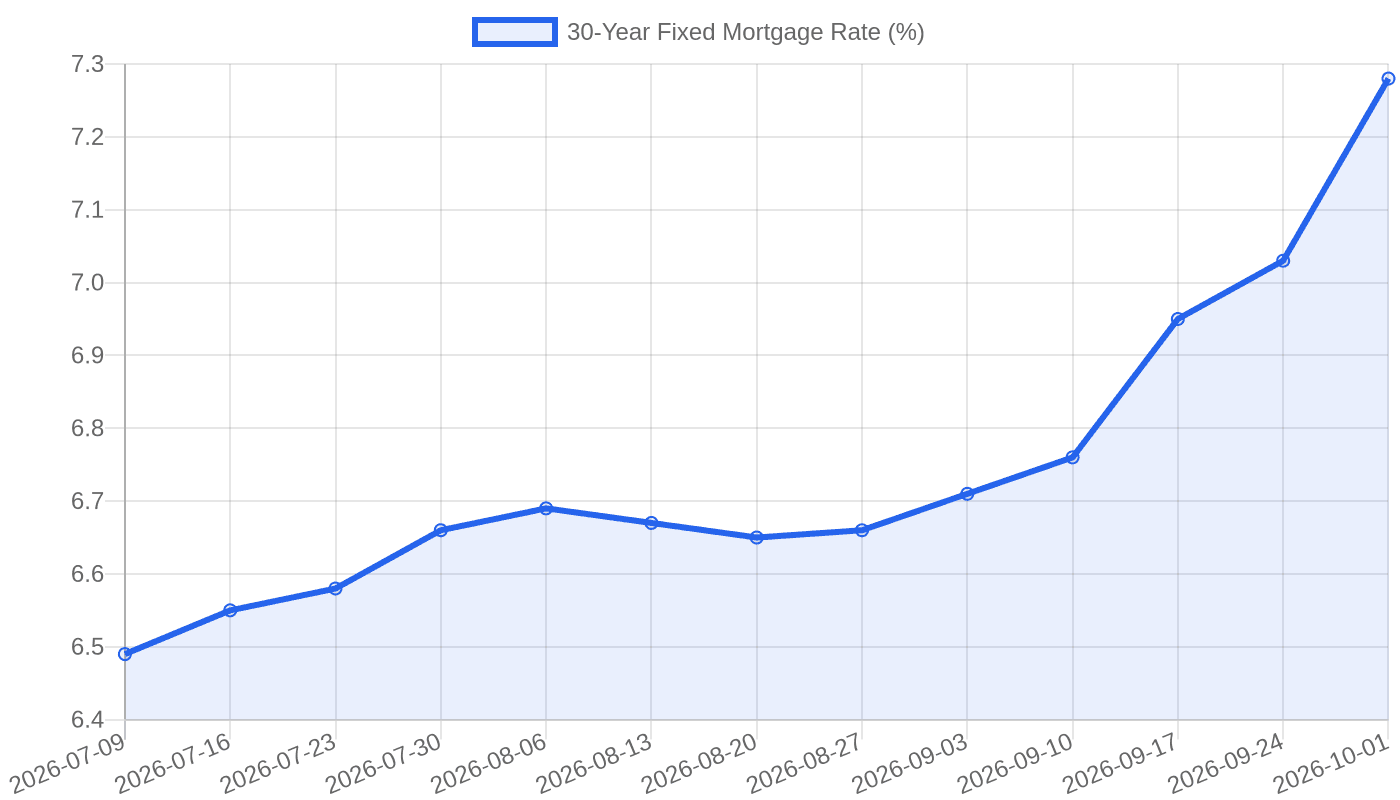
When rates move that fast, your lead lists go stale quickly. AI tools that refresh and re-score data continuously give you an edge over wholesalers still working off a list they downloaded last month.
Days on market opened a window
Median days on market tells you how long the typical home sits before selling. In April 2026, that number was 52 days. By September 2026, it had risen to 61 days.
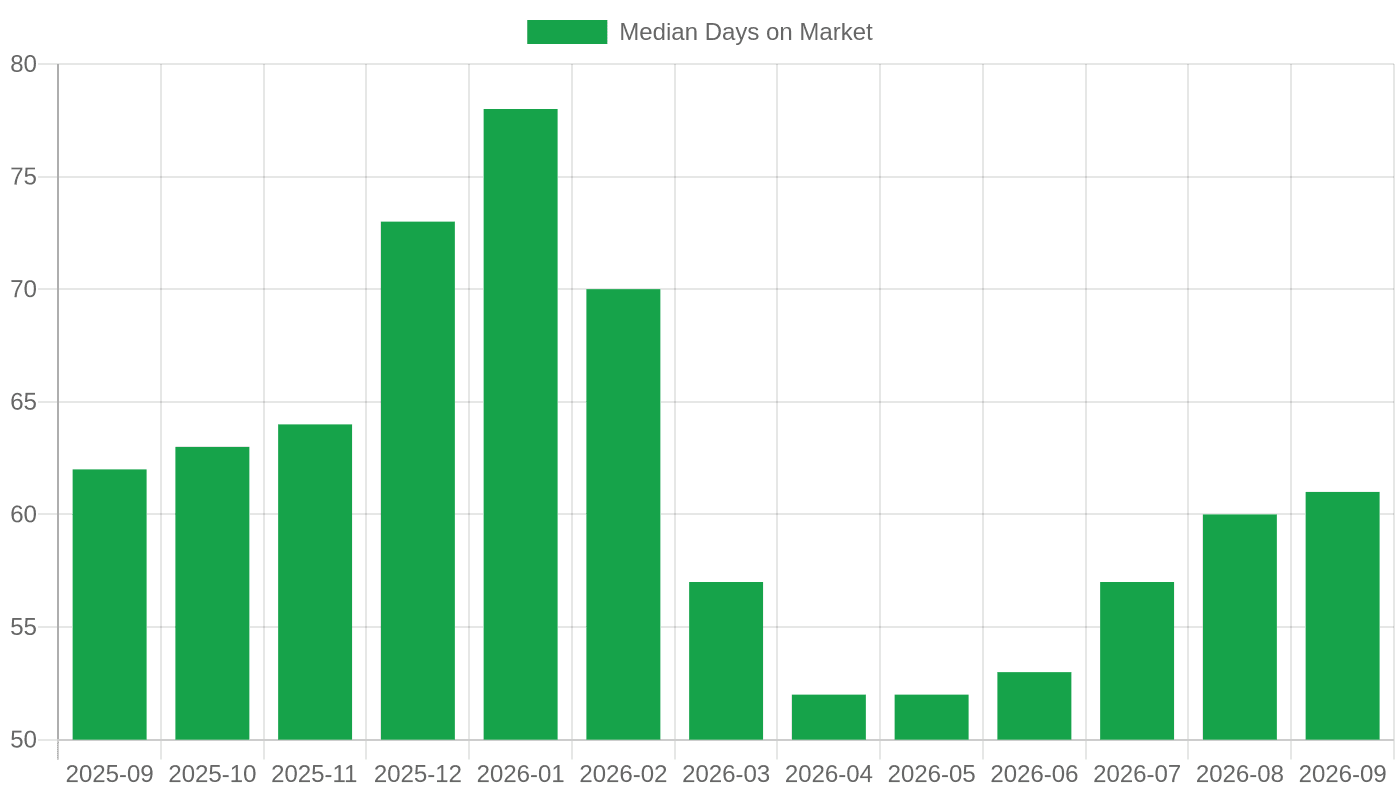
A longer days-on-market figure means sellers are waiting longer to close — and waiting sellers are more open to alternatives. AI-driven outreach can hit those sellers while they're still deciding, not after they've already signed with an agent.
How does AI change lead generation in wholesaling?
AI changes lead generation by scoring and prioritizing lists automatically, so you spend your time on the 5% of leads most likely to convert instead of the 95% that won't. Instead of pulling a list of 5,000 properties and calling down the line, AI ranks them.
Here's what that looks like in practice:
- Predictive scoring — models trained on past deals flag properties with traits that historically led to assignments.
- Distress signals — AI watches for tax liens, pre-foreclosure filings, probate, and code violations, then bundles them into one feed.
- Skip tracing — automated phone and email appends so you're not paying per-record manually.
- List refresh — daily re-pulls so you're not calling numbers that disconnected three weeks ago.
Tools like PropStream and ATTOM Data are built around this kind of data-first workflow, and both are tracked in the directory.
A concrete example
Say you pull 4,000 properties in a target zip code. A human might sort by equity and start dialing. An AI-scored list might rank the same 4,000 by a combination of equity, length of ownership, recent life events, and neighborhood turnover — then hand you the top 200.
You still make the calls. You just make better ones.
How is AI changing cold calling and outreach?
AI is changing cold calling by handling the dialing, the voicemail drops, and even the first 30 seconds of conversation — so your human reps only talk to people who are actually interested. This is the single biggest time-saver in the modern wholesale stack.
What AI dialers actually do
- Power dialing — auto-dial the next number the moment the last call ends.
- Voicemail detection — skip answering machines and drop a pre-recorded message instead.
- Call recording and transcription — every call searchable, every objection logged.
- Sentiment tagging — flag calls where the seller sounded warm but not ready.
Tools like CallTools and Launch Control are built for this layer of the stack. GoHighLevel bundles dialing with CRM and follow-up automation, which is why it shows up in so many wholesaler setups.
Where AI voice agents fit
AI voice agents can now hold a short, natural-sounding conversation. They're good at:
- Confirming the seller still owns the property.
- Asking whether they've considered a cash offer.
- Booking a callback with a human acquisitions rep.
They're not good at negotiating a contract. Use them as a filter, not a closer.
If you want to feel what a realistic AI conversation sounds like before you buy anything, our free AI Cold Call Trainer lets you practice against an AI seller — no signup, no cost.
How does AI help with comps and property analysis?
AI helps with comps by pulling recent sales, adjusting for differences, and producing an ARV estimate in seconds — work that used to take an hour per property. The median U.S. home sales price was $410,700 as of April 1, 2026, and that single number anchors a lot of the math.
What AI comping does well
- Pulls comps fast — recent sales within a radius, filtered by beds, baths, and square footage.
- Adjusts automatically — applies value adjustments for lot size, age, condition, and upgrades.
- Flags outliers — spots comps that are too far, too old, or too different to trust.
- Runs repair estimates — some tools estimate rehab cost from photos or condition scores.
What it still gets wrong
AI comping struggles with:
- Unique properties — odd lots, mixed-use, or heavy additions.
- Rural markets with thin comp data.
- Condition issues that don't show up in public records.
Always sanity-check the ARV yourself. AI gives you a fast first pass, not a final answer.
AI vs. traditional wholesaling: a side-by-side
Here's how the two approaches compare on the tasks that eat most of your week.
| Task | Traditional approach | AI-assisted approach |
|---|---|---|
| Lead sourcing | Manual list pulls, spreadsheet sorting | Predictive scoring, auto-refreshed lists |
| Cold calling | Manual dialing, one call at a time | Power dialers, voicemail drops, AI voice agents |
| Comps | Manual MLS search, hand adjustments | Automated comps with ARV estimates in seconds |
| Follow-up | Sticky notes, calendar reminders | CRM automation with sentiment-based triggers |
| Data refresh | Weekly or monthly | Continuous, often daily |
| Time per deal | High — most hours are admin | Lower — most hours are conversations |
The pattern is consistent: AI doesn't remove the human work. It removes the admin work around it.
What are the best AI tools for wholesalers?
The best AI tools for wholesalers are the ones that plug into the specific bottleneck you have right now — not the ones with the longest feature list. The Wholesale REI directory tracks 65 tools across 9 categories, which is enough to cover every stage of the pipeline.
Match the tool to the bottleneck
- Lead data and scoring — PropStream, ATTOM Data
- Dialing and outreach — CallTools, Launch Control
- All-in-one CRM + automation — GoHighLevel
- Lead generation services — TeleVista Lead Generation
How to evaluate an AI tool before you buy
- Ask what data it trains on. Generic models underperform models tuned to real estate.
- Check refresh frequency. Daily beats monthly.
- Test the dialer on your own list. Latency and answer rates vary a lot.
- Confirm CRM integration. If it doesn't talk to your CRM, you'll rebuild the workflow by hand.
- Run a 30-day trial. Track cost per appointment, not cost per seat.
What AI can't do in wholesaling
AI can't build trust with a seller, and wholesaling is still a trust business. The seller who signs your assignment contract is signing because a human made them feel safe — not because a model scored them 92 out of 100.
What AI can't replace:
- Negotiation — reading a seller's hesitation and adjusting in real time.
- Local relationships — agents, title reps, and cash buyers who take your call.
- Judgment on weird deals — the ones that don't fit the model.
- Accountability — someone has to own the outcome.
Treat AI as leverage, not as a replacement for the parts of the job that actually close deals.
How do you get started with AI in your wholesale business?
You get started by picking one bottleneck — usually lead sourcing or dialing — and adding a single AI tool to fix it. Don't rebuild your whole stack at once.
A 30-day rollout plan
- Week 1 — Audit where your hours actually go. Most wholesalers find 60% or more is admin.
- Week 2 — Pick one tool from the directory that targets your biggest time sink.
- Week 3 — Run it side by side with your current process. Track cost per appointment.
- Week 4 — Keep it if it beats your baseline. If not, try the next tool in the same category.
Common mistakes to avoid
- Buying three tools at once and using none of them well.
- Trusting AI comps without a manual check.
- Letting AI voice agents handle negotiations.
- Ignoring CRM integration until after you've paid.
The Bottom Line
Real estate wholesaling AI won't find deals for you — but it will cut the hours between you and the deals you'd otherwise miss. With rates at 7.28% and days on market at 61, speed is the whole game, and AI is how you buy speed. Start by comparing the lead-gen and dialer tools in the directory, then practice a few calls against a realistic AI seller with our free AI Cold Call Trainer before you spend a dollar on software.
Frequently Asked Questions
What is real estate wholesaling AI?
It's software that uses machine learning and automation to handle the repetitive parts of wholesaling — lead scoring, cold calling, comping, and follow-up. It doesn't replace your judgment; it replaces the admin hours around it.
Can AI find motivated sellers for wholesalers?
Yes, within limits. AI can flag distress signals like tax liens, pre-foreclosure, and probate, then score and rank those leads. You still have to make the call and build the relationship.
Is AI cold calling effective in real estate wholesaling?
It's effective as a filter, not a closer. AI dialers and voice agents handle the dialing, voicemail drops, and first 30 seconds of conversation, then hand warm leads to a human rep.
How accurate are AI comps and ARV estimates?
They're a fast first pass, not a final answer. AI comping works well in dense markets with plenty of recent sales, but it struggles with unique properties, rural areas, and condition issues that don't show up in public records.
How much do AI wholesaling tools cost?
Pricing varies widely by category — lead data, dialers, and CRMs are usually billed monthly per seat or per contact. The best way to compare is to check each tool's listing in the directory and track cost per appointment during a trial.
What's the first AI tool a new wholesaler should buy?
Start with whichever bottleneck costs you the most hours — usually lead sourcing or dialing. Pick one tool, run it side by side with your current process for 30 days, and measure cost per appointment before adding anything else.
Sources
- 30-Year Fixed Mortgage Rate (as of 2026-10-01) — FRED (Federal Reserve Bank of St. Louis)
- Median Days on Market (as of 2026-09-01) — FRED (Federal Reserve Bank of St. Louis)
- Median Sales Price of Houses Sold (as of 2026-04-01) — FRED (Federal Reserve Bank of St. Louis)
- Software tools tracked in the Wholesale REI directory — Wholesale REI directory
- Tool categories in the Wholesale REI directory — Wholesale REI directory
This article was researched and drafted with AI assistance, then reviewed and edited by Mark Anthony. Every statistic is sourced and cited. It's for informational purposes only and is not financial or legal advice. Read our editorial policy.