Top Real Estate Wholesaling Companies to Know


If you're looking up the top real estate wholesaling companies, you're really asking one of two questions: who's doing this well, and how can I do the same? The short answer is that the companies winning at wholesaling in 2026 run a repeatable system — and the Wholesale REI directory tracks 65 software tools across 9 categories that make up that system.
Key Takeaways
- The Wholesale REI directory tracks 65 software tools across 9 categories — the most complete public map of the companies powering modern wholesaling.
- The median U.S. home price is $410,700, and 30-year fixed mortgage rates have climbed to 6.66%, which pushes more sellers toward cash offers.
- Homes sit on the market a median of 53 days, giving wholesalers enough time to lock up a deal and find an end buyer.
- Top wholesaling companies win with a repeatable process — lead generation, fast comps, instant follow-up, and a ready buyer list — not with a giant staff.
- You can compare every major tool in one place before you spend a dollar.
What are real estate wholesaling companies?
Real estate wholesaling companies are businesses that put a property under contract and then assign or sell that contract to an end buyer — usually a flipper or landlord — for a fee, without ever buying the home themselves.
Here's the classic deal flow:
- Find a motivated seller who wants out fast.
- Negotiate a price below market value.
- Put the property under contract with an assignment clause.
- Find a cash buyer, flipper, or landlord who will pay more.
- Assign the contract and collect the difference at closing.
The wholesaler never takes title. You're selling the deal, not the house. So a "wholesaling company" can be one operator with a laptop and a CRM, or a team of acquisition managers, inside sales agents, and closers moving several contracts a month.
When people talk about top real estate wholesaling companies, they usually mean two different groups. There are the operators — the wholesalers themselves. And there are the companies that quietly power them: the software, data, and lead-generation companies that make the model scalable. Both groups matter, and the directory's 65 tools across 9 categories covers the second group from every angle.
What does the housing market look like for wholesaling companies right now?
For wholesalers, the 2026 market is genuinely good: prices are high but stable, homes take long enough to sell that motivated sellers will negotiate, and mortgage rates are squeezing out the retail buyers who would normally buy move-in-ready houses.
That combination creates opportunities for cash buyers and contract flippers. Here's what the data shows.
Prices have flattened below the 2023 peak
The median U.S. home sold for $410,700 in April 2026 — down from $416,100 a year earlier and still below the recent peak of $435,400 in July 2023.
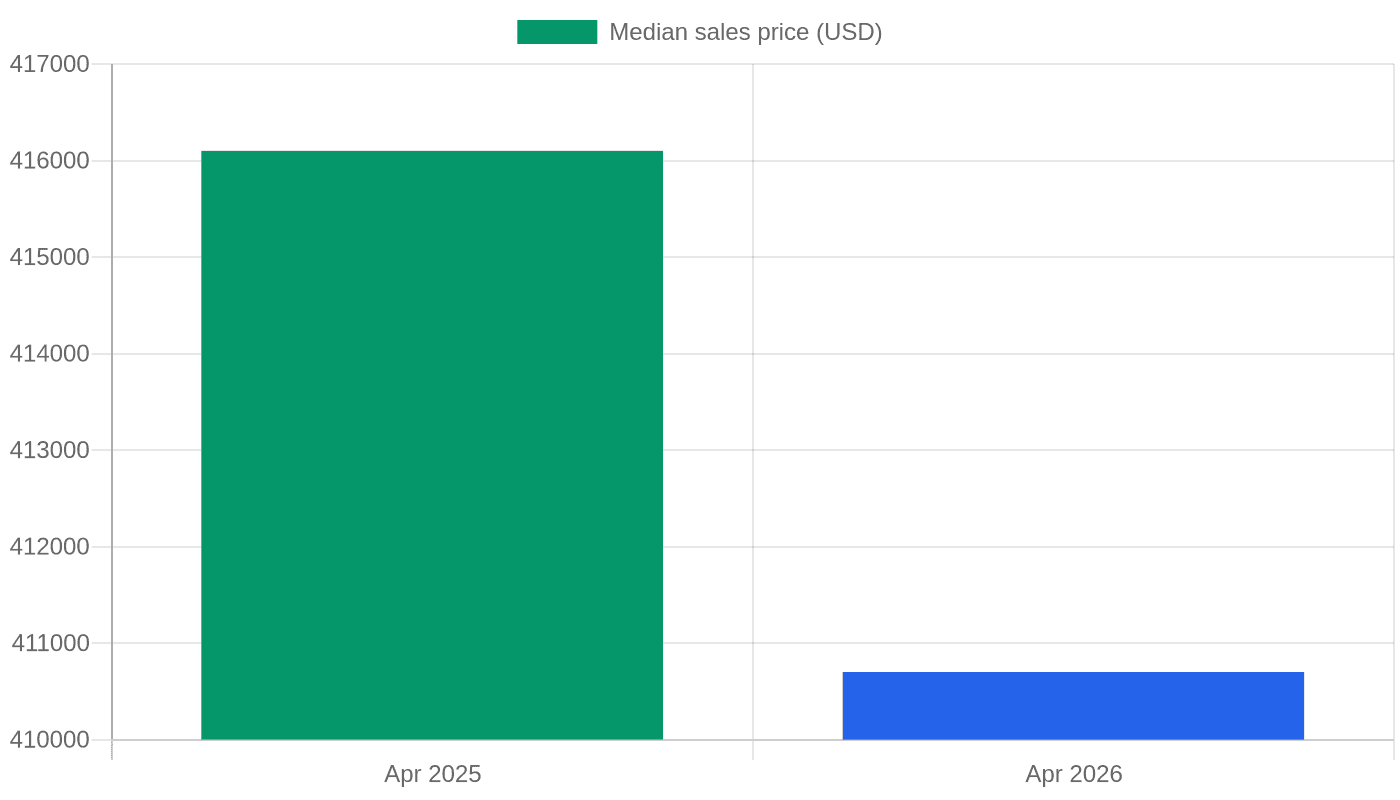
Flat-to-slightly-down prices mean less buy-and-hold appreciation, which forces investors to make money on the spread. That's exactly the wholesaler's game.
Mortgage rates above 6.5% shift power to cash buyers
The 30-year fixed mortgage rate climbed from 6.37% in early May 2026 to 6.66% by July 30, 2026.
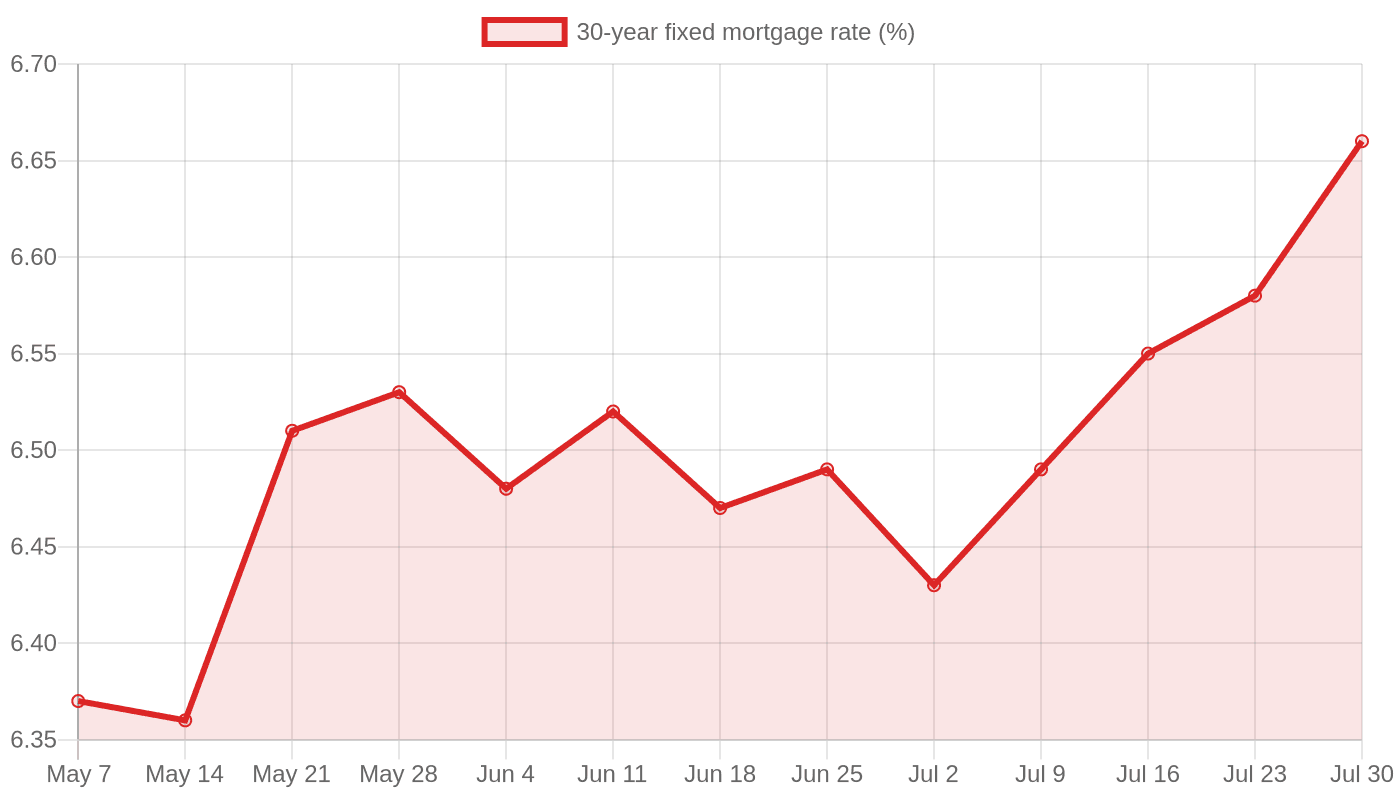
At those rates, monthly payments are heavy and fewer retail buyers qualify. Sellers who need to move quickly become more willing to accept a clean cash offer at a discount — and your buyer list is full of people who can make that offer.
Homes take time to sell — and time is your friend
The median home sat on the market for 78 days in January 2026, the slowest month of the past year. By June 2026, that had settled back to 53 days.
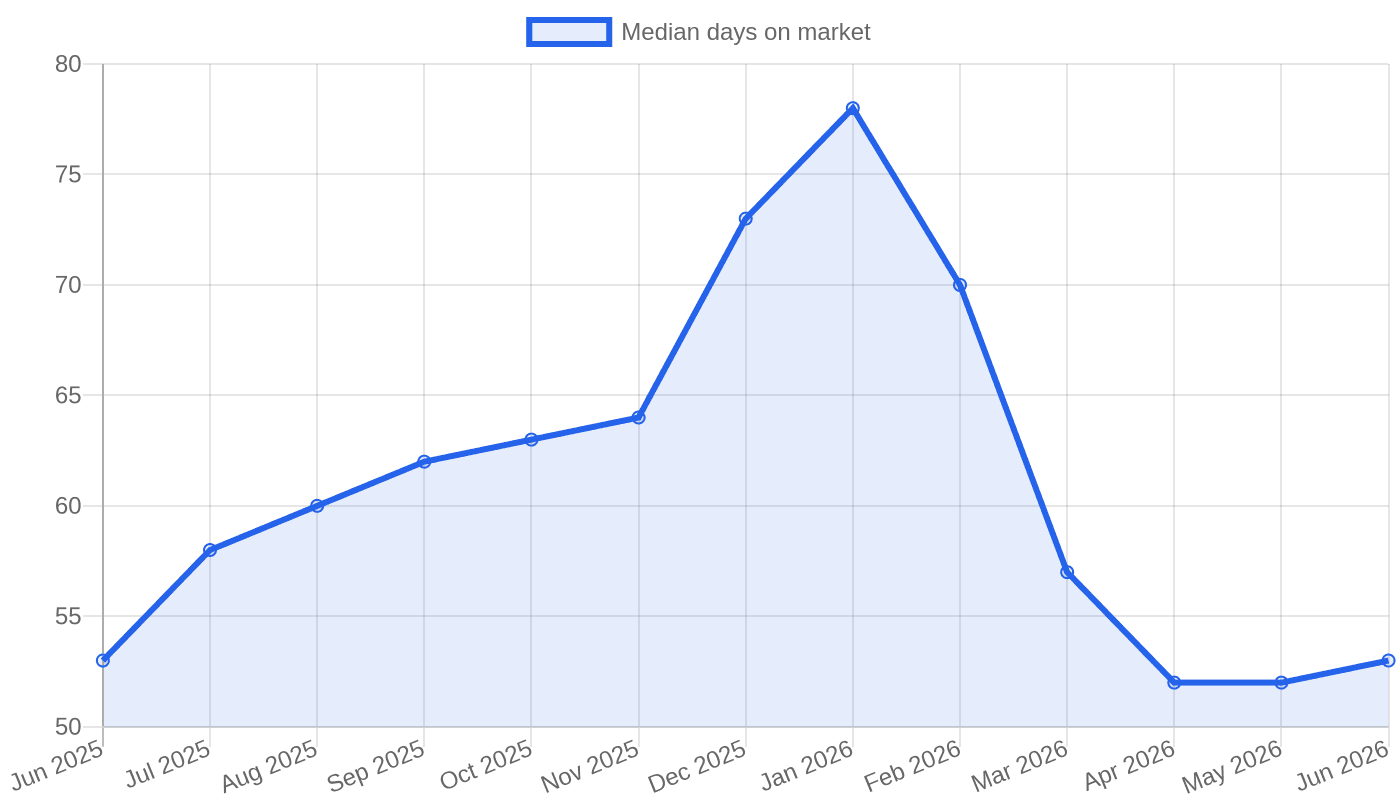
Fifty-three days is plenty of time to get a property under contract, market the deal, and assign it. The slower the market, the more leverage you have at the negotiating table.
Here's the current market snapshot:
| Market indicator | Latest reading |
|---|---|
| Median U.S. home price | $410,700 (April 2026) |
| 30-year fixed mortgage rate | 6.66% (July 30, 2026) |
| Median days on market | 53 days (June 2026) |
Taken together — high prices, high rates, and moderate days on market — the setup is classic wholesaling. Sellers are motivated, retail buyers are fewer, and cash investors are hunting for contracts.
How do real estate wholesaling companies make money?
Real estate wholesaling companies make money on the assignment fee — the difference between the price they contract a property for and the price their end buyer pays for that same contract at closing.
Here's how the model works in plain terms:
- You find a distressed property and get it under contract below market value.
- You verify the after-repair value so you know what an end buyer could pay.
- You find a flipper or landlord who agrees to take over the contract at a higher price.
- The difference between your contract price and the buyer's price is your assignment fee, paid at closing.
You never take title, never carry a mortgage, and never do a day of construction. Your job is finding the deal, pricing it right, and matching it to a buyer.
Why assignment beats flipping for new companies
Flipping ties up capital, credit, and time. Assigning contracts ties up almost none of those. That's why wholesaling is one of the lowest-barrier ways to enter real estate investing — and why the people who do it well obsess over their systems.
What separates the top real estate wholesaling companies from everyone else?
The top wholesaling companies don't have a secret deal source — they have a repeatable process. They find more motivated sellers, price deals faster, and move contracts to buyers quicker than the operators around them.
Here's what that process looks like:
- A real acquisition system. They generate a consistent flow of seller leads instead of waiting for the phone to ring.
- Speed with comps. They know the after-repair value and their maximum offer within minutes, not days.
- A big, organized buyer list. They track cash buyers, flippers, and landlords and know exactly who buys what.
- Relentless follow-up. Most deals happen on the second, third, or tenth contact — the top companies automate this.
- Discipline on the numbers. They compute their exit price before making an offer, so they never buy a deal they can't sell.
None of this requires a big office or a big payroll. It requires systems.
Why most wholesaling companies stall
Most operators fail at one of two points: they run out of seller leads, or they let leads die from slow follow-up. A dialer solves the first; a CRM with automated SMS and email solves the second. That's why the software layer is not optional anymore — it's the difference between a side hustle and a company.
Which software companies should every real estate wholesaler know?
The companies that quietly power successful wholesaling operations are software and data companies — and six of them cover nearly the entire workflow: GoHighLevel, PropStream, Attom Data, CallTools, Launch Control, and Televista.
Here's what each one does:
- GoHighLevel is the command center — a CRM and marketing automation platform that handles lead tracking, SMS and email follow-up, and pipeline management in one place.
- PropStream is a property data and comparable sales tool. Wholesalers use it to find off-market leads and run comps before making an offer.
- Attom Data provides bulk property data — tax records, ownership history, distressed signals — that powers everything from skip tracing to list building at scale.
- CallTools is a power dialer built for high-volume calling. It handles the busywork of dialing so you can talk to more sellers and buyers per hour.
- Launch Control organizes cold-calling campaigns, tracks agent performance, and helps get seller and buyer conversations booked.
- Televista Lead Generation is a lead-gen service that delivers live, transferred seller and buyer leads, letting you skip some of the top-of-funnel grind.
| Company | What it does | Where it fits in your pipeline |
|---|---|---|
| GoHighLevel | CRM and marketing automation | Manage leads, automate follow-up, send SMS and email campaigns |
| PropStream | Property data and comps | Find off-market leads and price deals fast |
| Attom Data | Bulk property data provider | Power skip tracing, tax records, and large lead lists |
| CallTools | Power dialer | Make more calls per hour to sellers and buyers |
| Launch Control | Cold-calling campaign software | Organize calling campaigns and book appointments |
| Televista Lead Generation | Live-transfer lead generation | Scale seller and buyer lead flow |
These six aren't the whole universe. The Wholesale REI directory tracks 65 tools across 9 categories, so plenty of specialized options exist — but this set covers the core workflow end to end.
How do you choose the right companies and tools for your market?
Start with the part of your workflow that hurts most. If you have no leads, buy lead generation. If leads leak out of your pipeline, buy a CRM. If you can't comp fast, buy data.
Then run this selection process:
- Write out your pipeline. Lead gen → data and skip tracing → CRM → dialer → closing. Every tool should map to one step.
- Pick one tool per step. Don't buy three overlapping products on day one.
- Use free trials. Almost every major wholesaling tool has one.
- Run one real campaign for 30 days. Test the tool against your actual workflow, not a demo.
- Cut what doesn't move the number. If a tool isn't generating more conversations or faster deals, drop it.
Here's what to weigh when you compare tools:
- Cost. Monthly price plus any per-lead or per-minute fees.
- Learning curve. Can your team use it this week, or does it need training?
- Integrations. Does it connect to your CRM and dialer?
- Volume limits. Will it scale when you double your campaign?
- Support. Is there real human help when something breaks?
Red flags to watch for
Avoid tools with opaque pricing, long-term contracts before you've tested them, or no integration with the rest of your stack. The best wholesaling companies keep their tool count small and their data clean.
How do you start your own wholesaling company?
You can start your own wholesaling company alone and on a small budget — the model never requires you to buy the property. The order of operations is simple: build your buyer list first, then find a motivated seller, price the deal, put it under contract, and assign it.
Step 1: Build a buyer list before you need it
Your buyer list is your power. Cash buyers, flippers, and landlords who can take a deal off your hands quickly. Find them at local real estate investor meetups, through title companies, and in online investor groups.
Step 2: Find motivated sellers
Motivated sellers rarely advertise. Cold calling, direct mail, driving for dollars, and live-transfer lead generation all work. Top companies run several of these channels at once.
Step 3: Price the deal before you negotiate
Know the after-repair value, estimate repairs, set your target profit, and work backward to your maximum offer. Data tools like PropStream and Attom make this a minutes-long exercise instead of a weekend project.
Step 4: Get the property under contract with an assignment clause
Your contract must allow you to assign it to another buyer. That's what makes the deal saleable.
Step 5: Market the contract to your buyer list
Send your buyers the essentials — address, numbers, after-repair value, and your assignment fee. Good deals get picked up fast.
Step 6: Close and collect your fee
At closing, the end buyer purchases the property and you receive your assignment fee. No title, no mortgage, no renovations.
Do you need a license to run a wholesaling company?
Wholesaling itself is a legal real estate practice, but the rules vary by state — and you should check your local laws before you start. Some states regulate how you advertise, how you present yourself, and whether assignments require a license.
The safest approach for any new company: have a real estate attorney review your contract and your marketing language before your first deal. That review is far cheaper than a compliance problem later.
The Bottom Line
Real estate wholesaling companies — both the operators and the software companies behind them — are thriving in a market of high prices, high rates, and moderate selling times. Your next step is to practice your seller pitch with the free AI Cold Call Trainer before you dial a real owner — it takes no signup. After that, compare the tools the top companies run on in the directory, and you'll be ready to work your first deal.
Frequently Asked Questions
What are real estate wholesaling companies?
Real estate wholesaling companies put a property under contract and then assign or sell that contract to an end buyer — usually a flipper or landlord — for a fee, without ever buying the home themselves.
How do real estate wholesaling companies make money?
They earn an assignment fee: the difference between the price they contract a property for and the price their end buyer pays for that contract at closing. The wholesaler never takes title or carries a mortgage.
What software do the top wholesaling companies use?
A typical stack covers lead generation, data and comps, a CRM, and a dialer. The six companies covered in this post — GoHighLevel, PropStream, Attom Data, CallTools, Launch Control, and Televista — span that entire workflow.
Is 2026 a good time to start a wholesaling company?
Yes. The median U.S. home price is $410,700, the 30-year fixed mortgage rate is 6.66%, and homes spend a median of 53 days on the market — a combination that creates motivated sellers and active cash buyers.
How many wholesaling software tools are available?
The Wholesale REI directory tracks 65 software tools across 9 categories, spanning lead generation, data, CRM, dialers, and more — so you can compare the major options in one place.
Do you need a real estate license to run a wholesaling company?
Wholesaling is a legal real estate practice, but rules vary by state, especially around assignments and advertising. Check your local laws and have a real estate attorney review your contract before your first deal.
Sources
- Software tools tracked in the Wholesale REI directory — Wholesale REI directory
- Tool categories in the Wholesale REI directory — Wholesale REI directory
- Median Sales Price of Houses Sold, April 2026 — FRED (Federal Reserve Bank of St. Louis)
- 30-Year Fixed Mortgage Rate, July 30, 2026 — FRED (Federal Reserve Bank of St. Louis)
- Median Days on Market, January 2026 (slowest month) — FRED (Federal Reserve Bank of St. Louis)
This article was researched and drafted with AI assistance, then reviewed and edited by Mark Anthony. Every statistic is sourced and cited. It's for informational purposes only and is not financial or legal advice. Read our editorial policy.