Real Estate Wholesaling: The Ultimate Guide to Getting Started


Real estate wholesaling is the answer. It's the fastest path to cash flow for new investors, and it's how I started. I remember my first deal — a tired three-bedroom ranch in a suburban neighborhood where the owner had already moved out of state. I had no money, no credit, and no experience. But I had a contract, a buyer, and a $12,000 assignment fee that funded my next three months of living expenses. That deal taught me that wholesaling isn't about luck — it's about process, persistence, and knowing exactly what to do at each step.
Key Takeaways
- Real estate wholesaling is assigning a purchase contract to another buyer for a fee — you never own the property.
- The median US home price is $403,200 (as of Jan 2026), and the 30-year mortgage rate is 6.49% — high rates make motivated sellers easier to find.
- You can start wholesaling with $0 of your own money by using the "double close" or "assignment" method.
- The Wholesale REI directory tracks 63 software tools across 9 categories to help you find deals, manage leads, and close faster.
- Success depends on finding motivated sellers, accurate comps, and a buyers list — not on market timing.
What Is Real Estate Wholesaling?
Real estate wholesaling is the practice of contracting a property at a below-market price and then assigning that contract to an end buyer for a fee. You never take ownership of the property. You're essentially a middleman who finds deeply discounted deals and sells the contract to an investor who wants to flip or rent the house.
Here's how it works in practice: You find a seller who needs to sell quickly — maybe they've inherited a property they don't want, or they're facing foreclosure. You negotiate a purchase price of $150,000 for a house that's worth $250,000 after repairs. You get the property under contract with a clause that allows you to assign the contract to another buyer. Then you find an investor who agrees to buy the contract from you for $165,000. At closing, the investor pays the seller $150,000 and pays you a $15,000 assignment fee. You never put up any money, you never owned the house, and you walk away with $15,000.
How Wholesaling Differs from Flipping
Flipping requires buying, renovating, and reselling a property. That takes capital, credit, and construction know-how. Wholesaling requires none of that. You just need a contract and a buyer.
| Aspect | Wholesaling | Flipping |
|---|---|---|
| Money needed | $0 (assignment) or short-term funds (double close) | 20-30% down + renovation costs |
| Ownership | Never own the property | Own during renovation |
| Risk | Low — no holding costs | High — market, renovation, carrying costs |
| Profit per deal | $5,000–$50,000 assignment fee | $30,000–$100,000+ after costs |
| Time per deal | 2–4 weeks to assign | 3–12 months to renovate and sell |
The difference in risk is stark. When you flip, you're exposed to every variable: a contractor who doesn't show up, a market downturn during your six-month renovation, or a buyer who backs out after you've already spent $50,000 on materials. With wholesaling, your exposure is limited to the time between signing the contract and assigning it — typically two to four weeks. If the deal falls apart, you lose nothing but time.
The Legal Structure of a Wholesale Deal
There are two primary legal structures for a wholesale deal:
Assignment of Contract: You sign a purchase agreement with the seller that includes an "assignment clause" or uses the phrase "and/or assigns." This gives you the right to transfer your interest in the contract to another buyer. The buyer then steps into your shoes and closes with the seller. You receive your assignment fee directly from the buyer at closing, often via a separate assignment agreement.
Double Close: You actually purchase the property using transactional funding (short-term money from a private lender or funding company), then immediately resell it to your end buyer on the same day. This is more paperwork and requires funding, but it keeps your name off the assignment and can be useful in states with strict licensing laws.
Most wholesalers start with assignment because it requires no money. But some experienced wholesalers use double closes to keep their deals confidential — the seller never knows you're assigning, and the buyer never knows your original contract price.
Why Wholesaling Works in 2026
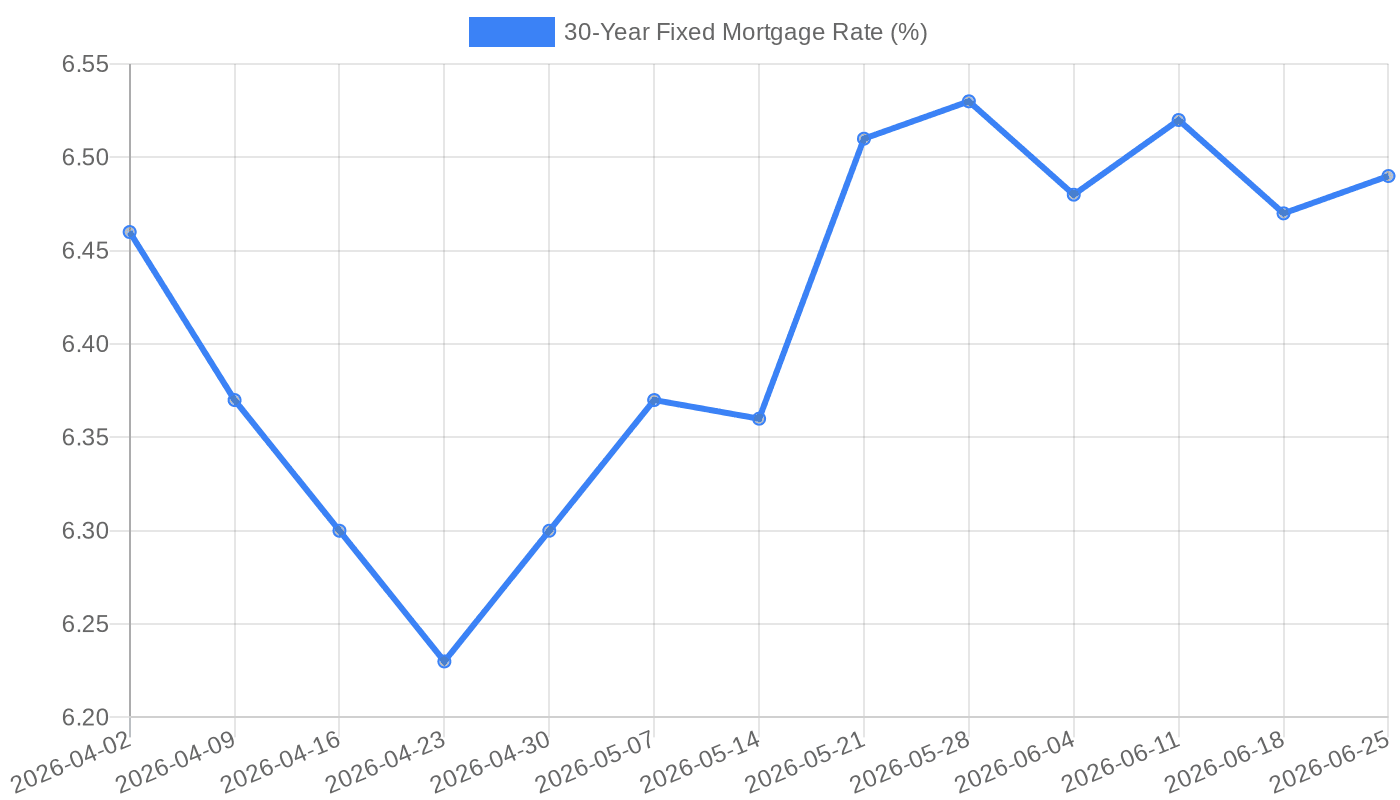
High mortgage rates and rising days on market create the perfect environment for wholesalers. As of June 2026, the 30-year fixed mortgage rate is 6.49%, up from historic lows. That means fewer buyers can qualify for traditional financing, and sellers are stuck with properties they can't move.
Think about what 6.49% means for a typical buyer. On a $403,200 home with 20% down, the monthly payment is about $2,030 — compared to $1,520 at the 3% rates we saw in 2021. That's an extra $510 per month. Many buyers simply can't afford that, which means fewer competing offers and more leverage for cash buyers — including the investors you'll be selling to.
Median days on market has climbed to 52 days as of May 2026. That's up from 51 a year earlier. When homes sit longer, sellers get nervous — and that's when you step in with a cash offer. A seller who's been on the market for 60 days with no offers is far more likely to accept a below-market cash offer than one who just listed last week.
The Numbers Tell the Story
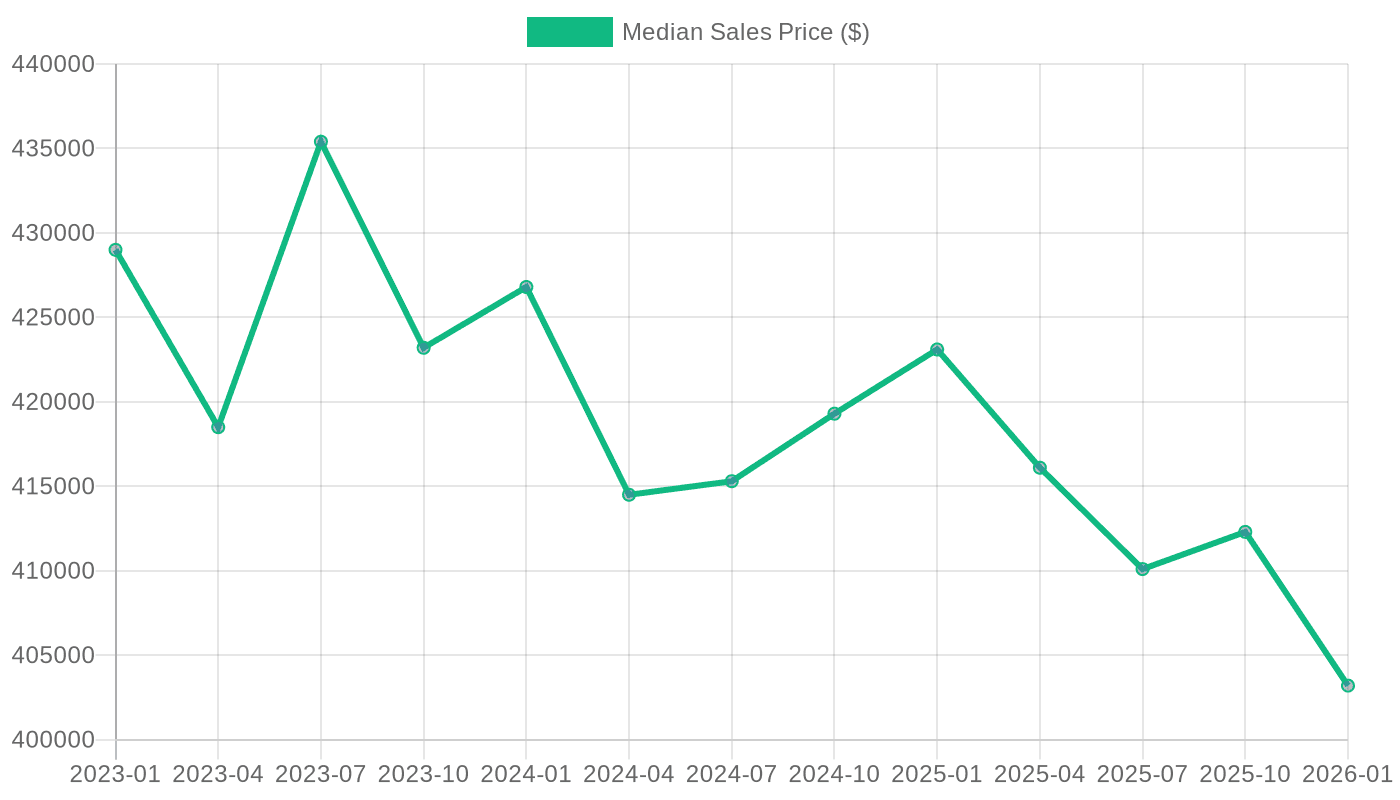
The median sales price of houses sold in the US was $403,200 as of January 1, 2026. That's down from the peak of $435,400 in July 2023. Prices are softening in many markets, which means more motivated sellers willing to negotiate.
Let's break down what that price decline means for wholesalers. A $32,200 drop from peak to current means the average homeowner who bought at the top has lost about 7.4% of their home's value. If they need to sell now — due to a job loss, divorce, or relocation — they're facing a loss. That's your opportunity. You're not taking advantage of them; you're providing a solution. You're offering a quick, cash sale that saves them from months of mortgage payments, repairs, and uncertainty.
Market Conditions That Create Motivated Sellers
Several specific scenarios are producing motivated sellers in 2026:
Post-pandemic relocation fallout: Many people who moved during 2020-2022 are now realizing they made a mistake. They moved to a new city, bought a house, and now want to move back or move again. These sellers are often willing to take a discount just to get out from under the property.
Adjustable-rate mortgage resets: Millions of homeowners took out ARMs during the low-rate years. As those loans reset to higher rates, monthly payments are jumping by $500-$1,000. Some can't afford the new payment and need to sell quickly.
Inherited properties: Baby boomers are passing away at increasing rates, leaving properties to heirs who don't want them. These heirs often live out of state and just want to sell fast — they're perfect candidates for a wholesale deal.
Divorce situations: When a couple splits, they often need to sell the marital home quickly to split the proceeds. They're motivated to close fast, not to maximize price.
How to Start Real Estate Wholesaling
You can start wholesaling today with no money. Here's the exact step-by-step process.
Step 1: Build a Buyers List
Before you find a deal, you need to know who will buy it. Other real estate investors — flippers, landlords, and rehabbers — are your customers. Join your local real estate investor association (REIA) or use platforms like PropStream to find cash buyers in your area.
Here's how to build a buyers list in one week:
Day 1: Search your county's property records for recent cash sales. Look for properties that sold to LLCs or trusts — those are likely investors. Export the buyer names and addresses.
Day 2: Use PropStream or a similar tool to find the phone numbers and email addresses of those buyers. Most property data platforms offer skip tracing for a few cents per record.
Day 3: Join your local REIA. Most have monthly meetings where investors network. Bring business cards and tell people you're a wholesaler looking for buyers. Collect at least 20 business cards at your first meeting.
Day 4: Create a simple Google Sheet with columns for buyer name, phone, email, buying criteria (price range, property type, zip codes), and how quickly they can close. Most cash buyers can close in 7-14 days.
Day 5: Call every buyer on your list. Ask them: "What are you looking for? What's your ideal deal? How fast can you close?" Take notes. You're not selling anything yet — you're building relationships.
Day 6-7: Send a follow-up email to everyone you spoke with. Say: "Thanks for chatting. I'll send you deals as I find them. What's the best way to reach you — text, email, or phone?"
A good buyers list has at least 50 active buyers. You need enough buyers that you can send a deal to 10-20 people and get at least one "yes" within 24 hours.
Step 2: Find Motivated Sellers
Motivated sellers are people who need to sell quickly due to divorce, foreclosure, job relocation, or inherited property. You can find them through:
- Direct mail — send letters to absentee owners or pre-foreclosures.
- Bandit signs — place "We Buy Houses" signs in high-traffic areas.
- Driving for dollars — look for distressed properties and look up the owner.
- Online lead generation — use tools like Launch Control to automate outreach.
Let's dive deeper into each method:
Direct Mail: This is the most consistent source of motivated seller leads. Target absentee owners (people who own a property but don't live there) and pre-foreclosure properties. Send a simple letter that says: "I buy houses in your area. If you're thinking of selling, I can make a cash offer and close in 7 days." Expect a 0.5% to 2% response rate. If you send 1,000 letters, you'll get 5-20 responses. Of those, maybe 1-2 will turn into deals.
Bandit Signs: Buy 50 "We Buy Houses" signs from a local sign shop or online. Place them at busy intersections in neighborhoods where you want to buy. Make sure they're legal in your area — some cities ban them. Include a phone number and a simple URL. Expect 2-5 calls per week per 50 signs.
Driving for Dollars: Spend two hours every Saturday driving through neighborhoods you want to buy in. Look for overgrown lawns, peeling paint, broken windows, mail piling up, or "for sale by owner" signs. Write down the address. When you get home, look up the owner using county property records or a tool like PropStream. Call or mail them.
Online Lead Generation: Use Facebook ads or Google ads targeting people who are "thinking of selling" or "need to sell my house fast." A well-targeted ad can generate leads for $5-$15 each. Use a tool like GoHighLevel to capture and follow up with those leads automatically.
Step 3: Analyze the Deal
You need to know the after-repair value (ARV) and repair costs. Use tools like Attom Data or PropStream to get comps. Your maximum allowable offer (MAO) is:
MAO = ARV × 70% – Repairs – Your Assignment Fee
For example, if ARV is $250,000 and repairs are $30,000, and you want a $15,000 fee: MAO = $175,000 – $30,000 – $15,000 = $130,000.
Here's how to calculate each component:
ARV (After-Repair Value): Find at least three comparable properties that sold in the last 90 days within a half-mile radius. They should be similar in size, bedrooms, bathrooms, and condition. Take the average sale price. That's your ARV.
Repair Costs: Walk through the property with a contractor or use a repair cost estimator like HomeAdvisor. Be conservative — add 20% for unexpected issues. Common costs: new roof ($8,000-$15,000), HVAC ($5,000-$10,000), kitchen remodel ($15,000-$40,000), bathroom remodel ($7,000-$15,000).
Your Assignment Fee: This is your profit. Aim for $10,000-$20,000 on a typical deal. On a $250,000 ARV property, a $15,000 fee is reasonable. Don't get greedy — if your fee is too high, the buyer won't have enough margin.
The 70% Rule: The 70% rule (ARV × 70%) ensures the buyer has room for profit after repairs, closing costs, and holding costs. If you're in a hot market, you might go up to 75%. In a slow market, stick to 65%.
Step 4: Get the Property Under Contract
Use a standard real estate purchase contract with an assignment clause. You can also use a separate assignment agreement. Make sure the contract says "and/or assigns" so you can transfer it.
Here's the exact language to look for or add: "Buyer may assign this contract to any person or entity without the consent of Seller." If the seller asks about it, say: "I'm working with a group of investors, and I want to be able to bring in a partner if needed."
Your contract should also include:
- Inspection contingency: 7-14 days to inspect the property. This gives you time to find a buyer.
- Financing contingency: Even if you're paying cash, include this to protect yourself.
- Closing date: 30-45 days out to give you time to assign.
Never use your own money for earnest money. Ask the seller to accept a small deposit ($100-$500) or no deposit at all. If they insist on a larger deposit, use transactional funding or ask your buyer to put up the deposit.
Step 5: Assign the Contract
Find a buyer from your list and assign the contract for a fee. You can do this via a simple assignment agreement. The buyer pays you directly at closing.
Here's the process:
- Send your deal to 10-20 buyers via text or email. Include: address, ARV, repair estimate, your contract price, and your assignment fee.
- The first buyer who says "yes" gets the deal. Don't negotiate — your price is your price.
- Sign an assignment agreement with the buyer. This document transfers your rights in the contract to the buyer.
- At closing, the buyer pays the seller the original contract price and pays you your assignment fee.
Most closings happen at a title company or real estate attorney's office. The title company handles the paperwork and disburses funds. You'll receive a check at the closing table.
Step 6: Close the Deal
Two ways to close:
- Assignment — You assign the contract to the buyer, who closes with the seller. You get paid at closing.
- Double close — You buy the property and immediately resell it to the buyer. This requires transactional funding (short-term money). Most wholesalers use assignment.
Assignment closing: The buyer and seller sign the final documents. The title company issues a check to the seller for the contract price and a separate check to you for your assignment fee. You walk out with cash.
Double close: You need transactional funding — a short-term loan from a private lender or funding company that covers the purchase price. You buy the property from the seller, then immediately sell it to your buyer. The buyer's funds pay off the transactional loan, and you keep the difference. This is more complex but keeps your assignment fee confidential.
Best Software Tools for Wholesalers
The Wholesale REI directory lists 63 software tools across 9 categories to help you automate and scale. Here are the top picks:
| Tool | Best For | Key Feature |
|---|---|---|
| GoHighLevel | CRM & automation | All-in-one marketing, pipeline, and texting |
| PropStream | Property data & comps | Nationwide MLS data, skip tracing, and driving routes |
| Attom Data | Advanced analytics | Property records, foreclosure data, and market trends |
| CallTools | Power dialing | Predictive dialer for cold calling sellers |
| Launch Control | Direct mail automation | Print-and-mail postcards with tracking |
| Rezzie | Lead generation | AI-powered buyer and seller leads |
Why You Need a CRM
Wholesaling is a numbers game. You'll contact hundreds of sellers to close one deal. A CRM like GoHighLevel keeps your leads organized, automates follow-ups, and tracks every call and text.
Here's how a CRM changes your workflow:
Without a CRM: You call a seller, leave a voicemail, and write their name on a sticky note. Three days later, you forget to call back. The seller sells to someone else. You lose the deal.
With a CRM: You call a seller, log the call in GoHighLevel, and set a follow-up task for 48 hours. The CRM automatically sends a text reminder to the seller and an email to you. When you call back, you see the entire history — what you talked about, what the seller's motivation was, and what price they're looking for.
A good CRM also automates your marketing. You can set up sequences that send a text, then an email, then a phone call, all on a schedule. This keeps you top of mind without manual work.
Category Breakdown of the 63 Tools
The Wholesale REI directory organizes tools into nine categories:
- CRM & Automation (12 tools) — GoHighLevel, Podio, Salesforce
- Property Data & Comps (8 tools) — PropStream, Attom Data, Reonomy
- Skip Tracing (6 tools) — BatchLeads, Skiptrace.com, TLO
- Direct Mail (7 tools) — Launch Control, Click2Mail, PostcardMania
- Dialers & Calling (5 tools) — CallTools, Mojo Dialer, Connex
- Lead Generation (9 tools) — Rezzie, Zillow, Redfin
- Transaction Management (4 tools) — Paperless Pipeline, Dotloop
- Marketing & Advertising (7 tools) — Facebook Ads, Google Ads, Yelp
- Education & Training (5 tools) — Wholesale REI, BiggerPockets
You don't need all 63. Start with one tool from each category that fits your budget. Most offer free trials or low-cost monthly plans.
Common Wholesaling Mistakes to Avoid
Overpricing the Assignment Fee
Don't get greedy. If you try to take too much, the buyer will walk. A $10,000–$20,000 fee on a $200,000 deal is reasonable.
Here's the math: If a buyer needs to make $40,000 profit on a flip, and you take $25,000 as your fee, the buyer only has $15,000 left. That's not enough to justify the risk. Keep your fee reasonable so the buyer can still make money. A happy buyer will buy from you again.
Not Having a Buyers List Ready
If you get a deal under contract but have no buyers, you'll lose your earnest money. Build your list before you start.
I made this mistake on my second deal. I got a great property under contract — a three-bedroom in a good neighborhood for $120,000 with an ARV of $200,000. But I had only three buyers on my list, and none of them wanted the deal. I couldn't find a buyer in time, and I lost my $500 earnest money. That $500 hurt, but the lesson was worth more: always have 50+ buyers before you sign a contract.
Ignoring Local Laws
Some states have strict rules about wholesaling. Always consult a real estate attorney. In many states, you need a real estate license to assign contracts — but others allow it without one.
States with strict wholesaling laws include:
- Florida — Requires a real estate license to wholesale.
- New York — Courts have ruled that wholesaling without a license is illegal.
- California — Requires a license if you're marketing yourself as a real estate agent.
States where wholesaling is generally allowed without a license:
- Texas — No license required for assignment of contract.
- Georgia — Legal as long as you disclose you're not a licensed agent.
- Ohio — Legal with proper disclosures.
Always check your state's laws and consult an attorney. A $500 legal consultation is cheaper than a lawsuit.
How to Scale Your Wholesaling Business
Once you've closed a few deals, you can scale by:
- Hiring virtual assistants to handle cold calling and data entry.
- Using software to automate lead generation and follow-ups.
- Partnering with other wholesalers to share deals and buyers.
The Role of Technology
With 63 tools in the directory, you can automate almost everything. For example, use CallTools to dial 300+ calls per hour, PropStream to find motivated sellers, and GoHighLevel to manage your pipeline.
Here's a scalable daily workflow:
6:00 AM — PropStream sends you a list of 50 new pre-foreclosure properties in your target zip codes. 7:00 AM — GoHighLevel imports the list and sends an automated text to each owner: "Hi [Name], I buy houses in your area. If you're thinking of selling, reply YES for a cash offer." 8:00 AM — You review the responses. Anyone who replied "YES" gets added to your hot lead list. 9:00 AM — CallTools dials your hot leads. You talk to motivated sellers and schedule property visits. 12:00 PM — You visit properties and estimate repairs. 2:00 PM — You send deals to your buyers list via text blast. 4:00 PM — You follow up with buyers who expressed interest. 6:00 PM — You review your pipeline and plan tomorrow's outreach.
With this system, one person can handle 50-100 leads per day and close 2-4 deals per month.
Building a Team
As you grow, you'll need help. Here's a typical team structure:
Virtual Assistant (VA) — $500-$1,500/month. Handles data entry, skip tracing, and initial outreach. Cold Caller — $15-$25/hour. Calls motivated sellers and screens leads. Transaction Coordinator — $500-$1,000 per deal. Handles paperwork and coordinates closing. Real Estate Attorney — $200-$500 per deal. Reviews contracts and ensures compliance.
With a team of 3-5 people, you can scale from 1 deal per month to 5-10 deals per month.
The Bottom Line
Real estate wholesaling is the most accessible way to break into real estate investing. With high mortgage rates and softening prices, motivated sellers are everywhere. You don't need money or credit — just a contract and a buyer. Start by building your buyers list, then find one motivated seller. Use the Wholesale REI directory to compare the top tools and pick the ones that fit your workflow. And if you want to practice your pitch, try our free AI Cold Call Trainer — it's a realistic way to build confidence before you dial a real seller.
Frequently Asked Questions
Do I need a real estate license to wholesale?
It depends on your state. Some states require a license to assign contracts, while others allow it without one. Always consult a real estate attorney in your area to stay compliant.
How much money do I need to start wholesaling?
You can start with $0 if you use the assignment method. You'll need a small amount for earnest money (usually refundable) and marketing costs like direct mail or bandit signs.
How do I find motivated sellers?
Common methods include direct mail to absentee owners, driving for dollars, bandit signs, and online lead generation tools like PropStream or Launch Control.
What is the difference between assignment and double close?
In an assignment, you simply transfer your contract to a buyer for a fee. In a double close, you buy the property and immediately resell it. Assignment is simpler and requires no funds.
How much can I make wholesaling?
Assignment fees typically range from $5,000 to $50,000 per deal, depending on the property value and your negotiation. Some wholesalers do multiple deals per month.
What software do I need for wholesaling?
At minimum, you need a CRM (like GoHighLevel), property data tool (like PropStream), and a dialer (like CallTools). The Wholesale REI directory lists 63 tools across 9 categories.
Sources
- 63 software tools tracked in the Wholesale REI directory — Wholesale REI directory
- 9 tool categories in the Wholesale REI directory — Wholesale REI directory
- 30-Year Fixed Mortgage Rate (as of 2026-06-25) — FRED (Federal Reserve Bank of St. Louis)
- Median Sales Price of Houses Sold (as of 2026-01-01) — FRED (Federal Reserve Bank of St. Louis)
- Median Days on Market (as of 2026-05-01) — FRED (Federal Reserve Bank of St. Louis)
This article was researched and drafted with AI assistance, then reviewed and edited by Mark Anthony. Every statistic is sourced and cited. It's for informational purposes only and is not financial or legal advice. Read our editorial policy.