Wholesale Real Estate Contract Texas: What You Need to Know


You found a motivated Texas seller, you agreed on a price, and now you're staring at a blank contract wondering which clause protects you and which one gets you sued. In Texas, the difference between a clean assignment and a blown deal usually comes down to a handful of contract terms — and most new wholesalers get at least one of them wrong.
Key Takeaways
- A Texas wholesale deal is a purchase contract plus an assignment, not a sale to the end buyer — you're selling your contractual right to buy, not the house.
- Texas Property Code Chapter 5 gives certain sellers a 14-day right to cancel an executory contract, so your exit window and disclosures have to be right from day one.
- You can wholesale in Texas without a real estate license as long as you're buying for your own account and assigning — not marketing or negotiating on someone else's behalf for a fee.
- Market conditions shape your offer: the 30-year fixed rate sat at 7.32% as of October 22, 2026, and the national median sales price was $410,700 in Q2 2026.
- Our directory tracks 65 software tools across 9 categories built for wholesalers, from comping to dialers to contract and CRM workflow.
What is a wholesale real estate contract in Texas?
A wholesale real estate contract in Texas is a binding purchase agreement between you and the seller that gives you the right to buy the property — and the right to assign that contract to another buyer before closing. You are not buying the house to keep it. You're buying the right to buy it.
That distinction matters more in Texas than in most states. Texas treats your interest under the contract as equitable title. You hold a real, enforceable stake in the property from the moment the contract is signed, even though you haven't closed yet.
The three documents in a typical Texas wholesale deal
Most Texas wholesale transactions involve three separate pieces of paper:
- The purchase and sale contract — your agreement with the seller, usually on a Texas REALTORS® form or a custom investor contract.
- The assignment agreement — the document where you transfer your rights under that contract to your end buyer for a fee.
- The disclosures — the seller's property condition disclosure, lead-based paint disclosure (for pre-1978 homes), and any statutory notices Texas requires.
Miss the third one and the first two don't matter. Disclosures are where Texas deals die quietly.
Why the assignment is the actual product
Your profit in a wholesale deal is the assignment fee — the gap between your contract price and what your end buyer agrees to pay. You never take title, never get a mortgage, and never pay closing costs on the purchase side.
That's the whole appeal. Low capital, fast turnaround, repeatable. But it also means your contract has to be assignable — and if the seller's contract says "non-assignable" or requires seller consent, your business model evaporates.
How does a Texas wholesale contract actually work, step by step?
It works in six steps: you contract with the seller, you market the contract, you assign it, and your end buyer closes. Here's the full sequence with the Texas-specific details that trip people up.
Step 1: Get the property under contract
You and the seller sign a purchase agreement with a price, a closing date, and — critically — an inspection or feasibility period. That period is your escape hatch. If you can't find a buyer or the numbers don't work, you terminate and walk.
Texas investor contracts typically use a 7- to 14-day feasibility window. Use it. A contract with no exit is a contract that can cost you your earnest money.
Step 2: Confirm the seller's disclosure obligations
Texas requires a seller's disclosure notice for most residential sales. Ask for it in writing and put the deadline in the contract. If the seller refuses or the disclosure reveals problems, your feasibility period lets you renegotiate or cancel.
Step 3: Open title early
Order a title commitment in the first week. Texas title issues — heirship problems, old liens, boundary disputes — are common on distressed properties. You want to know about them while you still have an exit, not three days before closing.
Step 4: Market the contract to cash buyers
Now you sell the deal, not the house. Your buyer list sees the spread: contract price, estimated repairs, and the assignment fee. This is where a solid buyer list and clean comps do the heavy lifting.
Step 5: Sign the assignment agreement
Your end buyer signs an assignment agreement and pays your fee — usually at closing through the title company. Texas title companies handle assignment fees routinely, but confirm yours will before you sign anything with the seller.
Step 6: Close
Your end buyer closes directly with the seller. You collect your fee and you're out. No title in your name, no loan, no holding costs.
What does Texas law require in a wholesale contract?
Texas law requires a written contract, proper disclosures, and — for certain executory contracts — a 14-day cancellation right for the seller. Get these three things right and most of your legal exposure disappears.
The statute of frauds: get it in writing
Texas requires real estate contracts to be in writing and signed by the party being charged. A handshake deal on a napkin won't hold up. Every term that matters — price, closing date, assignment rights, who pays closing costs — belongs in the document.
Chapter 5 and the 14-day cancellation right
Texas Property Code Chapter 5 governs executory contracts for conveyance of real property. Under the statute, a seller in an executory contract generally has the right to cancel within 14 days of signing, and the contract must include a conspicuous notice of that right.
If your deal structure falls under executory contract rules, the cancellation notice isn't optional. Skip it and the seller may be able to cancel later — or worse, you may be looking at statutory penalties.
Seller's disclosure notice
Texas requires most residential sellers to deliver a written disclosure of known defects. As the wholesaler, you're not the seller — but you're the one who has to make sure the disclosure gets delivered, because your end buyer will demand it and your title company will ask.
Lead-based paint disclosure
For homes built before 1978, federal law requires a lead-based paint disclosure and the EPA pamphlet. This applies to wholesalers too. It's a one-page form and it's non-negotiable.
What about the Texas Real Estate Commission forms?
TREC promulgates the standard contract forms most Texas agents use. Investors often use those forms with addenda, or use investor-specific contracts drafted by a Texas real estate attorney. Either can work — but if you're using a TREC form, read the assignment and addendum sections carefully, because they weren't written with wholesaling in mind.
Can you wholesale real estate in Texas without a license?
Yes — you can wholesale real estate in Texas without a real estate license, as long as you're contracting to buy for your own account and assigning that contract. What you can't do is act as a broker for someone else's transaction for a fee.
Where unlicensed wholesalers get into trouble
The line is marketing and negotiation on behalf of another party. If you list a property you don't own, negotiate terms for a seller who isn't your contract counterparty, or charge a fee for connecting two other people, Texas can treat that as unlicensed brokerage activity.
Stay on the right side by doing these things:
- Contract in your own name or your entity's name as the buyer.
- Assign your own contractual rights — don't broker someone else's deal.
- Disclose your interest clearly to the seller and the end buyer.
- Use a Texas real estate attorney for contract review, especially on your first several deals.
The "equitable interest" disclosure
Because you hold equitable title, you should disclose that interest in writing. Texas law and good practice both favor transparency here. A seller who understands you're assigning the contract is a seller who won't blow up the deal at closing.
How do market conditions shape your Texas wholesale contract?
Market conditions shape your offer price, your feasibility period, and your assignment fee — and right now the numbers favor patient wholesalers. Rates have climbed, which cools buyer demand and stretches days on market.
The 30-year fixed mortgage rate rose from 6.66% on July 30, 2026 to 7.32% on October 22, 2026. That's a meaningful jump in a single quarter, and it pushes more retail buyers to the sidelines.
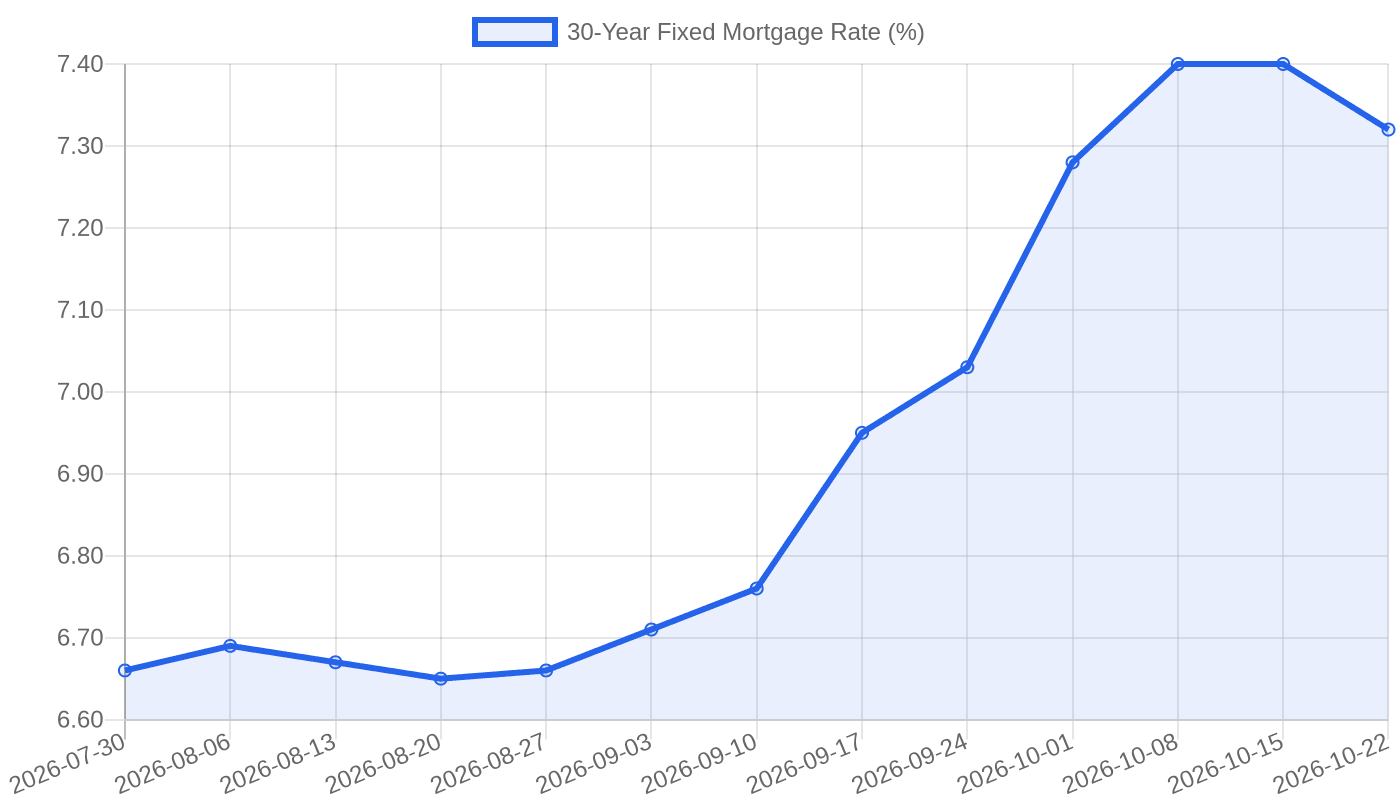
Higher rates mean fewer financed buyers competing for homes — which is exactly the environment where cash buyers and wholesalers gain leverage. Your end buyer pool is mostly cash, so they're less rate-sensitive than a retail buyer.
Days on market tell you how much room you have
Median days on market nationally hit 61 days as of September 1, 2026, up from a low of 52 days in April and May 2026. Longer market time means more motivated sellers and more negotiating room on your contract price.
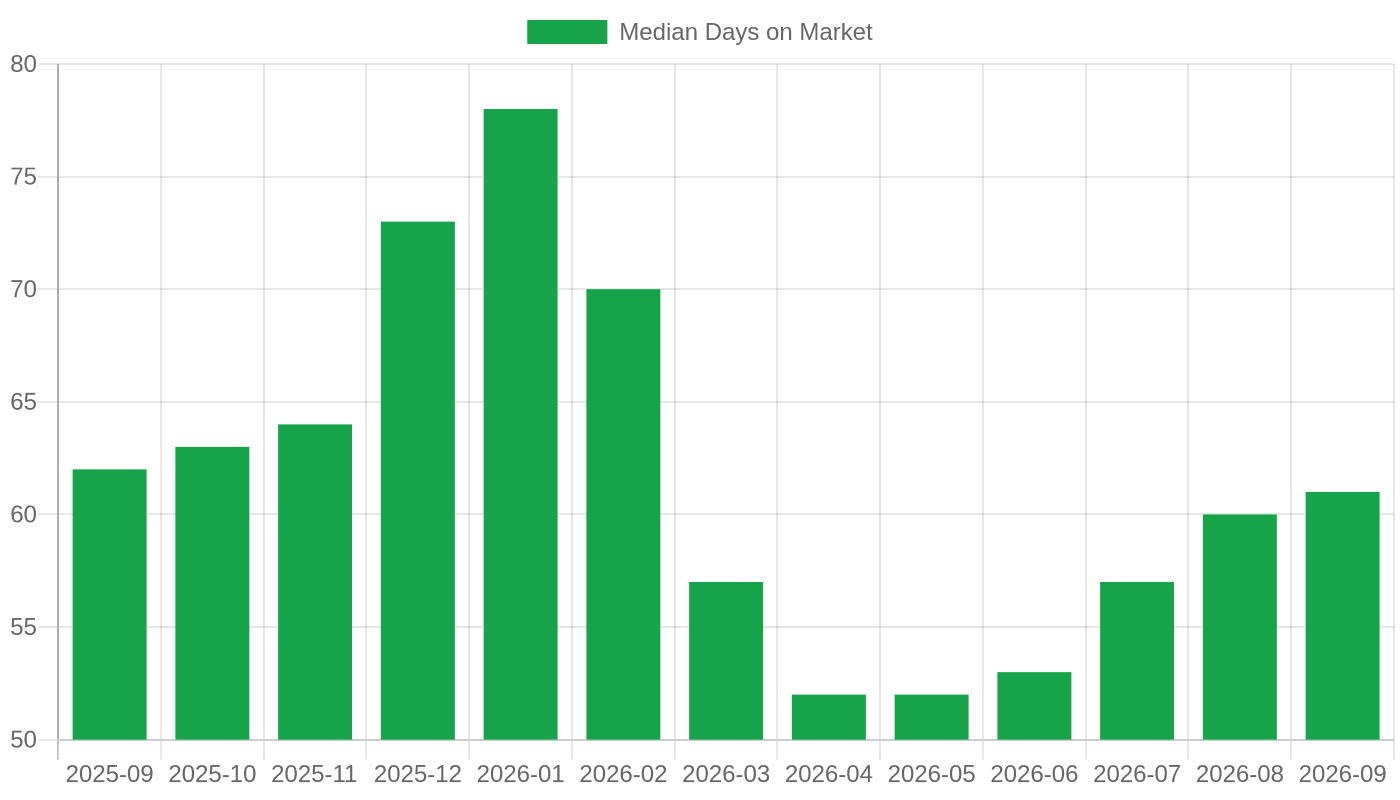
When homes sit, sellers get flexible. That flexibility is where your spread comes from. Build a longer feasibility period into your contract when days on market are climbing — you'll need the extra time to place the assignment.
Price trends set your ceiling
The national median sales price for houses sold was $410,700 as of April 1, 2026, down from $418,500 in April 2023. Prices have softened modestly, which means your after-repair value comps need to be conservative. Don't underwrite to last year's peak.
What this means for your contract terms
| Market signal | Latest figure | What to put in your contract |
|---|---|---|
| 30-year fixed rate | 7.32% (Oct 22, 2026) | Longer feasibility period; favor cash buyers |
| Median days on market | 61 days (Sept 1, 2026) | Negotiate harder on price; sellers are motivated |
| Median sales price | $410,700 (Q2 2026) | Conservative ARV; don't stretch comps |
What clauses should every Texas wholesale contract include?
Every Texas wholesale contract should include an assignment clause, a feasibility or inspection period, a clear closing date, and a disclosure acknowledgment. Those four protect your exit, your timeline, and your legal standing.
The assignment clause
This is the clause that makes wholesaling possible. It should say, in plain language, that buyer may assign this contract without seller consent. If the seller insists on consent, add "which shall not be unreasonably withheld" — and get it in writing.
The feasibility period
Your inspection or feasibility period is your unilateral exit. Make it long enough to place the deal — 10 to 14 days is common in Texas — and make sure the earnest money is refundable during that window.
The closing date and extensions
Set a realistic closing date and build in a short extension option. Title issues in Texas can add a week or two. An extension clause costs you nothing and saves deals.
The disclosure acknowledgment
Include a line confirming the seller received and signed the seller's disclosure notice and, where applicable, the lead-based paint disclosure. This is your paper trail.
The equitable interest disclosure
Add a plain-English statement that the buyer intends to assign the contract and holds an equitable interest in the property. Transparency here prevents the "I didn't know" problem at closing.
A note on earnest money
Keep it modest and refundable during feasibility. Texas title companies hold it in escrow. A large non-refundable deposit is the fastest way to lose money on a deal that doesn't place.
How do you assign a Texas wholesale contract?
You assign a Texas wholesale contract by signing a separate assignment agreement that transfers your buyer's rights to your end buyer in exchange for a fee, typically paid at closing through the title company.
What goes in the assignment agreement
- The original contract's date and property address
- The assignment fee amount
- A statement that the assignee assumes all buyer obligations
- The closing date and title company
- Signatures from you and your end buyer
What the seller needs to know
Nothing changes for the seller except who shows up at closing. Their price, their closing date, and their net proceeds stay the same. That's the beauty of assignment — the seller's deal is untouched.
How the fee gets paid
Most Texas title companies pay the assignment fee at closing from the end buyer's funds. Confirm this with your title company before you sign the purchase contract. Some title companies won't handle assignment fees, and you don't want to find that out on closing day.
What mistakes blow up Texas wholesale contracts?
The most common mistakes are missing disclosures, non-assignable contracts, unrealistic timelines, and skipping attorney review. Each one is avoidable with a checklist.
Mistake 1: No assignment clause
If the contract doesn't explicitly allow assignment, you're stuck. Read the clause before you sign, not after.
Mistake 2: Skipping the 14-day cancellation notice
If your deal is an executory contract, the notice is required. Missing it can void your protections.
Mistake 3: Underestimating repairs
Texas distressed properties often need more work than they look like they do. Pad your repair estimate and keep your assignment fee realistic.
Mistake 4: No attorney review
A Texas real estate attorney review costs a few hundred dollars. A blown contract costs thousands. On your first deals, get the review.
Mistake 5: Marketing the property instead of the contract
You're selling a contract, not a house. If your marketing looks like a listing, you're edging toward unlicensed brokerage territory.
How do you manage Texas wholesale contracts at scale?
You manage Texas wholesale contracts at scale with a CRM, a dialer, and a data source for comps — the three tools that turn one deal into twenty. Our directory tracks 65 software tools across 9 categories built for exactly this workflow.
The stack that matters
| Job to be done | Tool type | Example from our directory |
|---|---|---|
| Track sellers, buyers, and contract dates | Real estate CRM | GoHighLevel |
| Pull comps and property data | Property data platform | PropStream |
| Verify ownership and valuation | Data provider | ATTOM Data |
| Call sellers at volume | Dialer | CallTools |
| Automate follow-up and campaigns | Marketing automation | Launch Control |
| Generate seller leads | Lead generation | TeleVista Lead Generation |
Why contract dates belong in your CRM
Every contract has a feasibility deadline, a closing date, and a disclosure deadline. Miss one and you lose the deal or your earnest money. A CRM with task automation keeps those dates in front of you instead of buried in your inbox.
Why comps belong in your contract
Your offer price should be built from ARV minus repairs minus your fee minus closing costs. Pulling comps from a data platform keeps that math honest and keeps you from overpaying on a property that's been sitting.
The Bottom Line
A Texas wholesale contract is a purchase agreement you can assign — and it only works if the assignment clause, the feasibility period, and the disclosures are all correct. Get those right and Texas is one of the best wholesale markets in the country. Before your next seller call, practice the conversation a few times against a realistic AI seller with our free AI Cold Call Trainer — it takes no signup to start — then compare the CRM and data tools in our directory to keep your contracts on track.
Frequently Asked Questions
Do you need a real estate license to wholesale in Texas?
No. You can wholesale in Texas without a license as long as you contract to buy the property for your own account and assign that contract. Acting as a broker for someone else's transaction for a fee is where unlicensed wholesalers get into trouble.
What is the 14-day cancellation right in a Texas wholesale contract?
Texas Property Code Chapter 5 gives sellers in certain executory contracts the right to cancel within 14 days of signing. If your deal structure falls under those rules, the contract must include a conspicuous notice of that right — skipping it can undermine your protections.
Is an assignment clause required in a Texas wholesale contract?
It isn't legally required, but it's essential to your business model. Without an explicit assignment clause, you may not be able to transfer the contract to your end buyer, which is how you get paid.
How much earnest money should you put down on a Texas wholesale deal?
Keep it modest and refundable during your feasibility period. A large non-refundable deposit is the fastest way to lose money if the deal doesn't place with an end buyer.
Who pays the assignment fee at closing in Texas?
Usually the end buyer, paid through the title company at closing. Confirm with your title company before you sign the purchase contract that they handle assignment fees — some don't.
What disclosures does a Texas wholesale deal need?
Most residential sales require a seller's disclosure notice, and homes built before 1978 require a lead-based paint disclosure plus the EPA pamphlet. As the wholesaler, make sure both get delivered and signed.
Sources
- Software tools tracked in the Wholesale REI directory — Wholesale REI directory
- Tool categories in the Wholesale REI directory — Wholesale REI directory
- 30-Year Fixed Mortgage Rate (as of 2026-10-22) — FRED (Federal Reserve Bank of St. Louis)
- Median Sales Price of Houses Sold (as of 2026-04-01) — FRED (Federal Reserve Bank of St. Louis)
- Median Days on Market (as of 2026-09-01) — FRED (Federal Reserve Bank of St. Louis)
This article was researched and drafted with AI assistance, then reviewed and edited by Mark Anthony. Every statistic is sourced and cited. It's for informational purposes only and is not financial or legal advice. Read our editorial policy.