How to Wholesale Real Estate in Texas: The Complete Guide

Texas is one of the best states in the country to wholesale real estate — but it's also one of the easiest places to blow up a deal if you skip the paperwork. Get the process right and you can earn assignment fees of $5,000 to $15,000 per deal without ever owning the property.
Key Takeaways
- Wholesaling in Texas means assigning a purchase contract to a cash buyer — you never take title.
- Texas has no state wholesaling license, but you must disclose your profit and avoid unlicensed broker activity.
- The median U.S. home sold for $410,700 as of April 2026, and homes sat on the market a median of 61 days as of September 2026.
- The 30-year fixed mortgage rate hit 7.4% as of October 8, 2026 — higher rates mean more motivated sellers and more cash-buyer demand.
- The Wholesale REI directory tracks 65 tools across 9 categories to run your Texas pipeline end to end.
What is wholesaling real estate in Texas?
Wholesaling real estate in Texas is the practice of putting a property under contract with a motivated seller, then assigning that contract to an end buyer for a fee — without ever taking ownership. You are not a landlord, a flipper, or a realtor. You are a middleman who solves a seller's problem and gets paid for it.
In Texas, that middleman role is legal. But the way you structure it matters. Texas doesn't require a real estate license to wholesale, as long as you're buying and selling for your own account and not representing someone else in a transaction for a fee.
The moment you start marketing another person's property or negotiating on behalf of a seller for compensation, you cross into brokerage territory. That's the line you never want to cross.
The two ways Texas wholesalers get paid
- Assignment fee — you sell your contract rights to a cash buyer for a flat fee. This is the most common method.
- Double close — you buy the property and immediately resell it to your end buyer, sometimes on the same day. This costs more in closing fees but hides your profit from the seller.
Most new Texas wholesalers start with assignments because they're cheaper and simpler. Double closes make sense when the seller is sensitive about your markup.
Why Texas is a strong wholesaling market right now
Texas is a strong wholesaling market because it has no state income tax, fast foreclosure timelines, and a huge pool of cash buyers in metros like Houston, Dallas, San Antonio, and Austin. Those three factors create motivated sellers and fast exits.
The national data backs up the opportunity. The median sales price of houses sold in the U.S. was $410,700 as of April 2026, according to FRED.
That price level matters because it sets the ceiling on what your end buyer can pay. When the median home is over $400K, there's room for a wholesale spread in most Texas submarkets — especially in older neighborhoods where distressed properties trade well below median.
The rate environment is working in your favor
The 30-year fixed mortgage rate climbed to 7.4% as of October 8, 2026.
Higher rates push some would-be retail buyers out of the market. That's bad news for sellers who need top dollar — and good news for you. Sellers facing foreclosure, divorce, or an inherited property become more willing to take a cash offer at a discount.
Days on market tell you where to hunt
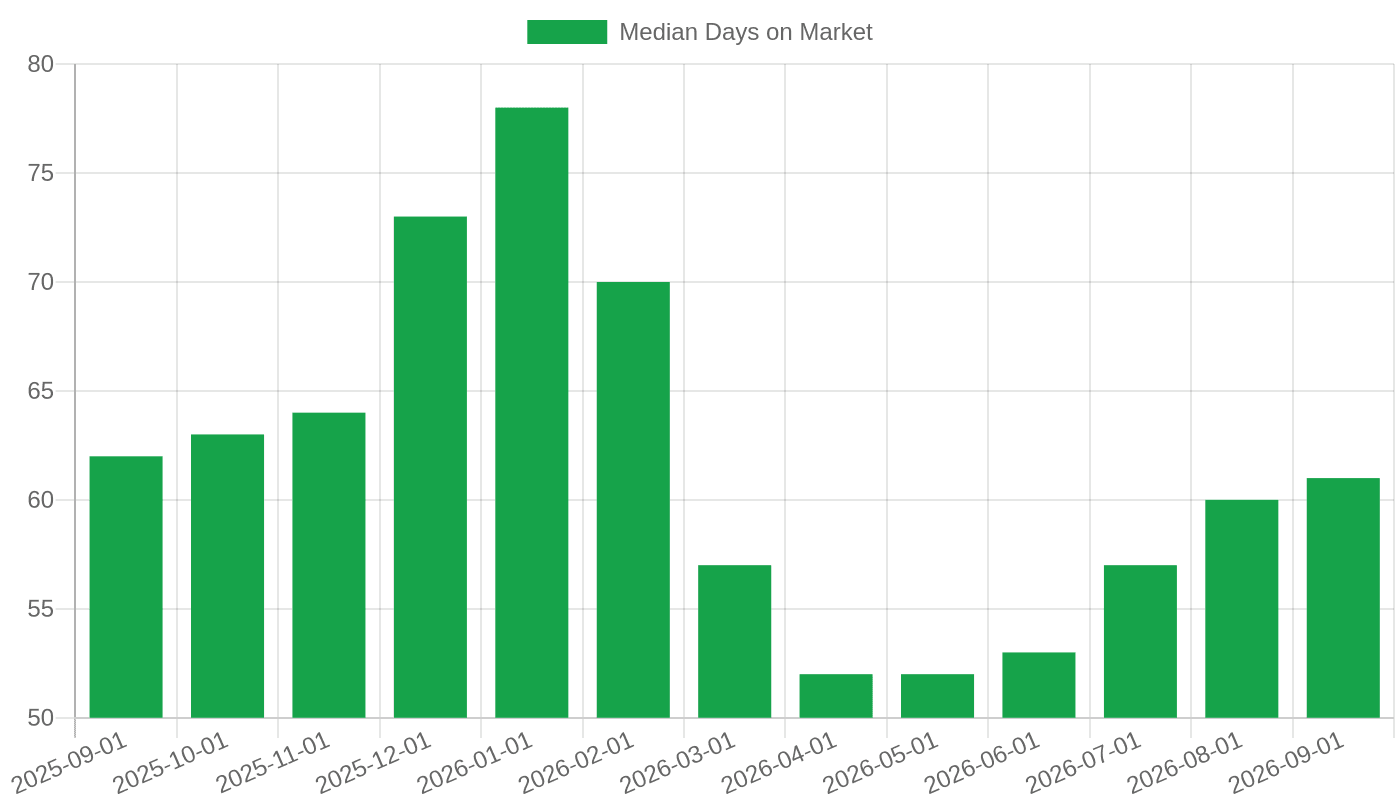
The median days on market for U.S. homes was 61 days as of September 2026.
When homes sit longer, sellers get nervous. That's your window. In Texas, look for properties that have been listed 90+ days, are vacant, or show signs of deferred maintenance. Those are the sellers who will talk.
How do you wholesale real estate in Texas step by step?
You wholesale in Texas by following seven steps: pick a market, build a lead list, market to motivated sellers, make offers, negotiate the contract, find a cash buyer, and assign the contract at closing. Each step has its own Texas-specific wrinkles.
Step 1: Pick your Texas market
Don't try to wholesale the whole state. Pick one metro and go deep.
- Houston — huge inventory, no zoning, lots of distressed properties.
- Dallas–Fort Worth — strong cash-buyer network, fast closings.
- San Antonio — lower price points, easier entry for beginners.
- Austin — higher prices, tougher spreads, but strong appreciation.
Start with one zip code cluster and learn it cold. Know the ARV (after-repair value) for a 3/2 in that area without looking it up.
Step 2: Build a motivated-seller lead list
Your list is your business. The best Texas wholesale lists come from:
- County clerk records — pre-foreclosure, probate, and tax delinquent filings are public in every Texas county.
- Driving for dollars — vacant, boarded-up, or overgrown properties.
- Direct mail and cold calling — the old standbys still work.
- Paid data tools — property data platforms that pull owner, equity, and distress signals in bulk.
Step 3: Market to sellers consistently
One mailer won't cut it. Plan on 5–7 touches before a seller calls you back.
- Direct mail postcards every 3–4 weeks
- Cold calls to your list
- SMS follow-ups (check TCPA rules)
- Door knocking on your best leads
Consistency beats creativity here. A boring campaign that runs for six months will outproduce a clever one that runs for two weeks.
Step 4: Make offers using the 70% rule
The classic wholesale formula is: (ARV × 0.70) − repairs − your fee = your max offer.
If a Texas house has an ARV of $250,000 and needs $30,000 in repairs, and you want a $10,000 assignment fee, your max offer is $135,000. That's the number you bring to the seller.
Be ready to explain your math. Sellers who understand the formula are more likely to accept a lower number.
Step 5: Get the contract right
Use a Texas-specific purchase and sale agreement with an assignment clause. That clause is what lets you sell your contract rights to a cash buyer.
Key clauses to include:
- Assignment clause (the whole point)
- Inspection or feasibility period (your escape hatch)
- Earnest money terms (keep it low but credible)
- Closing date and location (title company of your choice)
Never sign a contract you can't get out of. The feasibility period is your safety net.
Step 6: Find a cash buyer
Your end buyer is the person who actually closes. Build a buyer list before you need it.
- Local REIA meetings in Houston, Dallas, San Antonio, and Austin
- Facebook groups for Texas real estate investors
- Cash-buyer lists from title companies
- Direct outreach to flippers and landlords in your target zip codes
Know what your buyers want: bed/bath count, price range, condition tolerance, and closing speed. Then bring them deals that match.
Step 7: Assign the contract and get paid
Once you've got a buyer, you sign an assignment agreement. The title company handles the rest.
At closing, your assignment fee is paid out of the buyer's funds. You never touch the property. You never take title. You walk away with a check.
Is wholesaling real estate legal in Texas?
Yes — wholesaling is legal in Texas, but the way you do it determines whether you're compliant. Texas doesn't require a real estate license to wholesale, but it does prohibit unlicensed brokerage activity.
Here's what that means in practice:
- You can buy and sell properties for your own account.
- You can assign your contract to another buyer.
- You cannot market someone else's property for a fee.
- You cannot represent a seller in a transaction for compensation.
The disclosure rule you can't skip
Texas courts have consistently held that wholesalers must disclose their profit to the seller. If you hide your assignment fee, you risk a fraud claim and a lawsuit.
Put it in writing. Get it signed. Keep a copy.
Do you need a license in Texas?
No license is required to wholesale in Texas as long as you're acting as a principal in the transaction. The Texas Real Estate Commission (TREC) has been clear that unlicensed persons cannot perform brokerage services.
If you're unsure whether a deal crosses the line, talk to a Texas real estate attorney before you sign anything.
What tools do Texas wholesalers actually use?
Texas wholesalers use a stack of software tools to find leads, skip trace owners, run comps, manage follow-up, and dial prospects. The Wholesale REI directory tracks 65 tools across 9 categories built for exactly this workflow.
Here's a quick comparison of the tool categories and what they do:
| Category | What it does | Why Texas wholesalers need it |
|---|---|---|
| Lead generation | Pulls motivated-seller lists | Feeds your direct mail and cold call campaigns |
| Skip tracing | Finds phone numbers for owners | Turns a list of addresses into a list of conversations |
| Comps & valuation | Estimates ARV and repairs | Keeps your offers defensible |
| CRM | Tracks every seller and buyer touch | Prevents deals from falling through the cracks |
| Dialers | Automates outbound calling | Scales your cold call volume |
| Direct mail | Sends postcards and letters | Keeps you in front of sellers for months |
| Transaction management | Manages contracts and closings | Keeps your assignment paperwork clean |
| Buyer management | Organizes your cash-buyer list | Matches deals to buyers fast |
| Marketing | Builds your brand and lead flow | Attracts sellers who find you first |
How to pick your first three tools
Don't buy everything at once. Start with three:
- A lead generation tool to build your list.
- A skip tracing tool to get phone numbers.
- A CRM to track every conversation.
Those three will carry you through your first ten deals. Add a dialer when your call volume outgrows manual dialing.
How much can you make wholesaling in Texas?
Most Texas wholesalers earn $5,000 to $15,000 per assignment, with some deals reaching $20,000+ in hot submarkets. Your fee depends on the spread between your contract price and the end buyer's price.
A realistic first-year goal is 3–6 closed assignments. That's $15,000 to $90,000 in gross fees before marketing costs.
What eats into your profit
- Direct mail and list costs
- Skip tracing fees
- Cold calling software
- Earnest money (refundable if you use your feasibility period)
- Attorney fees for contract review
Budget 20–30% of your gross fee for marketing and tools. The rest is yours.
Common mistakes Texas wholesalers make
Texas wholesalers lose deals most often by using generic contracts, hiding their assignment fee, and failing to line up a buyer before closing. Each of those mistakes is avoidable.
Mistake 1: Using a non-Texas contract
Every state has its own contract norms. A generic template from a course won't protect you in a Texas court. Use a Texas-specific purchase and sale agreement reviewed by a Texas attorney.
Mistake 2: Hiding your assignment fee
We covered this above, but it's worth repeating. Disclose your profit in writing. Sellers who feel tricked sue. Sellers who feel informed move on.
Mistake 3: Not having a buyer lined up
Your feasibility period is finite. If you can't find a buyer before it ends, you either close yourself or lose your earnest money. Build your buyer list before you make offers.
Mistake 4: Skipping the title company relationship
A good Texas title company will catch contract problems before they kill your deal. Build a relationship with one that closes investor deals regularly.
Mistake 5: Treating it like a hobby
Wholesaling is a marketing business. If you're not sending mail, making calls, and following up every week, your pipeline dries up. Treat it like a job for the first year.
The Bottom Line
Wholesaling real estate in Texas comes down to three things: a real lead list, a Texas-specific contract with an assignment clause, and a cash buyer ready to close. Nail those and the rest is follow-up.
Your next step: pick one Texas metro, build a 500-property list this month, and start making calls. If cold calling feels intimidating, practice a few calls against a realistic AI seller first with our free AI Cold Call Trainer — it takes no signup to start. Then compare the lead generation and skip tracing tools in the directory to build your stack.
Frequently Asked Questions
Do you need a real estate license to wholesale in Texas?
No. Texas does not require a real estate license to wholesale as long as you're acting as a principal in the transaction — buying and selling for your own account. The moment you start marketing or negotiating on behalf of someone else for a fee, you cross into unlicensed brokerage territory.
How much can you make wholesaling real estate in Texas?
Most Texas wholesalers earn $5,000 to $15,000 per assignment, with some deals reaching $20,000 or more in competitive submarkets. Your fee depends on the spread between your contract price and what your end buyer pays.
Is wholesaling real estate legal in Texas?
Yes, wholesaling is legal in Texas. The key requirement is that you disclose your profit to the seller in writing. Texas courts have held that hiding your assignment fee can expose you to a fraud claim.
What is the 70% rule in wholesaling?
The 70% rule says your maximum offer should be 70% of the after-repair value, minus repair costs, minus your assignment fee. It's a quick way to make sure a deal has enough room for you and your end buyer to both profit.
How long does it take to close a wholesale deal in Texas?
Most Texas wholesale deals close in 14 to 30 days once you have a signed contract and a committed cash buyer. The timeline depends mostly on your feasibility period and how fast your title company can process the assignment.
What tools do Texas wholesalers need to get started?
At minimum, you need a lead generation tool, a skip tracing tool, and a CRM to track your seller and buyer conversations. The Wholesale REI directory tracks 65 tools across 9 categories built for this exact workflow.
Sources
- Software tools tracked in the Wholesale REI directory — Wholesale REI directory
- Tool categories in the Wholesale REI directory — Wholesale REI directory
- 30-Year Fixed Mortgage Rate (as of 2026-10-08) — FRED (Federal Reserve Bank of St. Louis)
- Median Sales Price of Houses Sold (as of 2026-04-01) — FRED (Federal Reserve Bank of St. Louis)
- Median Days on Market (as of 2026-09-01) — FRED (Federal Reserve Bank of St. Louis)
This article was researched and drafted with AI assistance, then reviewed and edited by Mark Anthony. Every statistic is sourced and cited. It's for informational purposes only and is not financial or legal advice. Read our editorial policy.