Buffalo Real Estate Market Update — September


Buffalo's median days on market just landed at 40 days — and after a spring where homes were flying off the shelf in under a month, that shift changes how you should be pricing your offers and talking to sellers.
Key Takeaways
- Buffalo's median days on market hit 40 days as of August 2026, up from a low of 29 days in June.
- Active listings climbed to 1,792 in August, the highest point in the past year.
- The median listing price sits at $273,700, still below the national median sales price of $410,700.
- The 30-year fixed mortgage rate rose to 6.95% as of September 17, 2026 — up from 6.49% in late June.
- Buffalo homes still sell faster than the national median of 60 days, but the gap is narrowing.
What is the Buffalo real estate market doing right now?
The Buffalo real estate market is cooling from its spring sprint but still moving faster than the country as a whole. As of August 2026, homes sat on the market a median of 40 days, there were 1,792 active listings, and the median listing price was $273,700.
That's the headline. Now let's talk about what it actually means when you're the one making offers.
The spring rush is over
Look at the days-on-market trend and you'll see a market that snapped tight in late spring and has been loosening ever since.
Buffalo's median days on market fell to 29 days in June 2026 — the fastest pace in the past year — then climbed back to 38 days in July and 40 days in August.
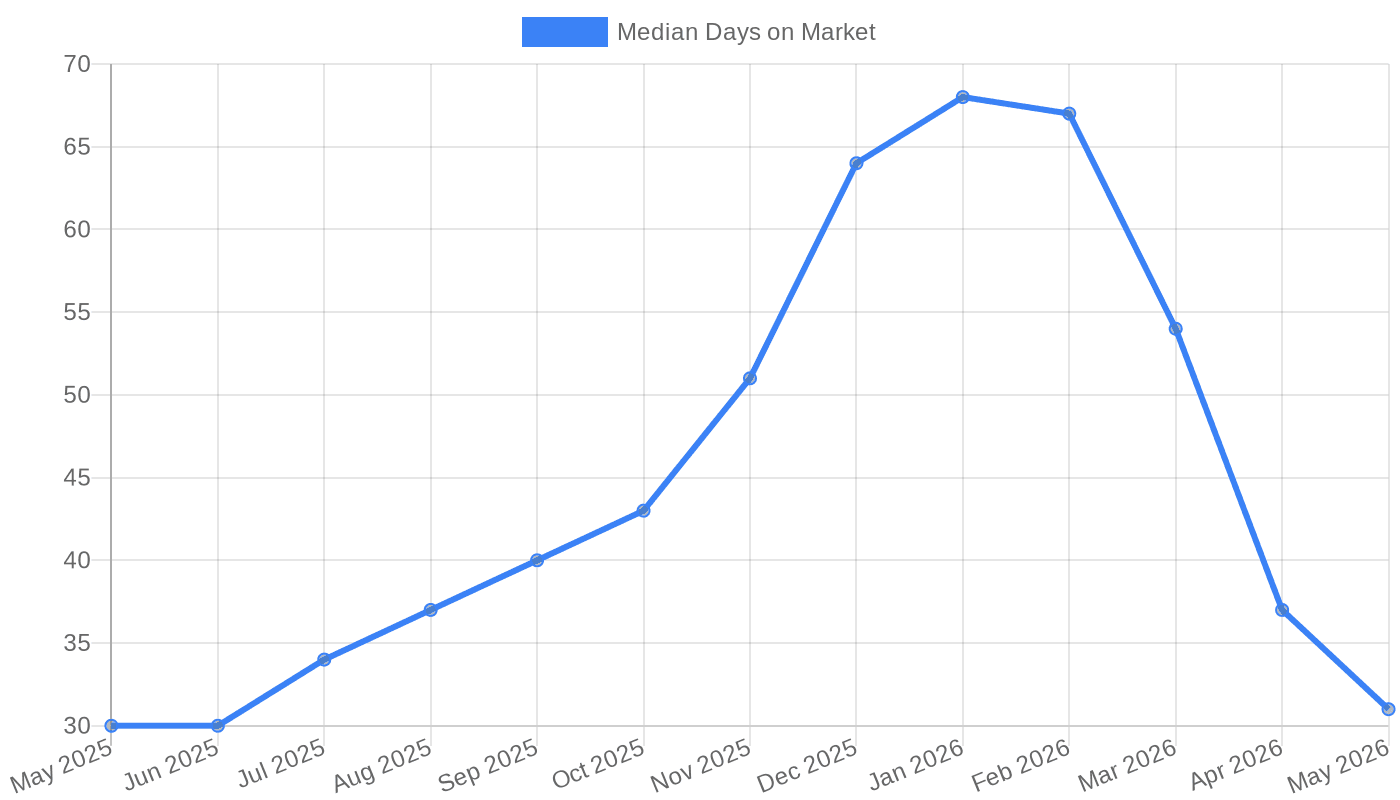
That June number was the peak of buyer urgency. Sellers who listed in May and June got multiple offers and fast closes. Sellers listing now are waiting roughly two extra weeks.
For wholesalers, that's not bad news. It's leverage.
Inventory is rebuilding fast
Active listings bottomed out at 831 in February 2026 and have nearly doubled since, hitting 1,792 in August.
That's a 116% jump in six months. Buyers suddenly have options again.
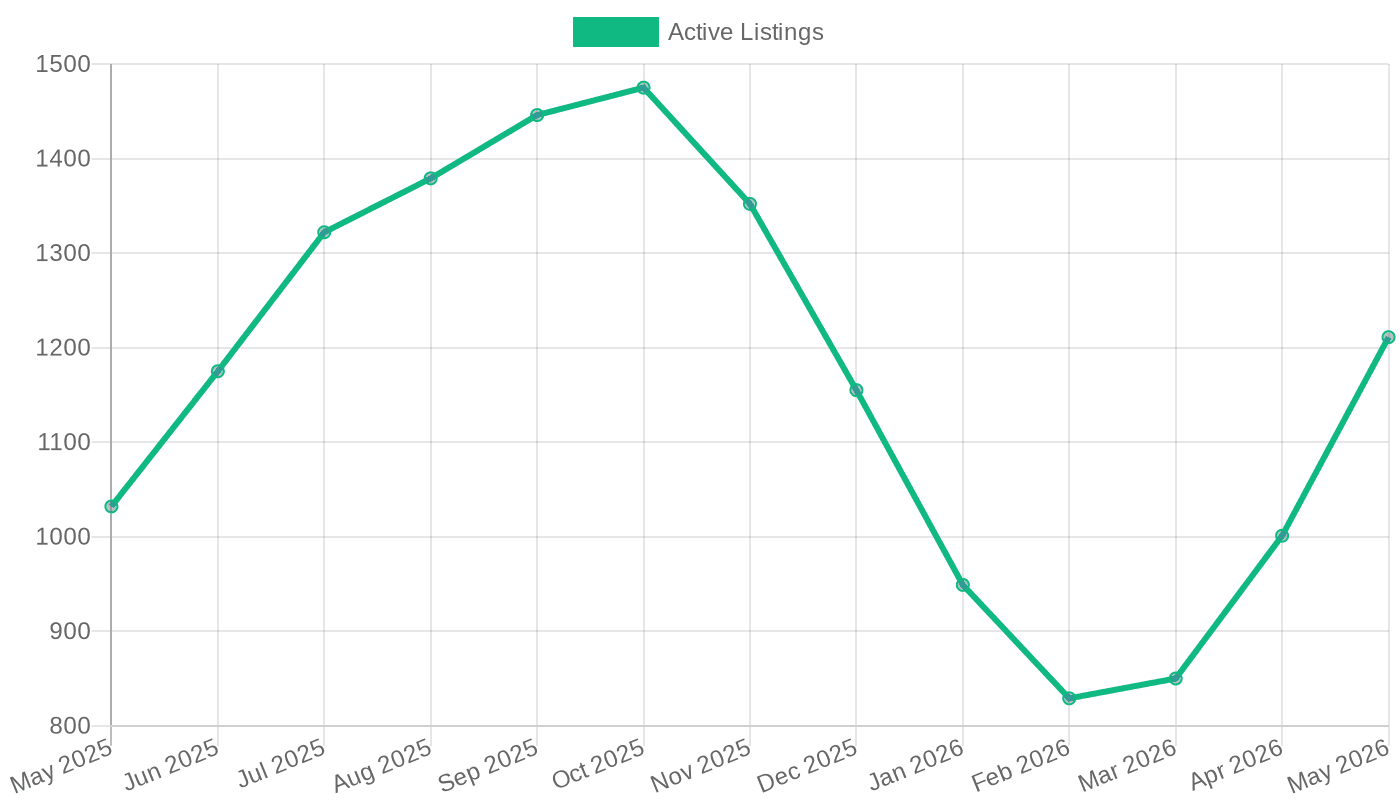
When inventory is this thin-to-thick swing happens, motivated sellers feel it first. If your listing has been sitting while three similar homes hit the market down the street, your patience for a retail buyer evaporates. That's when a cash offer starts sounding reasonable.
Prices are holding, not crashing
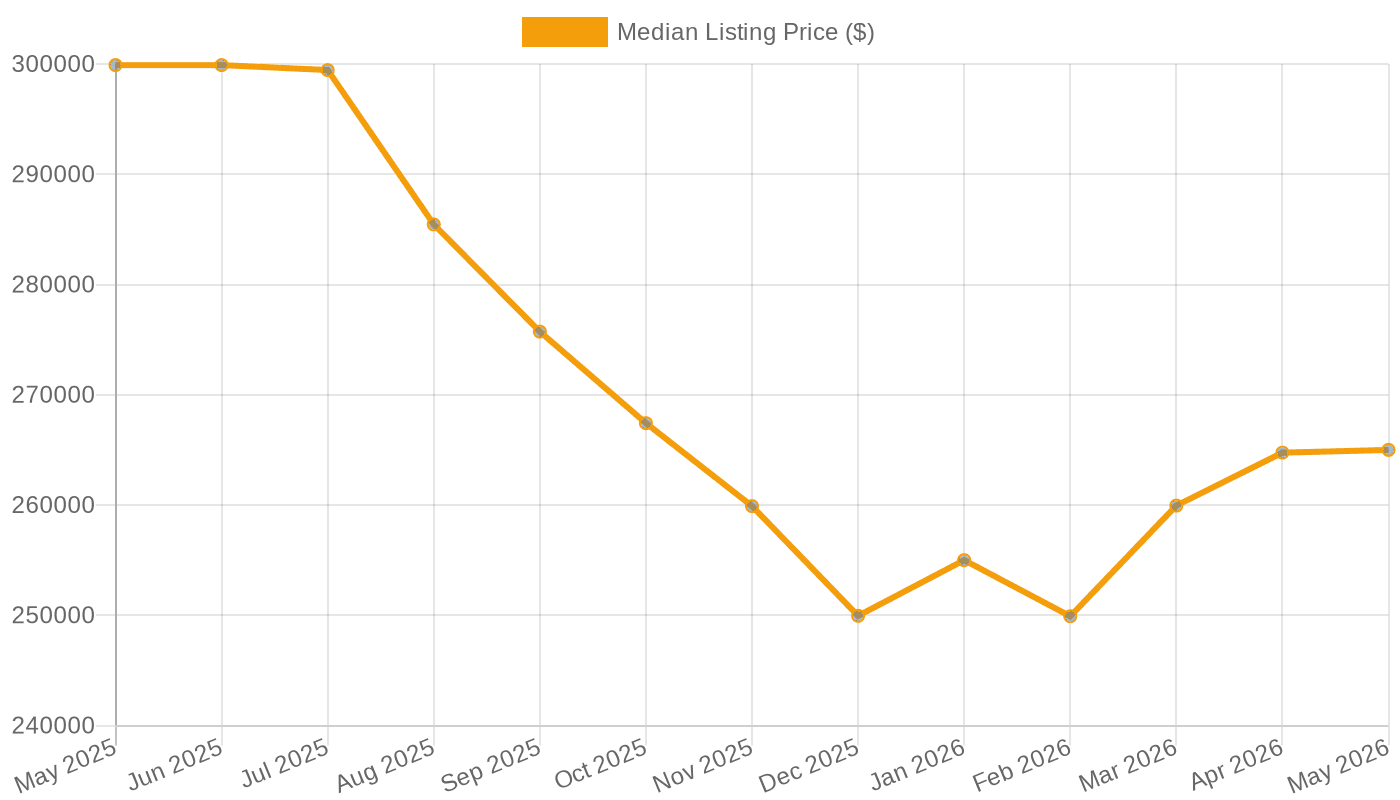
The median listing price in Buffalo was $273,700 in August 2026, up slightly from $274,900 in July and basically flat versus $272,500 in June.
Prices dipped to $249,911 in February — the winter trough — then recovered through spring and summer. That's a normal seasonal pattern, not a collapse.
So you're not buying into a falling market. You're buying into a market that's normalizing.
How does Buffalo compare to the national market?
Buffalo is still a faster-moving, cheaper market than the U.S. as a whole — but the speed advantage is shrinking. Buffalo's median days on market was 40 days in August 2026 versus 60 days nationally.
That 20-day gap is real, and it matters. It means Buffalo sellers still have a reasonable shot at a retail sale, which means your wholesale offers need to be genuinely competitive, not lowball.
Here's how the two markets stack up:
| Metric | Buffalo, NY | National (U.S.) |
|---|---|---|
| Median days on market (Aug 2026) | 40 days | 60 days |
| Median listing price (Aug 2026) | $273,700 | — |
| Median sales price (Apr 2026) | — | $410,700 |
| Active listings (Aug 2026) | 1,792 | — |
| 30-year fixed mortgage rate (Sep 17, 2026) | 6.95% | 6.95% |
Buffalo's median list price of $273,700 is roughly two-thirds of the national median sales price of $410,700. That's the affordability story that keeps buyers — including out-of-state investors — interested in Erie County.
Why the national numbers matter to you
The national median days on market climbed from 52 days in April 2026 to 60 days in August. Buffalo went from 37 to 40 over the same stretch.
Both markets are slowing. Buffalo is just slowing from a tighter starting point.
When the national market softens, out-of-state wholesalers start hunting for cheaper metros. Buffalo is on that list. Expect more competition on your best leads over the next few months.
What is the mortgage rate doing — and why does it matter?
The 30-year fixed mortgage rate rose to 6.95% as of September 17, 2026, up from 6.49% in late June. That's a 46-basis-point jump in under three months.
Every bump in rates knocks a few more retail buyers out of the pool. When a buyer's monthly payment goes up, their max purchase price goes down — and your seller's pool of qualified retail offers shrinks with it.
That's the environment where wholesale deals get made. Sellers who were holding out for a top-of-market retail price start doing the math and realizing a fast cash close at a fair number beats six more weeks of showings.
The rate trend, in plain English
- Late June 2026: 6.49%
- Mid-July: 6.55%
- Early August: 6.69%
- Early September: 6.71%
- September 17: 6.95%
That's a steady climb, not a spike. Steady climbs are easier to talk about with sellers because they can see the pattern themselves.
Who should wholesalers be targeting in Buffalo right now?
The best wholesale targets in Buffalo this fall are sellers who listed in late spring or early summer and are still sitting on the market. They priced into the June frenzy and are now watching days tick past 40.
Here's how to find them:
- Pull expired and withdrawn listings from the last 60 days. Anyone who listed in April or May and pulled their listing by August is a prime candidate.
- Filter for 45+ days on market. With the metro median at 40 days, anything past 45 is officially slow.
- Cross-reference with absentee owner data. Out-of-area owners feel rate pressure differently — they're more likely to take a clean cash number.
- Check for price reductions. A seller who's already cut once is emotionally closer to accepting a wholesale offer.
- Skip the luxury tier for now. The Buffalo News has been running weekly luxury listing roundups, but that's a different game with longer timelines and thinner margins.
What to say when you call
Lead with the data, not the pitch. Something like: "Homes in your ZIP are sitting about 40 days now, and rates just hit 6.95%. If you're still carrying that property, I can close in two weeks with no repairs."
That's a factual, non-salesy opener. It respects the seller and gives them a real reason to keep talking.
If you want to rehearse that call before you dial a real seller, you can practice against a realistic AI seller with our free AI Cold Call Trainer. It takes no signup to start.
What tools do Buffalo wholesalers actually need?
Most Buffalo wholesalers need four things: a data source to find leads, a CRM to track them, a dialer to reach them, and a way to market to them. The Wholesale REI directory tracks 65 tools across 9 categories, so you can compare options without guessing.
Here's how the core stack breaks down:
| Job to be done | What to look for | Example tools in the directory |
|---|---|---|
| Find distressed leads | Property data, absentee owner flags, equity estimates | PropStream, ATTOM Data |
| Track and follow up | Pipeline stages, task reminders, SMS/email | GoHighLevel, Launch Control |
| Make the calls | Power dialer, local presence, call recording | CallTools |
| Generate seller leads | Direct mail, SMS, ringless voicemail | Televista Lead Generation |
A note on data accuracy in a shifting market
When days on market swings from 29 to 40 in ten weeks, stale data costs you money. Pull fresh comps weekly, not monthly. A property that looked like a slam-dunk flip in June might be a hold in September.
What should your buy box look like this fall?
Your buy box should tighten slightly this fall. With rates at 6.95% and days on market at 40, you want more margin, not less.
Here's a practical framework:
- Target 70% of ARV minus repairs, not 75%. The extra cushion protects you if the market keeps softening.
- Prioritize properties under $250,000. That's below the metro median and where the deepest buyer pool sits.
- Avoid properties that need more than $40,000 in work unless you have a contractor locked in. Rehab timelines are the biggest risk in a normalizing market.
- Build in a 60-day hold assumption, not 30. Even if Buffalo moves faster than the national median, plan for the slower case.
When to walk away
If a seller won't budge below 80% of ARV and the property needs significant work, walk. There will be another deal. With 1,792 active listings on the market, you have more options than you did in February.
The Bottom Line
Buffalo's market is normalizing, not crashing. Days on market at 40, active listings at 1,792, and a median list price of $273,700 all point to a market where sellers are losing a little leverage and buyers are gaining some.
For wholesalers, that's an opportunity — but only if your offers and your conversations are sharp. Before you dial your next seller, run a few practice calls through our free AI Cold Call Trainer so your opener lands the first time.
Frequently Asked Questions
Is the Buffalo real estate market cooling down in 2026?
Yes, but gently. Buffalo's median days on market rose from 29 days in June 2026 to 40 days in August, and active listings climbed from 831 in February to 1,792 in August. Prices are holding near $273,700, so it's a normalization, not a crash.
How does Buffalo compare to the national housing market right now?
Buffalo is still faster and cheaper. Its median days on market was 40 in August 2026 versus 60 nationally, and its median listing price of $273,700 is well below the national median sales price of $410,700.
What mortgage rate are Buffalo buyers facing in September 2026?
The 30-year fixed mortgage rate hit 6.95% as of September 17, 2026, up from 6.49% in late June. Higher rates shrink buyer purchasing power, which pushes more sellers toward cash offers.
What is a good buy box for Buffalo wholesalers this fall?
Aim for 70% of ARV minus repairs rather than 75%, focus on properties under $250,000, and assume a 60-day hold instead of 30. With days on market at 40 and rates near 7%, extra margin protects you if the market keeps softening.
Which sellers should Buffalo wholesalers target right now?
Target sellers who listed in late spring or early summer and are still sitting past 45 days on market. They priced into the June frenzy and are now watching their listing go stale, which makes them far more open to a clean cash offer.
How many tools are available for Buffalo wholesalers?
The Wholesale REI directory tracks 65 tools across 9 categories, covering lead data, CRMs, dialers, and seller lead generation. That's enough options to build a full stack without overpaying for overlap.
Sources
- Buffalo: Median days on market (as of 2026-08-01) — Realtor.com via FRED
- Buffalo: Active listing count (as of 2026-08-01) — Realtor.com via FRED
- Buffalo: Median listing price (as of 2026-08-01) — Realtor.com via FRED
- 30-Year Fixed Mortgage Rate (as of 2026-09-17) — FRED (Federal Reserve Bank of St. Louis)
- Median Sales Price of Houses Sold (as of 2026-04-01) — FRED (Federal Reserve Bank of St. Louis)
- Median Days on Market (as of 2026-08-01) — FRED (Federal Reserve Bank of St. Louis)
- Software tools tracked in the Wholesale REI directory — Wholesale REI directory
- Tool categories in the Wholesale REI directory — Wholesale REI directory
This article was researched and drafted with AI assistance, then reviewed and edited by Mark Anthony. Every statistic is sourced and cited. It's for informational purposes only and is not financial or legal advice. Read our editorial policy.