Tampa Real Estate Market Update — October

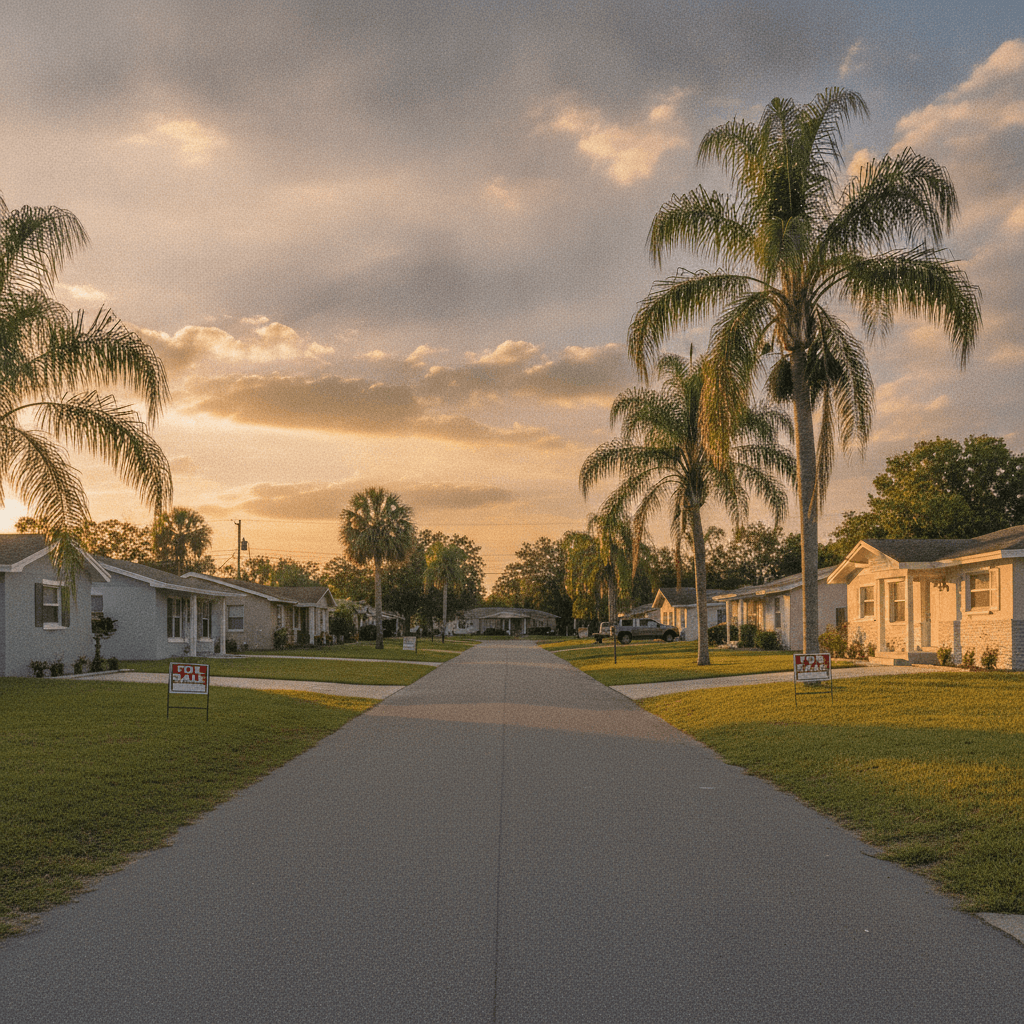
If you're wholesaling in Tampa, you've felt the shift: homes are sitting longer, and buyers are pickier. The latest numbers show a market that's cooling but still full of opportunity—if you know where to look.
Key Takeaways
- The 30-year fixed mortgage rate hit 7.24% as of October 29, 2026, up from 6.65% in late August.
- Median days on market nationally rose to 61 days in September 2026, up from 52 days in April.
- The national median sales price dropped to $393,300 in July 2026, the lowest in over a year.
- Tampa wholesalers should focus on motivated sellers and creative financing as rates squeeze affordability.
What is the Tampa real estate market doing right now?
The Tampa real estate market is cooling in October 2026, with longer days on market and rising mortgage rates putting pressure on buyers and sellers alike. While we don't have Tampa-specific figures in this update, the national trends give us a clear picture of what's happening locally.
Mortgage rates are climbing
The 30-year fixed mortgage rate has been on an upward swing. After dipping to 6.65% in late August, it climbed to 7.24% by October 29. That's a significant jump in just two months.

Higher rates mean higher monthly payments. For a $300,000 loan, the difference between 6.65% and 7.24% is about $120 per month. That might not sound like much, but it pushes some buyers out of the market entirely.
Days on market are stretching
Nationally, the median days on market hit 61 days in September 2026. That's up from a low of 52 days in April and May. Homes are taking about a week longer to sell than they did in the spring.

In Tampa, we typically see similar patterns. When homes sit longer, sellers get anxious. That's your opening as a wholesaler.
Prices are softening
The national median sales price for houses sold dropped to $393,300 in July 2026. That's down from $435,400 in July 2023—a decline of nearly 10% over three years.

Tampa hasn't been immune. While we don't have the exact local median, the national trend suggests prices are adjusting downward. Sellers who bought at the peak are now facing the reality of a softer market.
How do rising mortgage rates affect Tampa wholesalers?
Rising mortgage rates make it harder for retail buyers to afford homes, which means fewer traditional buyers and more opportunity for investors who can pay cash or use creative financing. As a wholesaler, you're not relying on a mortgage to close—you're connecting motivated sellers with investors who can.
More motivated sellers
When rates go up, some sellers panic. They see fewer showings and lower offers. If they need to sell quickly—due to job relocation, divorce, or financial strain—they're more likely to accept a discounted cash offer.
Less competition from retail buyers
First-time homebuyers are getting priced out. According to the National Association of Realtors, first-time buyers made up just 26% of sales in 2025, near historic lows. With rates at 7.24%, that number could drop further. Fewer retail buyers mean less competition for the homes you're targeting.
Creative financing becomes your edge
Subject-to, seller financing, and lease options become more attractive when rates are high. Sellers who can't get a traditional sale might be open to these strategies. Brush up on your creative finance skills—they'll set you apart.
Why are homes sitting on the market longer in Tampa?
Homes are sitting longer because higher mortgage rates have reduced buyer demand, leading to fewer offers and longer listing periods. The national median days on market jumped from 52 days in April 2026 to 61 days in September—a 17% increase.
The psychology of a slow market
When a home sits for 60+ days, sellers start to worry. They might drop the price, offer concessions, or become more open to investor offers. That's when you swoop in.
What this means for your marketing
Your direct mail and cold calling should target listings that have been on the market for 45 days or more. These sellers are prime candidates for a cash offer. Use tools like PropStream to filter by days on market and absentee owners.
What is the median home price in Tampa?
We don't have the exact median home price for Tampa in this update, but the national median sales price was $393,300 in July 2026. Tampa typically tracks close to the national average, though it can run slightly higher due to demand.
Price trends to watch
Prices have been sliding since mid-2023. The national median dropped from $435,400 in July 2023 to $393,300 in July 2026. That's a 9.7% decline. If Tampa follows suit, we could see more sellers underwater or unwilling to accept lower prices—creating negotiation opportunities.
How to use price data in your offers
When making offers, don't rely on outdated comps. Use the most recent sales data from the past 90 days. Tools like ATTOM Data can give you a granular view of recent sales in specific Tampa neighborhoods.
How can wholesalers find deals in a slower Tampa market?
You find deals by targeting motivated sellers who are feeling the pinch of longer days on market and higher rates. Focus on properties that have been listed for 45+ days, expired listings, and owners facing financial distress.
1. Pull expired listings
Expired listings are gold in a slow market. These sellers wanted to sell but couldn't. They're often ready to negotiate. Use PropStream or Launch Control to pull expireds from the last 30 days.
2. Target absentee owners
Absentee owners—especially those out of state—are more likely to sell at a discount if they're tired of managing a property. Use ATTOM Data to filter by owner-occupied status.
3. Monitor pre-foreclosures
With rates rising, some homeowners may fall behind on payments. Pre-foreclosure leads are highly motivated. Check county records or use a tool like PropStream to identify these properties early.
4. Network with local agents
Agents are feeling the slowdown too. Build relationships with agents who specialize in distressed properties. They can bring you deals before they hit the MLS.
5. Use direct mail wisely
In a slower market, your direct mail response rates might actually improve because sellers are more receptive. Personalize your letters and highlight the benefits of a cash offer—no repairs, no fees, fast closing.
What tools help Tampa wholesalers in this market?
The right tools help you find motivated sellers, analyze deals, and close faster. Here are the top categories and specific tools to consider.
Comparison of key tools for Tampa wholesalers
| Tool | Best For | Key Feature | Pricing |
|---|---|---|---|
| PropStream | Lead generation | 120+ filters, including days on market | Free trial, then $99/mo |
| ATTOM Data | Property data | Deep property and ownership data | Custom pricing |
| Launch Control | Direct mail | Automated direct mail campaigns | Starts at $99/mo |
| CallTools | Cold calling | Power dialer with CRM | Starts at $99/mo |
| GoHighLevel | CRM & automation | All-in-one marketing platform | Starts at $97/mo |
| Televista Lead Generation | Lead generation | Targeted seller leads | Custom pricing |
How to choose the right tool
Start with your biggest bottleneck. If you need more leads, focus on PropStream or Televista. If you're struggling to convert leads, invest in a CRM like GoHighLevel and a dialer like CallTools. For direct mail, Launch Control automates the process so you can scale.
What is the outlook for the Tampa real estate market in 2027?
The outlook is cautiously optimistic. As rates stabilize and prices adjust, buyer demand should return. But for now, the market favors investors who can move quickly and creatively.
Rates may stay elevated
The 30-year fixed rate is at 7.24% and could stay above 7% through the end of the year. The Federal Reserve hasn't signaled any immediate rate cuts. Plan for higher-for-longer.
Inventory will likely increase
As homes sit longer, more sellers will list. That means more inventory and more opportunities for wholesalers to find motivated sellers.
Tampa's fundamentals remain strong
Tampa continues to attract new residents from higher-cost states. Job growth is steady, and the long-term demand for housing is solid. The current slowdown is a correction, not a crash.
The Bottom Line
The Tampa real estate market in October 2026 is cooling, but that's good news for wholesalers who know how to adapt. With rates at 7.24% and homes taking 61 days to sell, motivated sellers are out there—you just need to find them. Start by targeting expired listings and absentee owners, and consider using tools like PropStream and Launch Control to streamline your efforts. And when you're ready to practice your pitch, try our free AI Cold Call Trainer to sharpen your skills before you hit the phones.
Frequently Asked Questions
What is the Tampa real estate market like in October 2026?
The Tampa market is cooling, with longer days on market and higher mortgage rates. Nationally, homes are taking 61 days to sell, and rates are at 7.24%, which is slowing buyer demand.
Are home prices falling in Tampa?
While we don't have the exact Tampa median, the national median sales price dropped to $393,300 in July 2026, down from $435,400 in July 2023. Tampa likely follows a similar downward trend.
How can wholesalers find deals in a slower Tampa market?
Target expired listings, absentee owners, and pre-foreclosures. These sellers are more motivated and open to cash offers. Use tools like PropStream to filter for these leads.
What mortgage rate should I expect in Tampa?
As of October 29, 2026, the 30-year fixed mortgage rate is 7.24%. Rates have been rising since August and may stay elevated through the end of the year.
Is it a good time to invest in Tampa real estate?
Yes, if you're a cash buyer or use creative financing. Slower markets offer more negotiation power and less competition from retail buyers. Focus on motivated sellers.
Sources
- 30-Year Fixed Mortgage Rate (as of 2026-10-29) — FRED (Federal Reserve Bank of St. Louis)
- Median Sales Price of Houses Sold (as of 2026-07-01) — FRED (Federal Reserve Bank of St. Louis)
- Median Days on Market (as of 2026-09-01) — FRED (Federal Reserve Bank of St. Louis)
This article was researched and drafted with AI assistance, then reviewed and edited by Mark Anthony. Every statistic is sourced and cited. It's for informational purposes only and is not financial or legal advice. Read our editorial policy.