Real Estate Wholesaling Courses for Free: What You Actually Get


You can find a free real estate wholesaling course in about ten minutes. The harder part is figuring out whether it will actually teach you to close a deal — or just sell you a $997 mentorship at the end.
That gap matters more right now than it has in years. Mortgage rates climbed from 6.55% in mid-July 2026 to 7.4% by early October, and homes are sitting on the market longer. Free courses that were recorded in a hot market won't prepare you for the math you need today.
This guide breaks down what free wholesaling education really covers, where it falls short, and how to build a complete skill set without spending a dime on tuition.
Key Takeaways
- Free wholesaling courses are best for learning vocabulary, contracts, and the basic assignment-fee model — not for mastering deal analysis.
- The 30-year fixed mortgage rate hit 7.4% as of October 8, 2026, up from 6.55% in mid-July — free courses recorded earlier often ignore this shift.
- Median days on market rose to 61 as of September 1, 2026, which means your exit strategy and buyer list matter more than ever.
- The median U.S. home sale price was $410,700 as of April 1, 2026, so your offers need to account for real, current comps.
- You can pair free coursework with a directory of 65 wholesaling software tools across 9 categories to practice on real data instead of theory.
What Are Real Estate Wholesaling Courses for Free?
Free real estate wholesaling courses are no-cost training programs — usually video lessons, PDFs, or live webinars — that teach you how to find distressed properties, put them under contract, and assign that contract to a cash buyer for a fee.
They come in a few common shapes:
- YouTube channels and playlists from active wholesalers who film their deals.
- Free mini-courses that act as a funnel for a paid program.
- Podcast libraries where investors break down real deals step by step.
- Community forums and Facebook groups where beginners ask questions and get answers.
- Free trials of paid software that include onboarding videos and templates.
The core promise is the same across all of them: learn the assignment-fee model without paying tuition. And honestly, that promise is real — you can learn the mechanics for free. What you can't always get for free is judgment.
The Assignment-Fee Model in One Paragraph
You find a motivated seller. You sign a purchase contract at a discount. You find a cash buyer who wants the property. You assign your contract to that buyer for a fee — typically a few thousand dollars — and the buyer closes. You never own the house. That's wholesaling.
Free courses explain this well. The hard part is everything around it: estimating repairs, pricing the offer, and knowing when to walk away.
What Do Free Wholesaling Courses Actually Teach You?
Free courses reliably teach the front half of wholesaling: terminology, scripts, and the paperwork. They're genuinely useful for getting oriented.
Here's what you can expect to learn well from free material:
- The vocabulary. Assignment fee, earnest money, equitable interest, double close, motivated seller, ARV (after-repair value).
- Basic contracts. Many free courses hand you a sample assignment contract and a purchase agreement template.
- Lead generation scripts. Cold call openers, direct mail copy, and text scripts you can adapt.
- The 70% rule. A common rule of thumb for pricing offers on fix-and-flips and wholesale deals.
- Mindset and expectations. How long deals take, how many leads turn into contracts, and how often deals fall apart.
That's a real foundation. If you've never heard the term "assignment fee" before, a free course will get you up to speed in a weekend.
Where Free Courses Fall Short
Free courses rarely teach you how to analyze a deal against current market conditions. That's the gap that costs beginners money.
Think about it. A course recorded when rates were near 3% teaches a completely different offer strategy than one recorded today. When the 30-year fixed rate sits at 7.4%, buyers are pickier, holding costs are higher, and your margin for error shrinks.
Free courses also tend to skip:
- Live comp analysis using current sold data, not stale examples.
- Repair estimating with real contractor numbers.
- Buyer list building and how to keep cash buyers engaged.
- Disposition — the actual skill of selling your contract.
Those four skills are where deals are won or lost. And they're almost never free.
Why Market Conditions Change What You Need to Learn
Market conditions decide which wholesaling skills matter most, and right now the data says patience and pricing discipline win. Free courses that ignore this will leave you underprepared.
Let's look at the mortgage rate trend first. Rates climbed steadily through the back half of 2026.
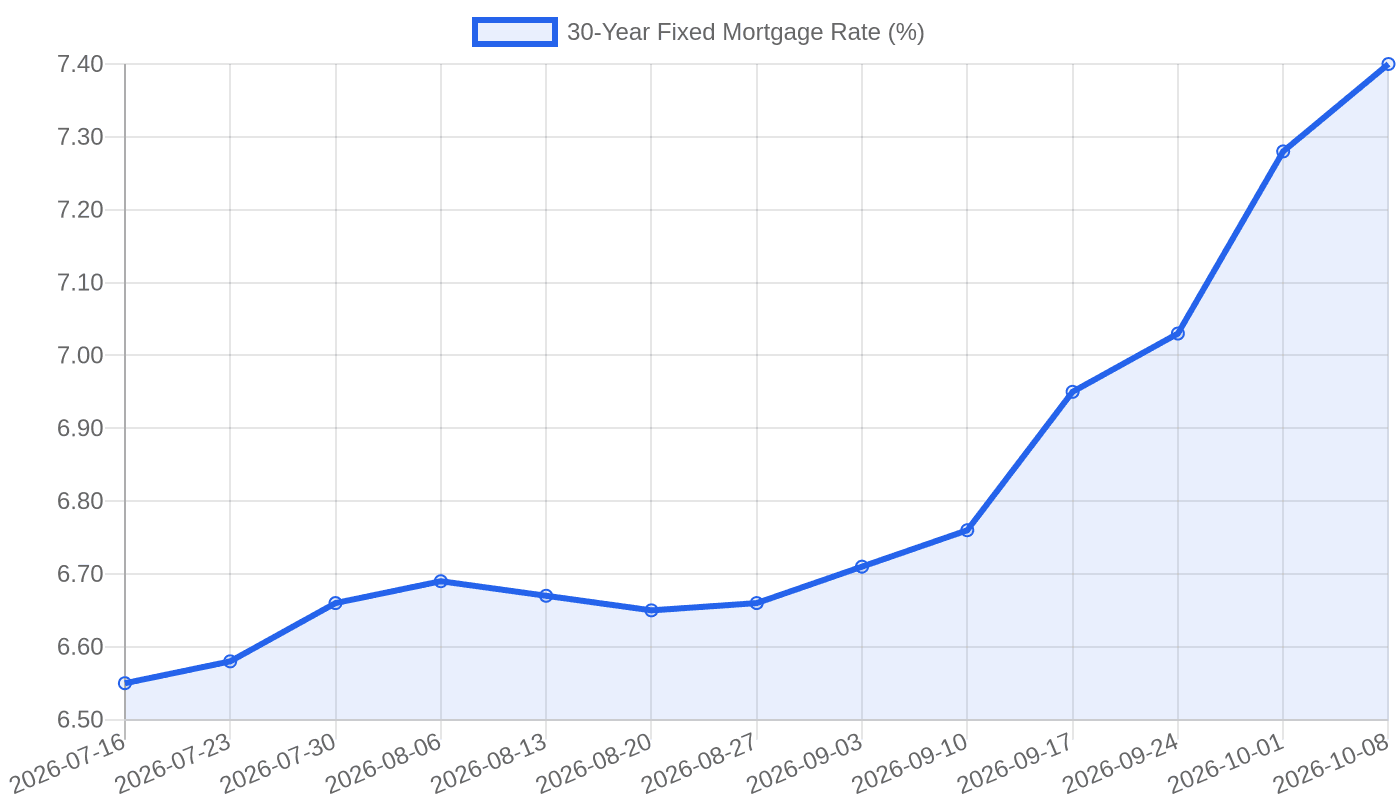
That jump from 6.55% to 7.4% in under three months changes buyer behavior fast. Higher rates mean fewer retail buyers qualify, which pushes more demand toward investors — good for wholesalers with a strong cash buyer list, bad for those without one.
Now look at how long homes sit on the market.
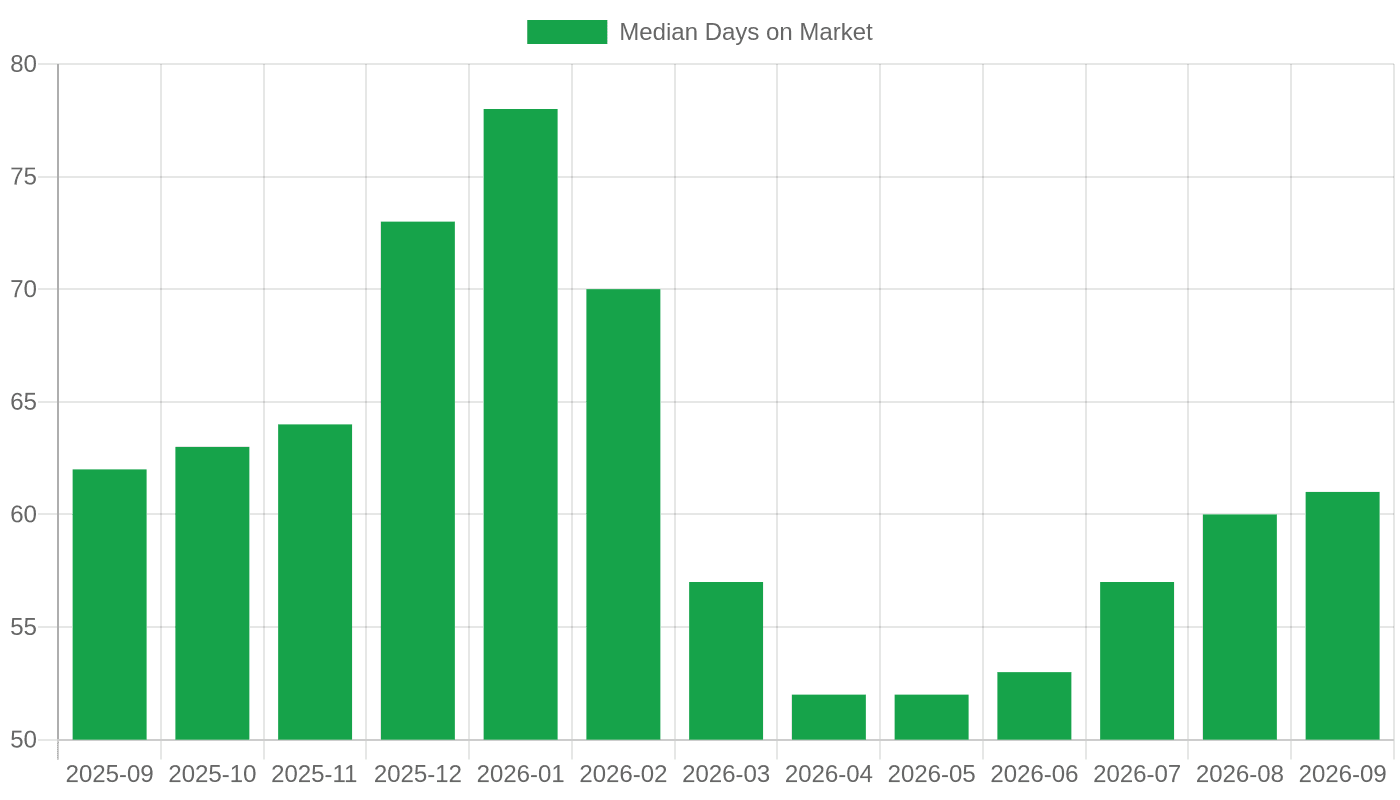
Median days on market spiked to 78 in January 2026, then settled back to 61 by September. That's still a slow market by historical standards. When homes sit for two months, your end buyer needs a bigger discount to feel safe — and that discount comes out of your assignment fee if you priced the deal wrong.
Finally, consider the price level itself. The median U.S. home sale price was $410,700 as of April 1, 2026. If your free course uses 2019 comps, your offers will be off by hundreds of thousands of dollars in some markets.
What This Means for Your Free Education
Use free courses to learn the language. Then use live data to learn the math.
That split is the single most useful thing you can do as a beginner. Don't try to learn everything from one free course. Learn the mechanics free, then practice analysis with real numbers.
Are Free Wholesaling Courses Worth It?
Yes — free courses are worth it if you treat them as a starting point, not a finish line. They cost you nothing but time, and they'll save you from embarrassing mistakes in your first conversations with sellers.
Here's a simple way to judge whether a free course is worth your hours:
- Does it teach a repeatable process? Look for step-by-step deal walkthroughs, not motivational speeches.
- Is it recent? Anything recorded before 2025 will feel out of touch with today's rates.
- Does it show real numbers? A course that never mentions actual purchase prices, repair costs, or assignment fees is hiding something.
- Does it push you to buy something in the first 20 minutes? That's a sales funnel, not a course.
- Does it teach disposition? If it only covers lead gen, it's half a course.
If a free course passes those five checks, it's genuinely valuable. If it fails three or more, move on.
The Hidden Cost of "Free"
The real cost of a free course is your time and the deals you might misprice because you skipped the hard skills.
That's not a reason to avoid free courses. It's a reason to pair them with something that gives you live data. A mispriced offer on a $410,700 median-priced home can wipe out your entire assignment fee — and then some.
How Do You Build a Free Wholesaling Education That Actually Works?
You build it by stacking free resources in a deliberate order, then practicing on real data before you ever talk to a seller. Here's a step-by-step path.
Step 1: Learn the Vocabulary (Week 1)
Pick one free course or YouTube playlist and finish it. Don't jump around. Your only goal this week is to understand every term you hear.
Step 2: Study Contracts (Week 2)
Download a free purchase agreement and assignment contract. Read them line by line. Highlight every clause you don't understand and look it up.
Step 3: Practice Deal Analysis (Weeks 3-4)
This is the step free courses skip. Pull real listings and sold comps, then run the numbers yourself. Use current market data — not the examples from the course.
Step 4: Build a Buyer List (Weeks 5-6)
Start collecting cash buyers before you have a deal. Free courses rarely emphasize this, but it's the difference between a contract that closes and one that expires.
Step 5: Practice Your Conversations (Ongoing)
Scripts only work if you've said them out loud a hundred times. Role-play with a partner, record yourself, and refine your tone.
Step 6: Use Free Trials to Learn Real Tools
Most wholesaling software offers a free trial. Use it to learn how professionals pull comps, skip trace, and manage leads. That hands-on time is worth more than another video.
Free Courses vs. Paid Programs vs. Free Tools: What Should You Choose?
For most beginners, the best path is free courses for concepts, free software trials for skills, and paid programs only if you need accountability. Here's how they compare.
| Option | Typical Cost | Best For | Main Weakness |
|---|---|---|---|
| Free courses (YouTube, webinars) | $0 | Learning vocabulary and the assignment model | Rarely teaches live deal analysis |
| Paid courses and mentorships | Varies widely | Accountability and coaching | Cost, and quality varies a lot |
| Free software trials | $0 | Practicing comps, skip tracing, lead management | Time-limited access |
| Community forums and groups | $0 | Real-world Q&A and networking | Mixed quality of advice |
| Live market data (FRED, MLS) | $0 | Pricing offers correctly | Requires you to interpret it |
The pattern is clear: free resources cover concepts well, but the skills that decide your profit — analysis, disposition, buyer relationships — need practice, not just watching.
A Realistic Free Stack
Here's a stack that costs nothing and covers the whole process:
- One free video course for vocabulary and contracts.
- One free software trial for comps and lead management.
- One community group for questions.
- FRED data for mortgage rates, prices, and days on market.
- A practice partner for scripts.
That stack won't replace a mentor, but it will get you to your first deal without spending thousands on tuition.
What Should You Look for in a Free Wholesaling Course?
Look for a course that shows real deals with real numbers, teaches disposition, and was recorded recently. Everything else is secondary.
Use this checklist before you commit your time:
- Recent recording date. Anything before 2025 is suspect given how fast rates moved.
- Full deal walkthroughs. You want to see the offer, the repair estimate, the buyer, and the final fee.
- Disposition coverage. If it doesn't teach you how to sell the contract, it's incomplete.
- No hard pitch in the first lesson. A soft mention is fine; a 40-minute sales pitch is not.
- Downloadable templates. Contracts, scripts, and checklists you can actually use.
If a course hits all five, it's worth your weekend. If it misses two or more, keep looking — there's no shortage of free material.
Red Flags to Avoid
Watch for courses that promise guaranteed income, show only wins, or refuse to discuss failed deals. Wholesaling has a real failure rate, and any course that hides it is selling a fantasy.
The Bottom Line
Free real estate wholesaling courses are a genuinely good way to learn the language and mechanics of the business — just don't expect them to teach you how to price a deal in today's market. Pair them with live data and hands-on practice, and you'll be ahead of most beginners who paid for a course and still can't run the numbers.
Your next step: browse the wholesaling software directory to see the 65 tools across 9 categories, then start a free trial on one that handles comps and lead management. That's where the real learning happens.
Frequently Asked Questions
Are free real estate wholesaling courses actually worth it?
Yes, as a starting point. Free courses teach you the vocabulary, contracts, and assignment-fee model at no cost. Just don't expect them to teach live deal analysis or disposition, which are the skills that decide whether you make money.
What do free wholesaling courses usually leave out?
Most skip live comp analysis, real repair estimating, buyer list building, and disposition. Those four skills are where deals are won or lost, and they're almost never covered in free material.
How has the market changed what I need to learn?
The 30-year fixed mortgage rate rose from 6.55% in mid-July 2026 to 7.4% by early October 2026, and median days on market sat at 61 as of September 2026. That means buyers are pickier and your offer pricing has to be sharper than in a hot market.
Can I learn wholesaling without paying for a course?
Yes. Stack a free video course, a free software trial, a community group, and live market data from FRED. That combination covers concepts and hands-on practice without tuition.
What should I look for in a free wholesaling course?
Look for a recent recording date, full deal walkthroughs with real numbers, coverage of disposition, no hard pitch in the first lesson, and downloadable templates. If it misses two or more of those, keep looking.
What's the fastest way to practice after a free course?
Start a free trial on a wholesaling software tool that handles comps and lead management. Practicing on real data beats watching another video, and it's the closest thing to doing a real deal.
Sources
- Software tools tracked in the Wholesale REI directory — Wholesale REI directory
- Tool categories in the Wholesale REI directory — Wholesale REI directory
- 30-Year Fixed Mortgage Rate (as of 2026-10-08) — FRED (Federal Reserve Bank of St. Louis)
- Median Sales Price of Houses Sold (as of 2026-04-01) — FRED (Federal Reserve Bank of St. Louis)
- Median Days on Market (as of 2026-09-01) — FRED (Federal Reserve Bank of St. Louis)
This article was researched and drafted with AI assistance, then reviewed and edited by Mark Anthony. Every statistic is sourced and cited. It's for informational purposes only and is not financial or legal advice. Read our editorial policy.