Jacksonville Real Estate Market Update — September

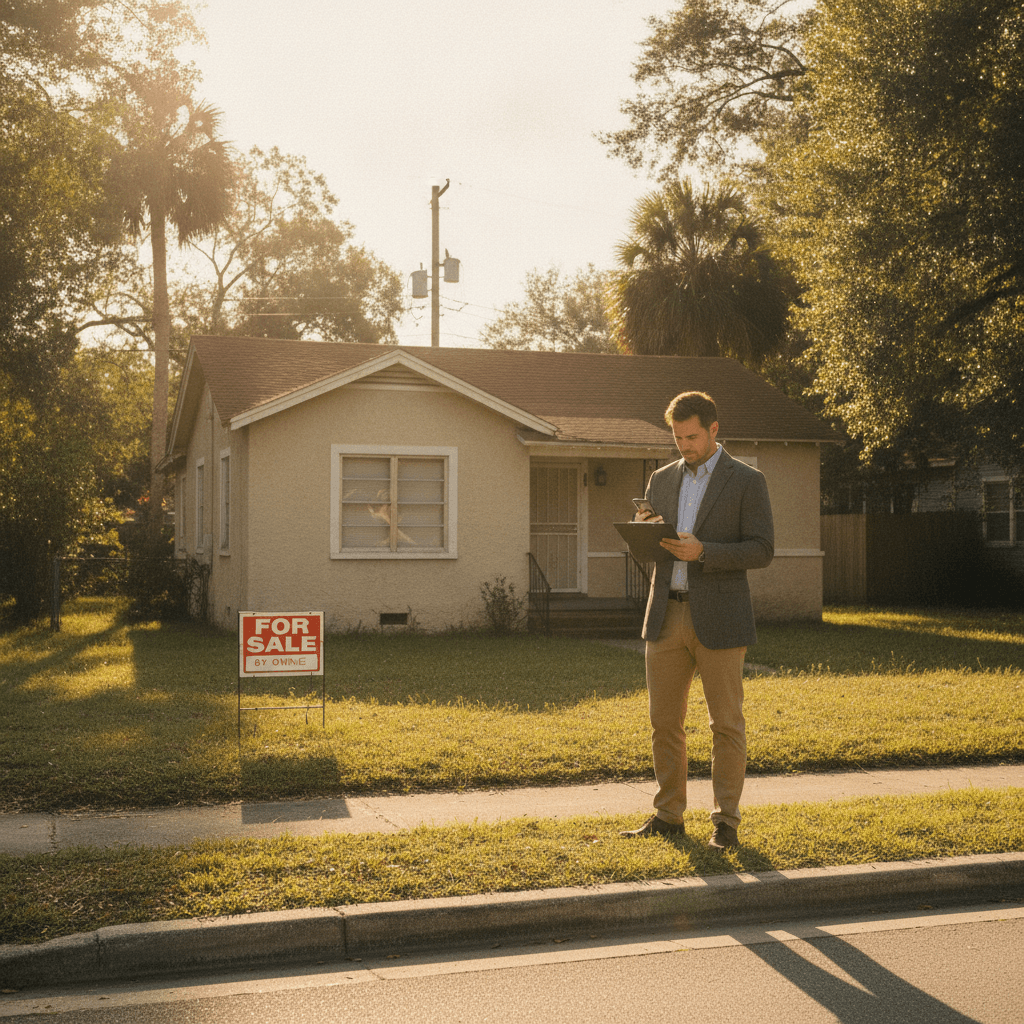
Jacksonville sellers are waiting longer to get paid — and that slow-down is exactly where wholesale deals get made. If you're working the Jacksonville real estate market this fall, the numbers just shifted in your favor.
Key Takeaways
- Jacksonville homes sat a median of 65 days on market in August 2026 — up from 58 days in the spring and slower than the national 60-day figure.
- Active listings slipped to 7,774, down from a December 2025 peak of 7,839 and well below the 9,352 we saw in August 2025.
- The median listing price fell to $380,000 in August 2026, down from $399,000 in June.
- The 30-year fixed mortgage rate climbed to 6.76% as of September 10, 2026 — the highest reading in the series we track.
- Rising rates plus longer market times mean more motivated sellers and more room to negotiate below list.
What is the Jacksonville real estate market doing right now?
The Jacksonville real estate market is cooling into a slower, more balanced fall — homes take longer to sell, inventory is tighter than last year, and list prices are drifting down. That combination is unusual, and it matters for how you source deals.
Here's the headline number. As of August 1, 2026, the median Jacksonville home took 65 days on market, according to Realtor.com data tracked by FRED.
That's a real change from the spring. Back in March 2026, the median was just 58 days. By July it was 63, and by August it was 65. The market is slowing, not crashing — but it's slowing.
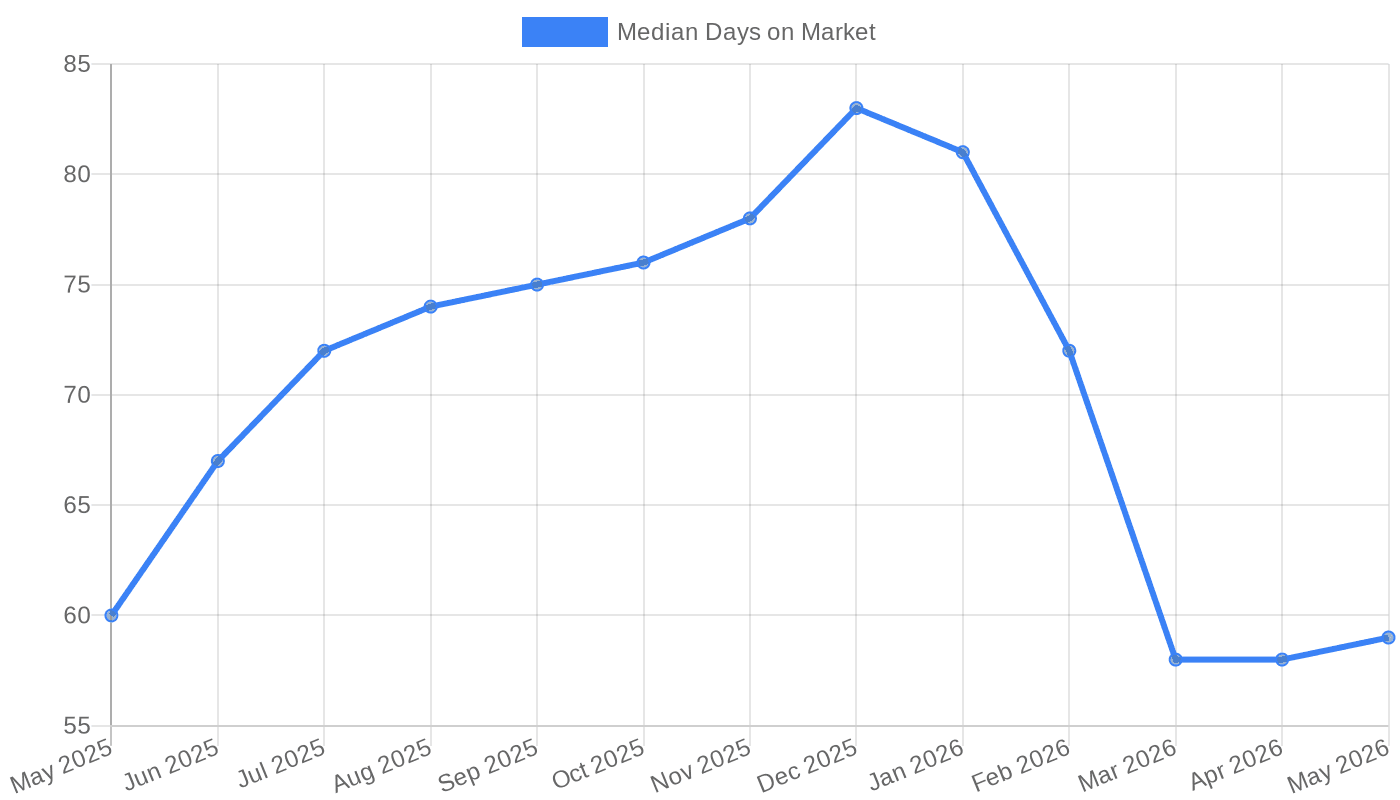
Compare that to the national picture. The U.S. median days on market was 60 days in August 2026. So Jacksonville is running about five days slower than the country as a whole.
Why does that matter to you? Because every extra week a home sits unsold is another week of mortgage payments, taxes, and stress for the owner. That's where wholesale conversations start.
Why the slowdown is happening
Two forces are pushing Jacksonville market times higher.
First, mortgage rates are climbing again. The 30-year fixed rate hit 6.76% on September 10, 2026, up from 6.47% in mid-June. Higher rates shrink buyer budgets, which means fewer offers and longer waits for sellers.
Second, sellers are still anchored to 2025 pricing. When the median list price was $399,000 last August, sellers felt rich. Now the market is telling them something different.
How many homes are for sale in Jacksonville?
There were 7,774 active listings in Jacksonville as of August 1, 2026. That's the number of homes competing for buyers right now.
Here's the interesting part. Inventory is actually tighter than it was a year ago. In August 2025, Jacksonville had 9,352 active listings. We're down roughly 17% year over year.
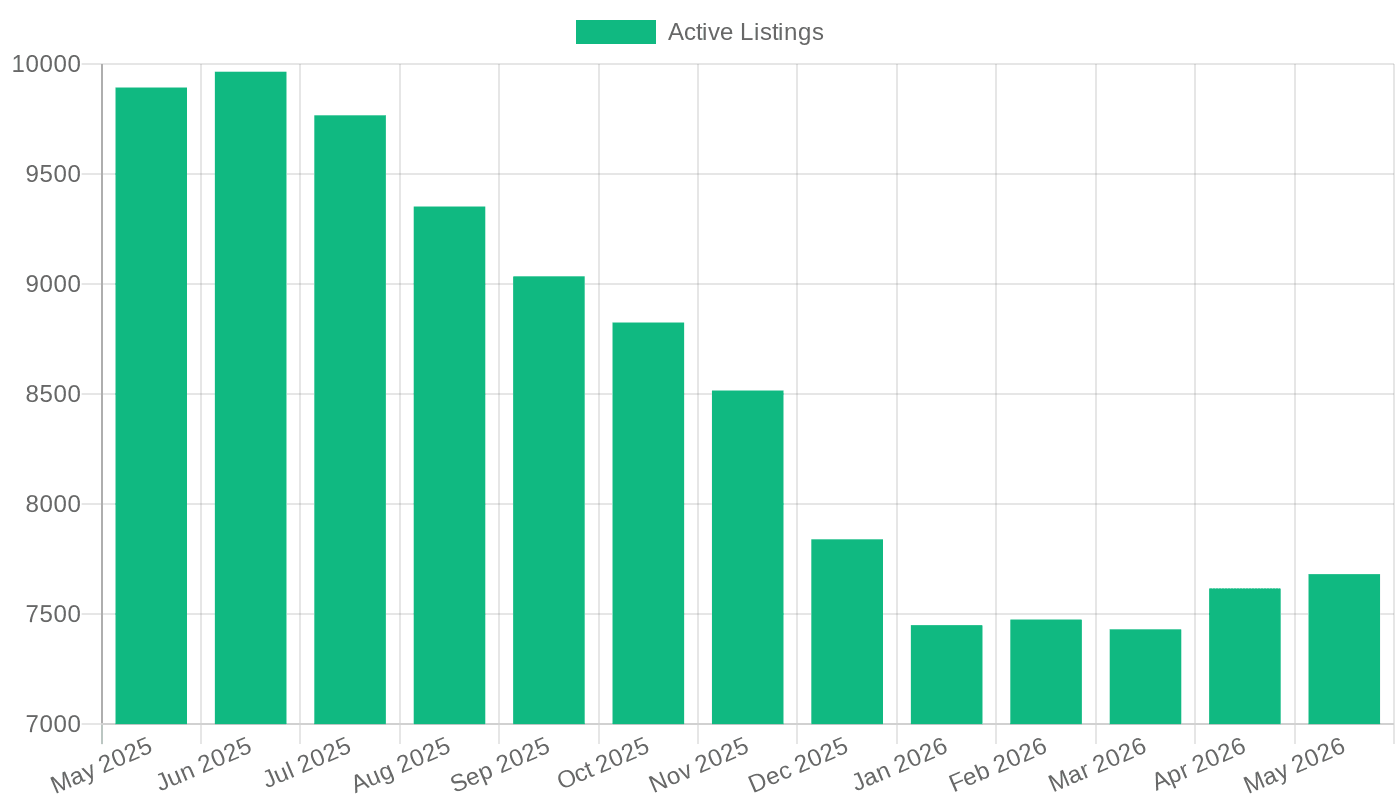
So we have a market with fewer homes for sale but longer selling times. That sounds contradictory until you remember the rate story — buyers can afford less, so the same inventory takes longer to clear.
What tight inventory means for wholesalers
Less competition on the listing side can be good news. If you're marketing to distressed owners, you're not fighting as many retail listings for buyer attention.
But it also means your end buyers are pickier. A fix-and-flip buyer looking at a Jacksonville property in September 2026 wants a bigger discount than they did a year ago, because their holding costs are higher.
Build that into your assignment fees. Don't assume last year's spreads still work.
What is the median listing price in Jacksonville?
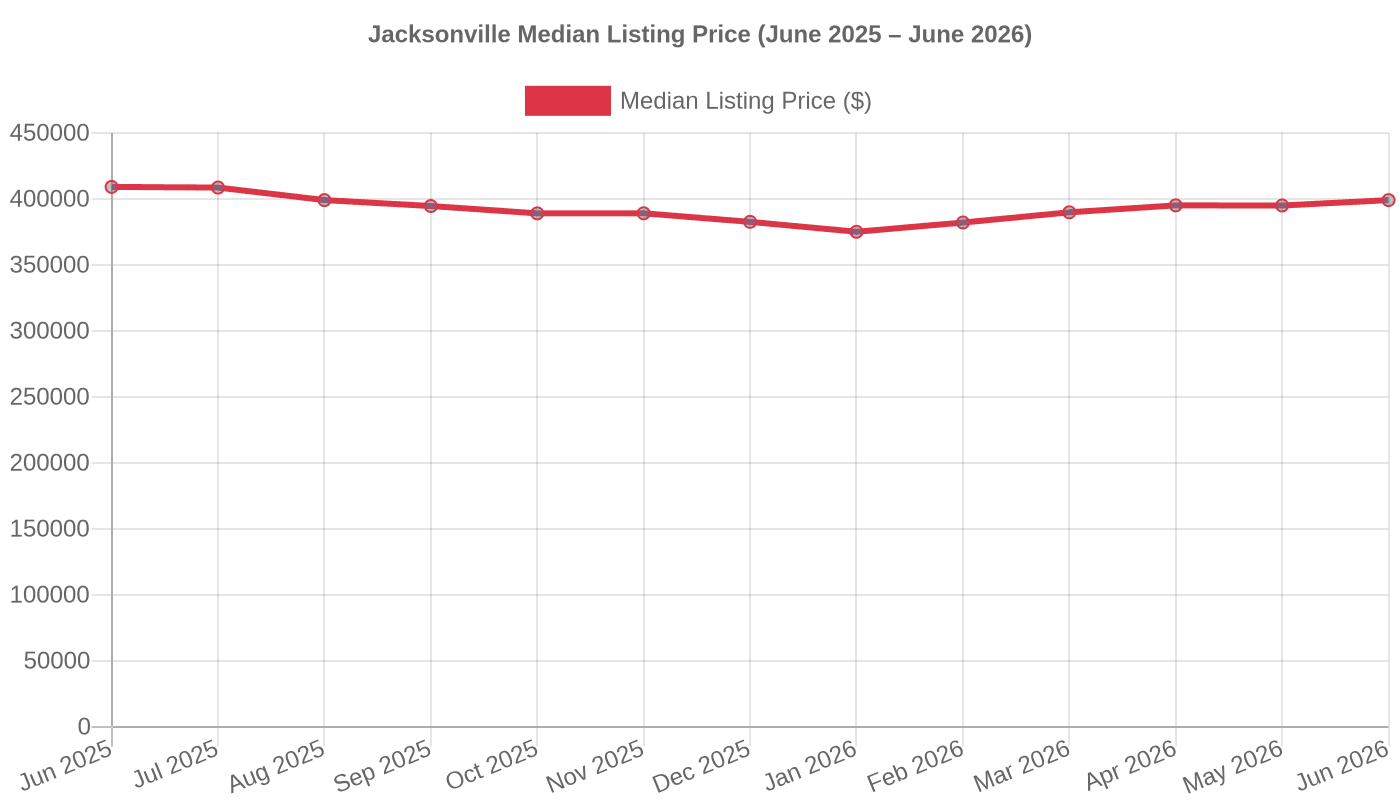
The median listing price in Jacksonville was $380,000 as of August 1, 2026. That's down from $399,000 in June 2026 and $399,000 in August 2025.
Let's walk the trend, because it tells a story.
- August 2025: $399,000
- January 2026: $375,000
- April 2026: $395,000
- June 2026: $399,000
- August 2026: $380,000
See the pattern? Prices bounced up through spring, then rolled over in late summer. That's classic seasonal behavior with a softening tilt.
Why list prices are drifting down
When homes sit longer, sellers cut prices. It's that simple.
A seller who listed at $400,000 in June and is still waiting in September is now a seller who will take $370,000. That gap is your opportunity.
Nationally, the median sales price of houses sold was $410,700 in the second quarter of 2026. Jacksonville's $380,000 median list price sits below that national figure — which makes sense for a metro that's still more affordable than many coastal Florida markets.
Jacksonville vs. the national market: how do they compare?
Jacksonville is running slightly slower and slightly cheaper than the country as a whole. Here's the side-by-side.
| Metric | Jacksonville | National |
|---|---|---|
| Median days on market (Aug 2026) | 65 days | 60 days |
| Median listing price (Aug 2026) | $380,000 | — |
| Median sales price (Q2 2026) | — | $410,700 |
| 30-year fixed mortgage rate (Sep 10, 2026) | 6.76% | 6.76% |
A few things jump out.
Jacksonville homes take five days longer to sell than the typical U.S. home. That's a modest gap, but it's consistent with a metro that's absorbing a lot of new supply from builders and relocations.
The rate is the same everywhere — 6.76% is a national figure, and it hits Jacksonville buyers just as hard as anyone else.
What the national rate trend tells you
The 30-year fixed rate has climbed steadily since mid-June 2026, when it was 6.47%. It's now 6.76%.
Every tick up in that line pushes another marginal buyer out of the market. And every buyer who drops out is a seller who has to wait longer — or get more flexible on price.
For wholesalers, that's the whole game right now. You're not competing with a hot retail market. You're negotiating in a market where sellers are starting to feel the squeeze.
Why this market favors wholesalers right now
Slower markets favor wholesalers because time is the seller's enemy. When a home sells in 30 days, the owner has options. When it sits for 65 days, the owner starts doing math.
Here's what that math looks like for a typical Jacksonville seller:
- Mortgage payment on a $380,000 home at 6.76%: roughly $2,470 per month (principal and interest).
- Two extra months on market versus last spring: about $4,940 in carrying costs.
- Plus taxes, insurance, and maintenance on top.
That's real money. And it's the reason your phone rings more in a slow market than a fast one.
The three seller types you'll meet this fall
The tired landlord. Rents have flattened, and they're done managing the property. They'll take a clean cash offer.
The rate-locked move-up buyer. They want to sell but their next mortgage would be at 6.76%. They're stuck and frustrated.
The estate or divorce seller. Life happened. They need it gone, and they care more about certainty than price.
All three are wholesale-friendly. None of them want to list and wait 65 days.
How do you find deals in a slower Jacksonville market?
You find deals in a slower Jacksonville market by targeting time-on-market signals instead of just price. The longer a listing has sat, the more likely the seller will negotiate.
Here's a simple playbook.
- Pull expired and withdrawn listings from the last 90 days. These sellers already tried the retail route and failed.
- Filter for properties listed 60+ days. That's the median market time — anything past it is a pressure point.
- Cross-check ownership. Absentee owners, out-of-state landlords, and long-held properties are your best targets.
- Skip trace and reach out with a specific, honest offer.
- Follow up at least five times. Slow markets reward persistence.
Tools that make this faster
You don't need a huge stack. You need a few tools that do specific jobs well.
- PropStream for list pulling and skip tracing.
- ATTOM Data for property and ownership records.
- CallTools for dialing through your outreach list.
- Launch Control for direct mail and follow-up sequences.
- GoHighLevel for CRM and pipeline management.
- TeleVista Lead Generation for inbound lead flow.
The Wholesale REI directory tracks 65 tools across 9 categories, so you can compare options before you commit to a monthly bill.
A quick note on marketing spend
In a slow market, your cost per lead usually goes down on direct mail and up on paid ads. Why? Because more sellers are motivated, but more investors are also bidding on the same keywords.
Lean into direct mail, cold calling, and driving for dollars this fall. Those channels reward effort, not budget.
What should wholesalers watch for the rest of 2026?
Watch the 30-day rate trend and the median days on market together. If rates keep climbing past 6.76% and market times push past 70 days, seller motivation will spike.
Here's your watch list.
- Mortgage rates. Above 7% would be a tipping point for a lot of Jacksonville sellers.
- Active listings. If the count climbs back above 8,000, competition for buyers heats up and your assignment fees compress.
- Median list price. A drop below $375,000 would signal broader seller capitulation.
- Days on market. Anything above 70 days means sellers are feeling real pain.
The seasonal factor
Jacksonville slows every fall and winter. Last year, market times climbed from 74 days in August 2025 to 83 days in December 2025.
If that pattern repeats, we could see market times in the high 70s or low 80s by December 2026. That's a big window for wholesale outreach.
Plan your Q4 marketing now. The sellers you want to reach in December are the ones you should be mailing in October.
The Bottom Line
The Jacksonville real estate market is slowing into fall 2026 — 65 days on market, 7,774 active listings, a $380,000 median list price, and a 6.76% mortgage rate. For wholesalers, that's not bad news. It's the setup for a strong Q4, as long as you're reaching motivated sellers before your competition does.
Your next step: tighten up your outreach. Compare the tools in our directory, then practice a few calls against a realistic AI seller with our free AI Cold Call Trainer — it takes no signup to start.
Frequently Asked Questions
How long do homes take to sell in Jacksonville right now?
As of August 1, 2026, the median Jacksonville home sat on the market for 65 days. That's up from 58 days in March 2026 and slightly slower than the national median of 60 days.
How many homes are for sale in Jacksonville?
Jacksonville had 7,774 active listings as of August 1, 2026. That's down from 9,352 a year earlier, so inventory is actually tighter than it was in August 2025.
What is the median listing price in Jacksonville?
The median listing price in Jacksonville was $380,000 as of August 1, 2026. That's down from $399,000 in June 2026 and flat versus August 2025.
Are mortgage rates affecting the Jacksonville market?
Yes. The 30-year fixed mortgage rate reached 6.76% on September 10, 2026, up from 6.47% in mid-June. Higher rates shrink buyer budgets, which pushes market times longer.
Is now a good time to wholesale in Jacksonville?
Slower markets tend to favor wholesalers because sellers face rising carrying costs the longer a home sits. With 65 days on market and climbing rates, motivated sellers are easier to find — but you'll need to negotiate tighter spreads with end buyers.
What should wholesalers watch in the Jacksonville market this fall?
Watch mortgage rates, active listing counts, median list price, and days on market together. If rates push past 7% or market times climb past 70 days, seller motivation typically spikes.
Sources
- Jacksonville: Median days on market (as of 2026-08-01) — Realtor.com via FRED
- Jacksonville: Active listing count (as of 2026-08-01) — Realtor.com via FRED
- Jacksonville: Median listing price (as of 2026-08-01) — Realtor.com via FRED
- 30-Year Fixed Mortgage Rate (as of 2026-09-10) — FRED (Federal Reserve Bank of St. Louis)
- Median Sales Price of Houses Sold (as of 2026-04-01) — FRED (Federal Reserve Bank of St. Louis)
- Median Days on Market (as of 2026-08-01) — FRED (Federal Reserve Bank of St. Louis)
- Software tools tracked in the Wholesale REI directory — Wholesale REI directory
- Tool categories in the Wholesale REI directory — Wholesale REI directory
This article was researched and drafted with AI assistance, then reviewed and edited by Mark Anthony. Every statistic is sourced and cited. It's for informational purposes only and is not financial or legal advice. Read our editorial policy.