Wholesale Real Estate Contract Example: A Sample Walkthrough


You found a motivated seller, ran the numbers, and now you are staring at a blank purchase agreement wondering what goes where. One wrong clause can cost you your assignment fee or kill the deal at closing.
This walkthrough shows you a complete wholesale real estate contract example, line by line, so you know exactly what to fill in, what to double-check, and what to negotiate.
Key Takeaways
- A wholesale contract is a standard purchase agreement with an assignment clause and a due diligence period that lets you sell your position to an end buyer.
- Your offer price should be based on the after-repair value (ARV) minus repairs and your assignment fee, not on what the seller owes.
- The assignment clause, inspection period, and earnest money terms are the three sections that decide whether you get paid.
- The Wholesale REI directory tracks 65 software tools across 9 categories to help you find deals, run comps, and manage contracts.
- National context: the median sales price of houses sold was $393,300 as of 2026-07-01, and the 30-year fixed mortgage rate was 7.11% as of 2026-11-12.
What is a wholesale real estate contract?
A wholesale real estate contract is a purchase agreement between you and a seller that gives you the right to buy the property, then assign that right to an end buyer for a fee. You are not buying the house to keep it. You are buying the contract.
The contract does two jobs. First, it locks in your purchase price and timeline. Second, it gives you a legal exit: the assignment clause. Without that clause, you are stuck buying the property yourself or walking away from your earnest money.
Most wholesalers use a state-specific purchase agreement or a attorney-reviewed template. The example below uses common terms you will see in most contracts. Your state may require different disclosures or wording, so always have a local real estate attorney review your template before you use it.
The three parties in every wholesale deal
- You (the wholesaler). You sign the purchase agreement with the seller.
- The seller. They agree to sell at your price and terms.
- The end buyer. They step into your shoes and buy the property at closing.
You are the middle link. The contract is what makes that middle link legal and profitable.
Wholesale real estate contract example: the sample deal
Here is the sample deal we will walk through. Keep these numbers in front of you as we go through each section.
- Property: 3-bed, 2-bath single-family home, 1,600 sq ft
- After-repair value (ARV): $250,000
- Estimated repairs: $40,000
- Seller's asking price: $210,000
- Your offer price: $160,000
- Your assignment fee: $15,000
- End buyer's price: $175,000
- Earnest money: $1,000
- Due diligence period: 14 days
- Closing date: 45 days from contract signing
How we got to the $160,000 offer
Use the standard wholesale formula: ARV × 70% − repairs = maximum offer. That gives you $250,000 × 0.70 = $175,000, minus $40,000 in repairs = $135,000. That is your maximum allowable offer if you want a 30% margin for the end buyer.
But in this example, we are using a slightly different structure. The end buyer pays $175,000, which is 70% of ARV. Your assignment fee is $15,000. So your contract price with the seller is $175,000 − $15,000 = $160,000.
That is the number that goes in the purchase price line of your contract. The seller sees $160,000. The end buyer sees $175,000. You keep the $15,000 difference at closing.
Why the national market matters to your offer
The national median sales price of houses sold was $393,300 as of 2026-07-01. That is the middle of the market, not your local market. Use it as a sanity check, not a comp.
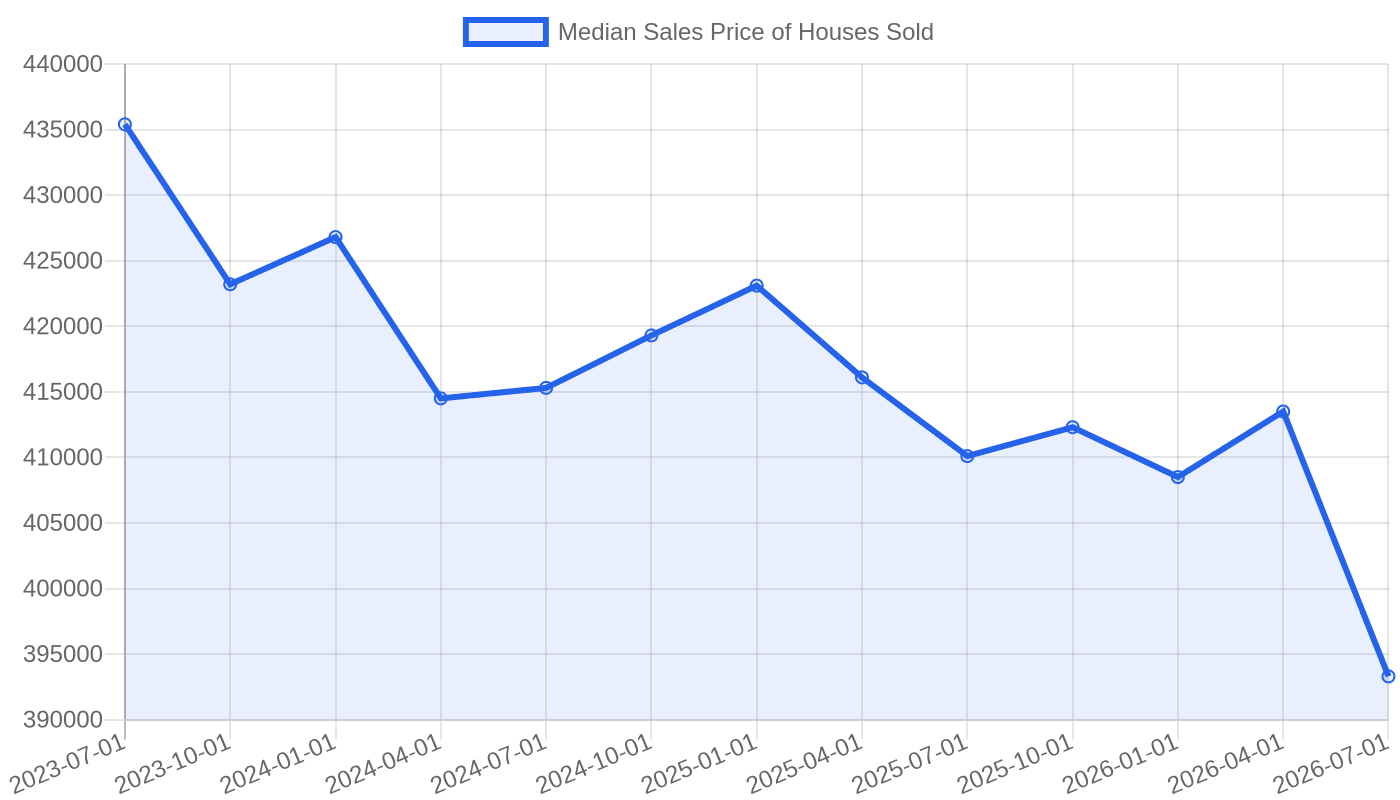
That chart shows the median sales price moving from $435,400 in 2023-07-01 down to $393,300 in 2026-07-01. Falling median prices mean end buyers are more price-sensitive. Your assignment fee has to leave enough room for them to still make a profit.
What goes in each section of the contract?
The contract has about a dozen sections. Here is what each one does and what to write in your example.
1. Parties and property description
List the seller's full legal name and your entity name. Then describe the property by its legal description, not just the street address. You can get the legal description from the county assessor or the title company.
Example: "Seller: John A. Smith and Jane B. Smith, husband and wife. Buyer: ABC Home Buyers LLC, an Ohio limited liability company. Property: Lot 14 of the Maplewood Subdivision, as recorded in Plat Book 12, Page 45, County of Franklin, State of Ohio, also known as 123 Maple Street."
2. Purchase price and financing
Write the purchase price and check the box for how you are paying. Most wholesale contracts use cash or conventional financing with a financing contingency. If you plan to assign, cash is cleaner because it does not depend on your credit.
Example: "Purchase Price: $160,000.00, payable in cash at closing."
3. Earnest money
This is the deposit you put down to show you are serious. In our example, it is $1,000. The contract should say who holds the money (usually a title company or attorney escrow account) and when it becomes non-refundable.
Example: "Buyer shall deposit $1,000.00 with First Title Company within three (3) business days of acceptance. Said deposit shall be refundable during the Due Diligence Period."
That refundable language is critical. It ties your earnest money to your inspection period.
4. Due diligence and inspection period
This is your escape hatch. During this window, you can inspect the property, run title, and decide whether to move forward. If you cancel during this period, you get your earnest money back.
Example: "Buyer shall have fourteen (14) days from the Effective Date to conduct all inspections, surveys, and title review. Buyer may terminate this Agreement for any reason during the Due Diligence Period and receive a full refund of the Earnest Money."
Fourteen days is common for wholesale deals. Some wholesalers negotiate 21 or 30 days for larger rehabs. The longer your period, the more time you have to find an end buyer, but the more the seller may push back.
5. Title and closing
The contract should name the title company or closing attorney and state who pays for title insurance and closing costs. In many wholesale deals, the buyer pays standard closing costs and the seller pays for the title policy.
Example: "Closing shall occur at First Title Company, 456 Main Street, within forty-five (45) days of the Effective Date. Seller shall convey marketable title by general warranty deed, free of all liens except current year taxes."
6. Assignment clause
This is the most important section for a wholesaler. It gives you the right to assign the contract to another buyer. Without it, you cannot wholesale the deal.
Example: "Buyer may assign this Agreement, in whole or in part, to any third party without Seller's consent. Buyer shall provide written notice of assignment to Seller at least five (5) days prior to closing."
Some sellers will ask for a clause that says "Buyer may assign with Seller's consent, which shall not be unreasonably withheld." That is weaker. Push for assignment without consent. If the seller insists, at least make the consent standard objective.
7. Seller disclosures and condition
Most states require a seller's disclosure form. The contract should reference it and state that the property is sold as-is. You do not want to promise to make repairs.
Example: "Seller shall provide the statutorily required Seller's Disclosure within five (5) days of acceptance. Property is sold AS-IS, WHERE-IS, with no warranties express or implied."
8. Default and remedies
This section says what happens if either side breaks the contract. For you, the key is that your liability is limited to your earnest money if you default.
Example: "If Buyer defaults, Seller's sole remedy shall be retention of the Earnest Money as liquidated damages. If Seller defaults, Buyer may seek specific performance or return of Earnest Money."
9. Closing costs and prorations
Spell out who pays what. Taxes, HOA dues, and rent (if any) get prorated at closing. In a wholesale deal, you usually want the end buyer to cover standard closing costs.
Example: "Real estate taxes shall be prorated as of the Closing Date. Buyer shall pay for recording fees and owner's title insurance. Seller shall pay for any transfer taxes."
10. Notices and signatures
List the address and email for each party. Then both sides sign and date. The date of the last signature is usually the Effective Date.
Example: "All notices shall be in writing and sent to the addresses below. This Agreement shall be effective on the date of the last signature below."
What does the assignment clause look like in practice?
Here is how the assignment plays out with our sample numbers. You sign the contract at $160,000. You find an end buyer who agrees to pay $175,000. You assign the contract for a $15,000 fee.
At closing, the title company handles two transactions. The end buyer brings $175,000. The seller receives $160,000. You receive $15,000. The title company may prepare two settlement statements or one combined statement showing the assignment fee.
The assignment agreement
You also need a separate assignment agreement between you and the end buyer. That document says the end buyer agrees to take over your rights and obligations under the purchase contract and pay you the assignment fee.
Example language: "Assignor hereby assigns all of Assignor's right, title, and interest in the Purchase Agreement dated [date] for the property at [address] to Assignee. Assignee agrees to pay Assignor an assignment fee of $15,000.00 at closing and to perform all obligations of Buyer under the Purchase Agreement."
What if the end buyer backs out?
If the end buyer backs out before closing, you still have your contract with the seller. You can find another buyer, renegotiate, or cancel during your due diligence period if you are still inside it. That is why the due diligence period and the assignment clause work together.
How do you fill out a wholesale contract step by step?
Here is the order to fill it out so you do not miss anything.
- Get the seller's legal name and vesting. Ask for ID and check the county records. If the seller is a trust or LLC, get the signer's authority.
- Pull the legal description. Use the county assessor or title company. Do not rely on the listing address alone.
- Run your numbers. ARV, repairs, assignment fee, and maximum offer. Write the offer price on the contract.
- Set the earnest money. Decide the amount and who holds it. Make it refundable during due diligence.
- Set the due diligence period. 14 days is a good starting point. Longer if you need more time to find a buyer.
- Set the closing date. 45 days is common. Make sure it is after your due diligence period ends.
- Add the assignment clause. Use strong language: assignment without seller consent.
- Attach disclosures. Include the state seller disclosure form and any lead-based paint disclosure for pre-1978 homes.
- Review with your attorney. Have your real estate attorney check the template before you send it.
- Send for signature. Use an e-signature tool and keep a copy for your records.
A quick checklist before you send
- Seller's name matches the deed
- Legal description is correct
- Purchase price matches your offer
- Earnest money amount and holder are correct
- Due diligence days are filled in
- Closing date is filled in
- Assignment clause is included
- As-is language is included
- Disclosures are attached
- Your entity name and signature block are correct
Wholesale contract vs. traditional purchase contract: what's different?
A wholesale contract is a traditional purchase contract with three changes: an assignment clause, a shorter due diligence period, and as-is language. Everything else looks similar.
| Feature | Traditional Purchase Contract | Wholesale Contract |
|---|---|---|
| Assignment clause | Rare or requires consent | Standard, no consent needed |
| Due diligence period | 7–10 days | 14–30 days |
| Property condition | Repairs negotiated | Sold as-is |
| Buyer's intent | Occupy or hold | Assign to end buyer |
| Earnest money | 1–3% of price | Often $500–$2,500 |
| Closing timeline | 30–45 days | 45–60 days |
| Contingencies | Financing, appraisal | Inspection, title, assignment |
That table is a general comparison, not legal advice. Your state's contract forms may differ.
Why the due diligence period is longer in wholesale deals
You need time to find an end buyer. A traditional buyer already knows they want the house. You are marketing a contract. The extra days give you room to run comps, take photos, and send the deal to your buyer list.
Why as-is language protects you
If you promise repairs, you are taking on construction risk before you even own the property. As-is language keeps the repair negotiation between the end buyer and the seller, or lets the end buyer handle it after closing.
How do market conditions affect your contract terms?
Market conditions affect how long you can stretch your due diligence period and how much assignment fee the end buyer will accept. When rates are high and days on market are long, buyers are pickier.
The 30-year fixed mortgage rate was 7.11% as of 2026-11-12, down from 7.40% in mid-October. Higher rates mean higher payments for your end buyer, which means they need a bigger discount to make the deal work.
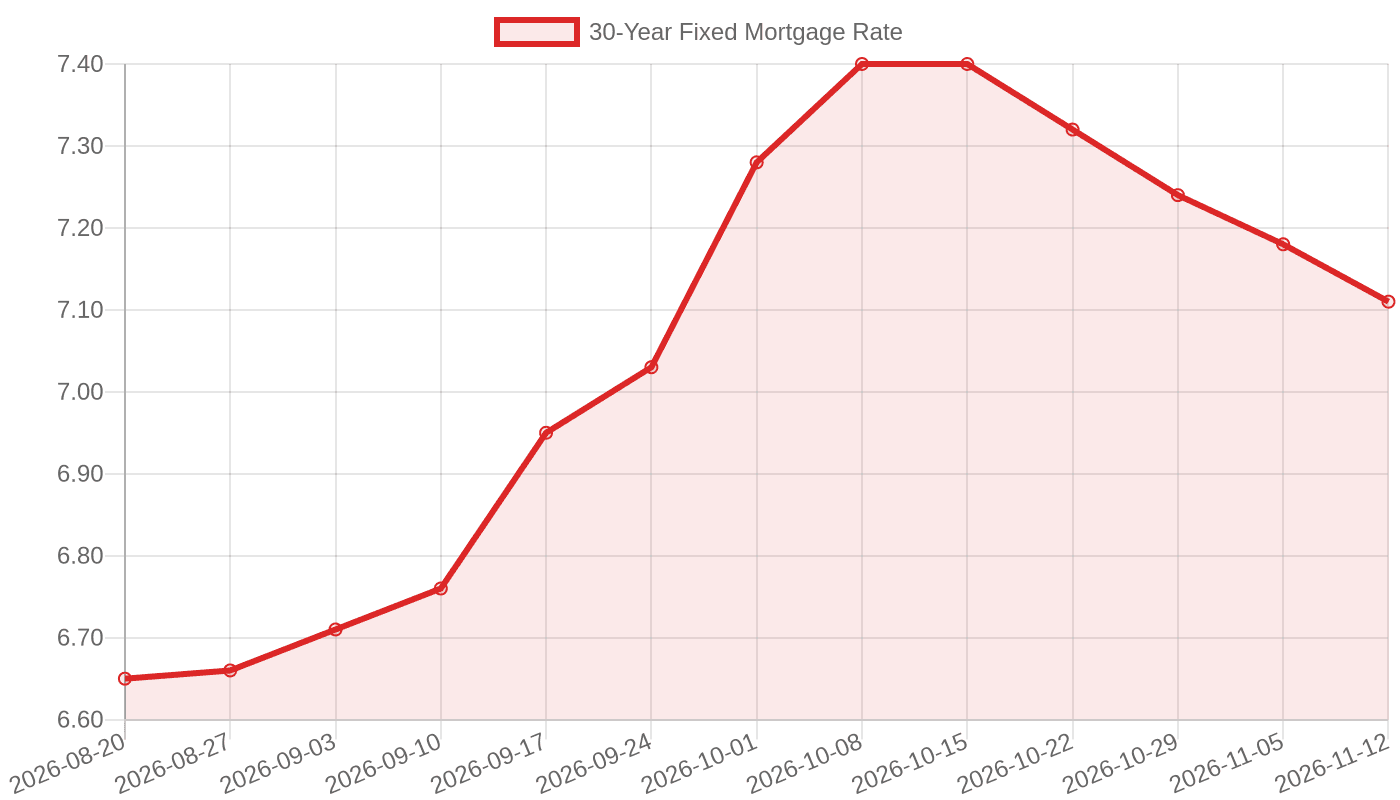
That chart shows the 30-year fixed rate climbing from 6.65% on 2026-08-20 to a peak of 7.40% on 2026-10-08 and 2026-10-15, then easing to 7.11% on 2026-11-12. When rates rise, your end buyer's monthly payment rises too. That squeezes your assignment fee.
Days on market tells you how fast you need to move
The median days on market was 63 as of 2026-10-01. That is how long the typical home takes to sell nationally. If your end buyer plans to resell, a 63-day market means they need a deeper discount.
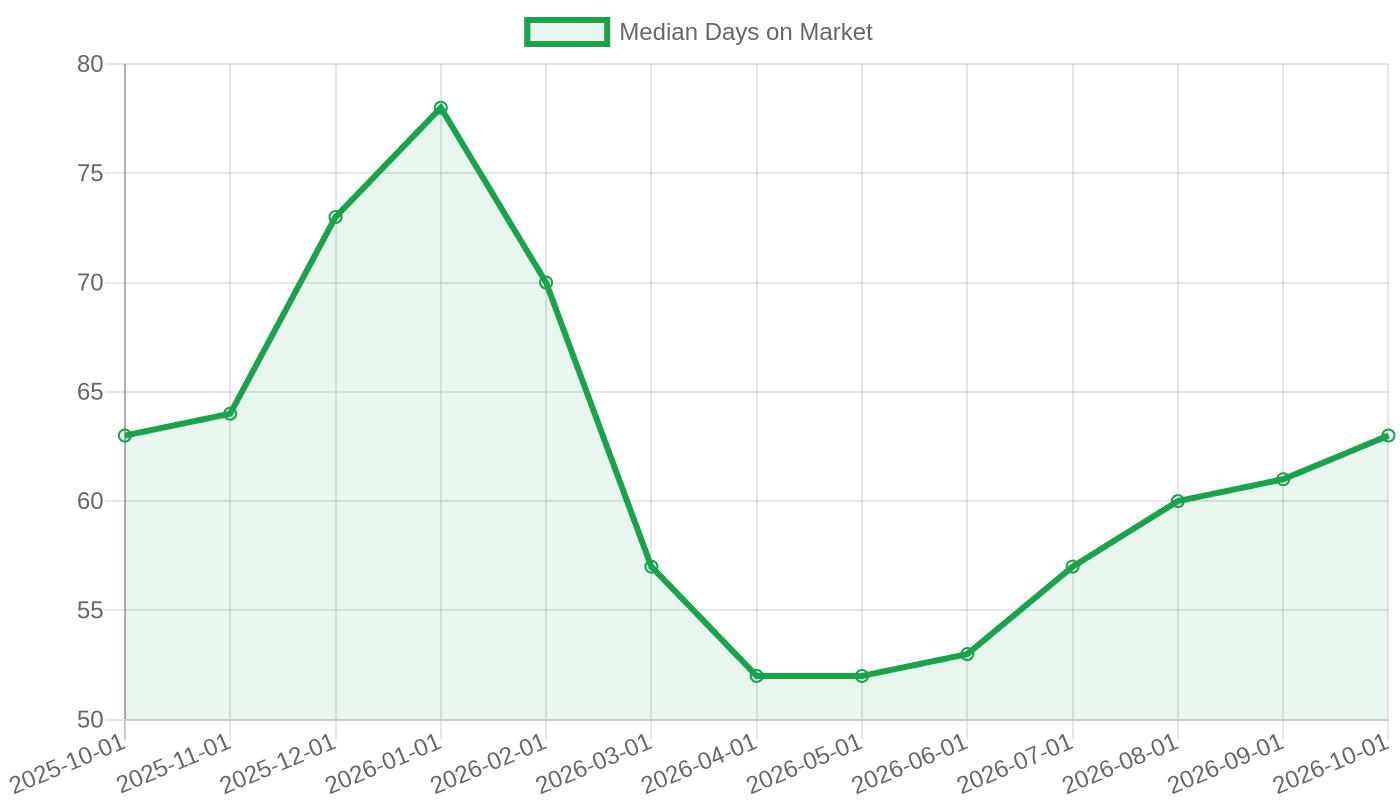
That chart shows median days on market moving from 63 in 2025-10-01 up to 78 in 2026-01-01, then down to 52 in 2026-04-01 and 2026-05-01, and back to 63 in 2026-10-01. Longer days on market means your end buyer carries the property longer. Build that into your offer.
How to adjust your contract when the market slows
- Shorten your due diligence period if you have a strong buyer list. Less time for the seller to get nervous.
- Lower your assignment fee if the deal is thin. A $10,000 fee that closes beats a $20,000 fee that dies.
- Add a financing contingency for your end buyer only if you have to. It weakens your position with the seller.
- Negotiate a longer closing if your buyer needs more time to close their own financing.
What are the most common mistakes in wholesale contracts?
Here are the mistakes that cost wholesalers the most money.
- No assignment clause. You cannot assign without it. If you use a generic purchase agreement, add the clause or use a wholesale-specific template.
- Earnest money that is non-refundable too early. Tie the refund to your due diligence period.
- Wrong legal description. A typo in the legal description can delay closing or void the contract.
- Promising repairs. As-is language protects you. Do not agree to fix anything before closing.
- No seller disclosure. Some states require it. Missing it can give the seller an out.
- Signing as an individual instead of your LLC. You want the contract in your entity name for liability protection.
- No exit strategy if the end buyer backs out. Keep your due diligence period long enough to find a backup buyer.
How software helps you avoid these mistakes
The Wholesale REI directory tracks 65 software tools across 9 categories. Tools like deal analyzers, contract templates, and CRM platforms can help you stay organized.
For example, a CRM like GoHighLevel can track your seller leads and end buyers in one place. A data tool like PropStream can help you pull comps and property details. A dialer like CallTools can help you follow up with sellers faster. None of these replace your attorney, but they reduce the paperwork errors that kill deals.
How do you explain the contract to a skeptical seller?
Explain it plainly: you are making a cash offer with a short inspection period, and you may assign the contract to another buyer who will close. Sellers care about three things: price, certainty, and timeline.
Be upfront about the assignment. Hiding it can blow up the deal later. Say something like: "I buy houses for cash, and sometimes I bring in another investor to close. Either way, you get your price and your closing date."
What to say when the seller asks about the assignment fee
You do not have to disclose your fee. But if they ask, you can say: "My fee is built into the price I offered you. You are getting $160,000 net, and that is what matters." Keep the conversation on their net proceeds.
What to put in writing
Put the assignment right in the contract. That way the seller sees it before they sign. Transparency builds trust and reduces the chance of a last-minute objection.
The Bottom Line
A wholesale real estate contract is a purchase agreement with an assignment clause, a due diligence period, and as-is language. Get those three right and you protect your fee. Fill in the numbers using the ARV formula, then have your attorney review the template before you use it.
Your next step: compare contract, CRM, and deal-analysis tools in the Wholesale REI directory so your paperwork and follow-up stay tight from first call to closing.
Frequently Asked Questions
What is a wholesale real estate contract?
It is a purchase agreement between a wholesaler and a seller that includes an assignment clause, letting the wholesaler sell their right to buy the property to an end buyer for a fee.
Do I need an attorney to write a wholesale contract?
Yes, you should have a local real estate attorney review your contract template. Real estate contract laws vary by state, and an attorney can make sure your assignment clause and disclosures are enforceable.
How much earnest money should I put down in a wholesale contract?
Many wholesalers put down $500 to $2,500. The key is to make it refundable during your due diligence period so you can cancel without losing it if the deal does not work out.
Can a seller back out of a wholesale contract?
A seller can back out if the contract allows it or if you breach the terms. A strong contract with clear deadlines and an assignment clause reduces the chance of the seller walking away.
How long should the due diligence period be in a wholesale contract?
Fourteen to 30 days is common. A longer period gives you more time to find an end buyer, but the seller may push back. Match the period to how fast you can market the deal.
What happens if my end buyer backs out of the assignment?
You still have your contract with the seller. You can find another buyer, renegotiate, or cancel during your due diligence period if you are still inside it. That is why the due diligence period and assignment clause work together.
Sources
- Software tools tracked in the Wholesale REI directory — Wholesale REI directory
- Tool categories in the Wholesale REI directory — Wholesale REI directory
- Median Sales Price of Houses Sold (as of 2026-07-01) — FRED (Federal Reserve Bank of St. Louis)
- 30-Year Fixed Mortgage Rate (as of 2026-11-12) — FRED (Federal Reserve Bank of St. Louis)
- Median Days on Market (as of 2026-10-01) — FRED (Federal Reserve Bank of St. Louis)
This article was researched and drafted with AI assistance, then reviewed and edited by Mark Anthony. Every statistic is sourced and cited. It's for informational purposes only and is not financial or legal advice. Read our editorial policy.