After Repair Value (ARV): What It Is and How to Calculate

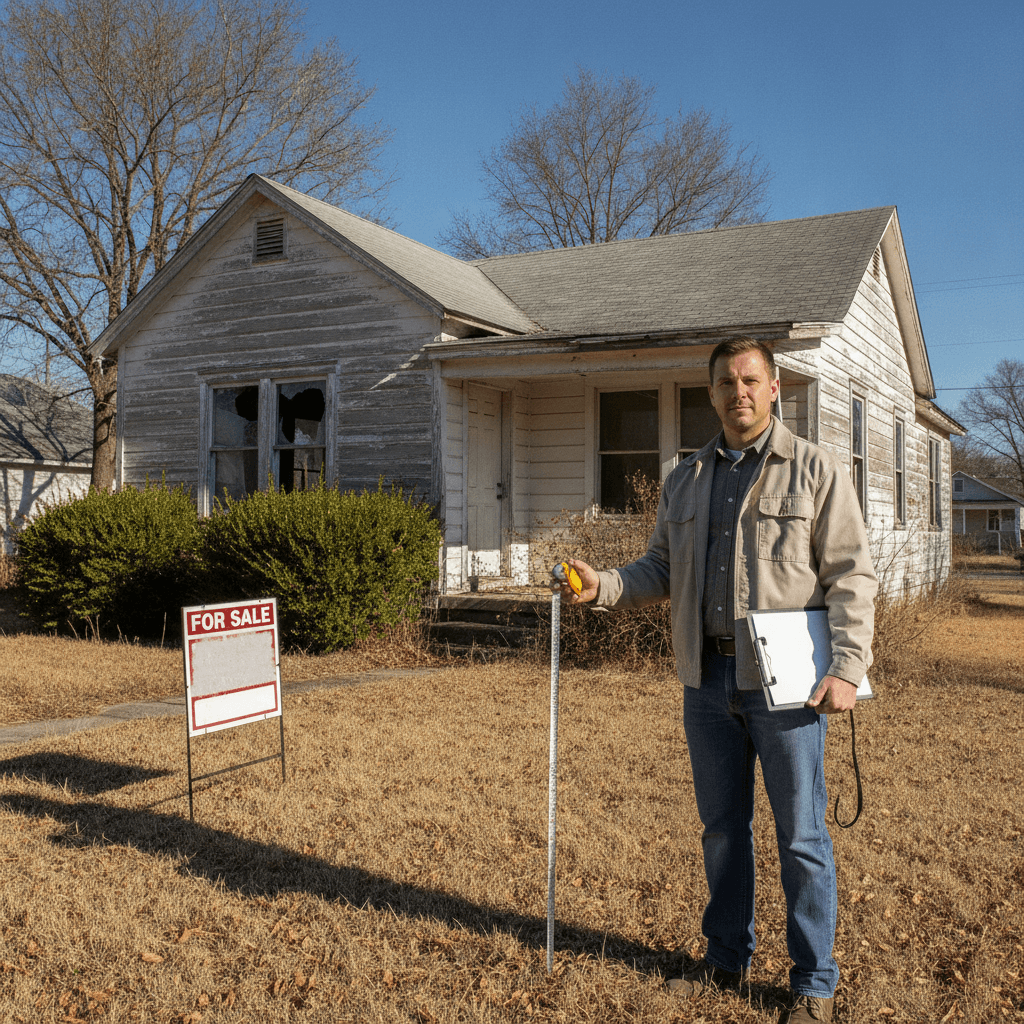
You've found a deal, but before you can flip it or wholesale it, you need to know what it will be worth after repairs. That number is the after repair value (ARV), and getting it wrong can turn a profitable deal into a money pit. Here's how to nail it every time.
Key Takeaways
- ARV is the estimated market value of a property after all repairs and renovations are complete.
- The most reliable method is comparing your subject property to at least three recently sold comparable homes (comps) that are similar in size, location, and condition.
- Adjust for differences in square footage, bedrooms, bathrooms, and upgrades, and always use sold prices, not listing prices.
- National median home price is $410,700 (as of April 2026), and the median days on market is 53 days, so pricing and speed matter.
- Always calculate your maximum allowable offer (MAO) using ARV minus repair costs and desired profit to avoid overpaying.
What Is After Repair Value (ARV)?
After repair value (ARV) is the estimated market value of a property after all repairs and renovations are complete. It's the price a buyer would likely pay for the renovated home, not the price you pay for it as-is.
ARV is the cornerstone of fix-and-flip and wholesaling math. It tells you what the end product is worth, so you can work backward to figure out what you can afford to pay for the property now.
In wholesaling, you use ARV to determine your maximum allowable offer (MAO) and to convince buyers that your deal has built-in equity. Without a solid ARV, you're guessing—and guessing is how deals fall apart.
Why Is ARV Important for Wholesalers?
ARV is important because it directly determines your profit margin and whether a deal is worth pursuing. If you overestimate ARV, you might pay too much and leave no room for profit. If you underestimate it, you could leave money on the table or miss out on a great deal.
For wholesalers, ARV serves three critical purposes:
- Pricing the deal: You need to know what the renovated property will sell for to set your asking price to buyers.
- Calculating your offer: Your offer to the seller is based on ARV minus repairs, your assignment fee, and other costs.
- Marketing to buyers: Buyers want to see that the deal has enough spread between ARV and your price to make their own profit.
A realistic ARV builds trust with cash buyers and flippers. If your numbers are off, you'll quickly lose credibility.
How to Calculate After Repair Value (ARV)
To calculate ARV, you find comparable sold properties (comps) in the same area, adjust for differences, and average their adjusted sale prices. Here's the step-by-step process:
Step 1: Find Comparable Sales (Comps)
Start by identifying at least three recently sold homes that are similar to your subject property. Look for:
- Location: Same neighborhood or within a few blocks. Ideally, the same school district and similar proximity to amenities.
- Size: Similar square footage. Aim for within 10-15% of your subject's size.
- Bedrooms and bathrooms: Same or very close count.
- Age and style: Similar construction type and era.
- Condition: This is tricky—you want homes that are in good, renovated condition, because that's what your property will be after repairs.
Use public records, real estate sites, or tools like PropStream to pull sold data. Always use sold prices, not listing prices.
Step 2: Adjust for Differences
No two homes are identical, so you'll need to adjust each comp to match your subject property. Add value if the comp is inferior, subtract if it's superior.
Common adjustments include:
- Square footage: Adjust per square foot based on local market data.
- Bedrooms/bathrooms: Each additional bedroom or bathroom can add thousands.
- Garage/parking: A garage adds value.
- Upgrades: Updated kitchen, bathrooms, flooring, roof, etc.
- Lot size: A larger lot can add value.
For example, if your subject has 3 bedrooms and a comp has 4, subtract the value of that extra bedroom from the comp's price.
Step 3: Calculate the Average Adjusted Value
After adjusting each comp, average the adjusted sale prices. That average is your ARV.
Here's a simple table to visualize it:
| Comp | Sale Price | Adjustments | Adjusted Price |
|---|---|---|---|
| Comp 1 | $400,000 | +$5,000 (extra bathroom) | $405,000 |
| Comp 2 | $415,000 | -$10,000 (larger lot) | $405,000 |
| Comp 3 | $390,000 | +$15,000 (needs updates) | $405,000 |
| Average | $405,000 |
That average is your ARV.
Step 4: Use ARV to Determine Your Offer
Once you have ARV, calculate your maximum allowable offer (MAO):
MAO = ARV × 70% - Repair Costs
This formula leaves a 30% buffer for your profit, holding costs, and unexpected expenses. For example, if ARV is $300,000 and repairs are $50,000:
MAO = $300,000 × 0.70 - $50,000 = $210,000 - $50,000 = $160,000
That's the most you should pay for the property.
What Are the Best Comps to Use for ARV?
The best comps are homes that sold within the last 3-6 months, are within a 0.25-mile radius, and are as similar as possible to your subject property in size, beds, baths, and condition.
Here's what to prioritize:
- Recency: Use sales from the last 3-6 months. Markets change, so older sales may be outdated.
- Proximity: Closer is better. If you can't find comps within a quarter-mile, expand to a half-mile, but note the differences.
- Similarity: Match square footage, bedroom/bath count, and property type (single-family, condo, etc.).
- Condition: Since you're estimating the value after repairs, use comps that are in good, renovated condition.
Avoid using foreclosures or short sales as comps unless you're specifically valuing a distressed property. They often sell below market value.
How Do You Adjust Comps for Condition?
Adjusting for condition means adding or subtracting value based on how a comp's condition compares to your subject's after-repair condition. If a comp is already renovated, it's a good match. If it's dated, you'll need to add value to it to reflect what it would be worth after similar repairs.
Here's how to think about it:
- If the comp is in worse condition than your subject will be after repairs: Add value to the comp's sale price.
- If the comp is in better condition: Subtract value.
For example, if a comp sold for $350,000 but needs $20,000 in updates to match your subject's renovated state, you'd adjust the comp up to $370,000.
Use local data to quantify adjustments. For instance, if a renovated kitchen adds $15,000 in your market, use that figure.
What's the Difference Between ARV and Market Value?
Market value is what a property is worth in its current condition, while ARV is what it will be worth after repairs. ARV is essentially the market value of the renovated property.
For a fix-and-flip or wholesale deal, you're buying at market value (or below) and selling at ARV. The difference between the two is the equity you create through renovations.
Understanding this distinction helps you explain the deal to sellers and buyers. You're not just buying a house; you're buying the potential value after repairs.
How Does the Current Market Affect ARV?
The current market affects ARV because home prices and days on market influence what buyers will pay and how quickly you can sell. As of April 2026, the median sales price of houses sold in the U.S. is $410,700, and the median days on market is 53 days.
When home prices are rising, ARV tends to increase, giving you more room for profit. When prices are flat or falling, you need to be more conservative.
Days on market matters too. If homes sit longer, you'll have higher holding costs, which should be factored into your offer.
Here's how the median home price has trended over the past few years:
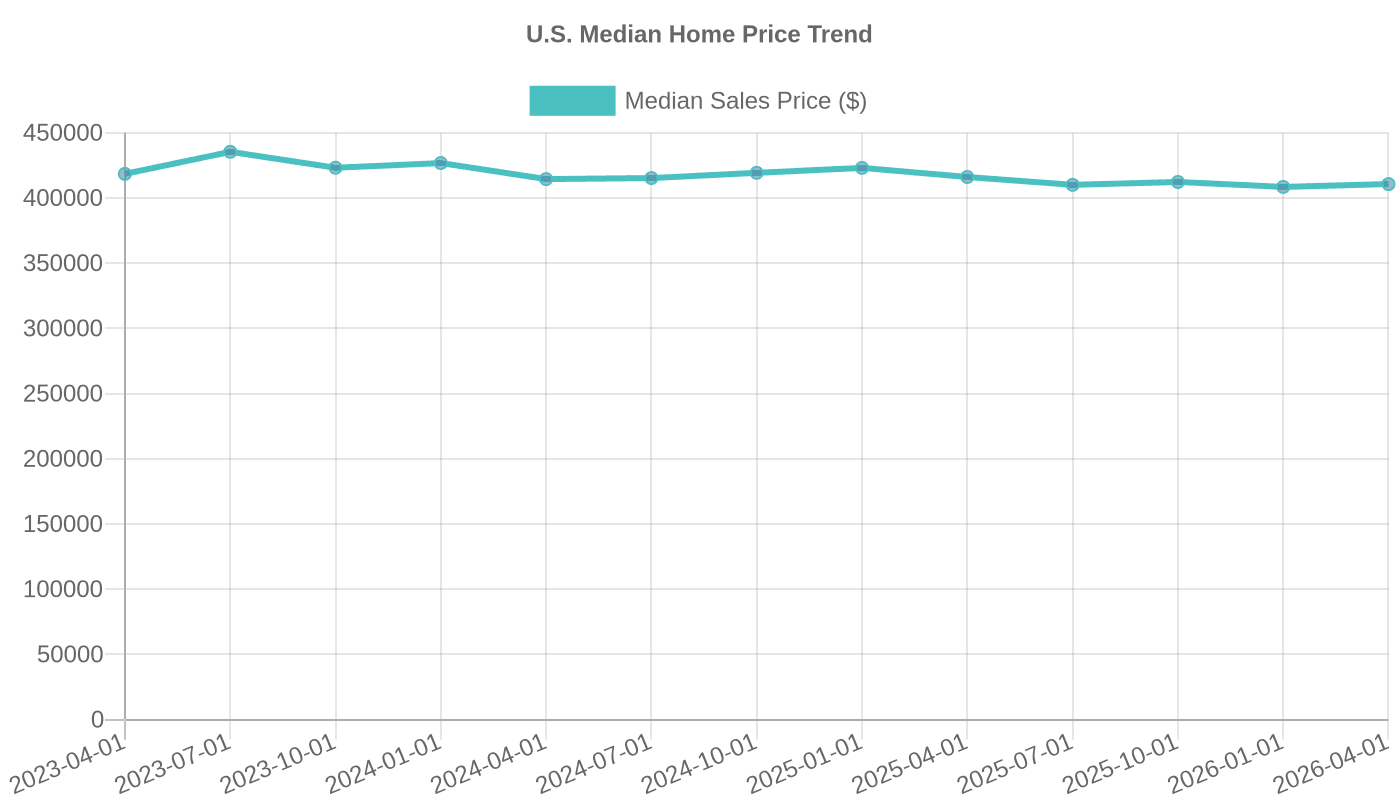
As you can see, prices have fluctuated but remained relatively stable around $410,000-$435,000 since 2023. This stability means ARV estimates based on recent comps are fairly reliable.
Mortgage rates also play a role. The 30-year fixed mortgage rate is currently 6.66% (as of July 30, 2026). Higher rates can reduce buyer demand, which may slow price growth and increase days on market.
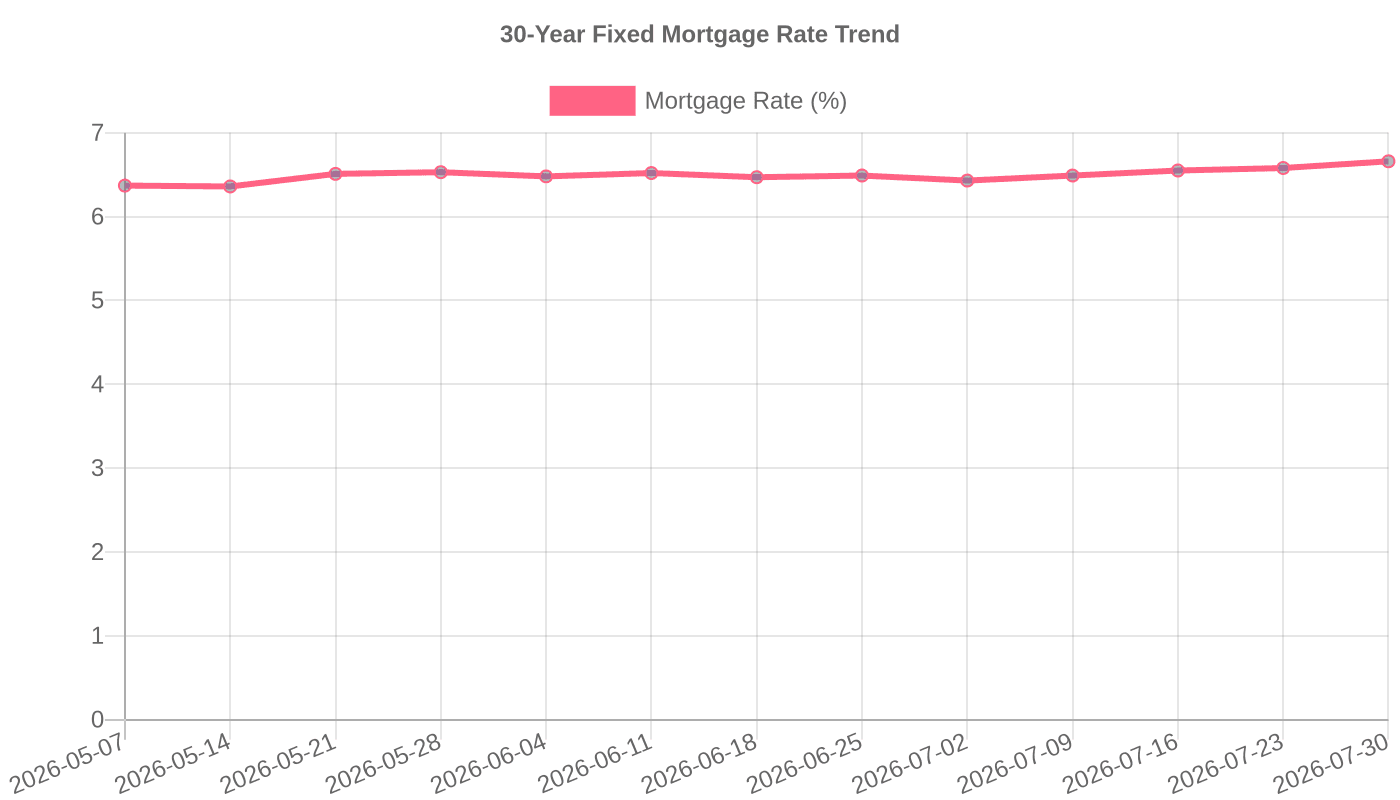
This chart shows the recent uptick in mortgage rates, which could cool the market. Keep an eye on these trends when calculating ARV.
What Are Common Mistakes When Calculating ARV?
The most common mistakes are using listing prices instead of sold prices, ignoring condition adjustments, and relying on too few comps. Here are the top pitfalls to avoid:
- Using list prices: List prices are asking prices, not what buyers pay. Always use sold data.
- Not adjusting for differences: Every comp needs adjustments. Skipping them leads to inaccurate ARV.
- Using too few comps: One or two comps aren't enough. Use at least three, ideally five.
- Ignoring market trends: If prices are falling, your ARV might be lower than current comps suggest.
- Overestimating repairs: Be realistic about repair costs. Get quotes from contractors.
Avoid these mistakes to keep your deals profitable.
How Do You Use ARV in Wholesaling?
In wholesaling, you use ARV to calculate your maximum allowable offer (MAO) and to price the deal for your buyer. Your goal is to lock up the property at a price that leaves enough profit for both you and the end buyer.
Here's a practical example:
- ARV: $300,000
- Repair costs: $40,000
- Desired assignment fee: $10,000
- Buyer's desired profit: $30,000 (10% of ARV)
Your MAO would be:
MAO = ARV - Repairs - Assignment Fee - Buyer's Profit MAO = $300,000 - $40,000 - $10,000 - $30,000 = $220,000
So you'd aim to get the property under contract for $220,000 or less, then sell the contract to a buyer for $230,000, pocketing your $10,000 fee.
What Tools Can Help You Calculate ARV?
Several software tools can help you find comps and calculate ARV faster, including PropStream, ATTOM Data, and others. These tools provide access to sold data, property details, and sometimes automated ARV estimates.
Here's a quick comparison:
| Tool | Key Features | Best For |
|---|---|---|
| PropStream | Nationwide property data, comps, ARV estimates | Finding comps and analyzing deals |
| ATTOM Data | Property data, tax records, sold prices | Data-driven investors |
| GoHighLevel | CRM and marketing automation | Managing leads and deals |
| CallTools | Power dialer and call tracking | Contacting sellers and buyers |
| Launch Control | Marketing and lead generation | Driving seller leads |
| Televista | Call tracking and recording | Monitoring sales calls |
These tools can streamline your process, but always verify the numbers with your own analysis.
How Often Should You Recalculate ARV?
You should recalculate ARV whenever you're evaluating a new deal, and update it if the market shifts significantly. Markets can change quickly, so a comp from six months ago might not be relevant today.
For active deals, check your ARV every few weeks if the market is volatile. If you're in a stable market, monthly reviews are usually enough.
Can You Use ARV for Off-Market Deals?
Yes, ARV is especially useful for off-market deals because you don't have a listing price to guide you. You're relying entirely on your analysis of comps and the property's potential.
For off-market properties, you'll need to be extra careful with your comps and condition adjustments. Since there's no public listing, you'll have to visit the property and assess repairs yourself.
What's the Role of ARV in the 70% Rule?
The 70% rule is a quick formula that uses ARV to determine your maximum purchase price: MAO = ARV × 70% - Repairs. It's a rough guideline, not a hard rule, but it helps you stay disciplined.
The 70% accounts for your profit, holding costs, closing costs, and other expenses. Some investors use 65% or 75% depending on their market and risk tolerance.
For example, if ARV is $400,000 and repairs are $60,000:
MAO = $400,000 × 0.70 - $60,000 = $280,000 - $60,000 = $220,000
That's your target offer.
How Do You Account for Holding Costs in ARV?
Holding costs are the expenses you incur while you own the property, such as mortgage payments, taxes, insurance, and utilities. These aren't part of ARV, but they affect your profit and should be factored into your offer.
To account for holding costs, estimate how long it will take to sell the property after repairs. With the median days on market at 53 days, you might plan for 2-3 months of holding costs.
Include these costs in your MAO calculation by subtracting them from your profit.
What Are the Limitations of ARV?
ARV is an estimate, not a guarantee. It's based on comparable sales, which can be imperfect, and it doesn't account for future market changes.
Other limitations include:
- Subjectivity in adjustments: Different investors may adjust comps differently.
- Lack of exact comps: In some neighborhoods, it's hard to find truly comparable sales.
- Market volatility: Prices can change between your analysis and the sale.
Despite these limitations, ARV is still the best tool we have for valuing rehab properties.
The Bottom Line
After repair value is the most important number in your wholesaling math. Get it right, and you'll consistently find profitable deals; get it wrong, and you'll waste time and money. Use recent comps, adjust for differences, and always be conservative.
Your next step is to practice calculating ARV on a few properties in your market. Use a tool like PropStream to pull comps, and consider using our free AI Cold Call Trainer to practice your pitch to sellers once you've locked in your numbers. It's free and takes no signup to start.
Frequently Asked Questions
What is after repair value (ARV)?
After repair value (ARV) is the estimated market value of a property after all repairs and renovations are complete. It's the price a buyer would likely pay for the renovated home.
How do you calculate ARV?
To calculate ARV, find at least three recently sold comparable homes in the same area, adjust for differences in size, condition, and features, then average the adjusted sale prices.
Why is ARV important for wholesalers?
ARV is important because it determines your profit margin and helps you set your offer price. It also helps you market the deal to buyers by showing the potential equity.
What is the 70% rule in wholesaling?
The 70% rule is a formula to calculate your maximum allowable offer: MAO = ARV × 70% - Repair Costs. It leaves a 30% buffer for profit and other costs.
What are common mistakes when calculating ARV?
Common mistakes include using listing prices instead of sold prices, not adjusting for differences, using too few comps, and ignoring market trends.
How does the current market affect ARV?
Market conditions like median home prices and days on market influence ARV. As of April 2026, the U.S. median home price is $410,700, and homes sit for a median of 53 days.
Sources
- Median Sales Price of Houses Sold — FRED (Federal Reserve Bank of St. Louis)
- 30-Year Fixed Mortgage Rate — FRED (Federal Reserve Bank of St. Louis)
- Median Days on Market — FRED (Federal Reserve Bank of St. Louis)
- Software tools tracked in the Wholesale REI directory — Wholesale REI directory
- Tool categories in the Wholesale REI directory — Wholesale REI directory
This article was researched and drafted with AI assistance, then reviewed and edited by Mark Anthony. Every statistic is sourced and cited. It's for informational purposes only and is not financial or legal advice. Read our editorial policy.