After Repair Value Calculator: How to Use It for Smarter Deals


You’ve found a deal, but you’re not sure what it’s worth after repairs. That’s where an after repair value calculator comes in—it helps you estimate the future value of a flipped or wholesale property, so you don’t overpay. Let’s break down how to use one, what numbers you need, and how to avoid common mistakes that kill your profit.
Key Takeaways
- An after repair value (ARV) calculator estimates a property’s value after renovations, typically using comparable sales (comps) and repair costs.
- The formula is simple: ARV = After-Repair Value – Repair Costs – Desired Profit – Other Costs.
- Using current market data—like the median sales price of $410,700 and median days on market of 57—helps you set realistic expectations.
- The 70% rule is a quick guideline: your offer should be 70% of ARV minus repairs, but it’s not a substitute for a full analysis.
- Always verify comps with a real estate agent or appraiser; a calculator is only as good as the data you feed it.
What is an After Repair Value Calculator?
An after repair value calculator is a tool that estimates the resale value of a property after it has been fully renovated, based on comparable sales and repair estimates. It’s not a magic number—it’s a formula that helps you make data-driven decisions.
Think of it as your deal’s crystal ball. You plug in the purchase price, repair costs, and expected resale value, and the calculator spits out whether the deal is worth your time. It’s used by wholesalers, flippers, and investors to avoid overpaying and to ensure there’s enough profit margin.
How Do You Calculate After Repair Value?
The basic formula is: ARV = After-Repair Value – Repair Costs – Desired Profit – Other Costs. But to get the After-Repair Value itself, you typically use the following steps:
- Find comparable sales (comps): Look for at least 3-5 similar properties sold in the last 3-6 months within a 1-mile radius (or your market’s norm).
- Adjust for differences: Add or subtract value for square footage, bedrooms, bathrooms, lot size, and condition.
- Calculate the average: The average of your adjusted comps gives you a baseline ARV.
- Subtract repair costs: Get a detailed repair estimate from a contractor or use a cost-per-square-foot figure.
- Subtract your profit and other costs: Include closing costs, holding costs, and your desired profit.
The result is the maximum price you can pay for the property. Let’s walk through a concrete example.
Example: Calculating ARV for a Wholesale Deal
Imagine a 3-bed, 2-bath house in a decent neighborhood. You find three comps:
- Comp A: Sold for $400,000, 1,500 sq ft, updated kitchen
- Comp B: Sold for $415,000, 1,600 sq ft, similar condition
- Comp C: Sold for $390,000, 1,450 sq ft, needs minor updates
Average: ($400,000 + $415,000 + $390,000) / 3 = $401,667. You adjust for the comps’ differences—say Comp A’s kitchen adds $5,000, Comp B’s extra sq ft adds $3,000, etc. After adjustments, your ARV is around $410,000.
Now, repairs: You estimate $30,000 in renovations. Your desired profit as a wholesaler is $20,000. Other costs (closing, holding, etc.) are $10,000. Your maximum offer would be:
$410,000 – $30,000 – $20,000 – $10,000 = $350,000.
That’s your target purchase price. If the seller wants more, you walk away.
Why Use an After Repair Value Calculator?
An ARV calculator saves you from emotional decisions and helps you stay objective. It’s especially critical in a market where prices are high and margins are thin. For example, the median sales price in the U.S. is $410,700 as of April 2026, and the 30-year fixed mortgage rate is 6.67% as of August 2026. High rates mean fewer buyers, which can soften demand and affect your resale timeline.
When you use a calculator, you’re forced to think about real numbers, not just “this feels like a good deal.” It also helps you communicate with sellers—you can show them why your offer is fair, based on data.
The 70% Rule: A Quick Check
A common shortcut is the 70% rule: your offer should be 70% of ARV minus repairs. For example, if ARV is $410,000 and repairs are $30,000, your max offer is $410,000 × 0.70 – $30,000 = $257,000. That’s conservative, but it leaves room for profit and unexpected costs.
However, the 70% rule is a guideline, not a law. In hot markets, you might go higher; in slow markets, lower. Always run the full calculation.
Best Practices for Using an ARV Calculator
To get accurate results, follow these best practices:
- Use recent comps: Properties sold more than 6 months ago may not reflect current market conditions.
- Adjust for market trends: If prices are rising, your ARV might be higher; if falling, lower. Check the median sales price trend in your area.
- Get a professional repair estimate: Don’t guess. A contractor’s quote is more reliable than a per-square-foot average.
- Include all costs: Don’t forget closing costs, holding costs (taxes, insurance, utilities), and financing costs.
- Double-check your numbers: A small error can wipe out your profit.
Common Mistakes to Avoid
- Overestimating ARV: Being too optimistic about comps can lead to overpaying.
- Underestimating repairs: Always add a 10-20% buffer for surprises.
- Ignoring days on market: If homes sit longer, your holding costs increase. The median days on market in the U.S. is 57 days as of July 2026, but it varies by area.
- Using the wrong comps: Don’t use foreclosures or short sales as comps unless you’re planning to sell that way.
How to Use an ARV Calculator for Wholesaling
Wholesalers use ARV calculators to determine the maximum price they can pay a seller while still leaving room for the end buyer’s profit. Here’s a step-by-step process:
- Estimate the ARV using comps and market data.
- Estimate repair costs from a contractor or your own experience.
- Decide your assignment fee (your profit).
- Calculate your max offer using the formula: Max Offer = ARV – Repairs – Your Fee – Buyer’s Profit – Other Costs.
- Present the offer to the seller, showing your math.
Example for a Wholesale Deal
Let’s say you find a property with an ARV of $300,000, repairs of $25,000. You want a $15,000 assignment fee, and you want the end buyer to make at least $20,000. Other costs are $5,000. Your max offer would be:
$300,000 – $25,000 – $15,000 – $20,000 – $5,000 = $235,000.
If you can get the property under contract for $235,000 or less, you can flip the contract to a buyer for $250,000, earning your $15,000 fee.
What Are the Best ARV Calculators for Wholesalers?
While you can use a simple spreadsheet, specialized software can speed things up. The Wholesale REI directory lists 65 software tools across 9 categories, including property analysis and lead generation tools. Some popular options include:
- PropStream: Offers ARV estimates and comps.
- Attom Data: Provides property data and analytics.
- Launch Control: Helps manage deals and workflows.
Here’s a quick comparison of a few tools:
| Tool | Key Feature | Best For |
|---|---|---|
| PropStream | Comprehensive property data, comps, ARV estimates | Investors who want all-in-one data |
| Attom Data | Detailed property records and analytics | Wholesalers needing deep data |
| Launch Control | Deal management and CRM | Wholesalers who want to track leads and deals |
These tools can automate the comp search and give you more accurate ARV estimates, but they’re not a substitute for your own analysis.
How to Verify Your ARV with Market Data
Your ARV is only as good as your comps. To verify, you can use national data as a baseline. For example, the median sales price of houses in the U.S. has fluctuated between $408,500 and $435,400 over the past three years, with the latest reading at $410,700 as of April 2026.
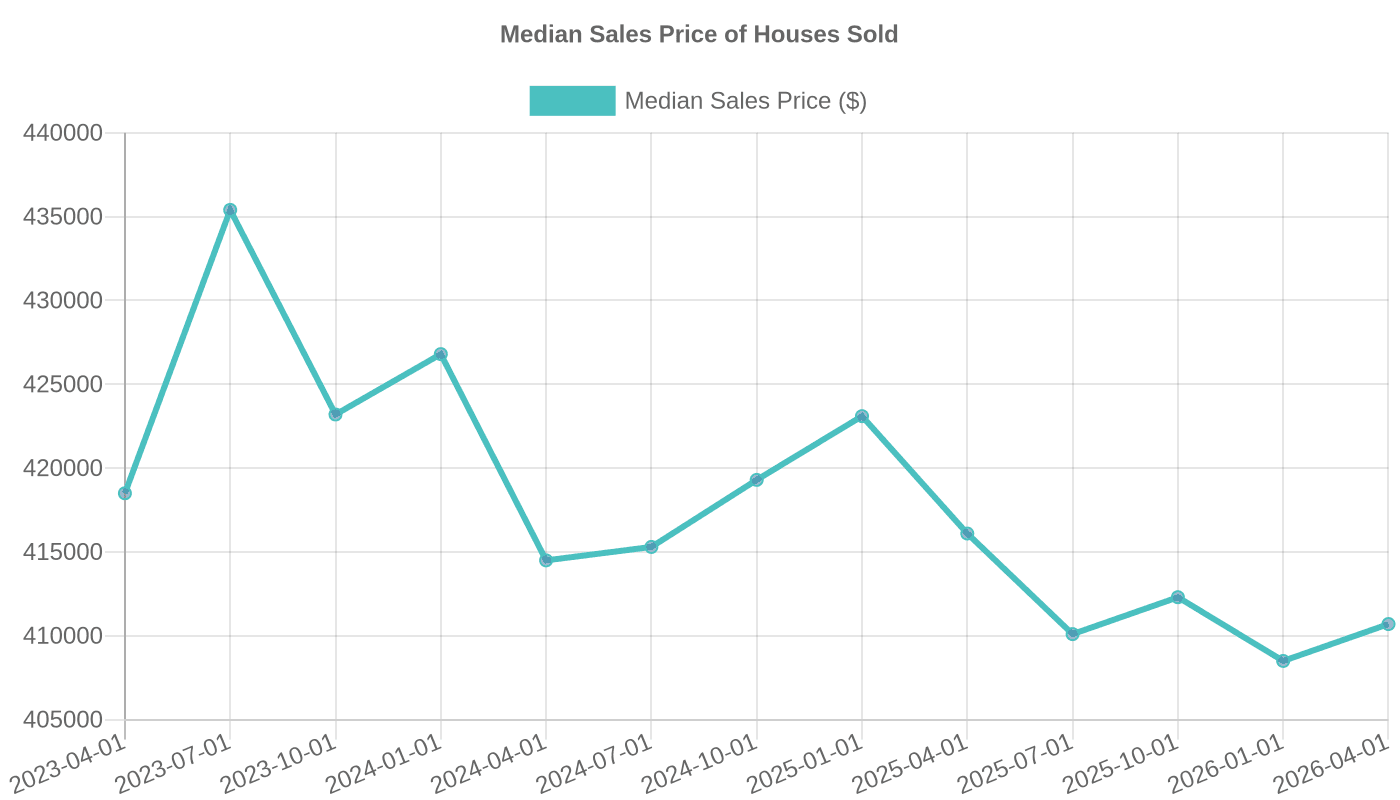
This trend shows that prices have been relatively stable, with a slight dip in early 2026. If your comps are much higher than the median, make sure they’re truly comparable.
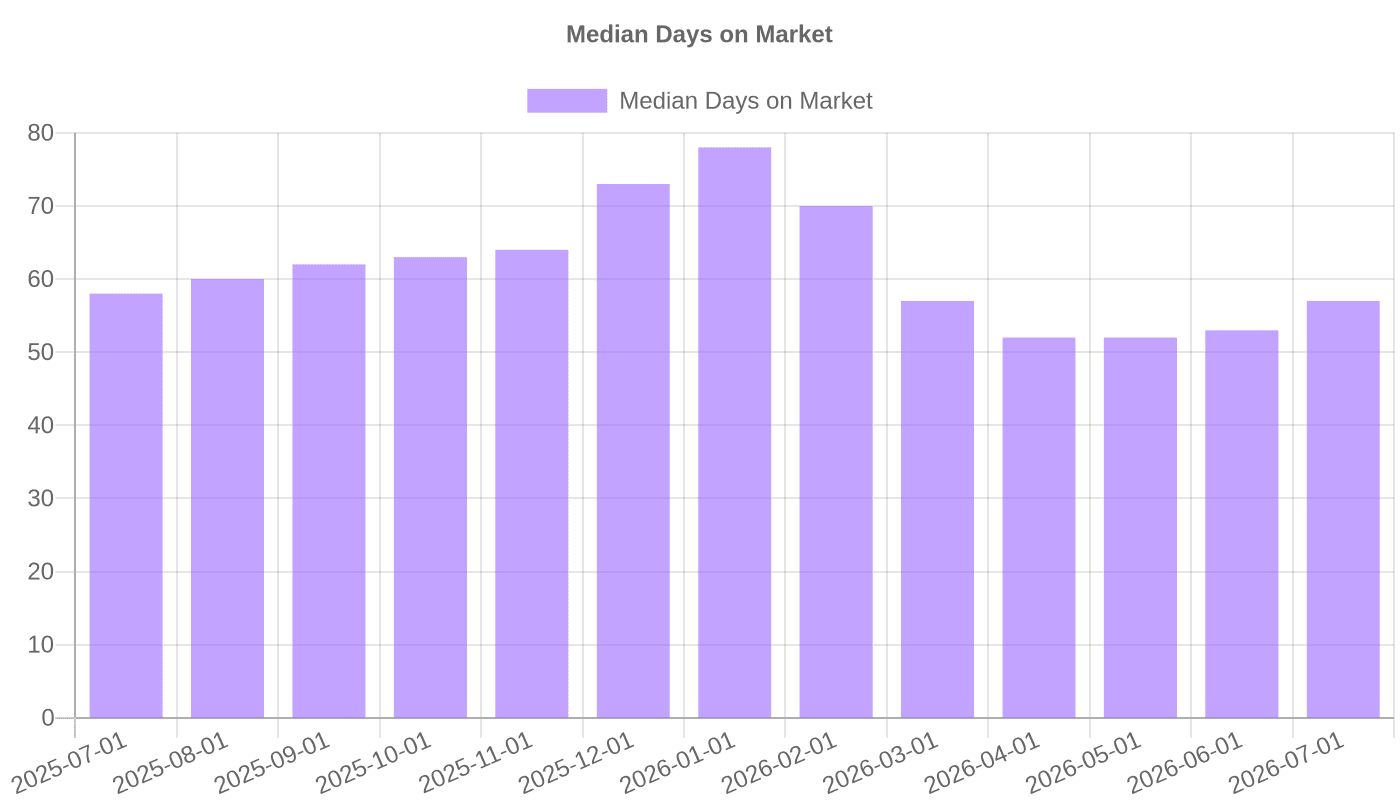
Also, consider the median days on market, which was 57 days as of July 2026. If your market’s days on market is higher, your holding costs will be higher, so factor that into your offer.
The Bottom Line
An after repair value calculator is a must-have tool for any wholesaler or flipper. It helps you make objective, data-driven decisions and avoid overpaying. Start by gathering accurate comps, getting a real repair estimate, and using the formula to determine your max offer.
Your next step: compare the top property analysis tools in the Wholesale REI directory to find one that fits your workflow. And if you want to practice your negotiation skills, try our free AI Cold Call Trainer — it’s a realistic way to rehearse your pitch before you talk to a real seller.
Frequently Asked Questions
What is an after repair value calculator?
An after repair value calculator is a tool that estimates a property's resale value after renovations, using comparable sales and repair costs. It helps investors determine a fair offer price.
How do you calculate after repair value?
ARV is calculated by finding the average of comparable sales, adjusting for differences, and then subtracting repair costs and other expenses. The formula is: Max Offer = ARV – Repairs – Profit – Other Costs.
What is the 70% rule in wholesaling?
The 70% rule states that your offer should be 70% of ARV minus repairs. It's a quick guideline, but you should always run a full analysis to account for market conditions and your profit goals.
Why is ARV important for wholesalers?
ARV helps wholesalers avoid overpaying and ensures there's enough profit margin for both the wholesaler and the end buyer. It's essential for making data-driven offers.
What are common mistakes when using an ARV calculator?
Common mistakes include overestimating ARV, underestimating repair costs, ignoring days on market, and using outdated or non-comparable comps. Always verify with recent data.
Can I use an ARV calculator for free?
Yes, many online calculators are free, but they require accurate inputs. For more advanced features, consider software tools like PropStream or Attom Data, which offer comprehensive data and analysis.
Sources
- Median Sales Price of Houses Sold (as of 2026-04-01) — FRED (Federal Reserve Bank of St. Louis)
- 30-Year Fixed Mortgage Rate (as of 2026-08-13) — FRED (Federal Reserve Bank of St. Louis)
- Median Days on Market (as of 2026-07-01) — FRED (Federal Reserve Bank of St. Louis)
- Software tools tracked in the Wholesale REI directory — Wholesale REI directory
- Tool categories in the Wholesale REI directory — Wholesale REI directory
This article was researched and drafted with AI assistance, then reviewed and edited by Mark Anthony. Every statistic is sourced and cited. It's for informational purposes only and is not financial or legal advice. Read our editorial policy.