After Repair Value in Spanish: What It Means (and How Wholesalers Say It)

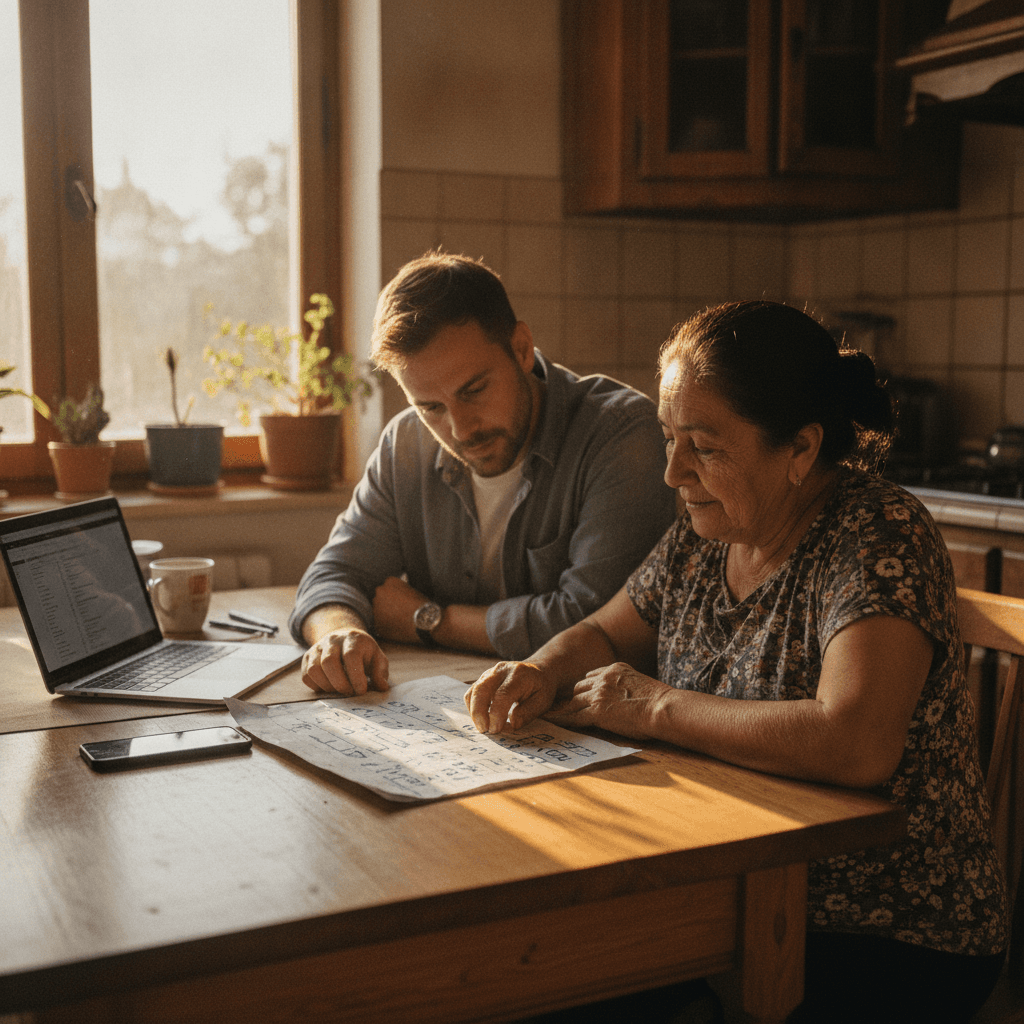
You're on a call with a Spanish-speaking seller, you know your numbers cold, and then it happens: you need to say "after repair value" and your brain freezes. The deal doesn't die because you don't know ARV. It dies because you can't explain it in the seller's language.
Good news. The term translates cleanly, and the concept is easy to explain once you have the right words.
Key Takeaways
- "After repair value" in Spanish is most often "valor después de reparaciones" (or "valor después de la reparación" in the singular).
- The acronym ARV stays ARV in Spanish — it's used as-is in investor conversations across Latin America and the U.S.
- The national median sales price of houses sold was $410,700 as of 2026-04-01, which is the kind of baseline you translate into "valor de venta" for sellers.
- The 30-year fixed mortgage rate sat at 6.95% as of 2026-09-17, and median days on market was 60 as of 2026-08-01 — both numbers you'll want to explain in plain Spanish.
- The Wholesale REI directory tracks 65 software tools across 9 categories, including tools that help you pull comps and run ARV math before you ever dial.
What is after repair value in Spanish?
The most common Spanish translation of after repair value is "valor después de reparaciones." You'll also hear "valor después de la reparación" (singular) and, in some markets, "valor después de remodelación" or "valor de reventa" when the seller is thinking about the resale price.
Here's the thing: there isn't one official translation. Spanish is spoken differently in Mexico, Puerto Rico, Colombia, and Texas. What matters is that the seller understands the idea — the house is worth more once the work is done.
The literal breakdown
If you want to see how the phrase is built:
- Valor = value
- Después de = after
- Reparaciones = repairs
Put together: valor después de reparaciones. That's your default. Use it unless the seller uses a different phrase first — then mirror theirs.
Is ARV used in Spanish?
Yes. ARV is used as-is in Spanish-language real estate investing circles. You'll see it in YouTube videos, Facebook groups, and courses aimed at Latino wholesalers in the U.S.
So if you're mid-sentence and you blank on the full phrase, just say "el ARV" and then explain it. Nobody will think you're wrong.
Other phrases you'll hear
- Valor después de remodelación — value after remodeling
- Valor de reventa — resale value
- Valor de mercado reparado — repaired market value
- Valor final — final value (vague, but common)
If a seller uses one of these, don't correct them. Adopt it. The goal is understanding, not vocabulary purity.
Why does the translation matter for wholesalers?
Because the seller has to believe your number, and belief starts with understanding. If you say "ARV" and the seller nods without knowing what it means, you've lost the trust you need to close.
Wholesaling is a trust business. A seller who doesn't understand your offer will either say no or, worse, say yes and back out later.
The real cost of a bad explanation
When a seller doesn't understand ARV, three things happen:
- They think you're lowballing them, even when you're not.
- They shop your offer against a retail listing price and feel insulted.
- They stop answering your calls.
A clean Spanish explanation of ARV prevents all three.
The market context you're explaining
You're not explaining ARV in a vacuum. You're explaining it inside a real market. The national median sales price of houses sold was $410,700 as of 2026-04-01. That's the kind of number a seller hears on the news.
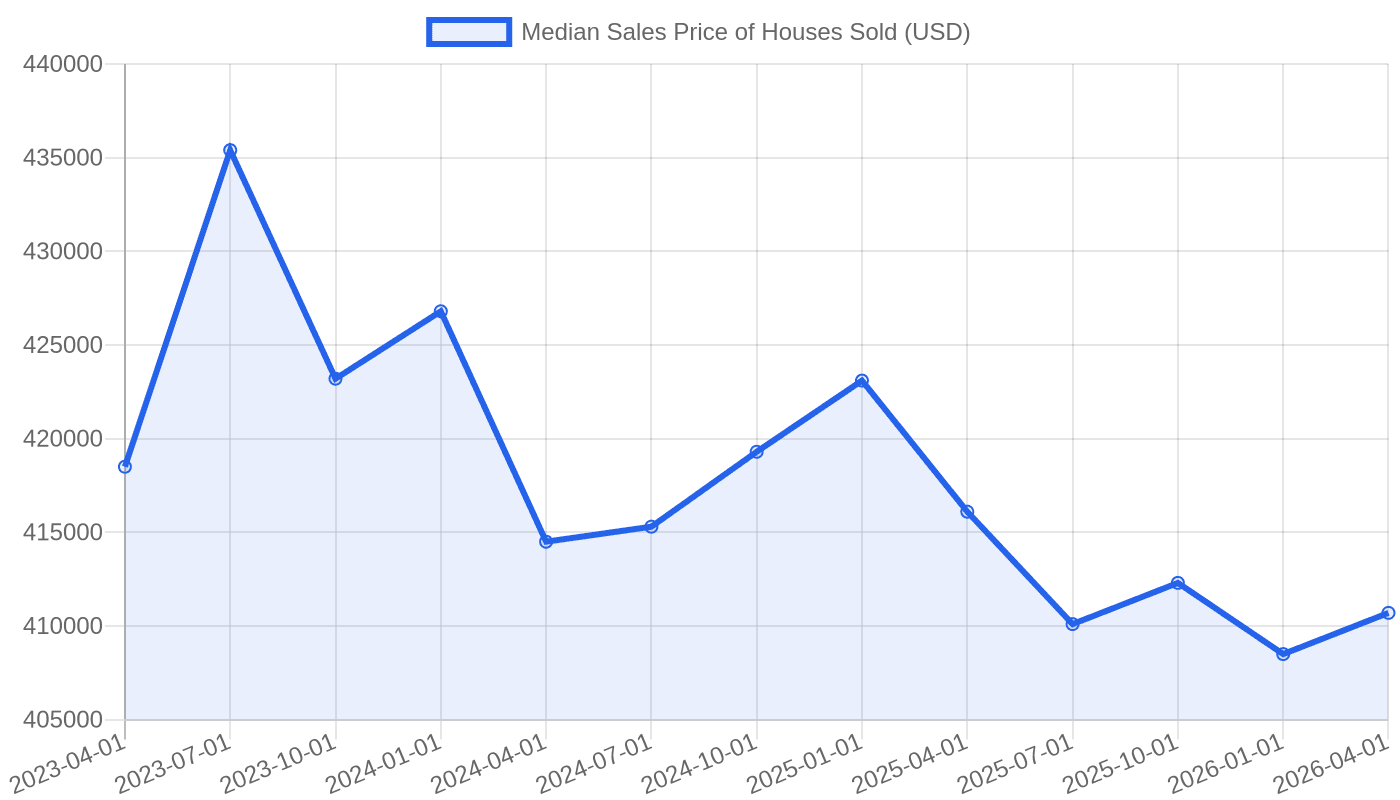
Notice the trend: the median sales price has hovered in the $408,500 to $435,400 range across the last three years. It hasn't crashed. It hasn't mooned. That's actually a helpful story to tell a seller — the market is steady, so your ARV estimate isn't a guess pulled from thin air.
Why financing matters to your ARV story
The 30-year fixed mortgage rate was 6.95% as of 2026-09-17. That's high enough that your end buyer is payment-sensitive.
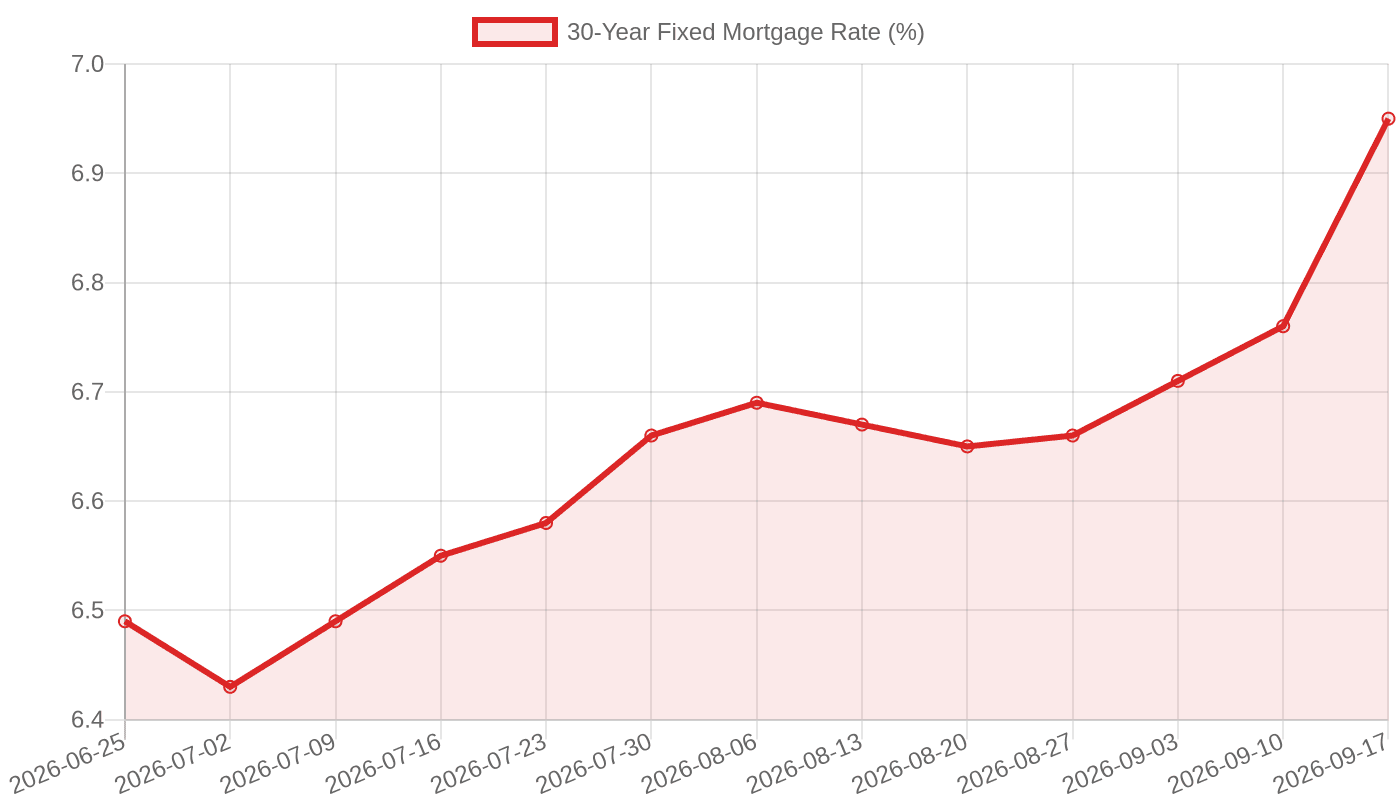
When rates climb, buyers care more about condition. A fully renovated house sells faster and for more than a fixer. That's the whole logic behind ARV — and it's a logic you can explain in Spanish in about 30 seconds.
How do you explain ARV to a Spanish-speaking seller?
You explain it in three steps: what the house is worth today, what it costs to fix, and what it's worth after. Then you show the math. Don't lecture — walk them through their own house.
Here's a script you can adapt.
Step 1: Start with the current value
Say something like:
"Ahora mismo, su casa vale aproximadamente [X] dólares en su condición actual."
That means: "Right now, your house is worth about [X] dollars in its current condition."
This anchors the conversation on reality, not on the retail listing price down the street.
Step 2: Explain the repairs
"Para que la casa se venda al precio más alto, necesita aproximadamente [X] dólares en reparaciones."
Translation: "For the house to sell at the highest price, it needs about [X] dollars in repairs."
Be specific. Roof, HVAC, kitchen, bathrooms. Sellers respect a list.
Step 3: Introduce the ARV
"Después de las reparaciones, el valor de la casa — el ARV — sería aproximadamente [X] dólares."
Translation: "After the repairs, the value of the house — the ARV — would be about [X] dollars."
Now the seller has a number they can hold. And you've used the term correctly, in their language.
Step 4: Show your offer math
This is where most wholesalers lose the room. Don't just state your offer — show how you got there.
A common formula is:
ARV × 0.70 − repair costs = maximum offer
Walk through it out loud in Spanish:
"El ARV es [X]. Multiplicamos por 70% y restamos las reparaciones. Eso nos da [X]."
That's it. Simple, transparent, and hard to argue with.
What are the key Spanish phrases every wholesaler should know?
Here's a cheat sheet you can keep open on your phone. These are the phrases that come up in almost every Spanish-language seller conversation.
| English | Spanish | When to use it |
|---|---|---|
| After repair value | Valor después de reparaciones | Introducing the ARV concept |
| ARV | ARV (used as-is) | Shortcut in conversation |
| Current value | Valor actual | Anchoring the conversation |
| Repairs | Reparaciones | Listing the work needed |
| Resale value | Valor de reventa | When seller thinks retail |
| Cash offer | Oferta en efectivo | Presenting your number |
| Closing costs | Costos de cierre | Explaining deductions |
| Comps | Comparables / comps | Justifying your ARV |
| As-is | Tal como está | Describing current condition |
| Assignment fee | Comisión de cesión | Explaining your profit |
Print it. Keep it next to your dialer. You'll use it more than you think.
How do you say "comps" in Spanish?
You say "comparables" or just "comps" — both work. In practice, most Spanish-speaking investors say "los comps" because it's shorter.
When you explain them:
"Los comps son casas parecidas que se vendieron recientemente cerca de la suya."
That means: "Comps are similar houses that sold recently near yours."
How do you say "as-is" in Spanish?
"Tal como está." That's the standard phrase. You'll use it when you explain that you're buying the house without asking the seller to fix anything.
"Compramos la casa tal como está. No necesita arreglar nada."
Translation: "We buy the house as-is. You don't need to fix anything."
That sentence alone has closed deals.
How do you calculate ARV the same way in any language?
The math doesn't change when the language does. ARV is still ARV. What changes is how you explain it.
Here's the process, step by step.
Step 1: Pull comps within a tight radius
Look for sold homes within the last 3-6 months, ideally within half a mile, with similar square footage, beds, and baths. Adjust for differences.
Step 2: Adjust for condition
A comp that sold fully renovated isn't the same as your subject property. If your house needs a roof and a kitchen, your ARV is the renovated comp price — but your offer has to subtract the work.
Step 3: Subtract repair costs
Get real bids, not guesses. A roof is not "about five grand." It's a number from a roofer.
Step 4: Apply your margin
The 70% rule is a starting point, not a law. In a slower market, you may need more cushion.
Step 5: Sanity-check against the market
Here's where national data helps. Median days on market was 60 as of 2026-08-01. That tells you how long a renovated house might sit before it sells.
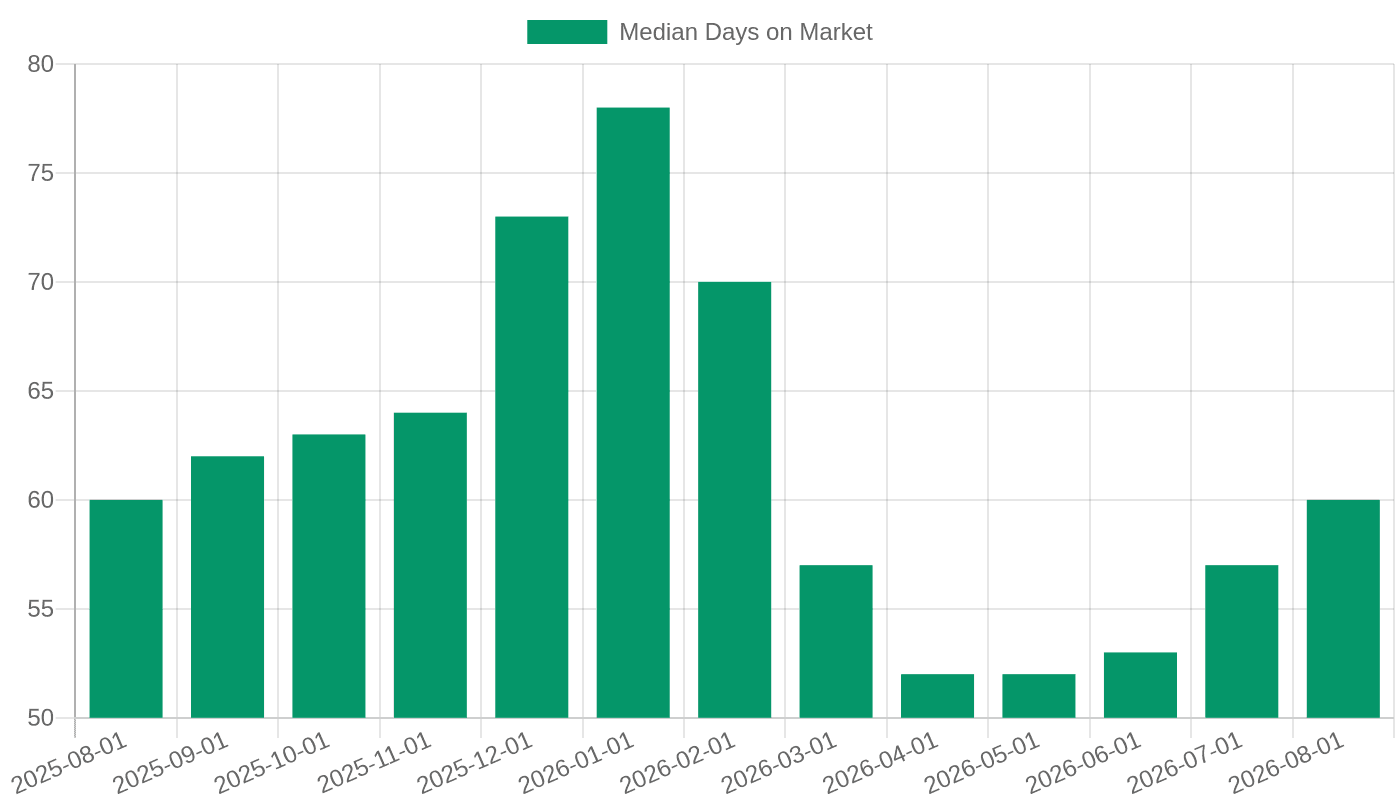
Look at that swing: days on market dropped from 78 in January 2026 to 52 in April and May, then climbed back to 60 by August. That's a market that moves. Your ARV estimate needs to account for how fast things sell in your specific submarket — not just the national average.
Why this matters for your offer
If homes are sitting longer, your end buyer will want a bigger discount. That discount comes out of your spread. So the ARV number you quote a seller has to leave room for the market to breathe.
What tools help you calculate ARV before you call?
You should never quote an ARV you haven't verified. The Wholesale REI directory tracks 65 software tools across 9 categories — and several of them exist specifically to help you pull comps, estimate repairs, and run ARV math fast.
Here's how the categories break down for ARV work.
Data and comps tools
These pull property records, sales history, and comparable sales. You use them to build the ARV before you dial.
CRM and follow-up tools
Once you've made the offer, you need to follow up. Spanish-speaking sellers often want to think it over with family. A CRM keeps you in front of them without being pushy.
Dialer and call tools
If you're making outbound calls in Spanish, a dialer with call recording helps you review your own phrasing. You'll catch mistakes you didn't know you were making.
Why the tools matter more in a second language
When you're speaking Spanish, your cognitive load is higher. You're translating in real time. Tools that pre-load the ARV, the comps, and the repair estimate free up your brain to focus on the conversation.
What mistakes do wholesalers make with ARV in Spanish?
They translate word-for-word, they over-explain, and they use jargon the seller has never heard. The fix is simpler than you'd think.
Mistake 1: Translating "after repair value" literally, word by word
"Después reparación valor" is not a phrase. Nobody says that. Use "valor después de reparaciones" and move on.
Mistake 2: Assuming all Spanish speakers use the same words
A seller from Mexico may use different phrasing than a seller from Puerto Rico. Listen first. Mirror their vocabulary.
Mistake 3: Skipping the explanation because you assume they know
Even experienced sellers appreciate a quick recap. Say the number, say what it means, then say it again.
Mistake 4: Using English acronyms without context
ARV is fine. But if you say "ARV" and then jump straight to your offer, the seller may not connect the dots. Say "el ARV, o sea, el valor después de reparaciones" the first time.
Mistake 5: Quoting an ARV you can't defend
If the seller asks how you got the number, you need comps. Not vibes. Tools help here.
How do you build trust with Spanish-speaking sellers?
You speak their language, you show your math, and you follow up consistently. Trust isn't built with a perfect accent — it's built with clarity.
Speak their language, literally
Even imperfect Spanish signals respect. Sellers notice when you try. Most will meet you halfway.
Show your math on paper
Write the ARV, the repairs, and the offer on one page. Hand it over or text a photo. Numbers on paper feel more honest than numbers spoken fast.
Follow up in the same language
If you opened in Spanish, follow up in Spanish. Switching to English mid-relationship feels like a demotion.
Be patient with family decisions
Many Spanish-speaking sellers make decisions with family. Give them room to talk it over. Then follow up.
How do you practice your Spanish ARV pitch?
You practice out loud, with a script, until the words come without translating in your head. Repetition beats study every time.
Use a script, then throw it away
Write your ARV explanation in Spanish. Read it 20 times. Then stop reading it and just talk. The script trains your mouth; the conversation trains your ear.
Record yourself
Record your pitch on your phone. Listen back. You'll hear where you stumble — usually right at the ARV sentence.
Practice the objection too
Sellers push back on ARV. They say things like:
"Pero la casa de al lado se vendió por más."
Translation: "But the house next door sold for more."
Your response:
"Sí, pero esa casa ya estaba remodelada. La suya necesita [X] en reparaciones. Por eso el ARV es diferente."
Practice that exchange until it's automatic.
Try it against a realistic AI seller first
If you want a low-pressure way to rehearse, run a few practice calls against our free AI Cold Call Trainer. You can work through an ARV explanation, hear a pushback, and try your response — no signup needed to start. It's not a Spanish tutor, but it's a safe place to get the pitch out of your head and into your mouth.
What does the current market mean for your ARV conversations?
It means you should lead with stability, not hype. The national median sales price of houses sold was $410,700 as of 2026-04-01 — roughly flat over the past year. That's a calm story, and calm stories close deals.
Use the numbers as a trust anchor
When a seller worries the market is crashing, you can point to the trend. Prices have held in a narrow band. That's reassuring.
Don't promise appreciation
You're not a fortune teller. Say what the data shows, not what you hope happens.
Adjust your ARV for local speed
Median days on market was 60 as of 2026-08-01. If your submarket moves faster, your ARV can be more aggressive. If it moves slower, add cushion.
The Bottom Line
"After repair value" in Spanish is "valor después de reparaciones" — and once you can say it and explain it, you open a whole segment of sellers most wholesalers never reach. Learn the phrase, learn the math, and practice saying both out loud until they're automatic.
Your next step: pull up the directory and compare the comps and data tools that help you nail your ARV before you dial. A verified number is easier to explain in any language.
Frequently Asked Questions
What is after repair value in Spanish?
The most common translation is "valor después de reparaciones." You'll also hear "valor después de la reparación," "valor después de remodelación," and "valor de reventa" depending on the region and the speaker.
Do Spanish-speaking investors use the acronym ARV?
Yes. ARV is used as-is in Spanish-language real estate investing circles across the U.S. and Latin America. If you blank on the full phrase mid-conversation, saying "el ARV" is completely normal.
How do you explain ARV to a seller in Spanish?
Walk through three numbers: the current value, the repair cost, and the value after repairs. Then show the offer math out loud — ARV times 70% minus repairs. Transparency beats vocabulary every time.
How do you say "comps" in Spanish?
You say "comparables" or simply "comps." Most Spanish-speaking investors shorten it to "los comps" in casual conversation. Explain them as similar houses that sold recently nearby.
What does "tal como está" mean in a wholesale deal?
"Tal como está" means "as-is." It's the phrase you use to tell a seller they don't need to fix anything before closing — you're buying the property in its current condition.
Why does the current market matter when quoting ARV?
Median days on market was 60 as of 2026-08-01, and the 30-year fixed mortgage rate was 6.95% as of 2026-09-17. Slower sales and higher rates mean your end buyer needs more cushion, which affects the ARV you can defend to a seller.
Sources
- Software tools tracked in the Wholesale REI directory — Wholesale REI directory
- Tool categories in the Wholesale REI directory — Wholesale REI directory
- Median Sales Price of Houses Sold (as of 2026-04-01) — FRED (Federal Reserve Bank of St. Louis)
- 30-Year Fixed Mortgage Rate (as of 2026-09-17) — FRED (Federal Reserve Bank of St. Louis)
- Median Days on Market (as of 2026-08-01) — FRED (Federal Reserve Bank of St. Louis)
This article was researched and drafted with AI assistance, then reviewed and edited by Mark Anthony. Every statistic is sourced and cited. It's for informational purposes only and is not financial or legal advice. Read our editorial policy.