After Repair Value Formula: How to Calculate ARV


If you've ever made an offer based on a shaky ARV, you know the sting of a deal that looked great on paper and bled money in reality. The after repair value formula is your defense: it turns "I think it's worth" into a number you can defend to a cash buyer.
Key Takeaways
- The after repair value formula is ARV = (comparable sale price ÷ comp square footage) × subject property square footage, adjusted for condition and features.
- The 70% rule offer = (ARV × 0.70) − repair costs; it's a quick screen, not a final offer.
- Use 3–5 sold comps within 1 mile and 6 months, ideally 3 bed/2 bath homes within 20% of your subject's square footage.
- National median sale price was $410,700 as of 2026-04-01 (FRED), and median days on market was 61 as of 2026-09-01 — slower markets mean your ARV must be conservative.
- The directory tracks 65 software tools across 9 categories to help you pull comps, run numbers, and market deals faster.
What is the after repair value formula?
The after repair value formula is a method to estimate what a property will be worth after all repairs and renovations are complete, using recent sales of similar homes. It's the number wholesalers, flippers, and landlords build their offer around.
At its core, ARV answers one question: what will a retail buyer pay for this house when it's fixed up? Get that wrong and every number downstream — your offer, your assignment fee, your buyer's profit — is wrong too.
Why ARV matters more than purchase price
A low purchase price on a house with an inflated ARV is still a bad deal. Your profit lives in the gap between ARV and total cost (purchase + repairs + fees). If ARV is too high, you'll overpay without realizing it.
The simple ARV formula
Here's the formula in plain terms:
ARV = (comparable sale price ÷ comp square footage) × subject square footage
Then adjust up or down for differences in condition, upgrades, lot size, and location. That's it. The complexity is in choosing the right comps and making honest adjustments.
How do you calculate ARV step by step?
You calculate ARV by finding 3–5 recent sold comps, calculating price per square foot, applying that to your subject property, and adjusting for differences. Here's the full process.
Step 1: Pull 3–5 sold comps
Look for homes that sold in the last 6 months within 1 mile of your subject. Aim for:
- Same bed/bath count (3 bed/2 bath is the sweet spot in most markets)
- Square footage within 20% of your subject
- Similar lot size and school zone
- Sold — not listed, not pending
Step 2: Calculate price per square foot for each comp
Divide each comp's sale price by its square footage. Example: a 1,500 sq ft home that sold for $300,000 is $200/sq ft.
Step 3: Find the average price per square foot
Add up your comps' price per square foot and divide by the number of comps. If your three comps came in at $195, $200, and $205, your average is $200/sq ft.
Step 4: Apply it to your subject property
Multiply the average price per square foot by your subject's square footage. A 1,400 sq ft subject at $200/sq ft gives you a base ARV of $280,000.
Step 5: Adjust for condition and features
Now make adjustments. A renovated kitchen might add value; a busy street might subtract. Be conservative — buyers pay for what they see, not what you spent.
Step 6: Sanity-check against the market
Compare your ARV to the national median sale price of $410,700 as of 2026-04-01. If your ARV is wildly above or below your local market, recheck your comps.
What is the 70% rule in wholesaling?
The 70% rule says your maximum offer should be 70% of ARV minus repair costs. It's a fast screen to see if a deal is worth pursuing.
Maximum offer = (ARV × 0.70) − repairs
Example: ARV of $280,000 × 0.70 = $196,000. Subtract $40,000 in repairs and your max offer is $156,000.
When the 70% rule breaks down
In hot markets with fast sales, 70% may be too conservative and you'll lose deals. In slow markets, 70% may not be conservative enough. Use it as a starting filter, then run your actual numbers.
How market speed affects your ARV
Median days on market was 61 as of 2026-09-01, up from 52 in April and May 2026. That's a meaningful slowdown — homes are sitting longer, which means your ARV should assume a longer hold and more price risk.
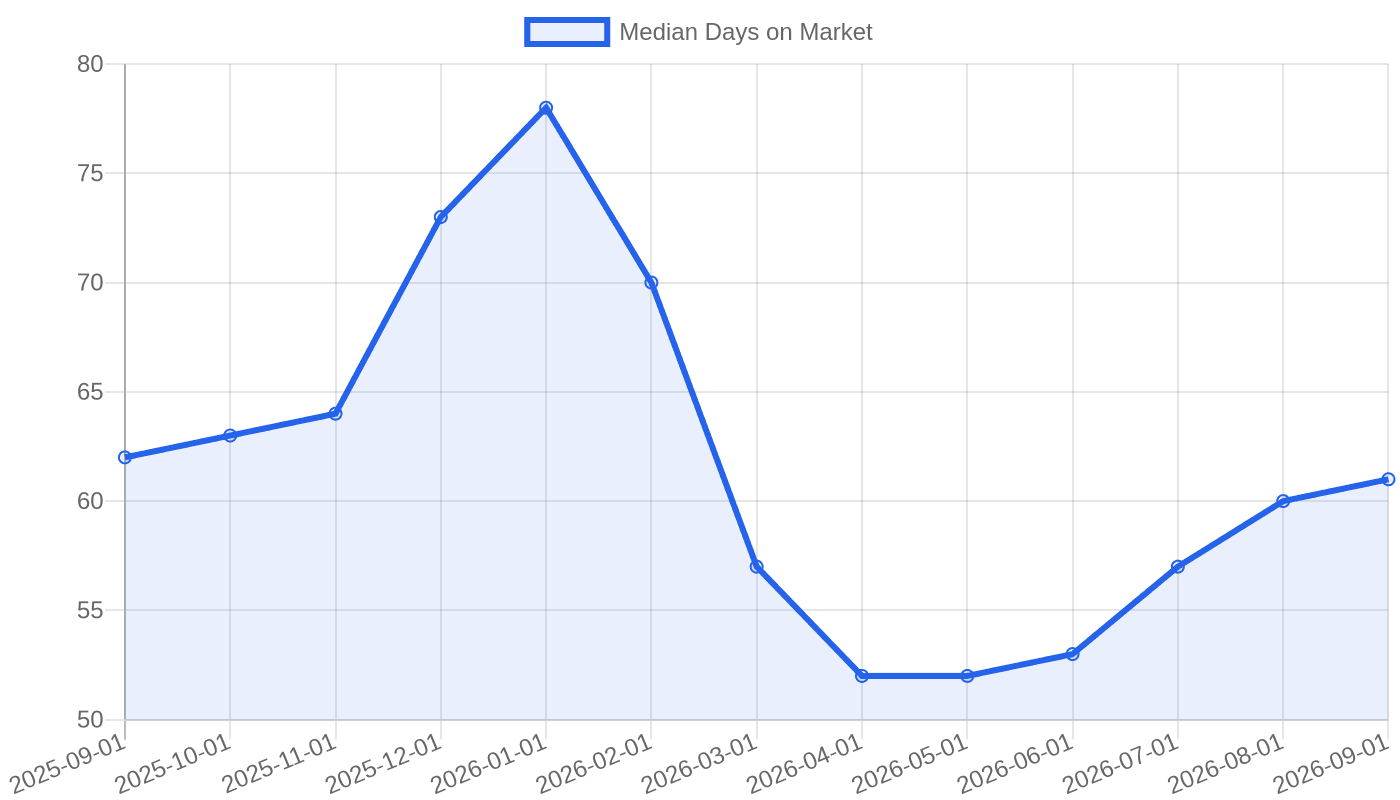
When days on market climb, buyers get pickier. Price your ARV as if the market will be slightly slower when you sell, not faster.
What are the best comps for ARV?
The best comps are recently sold, similar homes in the same neighborhood — ideally 3 bed/2 bath, within 20% of your subject's square footage, sold in the last 6 months. The closer the match, the more reliable your ARV.
The comp selection checklist
Use this checklist every time:
- Sold within 6 months (3 months is better)
- Within 1 mile in urban areas, 3 miles in rural
- Same bed/bath count
- Square footage within 20%
- Similar lot size and age
- Not a distressed or foreclosure sale unless you're comparing to one
Red flags in comp data
Watch for comps that are too nice, too big, or too far away. A renovated 4 bed/3 bath 2,500 sq ft home is not a comp for a 1,200 sq ft 2 bed/1 bath fixer. Also avoid using listings — only sold prices count.
How do you adjust ARV for repairs and renovations?
You adjust ARV by estimating what each repair adds to value, not what it costs. A $15,000 kitchen remodel might add $20,000 in value in one market and $5,000 in another.
The repair cost vs. value added distinction
Don't confuse repair costs with value. Your ARV reflects the finished product. Your repair estimate is a separate line item. Keep them separate or you'll double-count.
Using a repair estimator
Software tools in the directory can help you build repair estimates fast. Look for tools with built-in cost databases and photo-based scoping.
How do you use ARV to make an offer?
You use ARV to back into an offer: start with ARV, subtract repairs, subtract your desired profit, and subtract closing costs. That's your maximum offer.
The offer formula
Offer = ARV − repairs − desired profit − closing costs
If ARV is $280,000, repairs are $40,000, you want $25,000 profit, and closing costs are $5,000, your offer is $210,000. That's your ceiling.
Comparing ARV-based offers
| Scenario | ARV | Repairs | Profit Target | Max Offer |
|---|---|---|---|---|
| Conservative | $280,000 | $40,000 | $25,000 | $210,000 |
| 70% rule | $280,000 | $40,000 | — | $156,000 |
| Aggressive | $280,000 | $30,000 | $15,000 | $230,000 |
The 70% rule gives you a much lower offer because it bakes in a larger margin. Use it when you're unsure about ARV or repairs.
What tools help you calculate ARV faster?
The directory tracks 65 software tools across 9 categories — including comp databases, repair estimators, and CRM platforms. The right stack cuts your ARV calculation from an hour to minutes.
Top tool categories for ARV work
- Comps and data: PropStream, ATTOM Data
- CRM and follow-up: GoHighLevel, Launch Control
- Lead generation: Televista Lead Generation
- Calling and outreach: CallTools
How to choose
Start with a comps tool that pulls sold data and calculates price per square foot automatically. Then add a CRM to track your pipeline. Don't buy everything at once — add tools as your deal flow grows.
Why is ARV especially important in a shifting market?
ARV is more important in a shifting market because small pricing errors get amplified when homes sit longer and buyers negotiate harder. Median days on market rose from 52 in April 2026 to 61 in September 2026 — a clear signal that sellers are losing leverage.
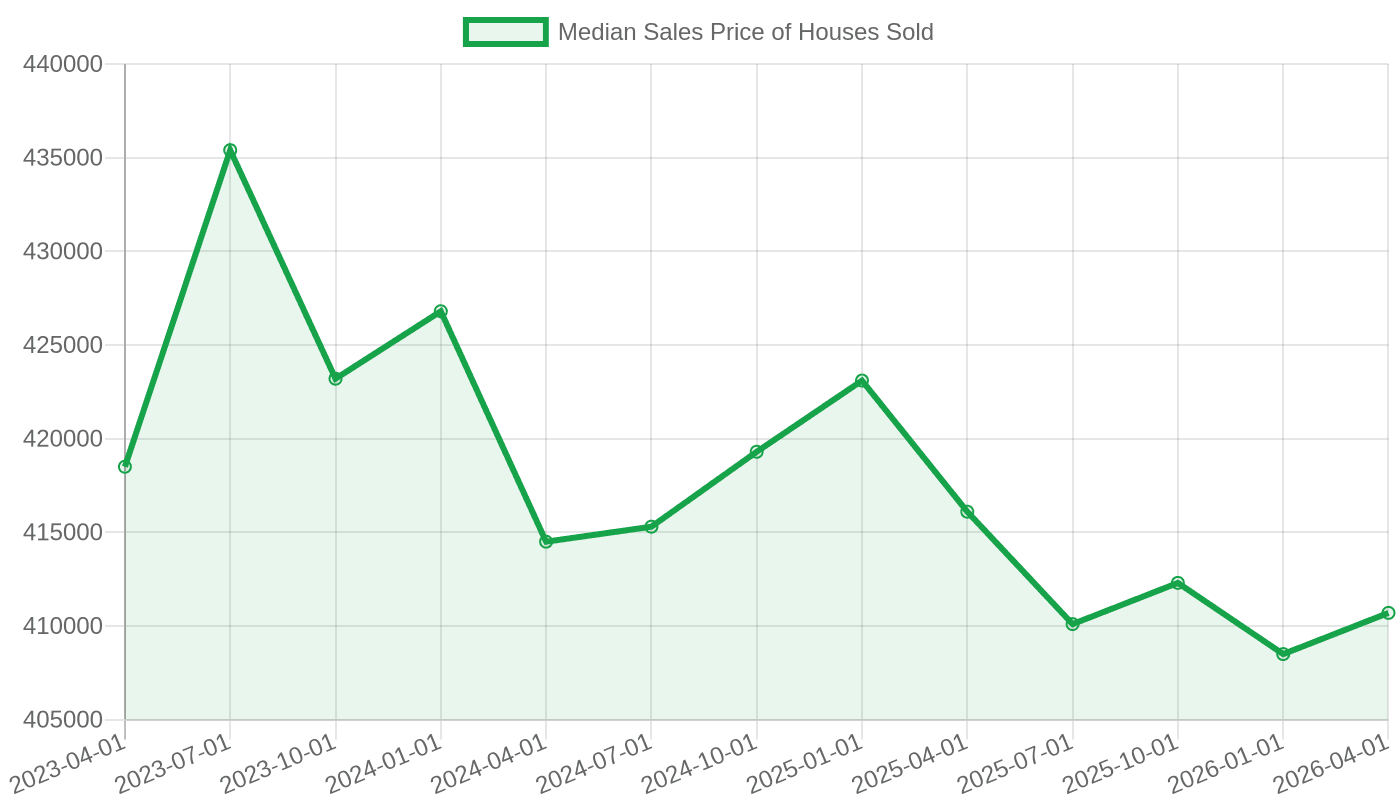
Meanwhile, the national median sale price has drifted from $418,500 in Q2 2023 to $410,700 in Q2 2026. Prices are not collapsing, but they're not climbing either. That flatness means your ARV should assume no appreciation between purchase and resale.
What this means for your offers
In a flat-to-slow market, build in a cushion. If your ARV is $280,000, treat it as $270,000 for offer purposes. You'd rather leave a little on the table than hold a house you can't sell.
How do you avoid common ARV mistakes?
You avoid ARV mistakes by using sold comps only, staying close to the subject property, and being honest about condition. Most bad ARVs come from wishful thinking, not bad math.
Mistake 1: Using listings instead of solds
Listings are hopes. Solds are facts. Only use closed sale prices.
Mistake 2: Cherry-picking the highest comp
If you pick the one high sale on the block and ignore the three lower ones, your ARV is fiction. Use the median or average of your comps.
Mistake 3: Ignoring market trends
If days on market are rising, your ARV should reflect that. A house that would have sold in 30 days last year might take 60 now.
Mistake 4: Over-improving
Don't put a $50,000 kitchen into a $150,000 house. Your ARV won't support it. Match your renovations to the neighborhood.
The Bottom Line
The after repair value formula is simple math wrapped in judgment: find good comps, calculate price per square foot, adjust honestly, and build your offer from there. In a market where homes are taking 61 days to sell, conservative ARVs protect your profit.
Next step: compare comps and CRM tools in the directory to speed up your ARV workflow. And if you want to practice talking to sellers about ARV without the pressure, try our free AI Cold Call Trainer — no signup needed.
Frequently Asked Questions
What is the after repair value formula?
ARV = (comparable sale price ÷ comp square footage) × subject property square footage, then adjusted for condition and features. It estimates what a home will be worth after repairs.
How many comps do I need to calculate ARV?
Use 3–5 sold comps within 1 mile and 6 months, ideally 3 bed/2 bath homes within 20% of your subject's square footage. More comps improve accuracy but slow you down.
What is the 70% rule in wholesaling?
The 70% rule says your maximum offer should be 70% of ARV minus repair costs. It's a quick screening tool, not a final offer.
Should I use listings or sold prices for ARV?
Always use sold prices. Listings are asking prices and can be inflated; sold prices reflect what buyers actually paid.
How does a slow market affect ARV?
In a slow market, homes take longer to sell and buyers negotiate harder, so your ARV should be more conservative. Median days on market was 61 as of 2026-09-01, up from 52 in spring 2026.
Sources
- Software tools tracked in the Wholesale REI directory — Wholesale REI directory
- Tool categories in the Wholesale REI directory — Wholesale REI directory
- Median Sales Price of Houses Sold (as of 2026-04-01) — FRED (Federal Reserve Bank of St. Louis)
- Median Days on Market (as of 2026-09-01) — FRED (Federal Reserve Bank of St. Louis)
This article was researched and drafted with AI assistance, then reviewed and edited by Mark Anthony. Every statistic is sourced and cited. It's for informational purposes only and is not financial or legal advice. Read our editorial policy.